
Complications
These images are posted here with permission of the owner, Alex83, who has the watch for sale on this site. My question involves the use of jeweled roller bearings on the rotor, which I've never encountered before and find quite interesting. Obviously other methods proved better/more reliable over t

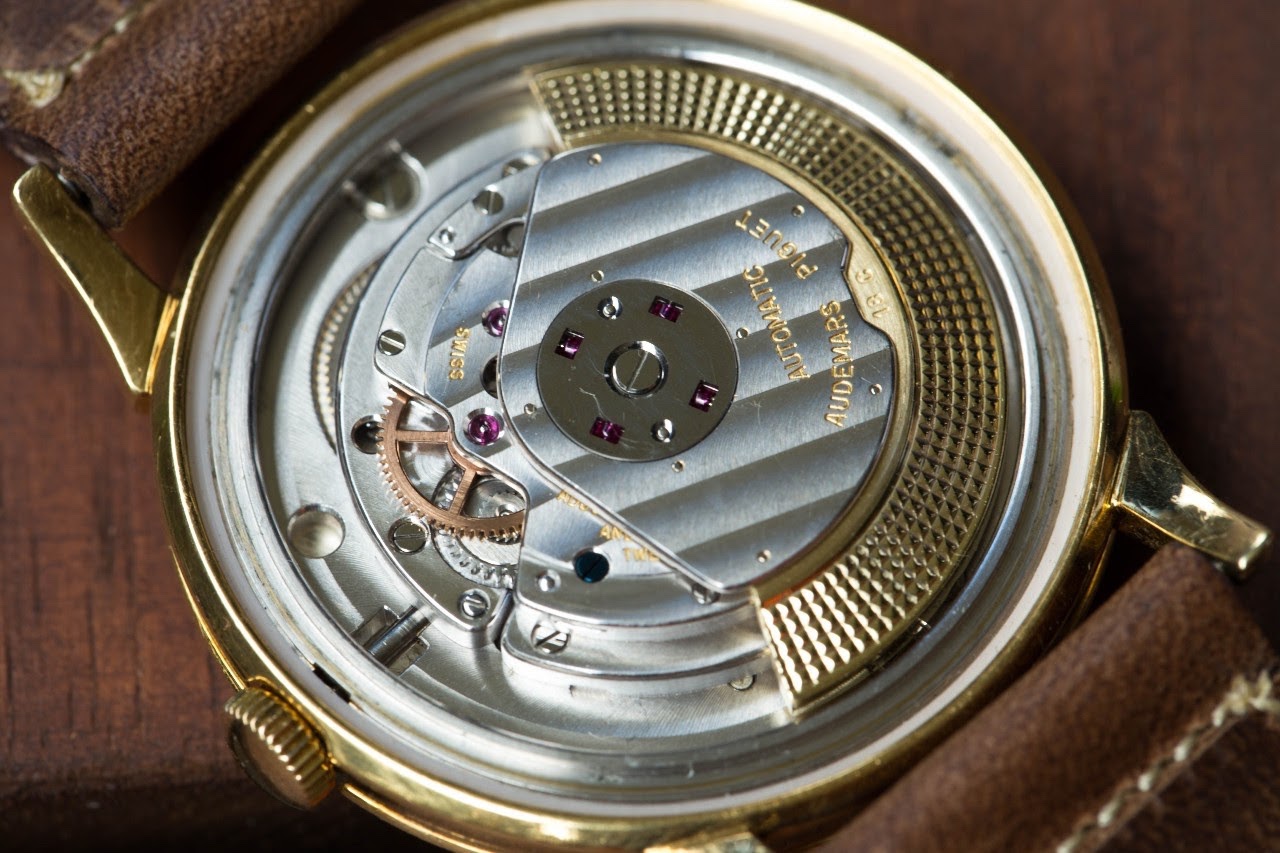

Until recently with the release of the 32xx caliber and the 41xx in-house chronograph movements which use ceramic ball bearings on the rotor, the 31xx, 15xx, 10xx caliber series dating back to the 1950s use a ruby jewel bushing on their rotors. Photo credit: Timezone There there is IWC which modified the ETA 2892-2 (calling it IWC cal. 37521) on their Ocean Bund ref. 3509 to use ruby bearings on the rotor instead of steel balls. (Note another version of the 37521 used steel ball bearings instead
My sample size is not large (I have owned two watches with that movement), but there does not seem to be any shock absorption built into the design. (Most automatic rotors do have some shock absorption.) Perhaps coincidentally, one of my two watches with that movement had trouble with wear of its winding rotor pivot mechanism. I have read that some people have had similar issues with the Ap 2120/2121/Vacheron 1120 mentioned previously in this thread. Leaving that issue aside, it would be hard to
Even with movements as robust as the Rolex 31xx and 15xx line. But it takes a lot to damage it; just think they're used on Sea-Dwellers, GMT-Master, Subs, and Explorers and were made in the millions of units over decades. It's an inherent weakness in using crystalline jewels.
It would be way too expensive to use natural jewels.
This thread is active on the Audemars Piguet forum with 26 replies. Share your knowledge with fellow collectors.
Join the Discussion →