Le Monde Edmond unveils the hidden gem of Zurich's watch scene: the Beyer Watch and Jewellery Museum. This post highlights the museum's world-class collection, comparing it favorably to the Patek Philippe Museum and showcasing rare pieces from Breguet, Rolex, and exquisite enamelled pocket watches. Readers are invited on a virtual tour of this impressive collection, curated over decades by Theodore Beyer.
 It is really unbelievable. For the person not looking for it- it is almost invisible. But right in the heart of Zurich is a worldclass watch museum. How good is this museum? Well it is not far behind Patek Philippe’s museum which is probably the worlds best. Do you want one of the rarest clocks ever made by the most important watchmaker Abraham-Louis Breguet? No problem. The Rolex watch worn by Sir Edmund Hillary when he climbed Mount Everest? This museum has it. A beautiful enamelled pocket watch with the portrait of the King of Saudi Arabia? Also included. Yes-Geneva might be the watch capital of the world, after all some of the greatest brands on earth are based there (Vacheron Constantin, Patek Philippe) but Zurich is home to one of the best watch collections / museum the world has to offer. Where is it? Well its at Bahnhofstrasse 31 inside BEYER, the oldest and most respected watch retailer in Zurich. Beyer is still run by the Beyer family, now in its 8th generation (can you imagine!?) and is run by Rene Beyer. However the brainchild and the initiator of the museum was his father Theodore Beyer who built up the museum from its founding in 1971. Theodore Beyer would travel the world to find interesting timepieces ranging from early clocks to enamelled pocketwatches and rare wristwatches. In short -this museum is a must for any serious watch collector. So enjoy the tour of one the most impressive watch museums you probably never knew existed.
The first picture show a British clock by James Cox circa 1860s made for the chinese market. Made in Goldleaf bronze.

Below a desk watch made in 1836, Paris by JF Houdin (1783-1860). In Goldleaf bronze, 8 day mechanical watch

Below some beautiful Enameled pocked watches around 1780 (center piece by Jaquet Droz)

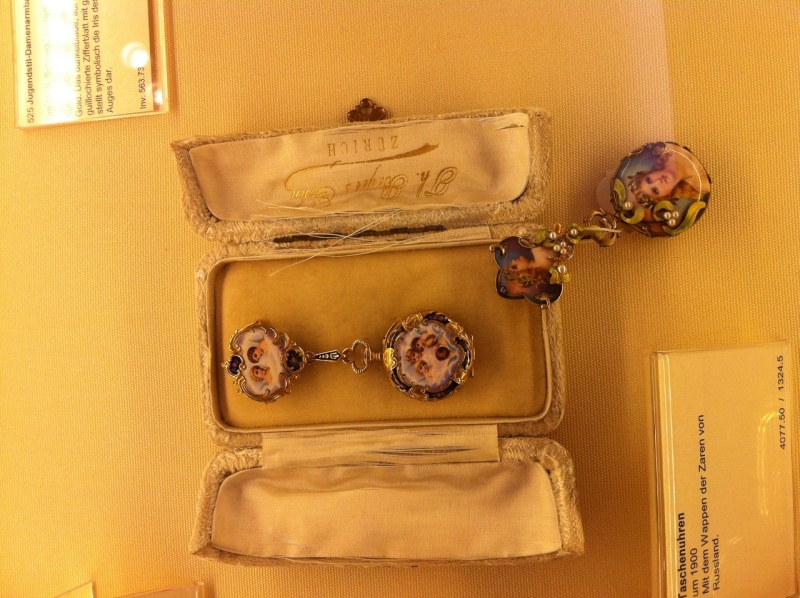
More pocket watches around 1900 with hanging broche in beautiful Enamel.

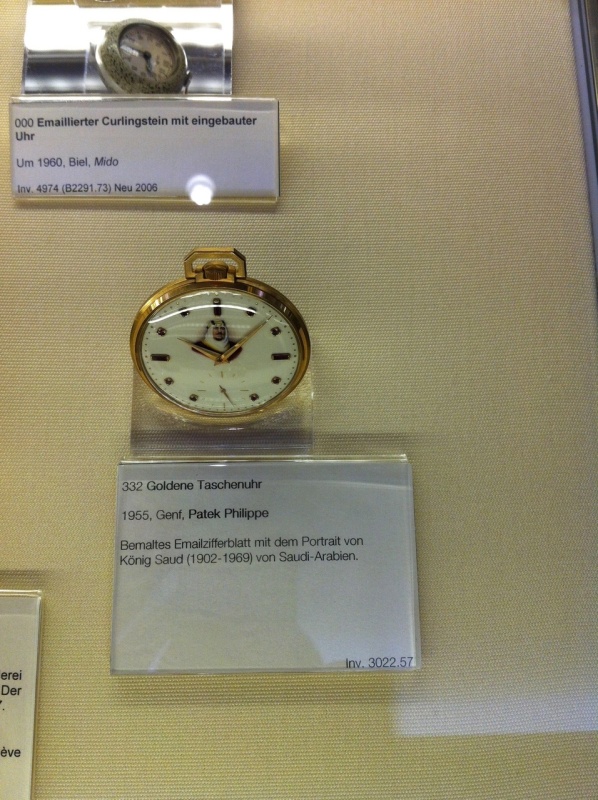
A stunning Patek Philippe pocket watch, 1955, with the portrait of the King of Saudi Arabia -King Saud (1902-1969) in Enamel. It was not uncommon for Patek to deliver pocket watches to the Kingdom of Saudi Arabia. Other portraits Patek made for the Royal house include King Fahd and King Faisal of Saudi Arabia.
 Below a fine Pocket watch, around 1850, portrait of ‘Sissi’ Emperess of Austria, with husband Emperor Franz Joseph (1948-1916)
 Now a big highlight of the Museum: Pendule Sympathique by Louis Abraham Breguet around 1830. This desk watch is extremely important for many reasons: Firstly Louis Abraham Breguet was the inventor of the ‘tourbillon’ as well as the Breguet balance ‘spiral’ spring which is used in most mechanical watches to regulate the speed at which the wheels of the watch turn. Secondly Breguet is probably the most important watchmaker that ever lived. His clients included the Bonaparts, Marie Antoinette and pretty much every member of the European Royal family. Thirdly this desk watch is unique in that it includes a pocket watch which will synchronise the time with the desk watch provided it is placed on top (see picture). The synchronisation happens at 12 o’clock (remember this watch was more than 180 years ago)! This desk watch ‘Pendule Sympathique’ was made for Napoleon Bonaparte’s brother Joseph Bonaparte, King of Spain from 1808-1813. The only other known example of this watch is presently owned by her majesty Queen Elizabeth II, constitutional monarch of the United Kingdom.
 Below the portrait of the watchmaker himself Louis -Abraham Breguet

An exceptional desk watch ‘Pendule Mysterieuse’ from Cartier around 1985. The Buddha on top is made out of cut Ruby.

An exceptional Pocket watch with Astrological indicators and also indicators for sunrise and sunset in Geneva. Made by Patek Philippe in 1898. An outstanding pocket watch with a perpetual calendar, moon phase and indicator for sunrise / sunset.

Below an exceptional desk watch by Patek Philippe 1938 showing the world time and hour repetition. This piece is decorated with fine Enamel and carries an 8day mechanism developed by Louis Cottier.
 Below another fine and exceptional pocket watch world time by Patek Philippe circa 1930s. With a fine Enamel dial.

Below an exceptional pocketwatch ‘tourbillon’ made completely by hand from Mr. George Daniels in 1980. Mr. George Daniels counts as one of the most skilled watchmakers of the last century.

Here comes an Icon: An early Atmos desk watch from Jaeger Le Coultre around 1930s. No need to ever wind this watch, it winds itself by the changes in room temperature, which JLC patented in the early 1930s. Today the Atmos is among the Iconic watches produced by JLC along with the Memovox, Polaris and of course the legendary Reverso.
 Below another highlight: An early Rolex wristwatch 1931- one of the first watches to be powered by an automatic rotor. A milestone because most watches untill that period had to be hand wound. Rolex is today famous for the ‘automatic’ movement powered by a rotor which winds itself with movement of the watch.

Another major highlight of the museum: A 1953 Rolex Oyster Perpetual. This watch was worn by Sir Edmund Hillary when he climbed Mount Everest in on the 29th of May 1953. The Rolex Explorer became subsequently an Icon within the Rolex models to the association Rolex had with Sir Edmund Hillary. The piece of paper towards the right of the pictures confirms Edmund Hillarys address in New Zealand at the time.

I hope you enjoyed the tour. Part II is coming later.....