Manufacture
AndrewD provides an insightful look into COSC certification processes at the Chopard manufacture, detailing the rigorous testing movements undergo. This article explains the technical specifications and procedures that ensure a movement meets the stringent chronometer standards, offering a valuable perspective for collectors interested in precision.
Contrôle Officiel Suisse des Chronomètres is the official not-for-profit Swiss chronometer testing facility which was established in its current format in 1973, bringing together several testing facilities in operation since the late nineteenth century. Three laboratories are located in Biel, St-Imier and Le Locle.
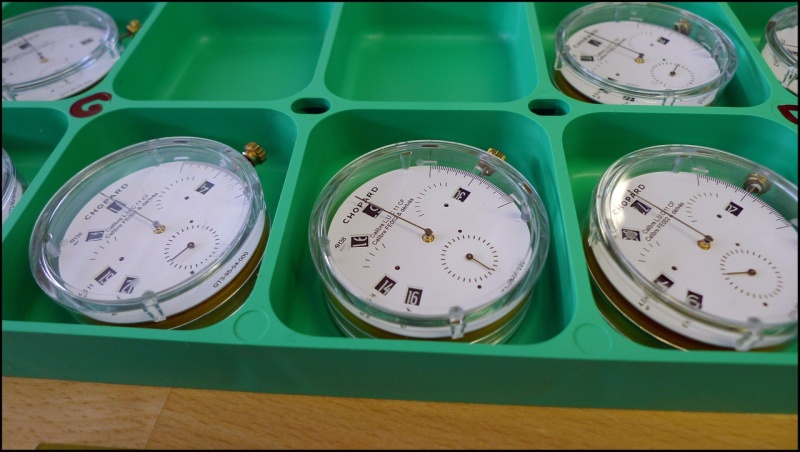
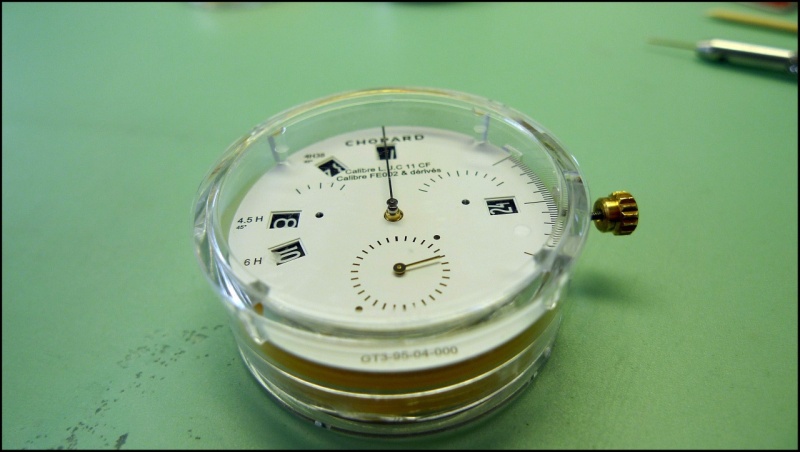
When I visited Chopard manufacture, movements were being prepared for testing. Testing is applied to uncased movements. A temporary white dial and seconds hand is fitted and then sent to the COSC facility.
A CCD (charge-coupled device) with an optical sensor is used to take images of the seconds hand against the white dial and compare the timing against the average of two atomic clocks synchronised on GPS time. Reference points on the dial enable absolute centering of the dial so there is no parallax error.
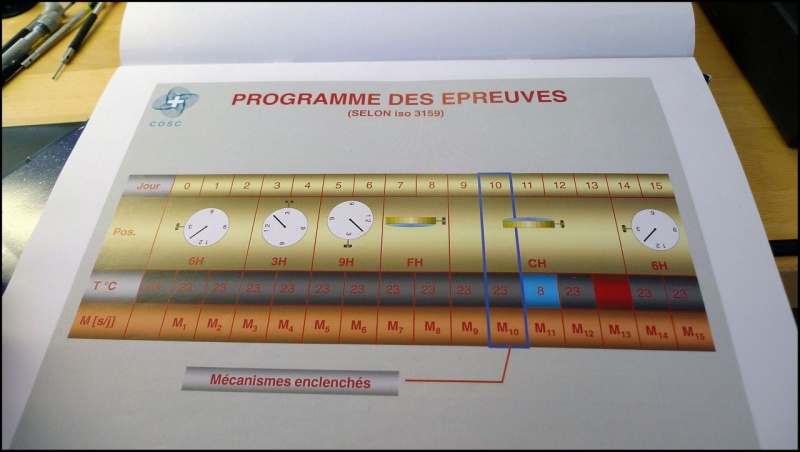
The international standard ISO 3159 is used and applies the following seven performance characteristics (for movements with a diameter >20mm). Each has to be passed in order for the movement to be COSC certified. Testing occurs over a 15 day period in 5 different positions and across 3 temperatures.
Average daily rate: -4 to +6 seconds per day
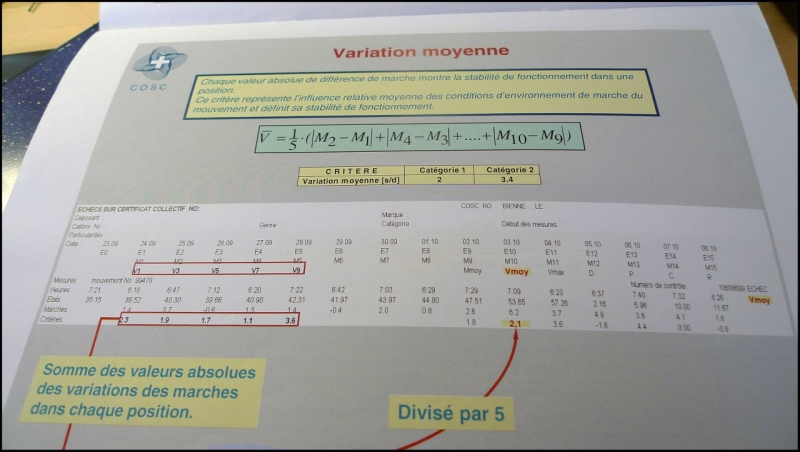
Mean variation in rates: 2 s/d
Greatest variation in rates: 5 s/d
Difference between rates in horizontal (H) and vertical (V) positions: -6 to +8 s/d
Largest variation in rates: 10 s/d
Thermal variation: -0.6 to +0.6 s/d
Rate resumption: -5 to +5 s/d


Thanks Andrew. The big difference now from previously is that COSC tests completed functional watch movements. That gives a closer to reality assessment of the functional error than just testing the engine base movement i.e. if the watch has perpetual calendar function, the whole movement and not just the engine base is certified. Chopard probably sends the most number of tourbillon movements in the world for COSC since the company policy is to get independent certification for 100% of their tou
Hello AndrewD More than a few years ago a Superlative Chronometer was sold in an AD . This was a new unopened watch. The customer returned it shortly after purchase with the complaint "The watch would not stay running". The watch was immediately opened revealing, no oscillating weight or auto-winding parts. But, the watch had past COSC certification. I had always ass-u-med that testing was done with completed watches (Cased). Kind regards and thanks Anthony
Yes, the COSC methodology and equipment call for uncased movements and automatic watches are tested before their oscillating weights are fitted. That's somewhat of a boo boo from that particular Manufacture that shall not be named. Great story, though. Thanks Andrew
In 2011 Chopard had 28,641 movements chronometer certified. This compares to 750,000 for Rolex and 510,000 for Omega, the two major users of the service. Having said that, only 3% of Swiss movements undergo COSC testing. The overall failure rate is apparently around 5%. I have said before that Chopard seems to want to make a strong statement with all the external certification. Their movements and quality control are good enough that they don't have to do this, but they go out of their way to va
... since some ten years ago, the COSC would test the base movement only, and any complication modules would be mounted only after the testing. However, experience tells that if a movement has passed the chronometer test once, it proved to be able to keep time according to the COSC rules. Even if something becomes maladjusted during the final assembly and/or casing, it can still be readjusted to the previous values. A watch where the pairing of hairspring/balance and anchor would not be good, ca
... since normally, the measuring dials for the COSC are shown only very rarely. It might be interesting to add that - unlike the hour and minute hands - the chronograph second hand is still kept, because on chronographs, the COSC is testing an additional 24 hours with the chronograph running, to determine in how far the energy drain of the chronograph influences the general timekeeping. On the home page summary, but not here, you wrote: Depending on which series of the Chrono One you have, eith
This thread is active on the Chopard forum with 10 replies. Share your knowledge with fellow collectors.
Join the Discussion →


