
Manufacture
MTF's insightful post delves into Chopard's strategic acquisition and development of La Chronométrie Ferdinand Berthoud S.A. in 2006, highlighting Karl-Friedrich Scheufele's vision to revive the legacy of a master horologist. This article provides crucial historical context for understanding the brand's commitment to high-end watchmaking and its dedication to honoring a significant figure in horological history. It is a must-read for those interested in the intersection of historical reverence and modern luxury watchmaking.


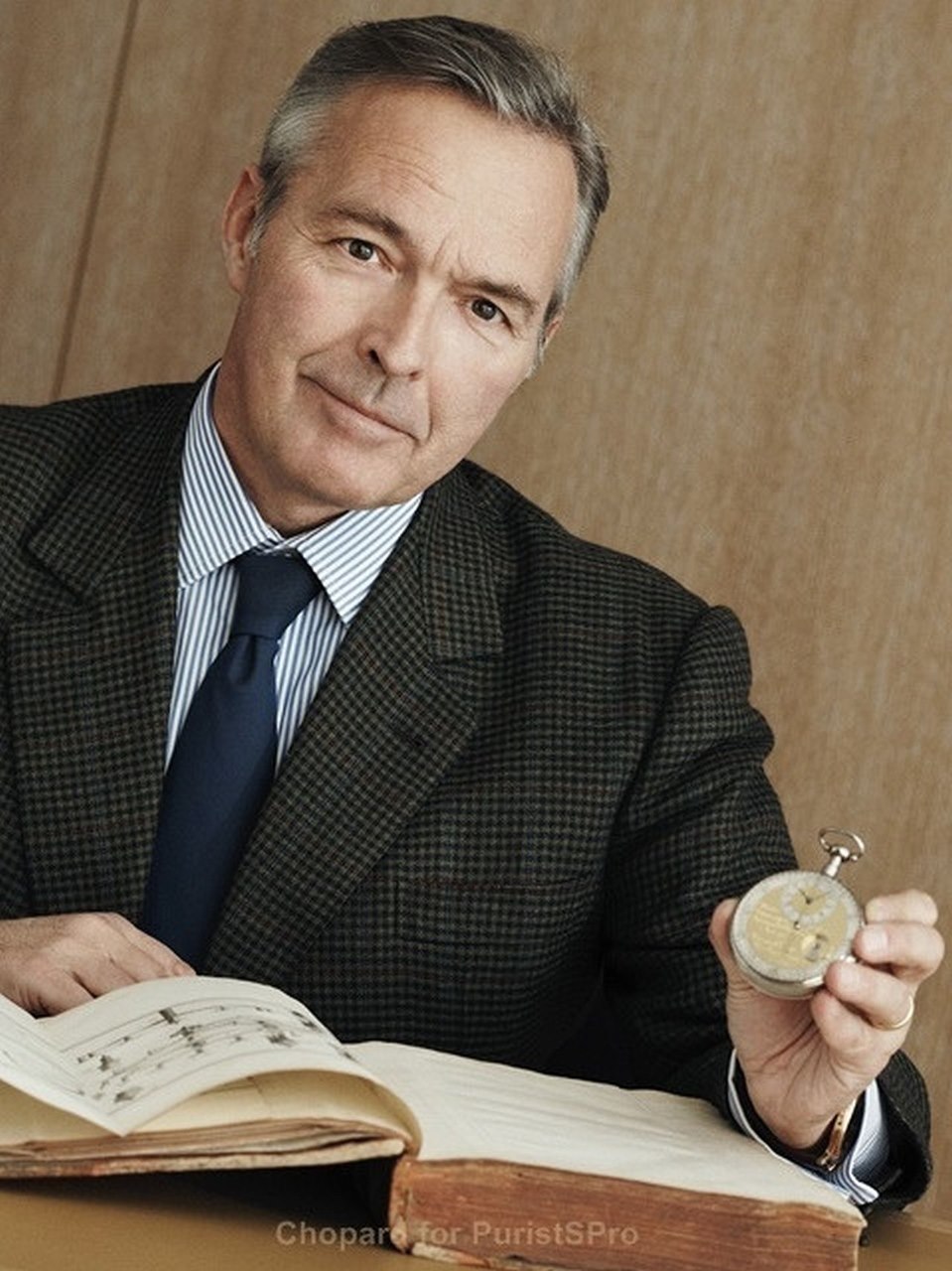
In 2006, Chopard Group laid a new milestone in its watchmaking development and reinforced its presence in Fleurier, in the Val-de-Travers, Canton Neuchâtel (Switzerland) by acquiring a company and developing a new brand: La Chronométrie FERDINAND BERTHOUD SA.
Through this project that he particularly cherishes, Chopard co-president Karl-Friedrich Scheufele intends to bring back to life the memory of Ferdinand Berthoud and restore this substantial watchmaking legacy to its rightful status. Positioned at the very peak of the collections within the Chopard group, La Chronométrie FERDINAND BERTHOUD will be dedicated to offering exceptional timepieces in highly exclusive production runs.
The result of lengthy and careful consideration, this new horological activity began to take shape nearly nine years ago, as Karl-Friedrich Scheufele explains: “In acquiring La Chronométrie FERDINAND BERTHOUD in 2006, I wanted to be sure that one day a watch bearing this name would be worthy of the great master horologist who inspired it”.

Ferdinand Berthoud was born on the 18th March 1727 to a family of distinguished clock- and watchmakers in Plancemont in the heart of Val-de-Travers, barely five kilometres from the current Chopard Manufacture in Fleurier. At the age of fourteen he was taken on by his brother, Jean-Henry, as a clockmaker's apprentice in Couvet, to receive a sound scientific education. On the 16th April 1745, aged 18, he moved to Paris, where he continued to hone his skills as a clockmaker. He employed his talents as a journeyman for the Parisian community of master watchmakers.
During the reign of Louis XV (1710-1774), 18th century Paris was undergoing an unprecedented period of intellectual influence and scientific inquiry. This was the Age of Enlightenment. Knowledge was the holy grail of all scholars, writers and philosophers, whose research enjoyed the encouragement and support of The French Royal Academy of Sciences. This was the specific context in which Ferdinand Berthoud's expertise as a scientific engineer, his manual skill and his gift for mechanics were able to flourish, marking him out as one of the greatest horologists of all time.
He was officially awarded the title of master clockmaker in Paris in 1753.
At the time, both France and England were offering substantial rewards to the first person to discover a practical method for accurately determining the east-west position of a boat on the ocean. [See John Harrison 1693 - 1776] On the 13th December 1760, Ferdinand Berthoud presented his "Mémoire sur les principes de construction d’une Horloge de Marine" (1) to the French Royal Academy of Sciences, in which he described the famous Marine Clock No. 1, completed in early 1761.
In 1763, Ferdinand Berthoud was appointed by the French King to examine John Harrison's H4 Marine Timekeeper in London. Harrison categorically refused to let Berthoud see the clock. However, Berthoud's journey opened the doors to the English scientific fraternity, thanks to the importance of his horological work and publications, and on the 16th February 1764 he was appointed a "foreign associate member" of the Royal Society in London. The following year, Berthoud produced two Marine Clocks, known as the No. 2 and No. 3.

In 1765, Berthoud published a two-volume horological treatise: "Essai sur l’horlogerie; dans lequel on traite de cet Art relativement à l’usage civil, à l’Astronomie et à la Navigation, en établissant des principes confirmés par l’expérience" (2). This work was translated into German in 1795 and reprinted numerous times.
His place in history was assured thanks to his Marine Timepieces, which were capable of measuring longitude to within less than half a degree. The accuracy of the chronometers designed by Ferdinand Berthoud enabled France to challenge the maritime supremacy of England, and led to their creator receiving the coveted warrant of "Watchmaker-Mechanic to the King and to the Navy" in 1770.
In 1771, Berthoud developed the detent escapement with rocker, which achieved a more accurate rate than Pierre Le Roy's marine timepieces.
An exceptional horologist who was highly cultivated, refined and intellectually gifted, Ferdinand Berthoud left behind an outstandingly vast body of work encompassing the fields of marine chronometers, decorative clocks and watches, specialised tools, scientific measurement instruments, as well as publications.
Unlike the much touted 'celebrity watchmaker' A.L. Breguet, Ferdinand Berthoud was also a renowned theorist and talented writer.
Ferdinand Berthoud died in 1807. His business was taken over by his nephew Pierre-Louis Berthoud. The Berthoud dynasty's body of work continued by nephews and great-nephews, occupies a distinguished place in the history of the science and techniques of time measurement. The latter include dozens of specialised books and treatises representing 4,000 pages and 120 engraved plates.
Ferdinand Berthoud’s career was also truly exceptional, as indeed were each of the periods of history he lived through – from the Age of Enlightenment to the Empire, including surviving the French Revolution. His brilliance was duly acknowledged by his contemporaries. This recognition led to him being elected to the Institut de France, and also commissioned “Horologist mechanic by appointment to the King and the Navy” during the reigns of Louis XV and Louis XVI, as well as subsequently under the Empire. In 1804, Napoleon conferred on him the title of Knight of the Legion of Honour. Much of his work is indeed as timely and relevant today as ever.
References:
(1) Submission on the construction principles of a Marine Clock
(2) Essay on horology, examining the Art in relation to civil use, Astronomy and Navigation and establishing principles confirmed by experience.
(3) 1911 Encyclopædia Britannica Vol 3
Bringing back the Berthoud name
It was in homage to this master horologist of exceptional stature that Karl-Friedrich Scheufele wished to bring back to life the illustrious name of Ferdinand Berthoud in his native region. Chopard is already strongly established in Fleurier, a town that has been beating to the tune of watchmaking for several centuries and which currently hosts Chopard Manufacture, the entity responsible for producing the L.U.C Fine Watchmaking movements; Fleurier Ebauches SA, which handles the production of Chopard mechanical movements; the Chopard Forum located in a 17th century mansion serving as a hospitality centre; and the L.U.CEUM, located within the Chopard Manufacture itself and which regroups authentic horological masterpieces including an exceptional collection of timepieces by the famous Ferdinand Berthoud.

Paris c.a. 1775.
Enamelled Dials for Hours, Minutes, Seconds, Calendar.
Remontoir d'egalite constant force mechanism, quarter hour chimes on two bells.

Paris, 1777

Ferdinand Berthoud No.957
Paris ca.1780


Ferdinand Berthoud No. 1113
Paris, 1781.


In his “Supplément au Traité des Montres à Longitudes,” Ferdinand Berthoud comprehensively described this timepiece as “Montre Astronomique, No. 3.” The device was delivered to Jean Chaptal, Count de Chanteloup, a physician and politician.
Berthoud commissioned Jean Martin in 1806 to make the watch. In Berthoud’s opinion, this timepiece contained everything necessary to define the accuracy of astronomical watches. He provided clear instructions for determining longitude, e.g. this watch and No. 73 were each to be held only in a horizontal position. The end stone was to be made not from ruby, but from diamond. Of course, the watch could also be used in the vertical orientation as an ordinary pocket watch.
The Future:
With such a strong tradition in chronometry, I am guessing that the first watch to be presented by La Chronométrie FERDINAND BERTHOUD SA will emphasise traditional mechanical time keeping to honour the memory of the Master. In this age of mobile technology, with GPS and Atomic Clock time signals accessible from our personal devices, the absolute precision of telling time to 19 decimal places is almost routine.
Despite that, humans still appreciate handmade objects and micro-engineering artistry so we still venerate mechanical timekeepers and honour our forebears like Ferdinand Berthoud. Again: "The true cost of luxury is in the choice it affords".
I look forward to the Tribute to Berthoud.
Dr M. Teillol-Foo, 2015
Thanks for the write-up MTF, After knowing the story of Berthoud a little bit better, I just wonder once again about the when. When will we see this name on a new masterpiece. Any rumours or news? Regards, Kolosstt
kolosstt Ferdinand Berthoud No. 2204 Paris, 1780 We were expecting updates in late-2013 and then in late-2014, so I'm always hopeful each Autumn :-) With all that historical pressure, I guess they want to ensure 'near perfection' by development for 8 years, so far. There cannot be absolute perfection or we would stop innovation but Mr K-FS is always "seeking perfection in an imperfect world" as our PuristS' motto. There is a window of opportunity because 2013 was the 50th anniversary of the Sche
Chopard will not rush something out before it is truly ready. While it would be nice to see something released in a milestone/anniversary year, I will gladly wait for perfection! Best, CaliforniaJed
...that I got a newsletter today them at on 22nd of September FB1 chronometer will be revealed to the public. Looking forward to it!
:) MTF
I have high expectations of the timepieces under the Berthoud brand as Chopard\'s track record is excellent. The question remains though, is the relaunch of long dead historical watchmakers and their brands the most efficient path to prestige? I anticipate Berthoud will be honored with one of the finest and least cynical efforts in the industry, but it\'s still akin to another excellent reboot of a dormant Hollywood movie. I\'ll buy the ticket and enjoy the movie, but contradictorily wish for mo
This thread is active on the Chopard forum with 10 replies. Share your knowledge with fellow collectors.
Join the Discussion →


