
Innovation
Patrick_y's exploration of Frank Buchwald's Nixie Machines, showcased at the M.A.D. Gallery, offers a fascinating look into the revival of vintage display technology. This article delves into the history and allure of Nixie tubes, synthesizing community experiences and technical insights to illuminate why these retro-futuristic clocks captivate collectors. Readers will discover the unique appeal and challenges of owning these distinctive timepieces.


PuristSPro moderator Patrick_y explores the world of the M.A.D. Gallery’s [Original] Nixie Machine and Nixie Machine II, created by Berlin based artist Frank Buchwald.
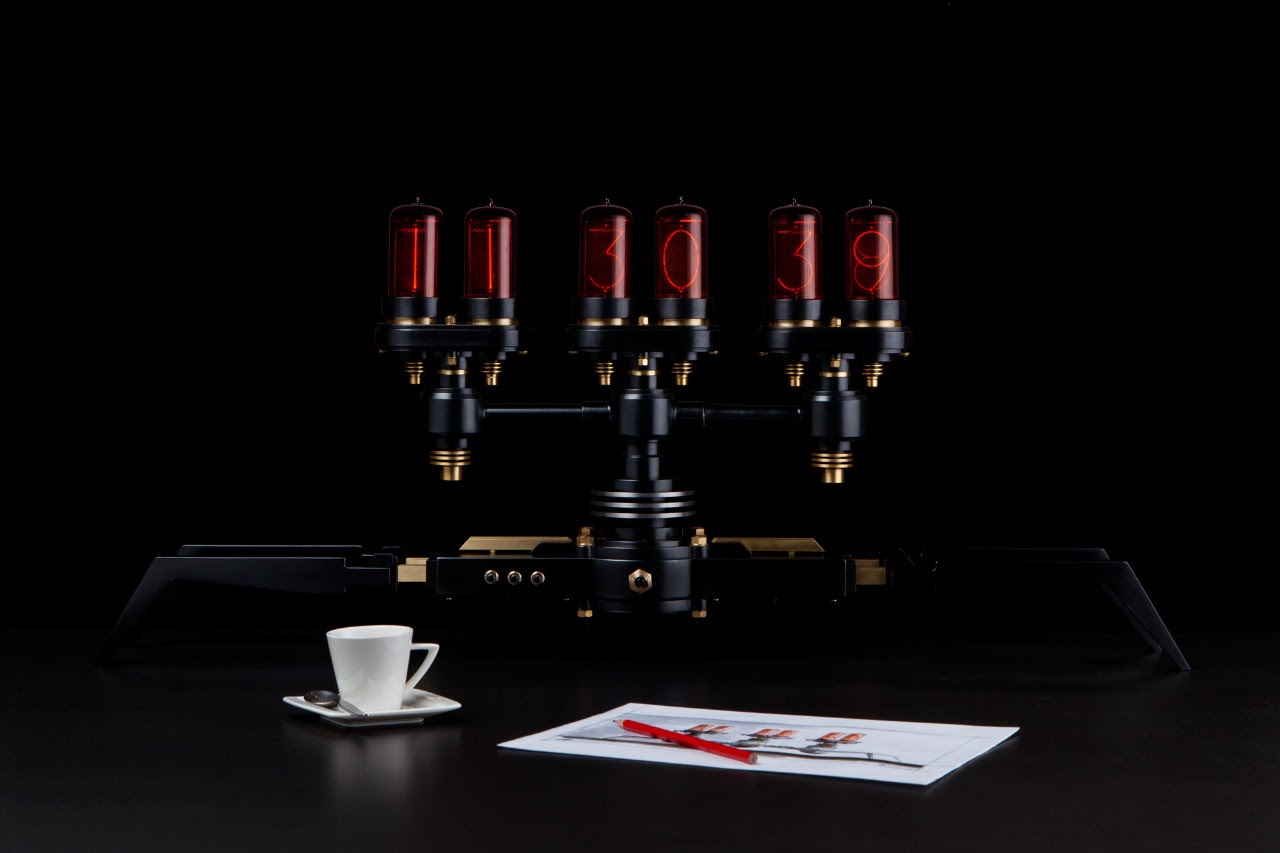
A LITTLE HISTORY OF THE ORIGINAL NIXIE MACHINE
In January 2015, I was at SIHH in Geneva when I had an invitation from Max Busser to visit his M.A.D. Gallery. Where I happened to see the [original] Nixie Machine from Frank Buchwald. I was instantly shocked and impressed by the Nixie Machine.
The original Nixie Machine was created thanks to Albert
Schileo, a watch/clock collector who found a stash of 100+ Nixie Tubes that
were forgotten in a Bulgarian Army Depot for around 50 years. These tubes were the RFT Z568 tubes, the most
highly regarded tube by nixie clock aficionados as they are one of the largest
and most beautifully proportioned tubes to ever be created. After Schileo secured these tubes, he then
went to Max Busser to approach the German artist Frank Buchwald to create the
first Nixie Machine.
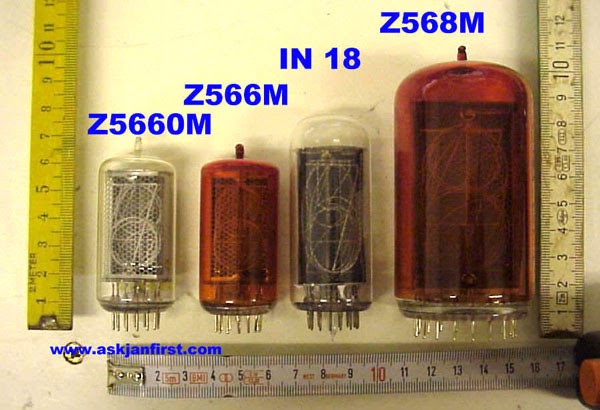
Photo of size comparison of various nixie tubes. The Z568 tube is one of the largest ever made.
Photo Credit: Herr Jan Wüsten
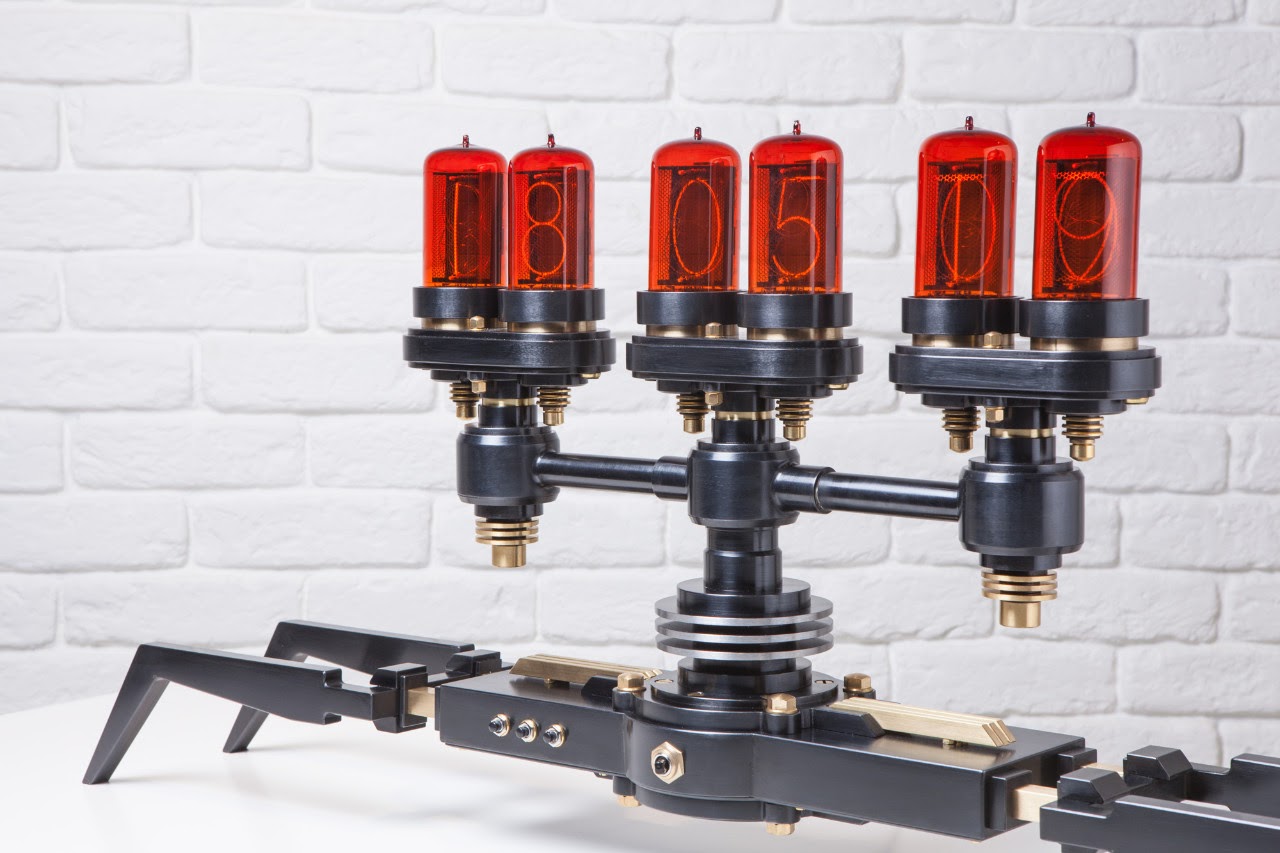
When Buchwald was finally finished with the design, there were at least 350 individual pieces all individually finished in brass and stainless steel. Buchwald’s masterpiece was of an imposingly large size; nearly a meter wide at the base and nearly half a meter tall.


The original Nixie Machine was intended to be created in two colors, a “silvered” finish and a “blackened” finish; but since the prototype was in the blackened finish and all the early orders were for the blackened finish, eventually the option for the silvered finish was cancelled.


The original Nixie Machine was made in blackened acid dipped steel. Buchwald himself dips the pieces in acid multiple times and brushes the metal to achieve the brushed and blackened finish. It’s even said that Buchwald’s fingertips have come into contact with acid so many times that his fingerprints are completely eroded in some areas. I hope he doesn’t have trouble when traveling through customs at airports!


In total, due to the limitation of the bulbs, only a total of twelve Nixie Machines were created in addition to the original one prototype. The Dubai and Taipei galleries each sold one Nixie Machine and the Geneva sold the remaining ten. Today, the twelve original Nixie Machines are believed to be spread among collectors through the United States, Europe, Middle East, and Asia. The collectors waited on average for about a year to have their individual Nixie Machines to be created and delivered. At least a few of them are known to be readers of PuristSPro.
For more information about the original Nixie Machine, please visit:
https://www.madgallery.net/geneva/en/creators/nixie-machine

THE SEQUEL: NIXIE MACHINE 2 – RETURN OF THE SPACE INVADERS
Sometimes a great machine deserves a sequel. The Nixie Machine 2 is the second and latest Nixie clock to come out of the Berlin based Atelier of Frank Buchwald.
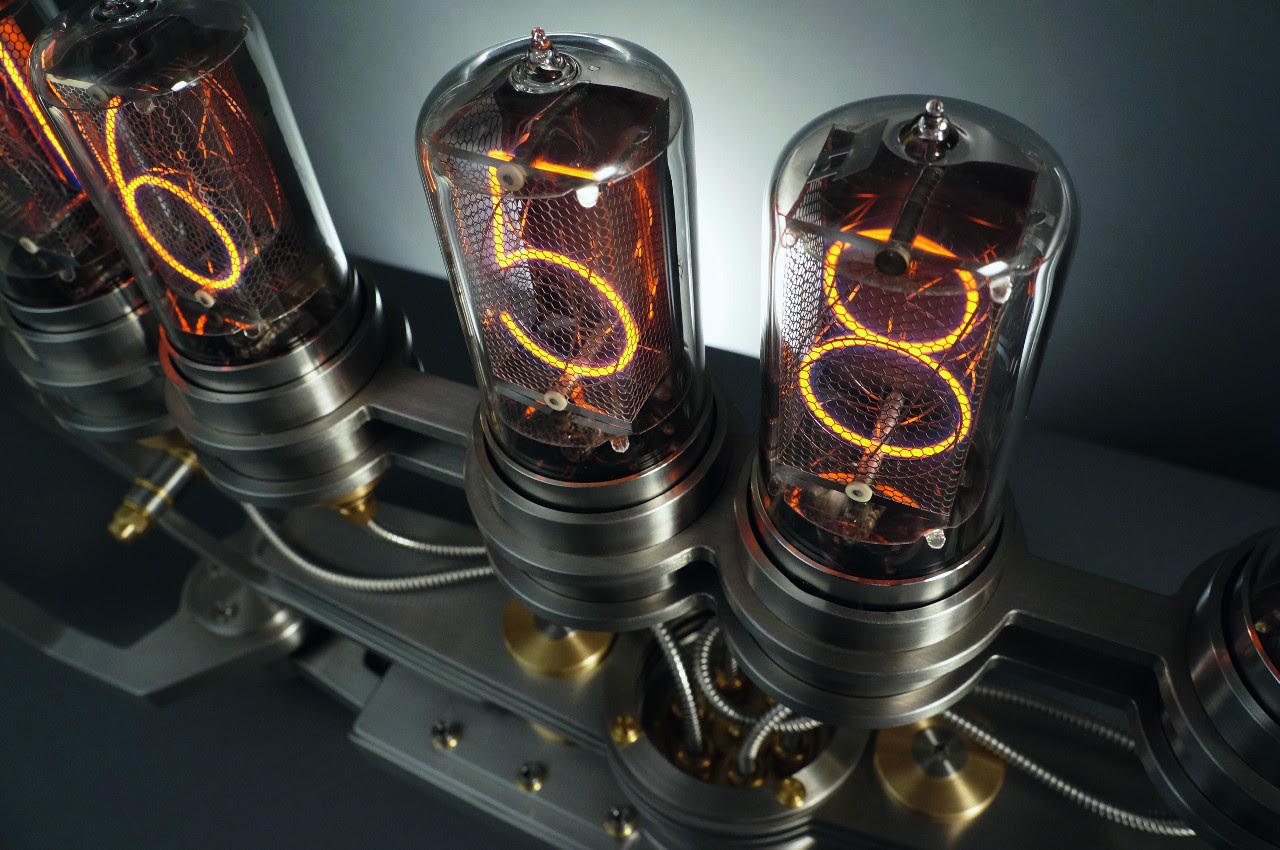
Finished in the “silvered” stainless steel finish that was proposed as an
option on the first machine, the new Nixie Machine 2 is wider than the
original. Also, the new Nixie Machine 2
features nixie tubes made by the Czech Nixie creator Dalibor Farney. Notice the magnificent size and scale for Dalibor Farney's Resurrected Z568M tubes!
The ultra-passionate Dalibor Farney fell in love with nixie clocks several years ago, in particular with those utilizing the RFT Z568 tubes. Knowing how rare these tubes were, he decided to make his own version of the Z568 tubes that he calls his “resurrected Z568 tube” which he designed and created by hand in his own self-built workshop! The “resurrected” tube is very similar to the original, but is slightly different in design, internal structure, and the metal electrical contacts are fewer in number and are mounted on a metal chassis – the original have the metal pins coming out of the glass tube directly. Farney’s tubes also do not have the red film found on the original tubes.
See how Dalibor Farney creates a modern Nixie Tube:
The video shows the difficult and individualized process to assemble every single blown glass tube by hand in a workshop where Farney also tests the tubes. To date, Farney has created and tested at least 5000 tubes!
Nixie tubes are basically vacuum tubes with cathodes shaped in the numerals from 0-9 placed in a tube filled with low pressure neon gas. When an electrical charge is applied to the numerals, the wire and the gas around it glows in the shape of the number. Each number is on its own circuit, so there are multiple pins exiting the bottom of the tube.


Both Nixie Machines operate similarly and features six large
tubes arranged in three pairs; each pair denotes the hours, minutes, and
seconds. The tubes also can display the
date, month, year; normally for about five seconds each minute. And every 5-10 minutes the tubes will also
perform a slot-machine-like random scrolling effect.
The random scrolling effect is necessary due to a unique property of nixie tubes. The unused digits in the nixie tube suffer from cathode poisoning, the deposits from the use of activated tungsten wires settle onto the inactivate tungsten wire numerals. For instance, the first number usually only goes through the numerals 0, 1, and 2 for the hours. The numerals 3 to 9 are almost unused. If these numerals were to continue to be completely unused, they would likely suffer from cathode poisoning, thus shortening the lifespan of the entire nixie tube. In order to avoid this, all the digits have to be activated every 5 to 10 minutes to reduce the accumulation of the deposits on the inactive numerals and lengthen the healthy lifespan of the bulb. The frequency and duration of the random scrolling effect can be set by the user.
IN CONCLUSION
Horological art comes in multiple forms, not always in the traditional clock nor watch mediums. This steampunk-ish Nixie Machine that combines Cold-War era Nixie tubes (you can imagine these nixie tubes in the missile countdown timers in some Eastern European silo or bunker) encased in the beautifully industrial metal frame by Frank Buchwald is definitely stunning in both versions. It's amazing that the likes of Alberto Schileo, Frank Buchwald, Dalibor Farney, and the team at MB&F have kept the Nixie tube alive and reintroduced it to a new segment of the public. Regardless of whichever Nixie Machine is your favorite, feel free to post your comments and questions about either Nixie Machine here! If you have questions of a technical nature, I'll try to answer them or find someone who can.


... Nixies, one at home and one at work. Totally short of these pieces of art but still.... Cheers, HSTE
I didn't know what they were until I saw the original Nixie Machine back in January 2015! Thank you Max Busser for that introduction and insisting that I visit your store! But they're certainly addictive and I've been learning more about them over the past two years. You've got it bad HSTE, you have two pieces! One at the home and another at the office! You must really suffer from Nixie withdrawal!
.... two very simple single-tube nixie clocks (see pic below). A Buchwald would be a grail! Cheers, HSTE
I like this clock! The Nixie tube supplier for "blub" is currently also Dalibor Farney, the same gentleman who makes the tubes for the Nixie Machine II. Awesome clock. I just googled blub and I think that's a fantastic concept. I might just have to treat myself to one!
I have one in the bedroom for many years now - perfect lume for night time It is much sharper than it looks in this crappy picture.
That's a cool clock! Do you have the scroll setting activated on yours? How long have you had that? That looks great!
This thread is active on the Horological Meandering forum with 34 replies. Share your knowledge with fellow collectors.
Join the Discussion →


