6 replies4279 views45 photos
Cazalea's insightful post offers a rare, behind-the-scenes look into Grand Seiko's manufacturing facilities, shedding light on the meticulous craftsmanship behind their renowned dials, hands, and markers. This article is particularly valuable for understanding the 'cosmetic' finishing techniques that contribute to Grand Seiko's distinctive aesthetic and high reflectivity, a topic often discussed among collectors. Cazalea's unique access and personal watch examples provide a tangible connection to the intricate processes that define Grand Seiko's commitment to quality.
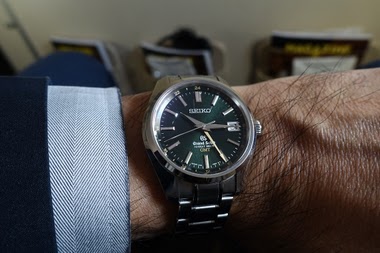
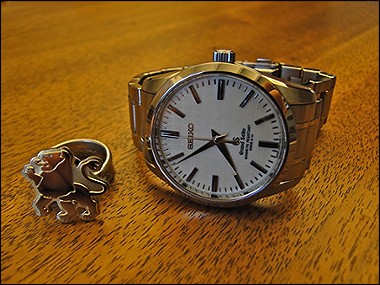
Lately we have had some questions on this forum about Grand Seiko finishing techniques and the kind of process used to finish the "cosmetic" part of the watch - under the crystal. Notice the remarkable reflectivity of this dial and inner case:
This report is comprised of some images of watches I own, interspersed with photos taken on my visits to Grand Seiko workshops a few years ago. As many readers might know, there are two locations where Grand Seiko watches are built. One, in the north-central part of Japan, in a mountainous, tree-covered area, produces the mechanical models. The other, in the western part of the country near the ski resorts and vineyards, produces quartz, Spring Drive and Eichi & Credor hand-built models as well as Astron. Let's start there:
SPRING DRIVE, QUARTZ, CREDOR models
Preparations for constructing the dial. This photo is of an exhibit at the beginning of the factory area. You can see a selection of dials, markers, numerals, hands, etc.
 SIDEBAR: A CLOSE LOOK AT SOME WATCHES
Here are a couple of the watches whose dials are shown above. I happened to have to occasion to open the black one for service, so you can see details of the dial without the crystal in place. I think this watch had been opened a number of times, for battery changes and perhaps other things.

This was quite an old GS and "used-hard-and-put-away-wet", which is why the owner brought it to me.

Same watch - different angle - with crystal on. Both of those dials look smooth when viewed at an angle, but from other vantage points appear to be very textured.

The white dial automatic is much cleaner inside.
 FACTORY REPORT
Now back to our tour. The index markers are being cut on a lathe - the gold "wheel" you see spinning is a disc of raw brass being cut into the index shapes (the straight ones, not the tapered ones)

I think he gets a bit in his hair

After this step they are cut, polished, plated and inserted into the dials.
Now some steps in making the second hands - setting the central part - the tube that will grip the arbor rising up through the dial. It gets inserted into the hand itself and pressed into place.

This operation is performed on the smallest hands, such as power reserve, chrono and second hands

Bang Bang Maxwell's silver hammer comes down upon the machine! They have found that a human touch is more reliable than the machine for setting this part into the hand.

An assortment. You can see the hour and minute hands, which grip a larger area, do not need that central tube. The swoopy hands go into Galante watches (shown later in this story).

Blueing the hands

 MECHANICAL MODELS
The dials are made at Grand Seiko factories, and are printed there using what the French call a "tampon". The large rubber tip removes ink from the pad behind it, and applies it to the dial.


Then all the markers and numerals are added. Plus the logos.

As you can imagine, cleanliness is essential (we were in a clean room with hair nets, shop coats and booties).
A quality control check assures things are done properly and no dust remains on the dials.

Here is an image of the test hands being installed for time-checking quality control tests. Notice the special dials on the movements:

Photo of the video monitors (no I have not been drinking)

The hands on the left row (below) are the GMT indicators which go on first (after the test hands and dials have been removed).

Hand setting by hand
Here are a few more views of the dials and hands on watches I've owned.
GS Manual Wind. Many GS watches have curved hands - you can see the curvature here.

Hi-accuracy quartz GS

Credor Moonphase with round markers on 5 minutes; long markers on 15, painted markers on all the rest, power reserve indication, Credor logo, curved blued hands, multi-level dial, etc.

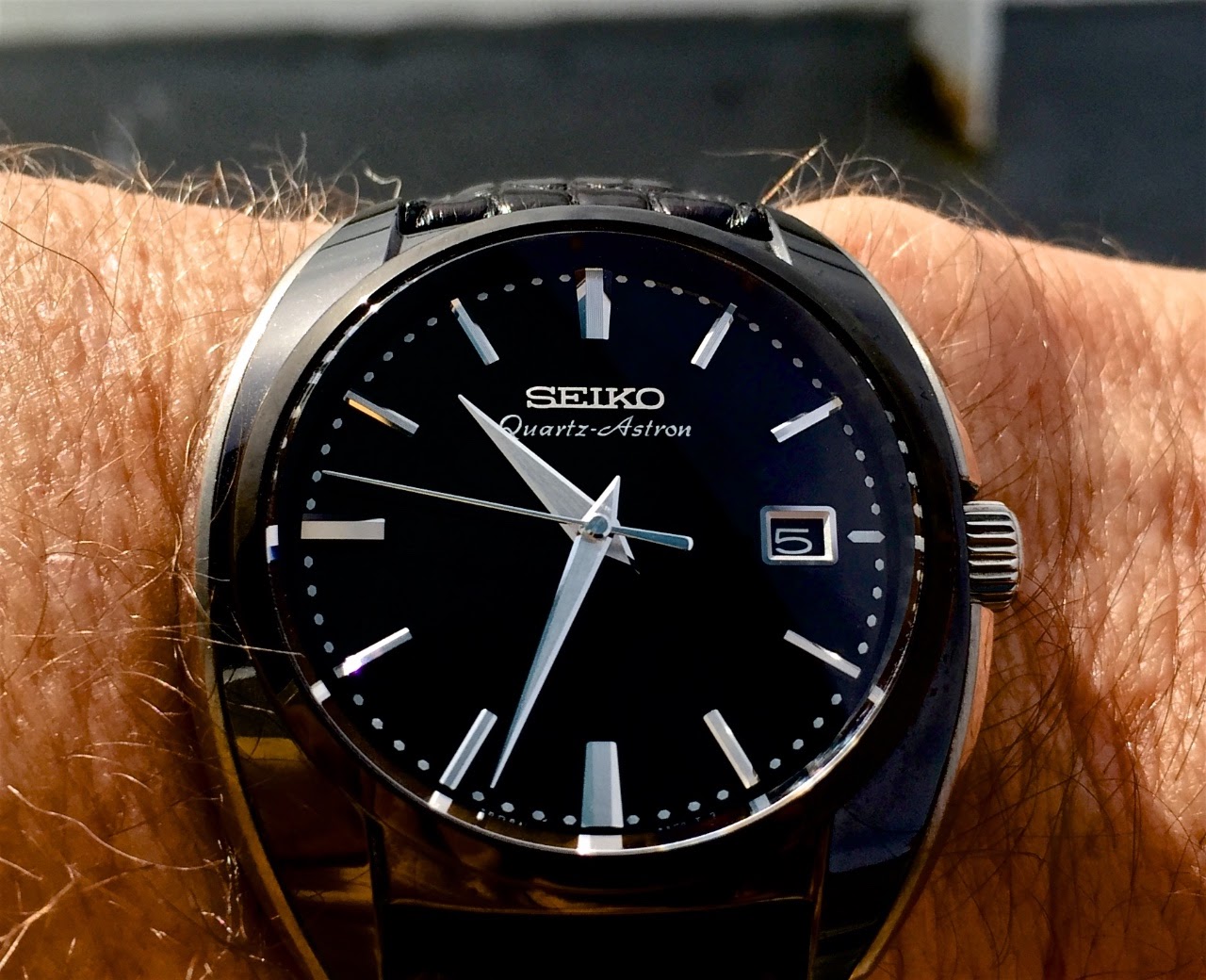
Astron with a heavily-textured dial which is completely hidden in this view. But you can see the contrast of the shiny markers against the jet black dial. The bezel is a black ceramic material.
Finally a Galante, as promised.

I hope this is interesting to current and prospective Grand Seiko buyers.
Cheers,
Cazalea