Review
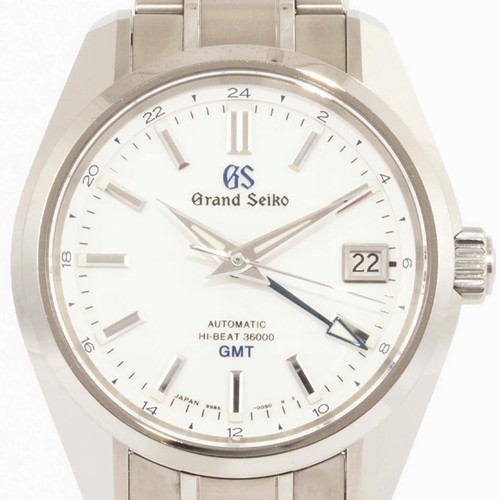
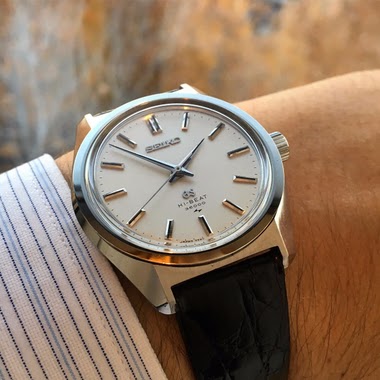
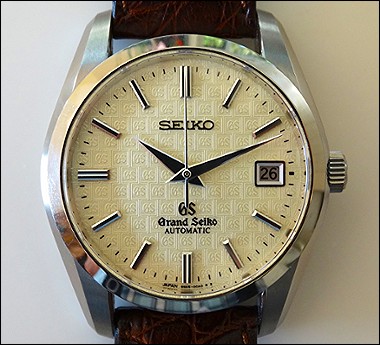
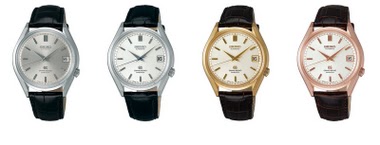
Hieraklion provides an in-depth review of the Grand Seiko Historical Collection Tribute to 62GS, reference SBGR095. This initial installment focuses on the historical context of Grand Seiko's accuracy labeling and its evolution compared to traditional chronometer standards.


GRAND SEIKO HISTORICAL COLLECTION – Tribute to 62GS, SBGR095 - Part 1 : Historic models

SBGR095
1. “Chronometer ” vs. Grand Seiko accuracy
label at the end of 60’s
1.1. “ Chronometer ” usage
Seiko marked some pre-1960 (1920–1950’s) watches dials (Cal. 10 models for example) with “Chronometer“. The “Chronometer” label was either standing for a “Marine Chronometer” or just for a higher quality watch. No testing program was actually associated with this label.
It is only in the early 1960’ss than Seiko decided to use the “Chronometer” label for specific precision models, including Grand Seiko watches.
This label was not relative to the “Chronometer” Swiss label of “Bureaux officiels de contrôle de la marche des montres - B.O.’s”, pre-COSC organization; However it was an official “Chronometer” certificate label developed internally in the Suwa Seikosha factory. Yet this Seiko standard was following the BO’s Average Daily accuracy Rate (-3s; +12s/day).
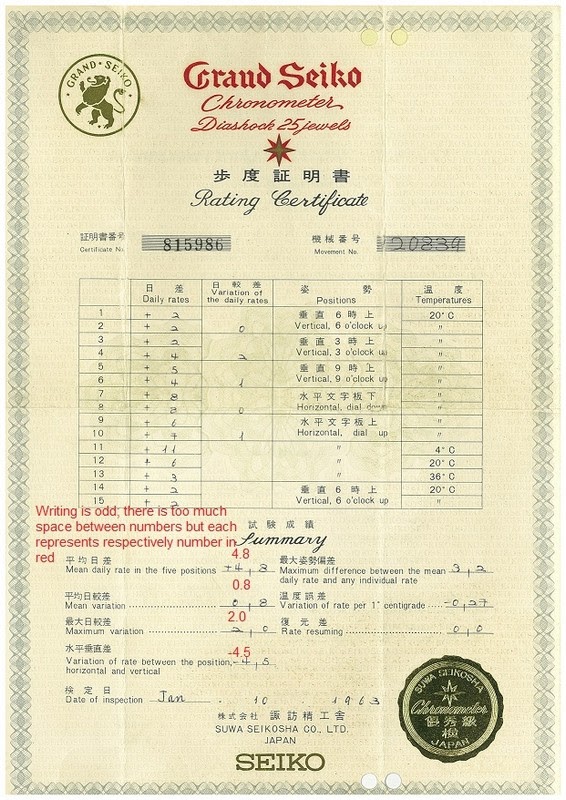
Grand Seiko “Chronometer” Certificate, 1963 (front view) – Copyright Seiko Corp.

Grand Seiko “Chronometer” Certificate, 1963 (back view) – Copyright Seiko Corp.
During this period, the ”Chronometer” watches had a gold case back
medallion covered with an engraved Lion.
It is important to understand that in this period, the Lion medallion was not the emblem of the “Grand Seiko” models but was a symbol for the superlative accuracy of the internal Seiko “Chronometer” label.

Liner “Chronometer” – Copyright Seiko Corp.
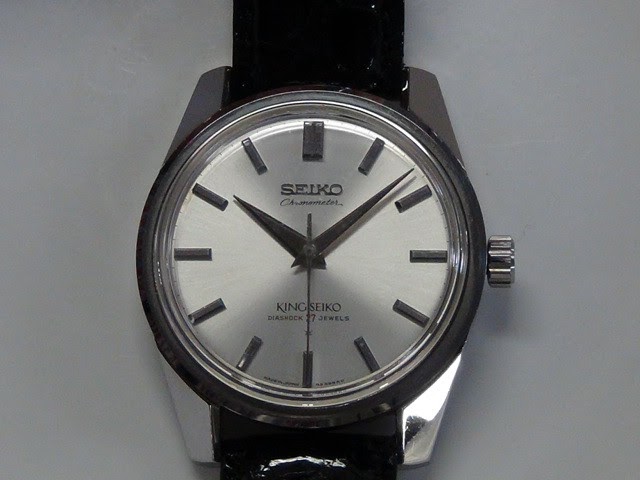
King Seiko “Chronometer” – Copyright Seiko Corp.
1.2 Grand Seiko Label
As the brand wished to be independent, Seiko decided in parallel to develop an internal standard: “Grand Seiko”.

In the middle of 1966, the CICC (“Commission Internationale des Contrôles Chronométriques”) claimed that the “Chronometer” label was only allowed to watches which had successfully passed the examination at Basel Observatory or independent CICC Certification facilities [1].
At this moment, Seiko had to stop displaying the name “Chronometer” on the dials, except for the watches that successfully passed the Swiss certification (“Astronomical Observatory “Chronometer”” in 1969 for example). To avoid any confusion, Seiko used to display the “Officially Certified” words on the dials for such models.

1970 Seiko Catalog fragment
Nota :
[1] CICC recognized the JCA (Japan “Chronometer” Association, created in 1969) to deliver Chronometer” certification in January, 1970.
2. 6245/6246 Seikomatic “Chronometer”, 62GS precursors
6245/6246 Seikomatic “Chronometer” belong like 57GS models and 44KS/44GS to this transition period from “Chronometer” to “GS” label.
These 6245/6246 Seikomatic “Chronometer” calibers specifications are:
Seikomatic models featured “Chronometer” label on the dial and engraved on the movement rotor.
From a design perspective, these models were quite distinctive. The case was made of a lot of Mirrored facets. The crown was at 4 o'clock.
In my opinion, the most interesting point was the lack of bezel, allowing a great visibility of the impressive silver dial and polished hands.
As usual for “Chronometer” models during this period, these watches featured a 14kt gold lion medallion at the back.

Seiko Internal News, March 1966 – Copyright Seiko Corp.
3. And the 6245/6246 Seikomatic “Chronometer”s became the 62GS
3.1 A period of mutations
62GS were mostly Seikomatic “Chronometer”s. Because of the “Chronometer” naming legal issue in mid-1966, Seiko decided to totally change the name of these models. Another consequence was of course their accuracy: 62GS models were not labeled “Chronometer” anymore, because their new standard was the more accurate “GS” label.
All 62GS watches followed the (-3s; +5s) mean Daily accuracy Rate, even if the movement had been produced in 1966.
62GS was eventually marketed as the first self-winding movement in the GS collection.
3.2 Design
From a design perspective, Seiko kept the same bezel-free case and the crown position at 4 o’clock. But in contrast to other GS models from this period, the crown face was plain, with neither “GS” nor “Seiko” sign.

Original 62GS (6245-9000TAD dial) - Copyright Seiko Corp.
The first models of the 62GS featured a 14Kt gold lion medallion like the Seikomatic. This medallion was eventually replaced with a gold “GS” medallion. “Chronometer” was not engraved anymore on the movement rotor.
From a dial perspective, the 62GS - 6245 models kept the same specs as the Seikomatic models. The reference of this dial is 6245-9000TAD. Markers are large, and the beveled part of the hands is very narrow. This design is used too on the Seikomatic 6246 models under the reference 6246-9000TAD.
In May 1967, the dial of 62GS - 6246 models changed. The new reference is 6246-9010TAD and is closed to the design we used to see on 57GS or 44GS. The index became rectangular and multi-faceted. The hour and minutes hands shape had completely changed.
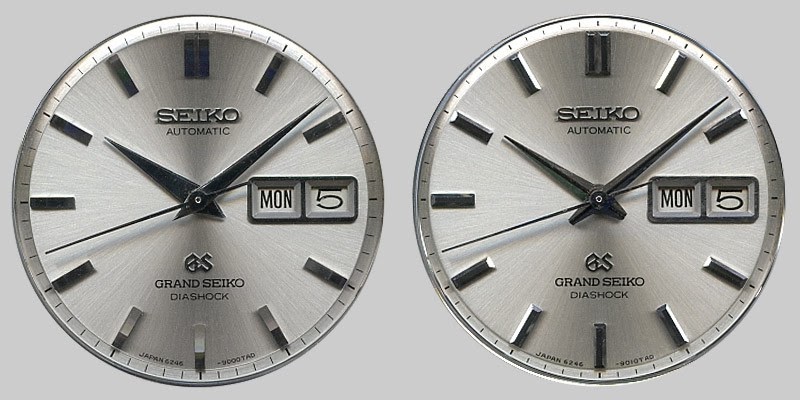
6245-9000TAD dial and 6245-9010TAD dial - Copyright Seikomatic-Archive
4. Contradictory sources
I read two main contradictory sources about the 9000/9001 references and production months of the 6245/6246 models. This was a real transition period for Seiko and the migration to the 6245/6246 Seikomatic models to the 62GS models is not very well-known or documented.
One source explained that the 9000 references where related to the Seikomatik models with “Chronometer” on the dial end engraved on the movement rotor. The 9001 references were associated with 6245 and 6246 movements dedicated to the 62GS.
Another source refers to 9000 and 9001 references with 62GS models with the following production dates:
Seikomatic models:
62GS models:
Anyway, few points are confirmed:
To be continued.
Next chapter : Tribute to 62GS - SBGR095 - Part 2 : Tribute to the 62GS, SBGR095
Hieraklion
10/31/2016
The 1966 Ford Mustang represents a significant year for the model, building on the initial success of its introduction. This reference is part of the first generation, which established the Mustang as a distinct category of American automobile. It continued to offer a range of body styles and engine options, allowing for considerable personalization and appealing to a broad market segment. The 1966 model year saw refinements rather than radical changes, solidifying its design language and market position.
The vehicle's construction typically featured a steel unibody chassis. Various engine configurations were available, including inline-six and V8 options, paired with manual or automatic transmissions. Specific dimensions varied slightly depending on the body style, such as coupe, convertible, or fastback. The interior offered a functional layout, with instrumentation focused on driver information.
This reference holds interest for collectors due to its place in the early history of the Mustang and its enduring popularity. The availability of different engine and trim levels means that specific examples can vary widely in their features and performance. It remains a recognizable and sought-after classic, often celebrated at automotive events worldwide.
I have limited knowledge as I am just getting into the vintage Seiko divers using the i.e. 62Mas from the mid 1960's.
Thank you so much for compiling this, Hieraklion! Looking forward to Part 2 Definitely a watch I would like to add to my collection one day...
Yw. Part 2 published : www.watchprosite.com /
This thread is active on the Seiko forum with 3 replies. Share your knowledge with fellow collectors.
Join the Discussion →