Marc Obermann's deep dive into the world of ultra-thin watches offers a compelling exploration of a horological niche often misunderstood. His personal journey, sparked by the acquisition of a Boucheron La Carree Ultra Plate, illuminates the complexities and historical significance of these elegant timepieces. Obermann challenges the community to define 'ultra-thin' beyond marketing fluff, emphasizing the exceptional skill required to craft watches under 5mm thick.
Hi all so firstly my apologies for the long delay after my post on Ultra Thin movements but increasing pain levels seriously hampered my ability to put this post together. First of all I need to make it clear I am not an expert on Ultra Thin watches and am just a passionate enthusiast but that after my acquisition of my Boucheron La Carree Ultra Plate watch I fell deep down the rabbit hole of Ultra Thin movements and watches and this post is just about all the information I have discovered and felt was worth sharing. I hope many of you find it interesting but these are just my opinions if you disagree please feel free to comment but I would appreciate the reasons why you disagree so we may have an open discussion and possibly reach an agreement and all learn from sharing our views.
So really as a starting point we need to try and establish just what is an Ultra Thin watch, now unfortunately there is no clear definition of just what makes an watch Ultra Thin, there is no ISO standard as for dive watches or something akin to the COSC standards for movements. The only way I can see to reach a logical consensus is to look back at the earliest and later examples of Ultra Thin watches and from that we can conclude from the majority just what defines a watch as Ultra Thin. Obviously it goes without saying without Ultra Thin movements there could be no Ultra Thin watches but it is important to realise that making an Ultra Thin watch is not a simple task of just reducing its thickness the complexities in doing should not be underestimated. There is good reason why you will find Ultra Thin watches are made alongside Grand complication watches in the workshops with the most skilled and experienced watchmakers and why they are more expensive to service.
At the time Ultra Thin watches first started to appear the dress watch was king and although there were dive watches the birth and rise of the sports watch had not yet arrived and changed the landscape. These watches were made to be elegant stylish and refined they were simple two handed watches and adhered to the less is more ethos and IMO were stunning. We really shouldn't need to have a firm dimension specification for Ultra Thin watches as really just looking at an watch will tell you if it is Ultra Thin or not it is impossible to see a Ultra Thin watch and not realise that is what it is.
The vast majority of the early Ultra thin watches were between 30mm and 33mm for round watches and 23mm to 26mm for shaped watches but they all had one thing in common they were all under 5mm thin some were even thinner than this but these were the outliers and exceptional examples of Ultra Thin watch making at its limits. It is also worth noting that at this time there were no exotic super strong, super light materials, no computer aided design and no advanced machinery that could be used to aid in the manufacture of these watches, these watches relied on the highly skilled artisans in the workshops to make them.
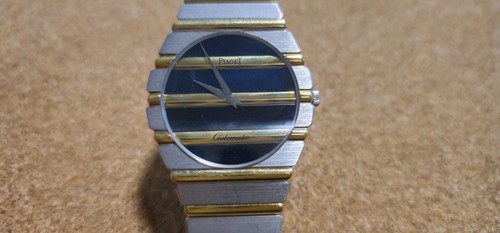
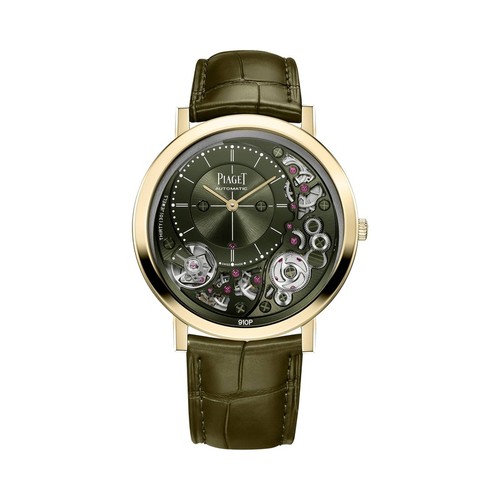
Most of the Grand maisons we think of and still love today all made Ultra Thin watches some with fully in house movements, cases and dials others bought in a lot of these components and assembled them in house all were beautiful in their own right. One Maison above all others deserves a special mention and that is Piaget who whilst still under family ownership made everything themselves in house. Piaget for a long time were known as and considered the King of Ultra Thin watches and for good reason. Not only did they do it all themselves but they offered their clients the ability to truly customise and make their watch their own and special to them. From a base model their clients could choose the finish of the case the dial colour and or material the style of the hands and even the numerals or none this is something we even rarely see today bar from a few independants and deserves our admiration IMHO.
So it is my conclusion that Ultra Thin watches are indeed special and that by looking at the majority of watches and from reading what others have posted to be considered as an Ultra Thin watch it needs to be sub 5 mm with of course a small amount of deviation allowed. I have seen the argument proposed that watches that house complications are of course going to be thicker and that even at 8,9 or 10mm they can still be considered to be Ultra Thin. I wholly reject this proposal as whilst these watches may still be magnificent and technically brilliant they are quite simply not Ultra Thin and never will be.
Below I am posting some examples of beautiful Ultra Thin watches for your pleasure.

Audemars Piguet Ultra Thin ref. 5043BC 5mm


Credit quattro and Avocado Vintage Watches

Piaget 9294 4mm

Piaget 9294 4mm side view
Credit unnamed seller @Chrono24

Vacheron Constantin 33155 Historiques Ultra-Fine 1955 4.1mm

Credit European Watch Company

Cartier Tank Louis Extra Plate CPCP, reference 1600B

Credit Watches of Knightsbridge Curated

Cartier 1577B Santos Dumont Paris 4.3mm

Credit European Watch Company

Piaget Ultra-Thin Altiplano
3.4mm
Credit Plus Ultra

Patek Philippe 2591 Calatrava ”Disco Volante" 4mm

Credit European Watch Company

Breguet Classique Ultra Thin Automatic 3390

Credit Watches of Knightsbridge
Last but not least are my two examples of Ultra Thin watches

Breguet Classique Ultra Thin 4.3mm


Boucheron La Carree Ultra Plate 3.3mm


This is actually just Part 1 of my planned posts Part 2 will discuss what are not Ultra Thin watches but still labelled as such by the manufacturer and why this is wrong.
Marc