28 replies10803 views0 photos
Fred Bonatto's comprehensive review of the IWC Ingenieur 3227-01 remains a valuable resource for collectors interested in this robust timepiece. His detailed observations on its design evolution and wearability offer a personal perspective that complements technical specifications. This article highlights why the 3227-01, with its distinctive Gerald Genta-inspired lineage and IWC's Calibre 80110, continues to captivate enthusiasts.
The 3227-01 Ingenieur Reviewby Fred Bonatto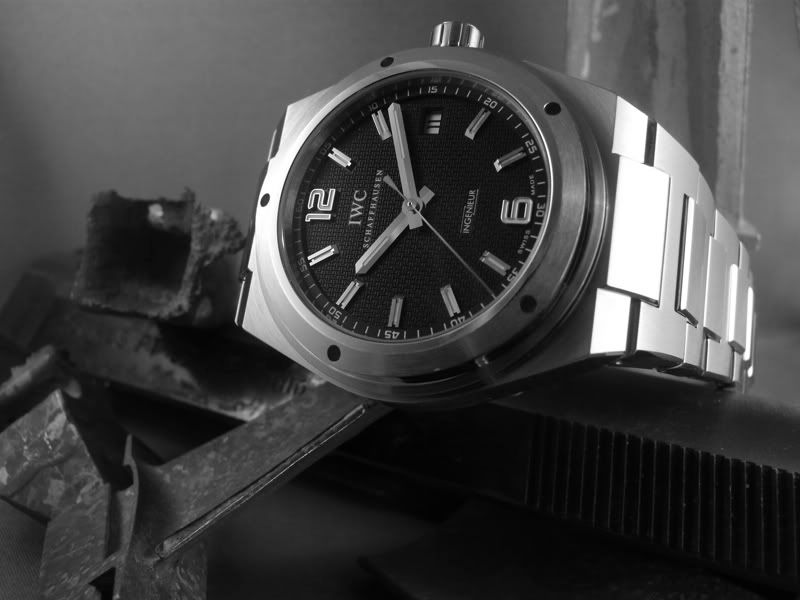
I really had great pleasure in photographing and writing about one my favorite watches. Those who have the pleasure of owning one know exactly what I’m talking about. I’ve owned this watch for a sometime now and feel confident writing a review that I hope is both insightful and pleasant to read. It’s in my weekly rotation and I think it needs no formal introduction, but since some may not know it’s full history or influences, I would feel the review to be incomplete, and it would be inadequate not to include at least a short summary. I had a short “in-love” period with this watch that unfortunately was ended because I traded it down with plenty of cash back, a good trade at the time but one I came to regret almost instantly. About one week after the trade, I was able to locate one at a reasonable price and once again pulled the trigger!

Ingenieur history goes back a few decades, but the original model that the current Automatic Ingenieur takes its inspiration from is the 1976 Jumbo SL designed by the illustrious Gerald Genta. Plenty of more details and technical specifications can be easily found by a simple Google search should it be desired.
What happened to the classic design was quite radical. It has been described as the Ingenieur on steroids. It really is a tremendous evolution. From a small AP Royal Oak like understated timepiece, to the current stainless steel sculpture/brick/slab/or whatever you wish to call it. If you haven’t picked one up yet, you may sense what I describe when I say that I would feel confident taking it off my wrist and using it as a bludgeoning weapon should I ever come across the need to. Not only that but I’m sure the shock protected movement (more on this later) would handle the forces properly! All in good fun.
Stock photo
The current automatic line (AMG and Regular SS) bears the infamous calibre 80110, subject of much controversy regarding its true “In-House-ness”. I reserve my opinion on this.
Stock photo
Overview/First Impressions:
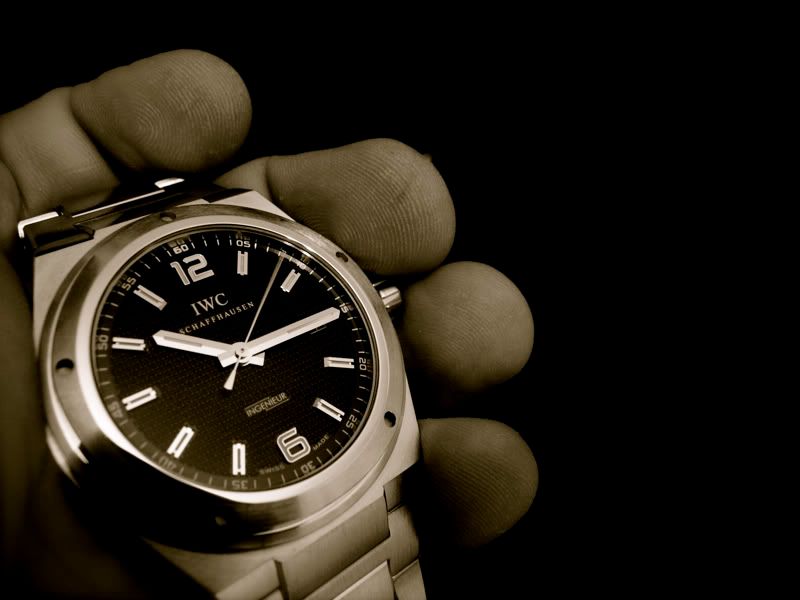
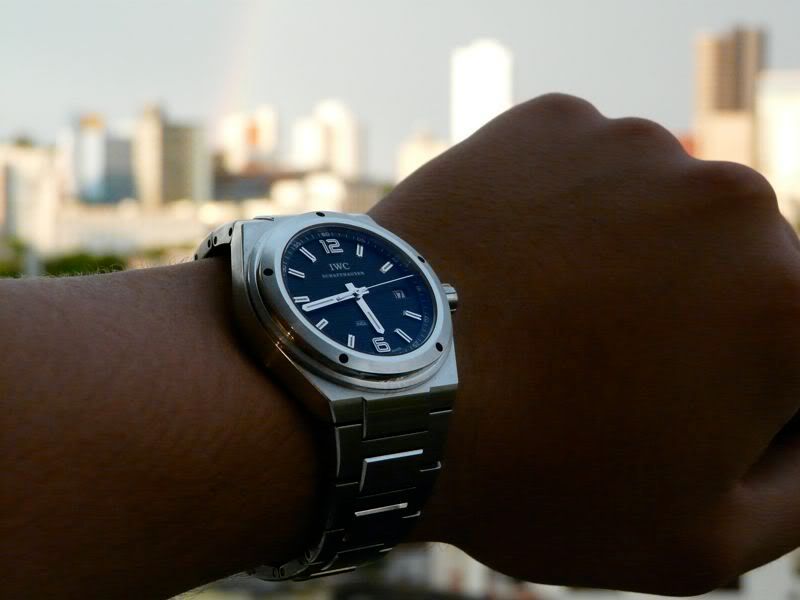
It really is quite an impression when you first lift it up and handle it. It feels a bit edgy and aggressive to the touch and quite heavy. Your fingertips may feel a bit uneasy due to the sharp edges at first. Observing it closely and examining its details, it’s clear that it’s quite a well-made timepiece. The attention to detail and depth that is found on the dial and hands is almost breathtaking; you can easily get lost staring at it (at least I did, and still do sometimes). When you slip it on your wrist, its weight is instantly noticed (to some this may even put up a negative picture). As soon as you close the clasp, though, the perception may change drastically as the integrated bracelet does an excellent job distributing the combined weight of the watch evenly around your wrist. After a while, you may come to forget you ever had it on in the first place (unless you are around plenty of door-frames, it’s quite tall and a ding magnet, one of its drawbacks)
Despite its size (42mm) the watch manages to feel a bit smaller, perhaps due to the smaller dial.

Fit/Finish:
As stated in the introduction, the attention to detail IWC put on the design and manufacture of this watch is admirable. The finish of the bracelet and case is quite detailed and complicated. Each link obviously takes some time to properly detail and polish.
The bracelet fits onto the case via a pin system used by IWC on many of its bracelets. You simply depress the mini buttons on the inside of each link (with the supplied brass tool to prevent scratches) and push the pin out from the side. Upon examination of the pins, one can see that each one has a perfectly polished/machined tip. This circular pattern is a nice touch to the already highly detailed bracelet.

Case:
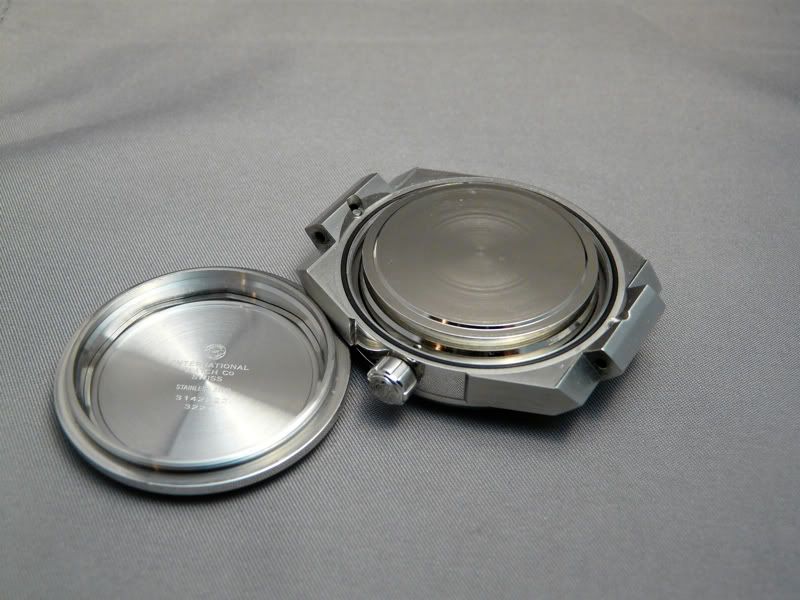
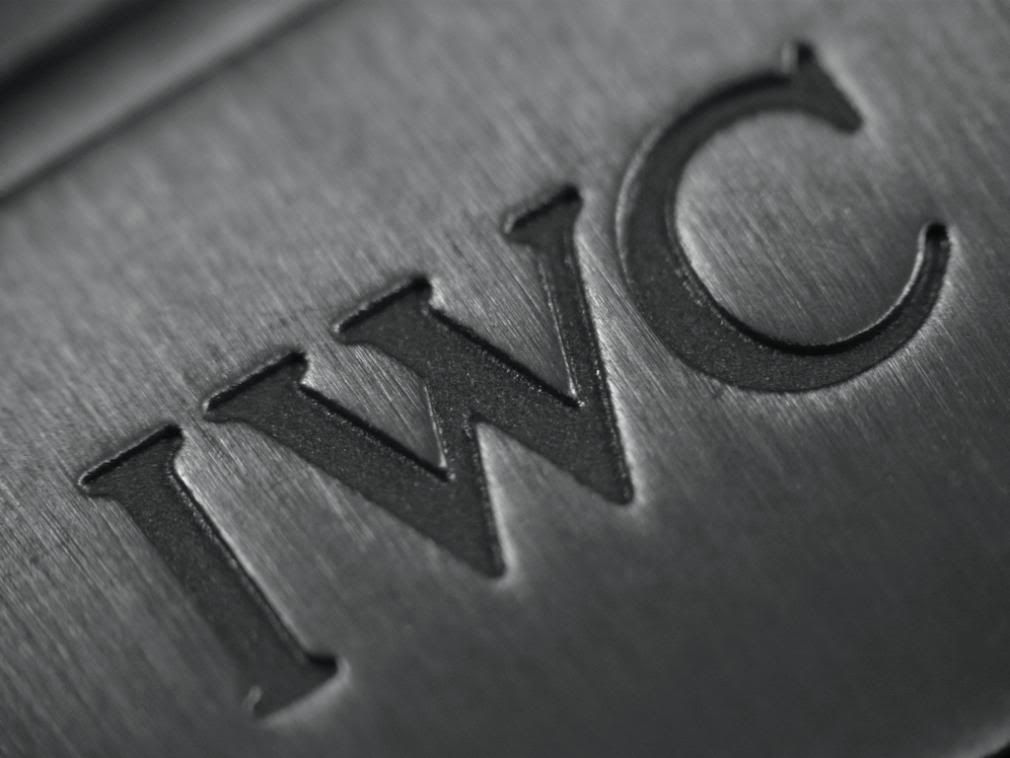
The same applies to the traditional, three-piece case, which appears to have undergone many different polishing/brushing sessions in order achieve its angular feel. There are absolutely no defects in machining or otherwise that I could find on my watch. This, of course, is expected on a watch of such cost. The dial is part of the Faraday that protects the movement from magnetic interference. It's made up of the dial (lid) a thick ring and the soft iron case back. All of these are made, of course, out of soft iron. Protecting the dial is an AR coated, flat sapphire crystal. The case back is also very well executed and engraved
Dial:
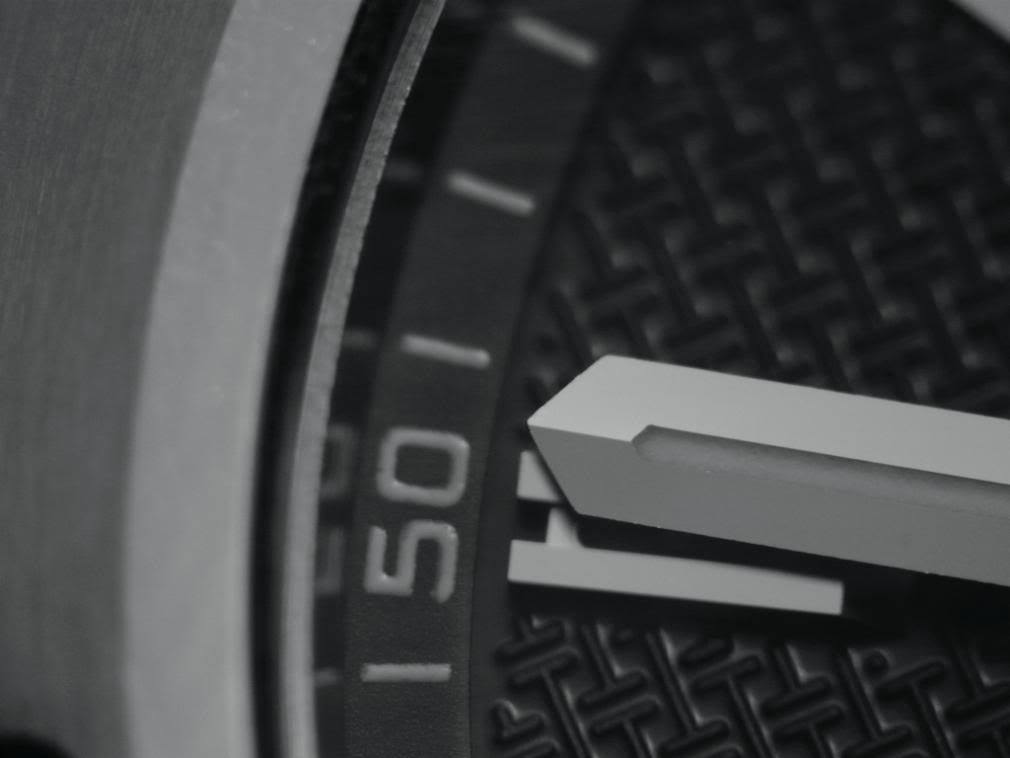
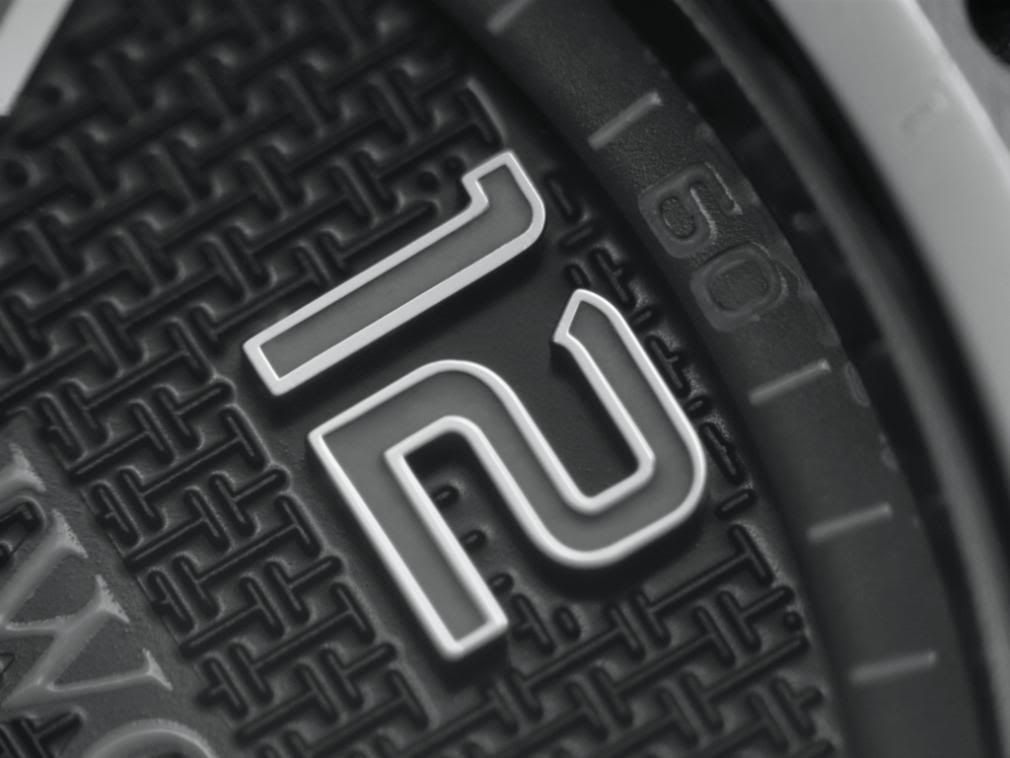
The dial and hands also have a lot of detail, all of which can be better described through pictures than with words.
The luminosity is not fantastic, although the highly reflective markers and indexes reflect just about any light, making it readable in a dark movie theater without using the luminous material as guidance. Though not very strong, the luminous material is well applied without any visible imperfections.
Accuracy/Movement:
I gave up on tracking mechanical watches’ accuracy. It got to a point where it was fun for the first week or so of a new timepiece, but then no more. What I did observe on this particular watch was sub one-second difference per day over the course of 2 weeks. I don’t remember the exact number but basically it gained less than 10 seconds over the course of fourteen days. I did not keep daily track of it either, I simply didn’t take it off my wrist. Showered with it, slept with it, danced with it, enjoyed it! Personally this is more than satisfactory for rate results. The winding is very efficient, thanks to the Pellaton system, a feature also shared with the 5000 movement series. This has been documented extensively in many different forums and web-pages.
Movement features/Finishing:
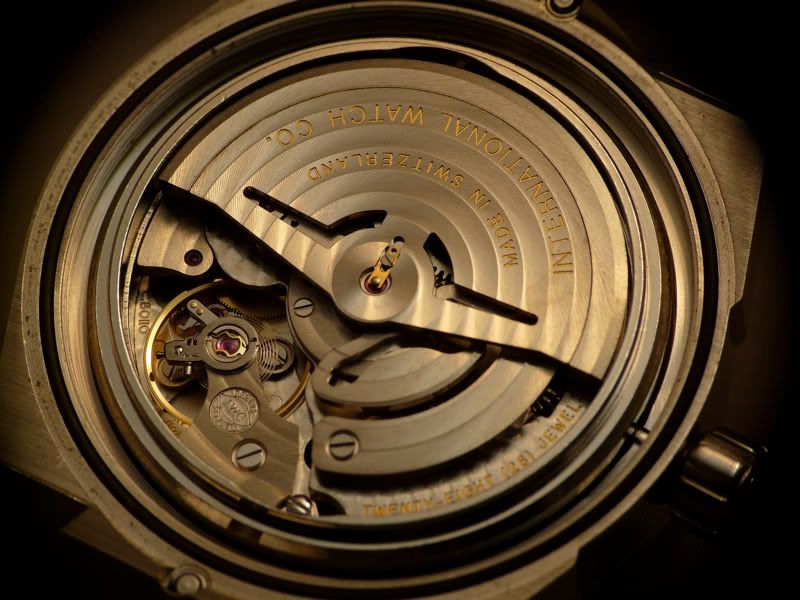
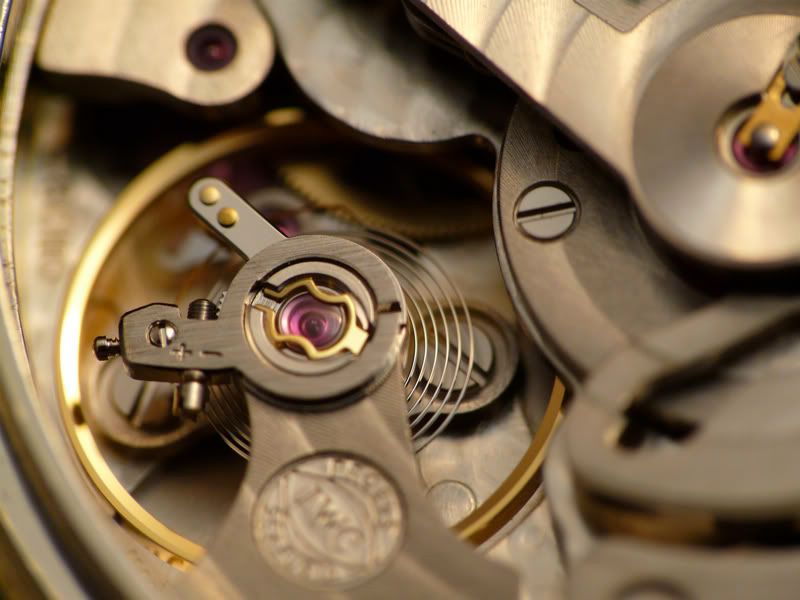
The movement features a shock absorbing system that protects the movement plates and components. It's essentially made up of two things. First, the snake-like spring visible in the picture above. This spring allows the rotor to shift from it's central position, preventing a hard knock from breaking the oscillating mass axle. The second component is a set of synthetic pads made of a nylon-like material called Delrin (DuPont patent). These pads are placed throughout the movement, where a shifting rotor could possibly hit in the event of a sudden shock. These are protections that go beyond the typical incabloc, kif, in terms of damage prevention technology.
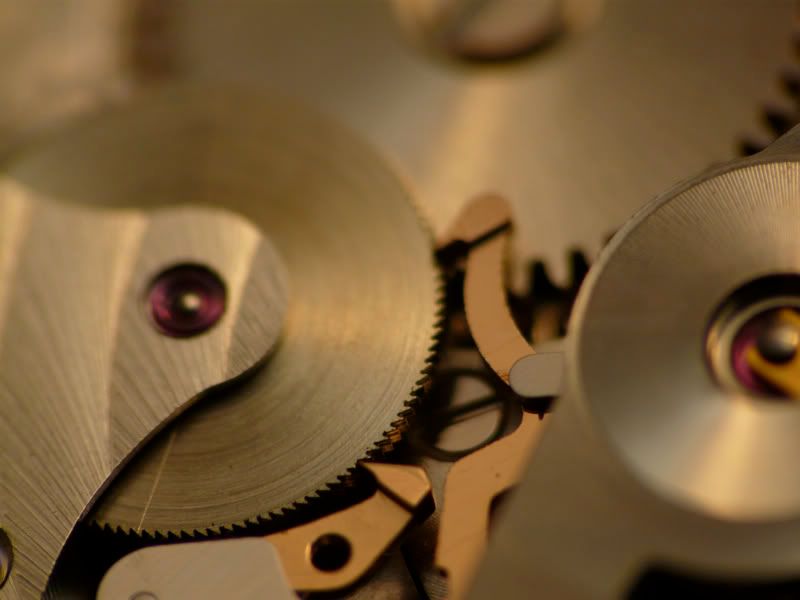
The Pelatton System
Since this is essentially a tool watch, it deserves an industrial-like finishing. It would be somewhat akward to open the case up and find a highly polished, beveled movement with anglage etc. What IWC managed to do is decorate the movement, make it look good, while maintaining the spirit of things. Under very close inspection, you can see some very minor blemishes either in decoration or machining, but none of the very few that I noticed posed a potential mechanical problem.

Summary:
I quite enjoy wearing this watch regularly. It has given me no trouble so far and I’ve noticed something I quite like about it. It seems that IWC has used steel that is somewhat more scratch resistant than the industry standard stainless steel. Overall it's a very solid timepiece that delivers pretty much everything it promises. An in-house movement cased in a fabulous setting with a spectacular bracelet to boot.
Like any timepiece, you should always try it on if you have the opportunity. This watch is certainly different than most and may not be for everyone.
Please be sure to consult with a doctor prior to beginning any weight lifting routine with this watch as training equipment! Otherwise, if you feel compelled to do so, just go out and buy one. It’s worth it.
A final, afternoon wrist shot!
Fred Bonatto
This message has been edited by MTF on 2008-12-01 04:41:03 Key Points from the Discussion
- The Pellaton winding system, central to IWC's in-house movements, was introduced in the Calibre 85 around 1950 and first appeared in the Ingenieur Ref 666A in 1955. This system was a hallmark of the Ingenieur line until the early 1980s and was revived for the Ref 3227, distinguishing it from later ETA-based movements.
- The Pellaton winding system, while more complex than Seiko's Magic Lever, is noted for its elegant engineering, visual appeal, and efficient winding performance.
- The AMG version of the Ingenieur, while visually striking, may not appeal to all collectors due to its specific aesthetic choices, such as the use of red accents.
- The integrated bracelet of the IWC Ingenieur 3227-01 is highly effective at distributing the watch's considerable weight, making it surprisingly comfortable for daily wear despite its initial heavy feel.
- The IWC Ingenieur 3227-01 is considered a compelling alternative to watches like the Rolex Milgauss, particularly for those seeking a robust, anti-magnetic timepiece with a distinctive design.
Advertisement
Advertisement
Continue the conversation
This thread is active on the IWC forum with 28 replies. Share your knowledge with fellow collectors.
Join the Discussion →