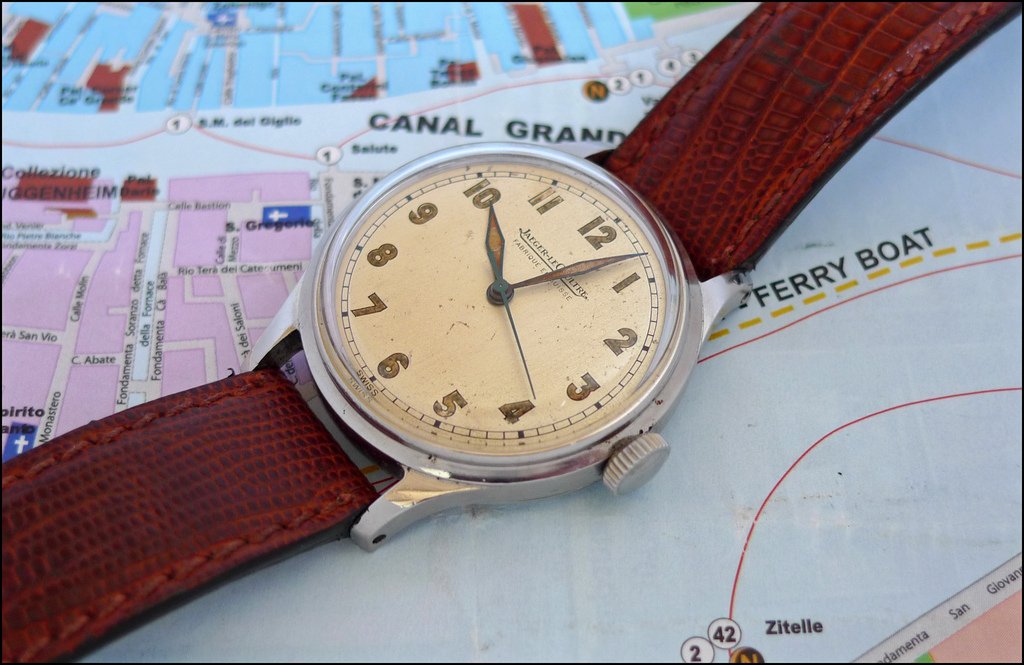
This watch belongs to the category of the timekeepers with an History.
Released in 1945 and produced till 1950, some of the 159 were delivered to the SHOM, which stands for " Service Hydrographique et Océanographique de la Marine ", a Service which belongs to the Ministry Of Defense which completes Civilian and Military tasks, as establishing maps of coasts and Ocean Depths all around the World.
To be clear, several thousand of 159 were made, and this reference was included in the catalogues of this era.
Here, with a black dial:
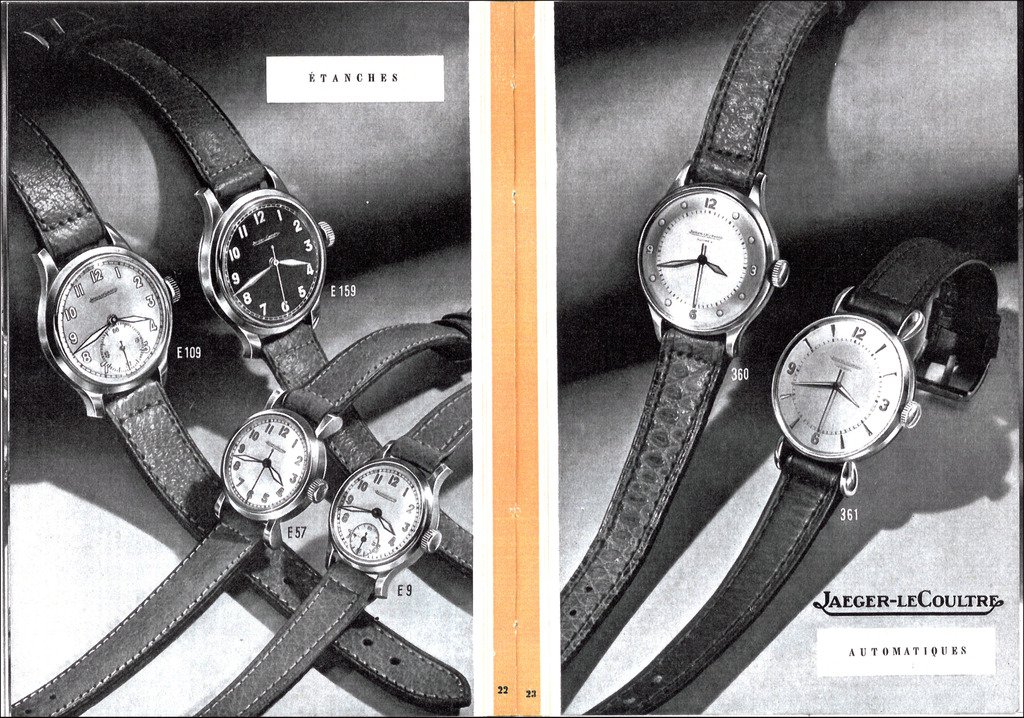
A few of them ( 20, 30, 50, 100 ? ) was delivered to this Service, so, this model was not specially made for the SHOM, at the contrary of the Military Mark 7, XI, or WWW destined to several Armies, but the 159 was chosen by the SHOM, certainly due to the qualities ( accuracy, reliability ) of this model ( but not modified for / by the SHOM ).
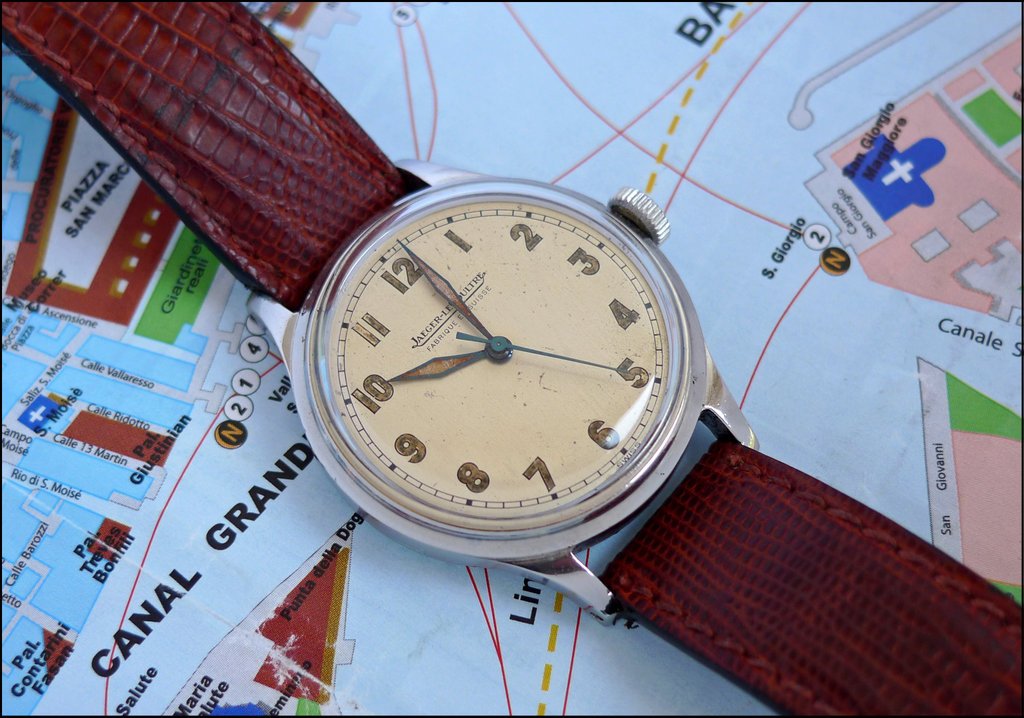
Its look is very discrete, as the watch is around 34 mm " big ", and there is nothing special to say about the dial, which, with time passing, turned to a creamy almost champagne color.
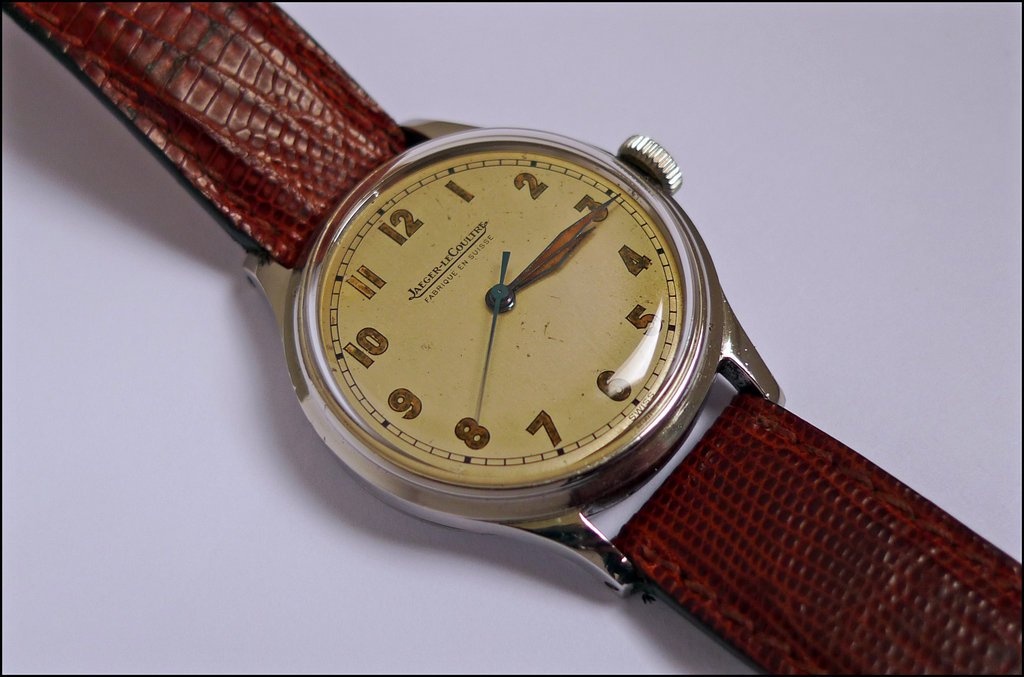
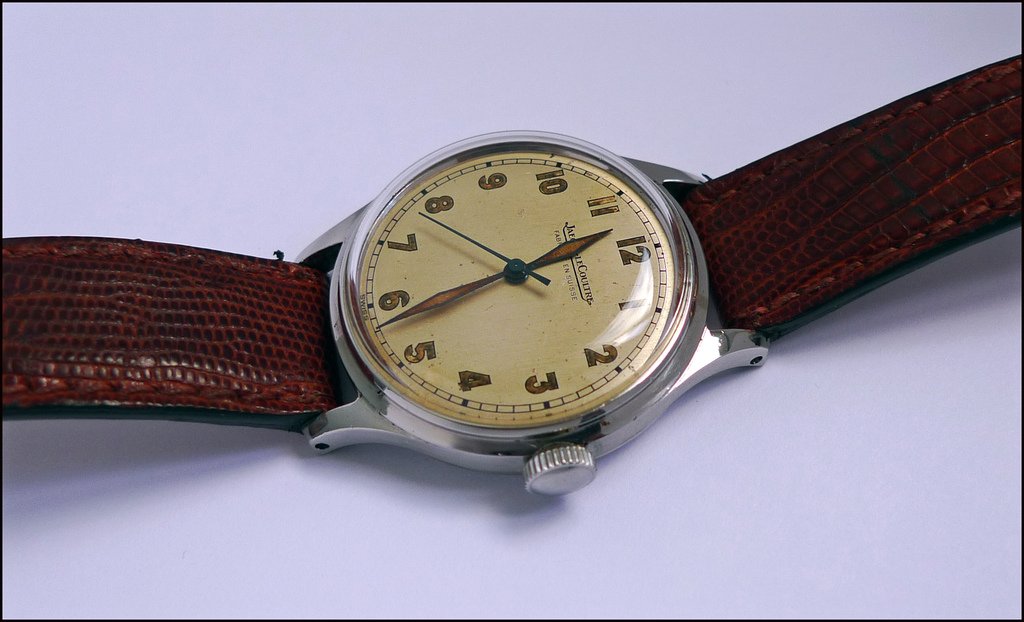
But does a toolwatch really need to be exuberant?
The main goal is to keep the time, in an accurate, reliable and legible way, and this watch perfectly fits this purpose.
Small?
With a case which is only 34 mm, you could be tempted to say yes, but in fact, as there is no bezel, the important aperture of the dial makes it looking bigger than it is, like if it had a 37 mm case.
It isn't ridiculous at all, on the wrist.
It is well centred, and fills nicely the wrist, with an elegant presence.

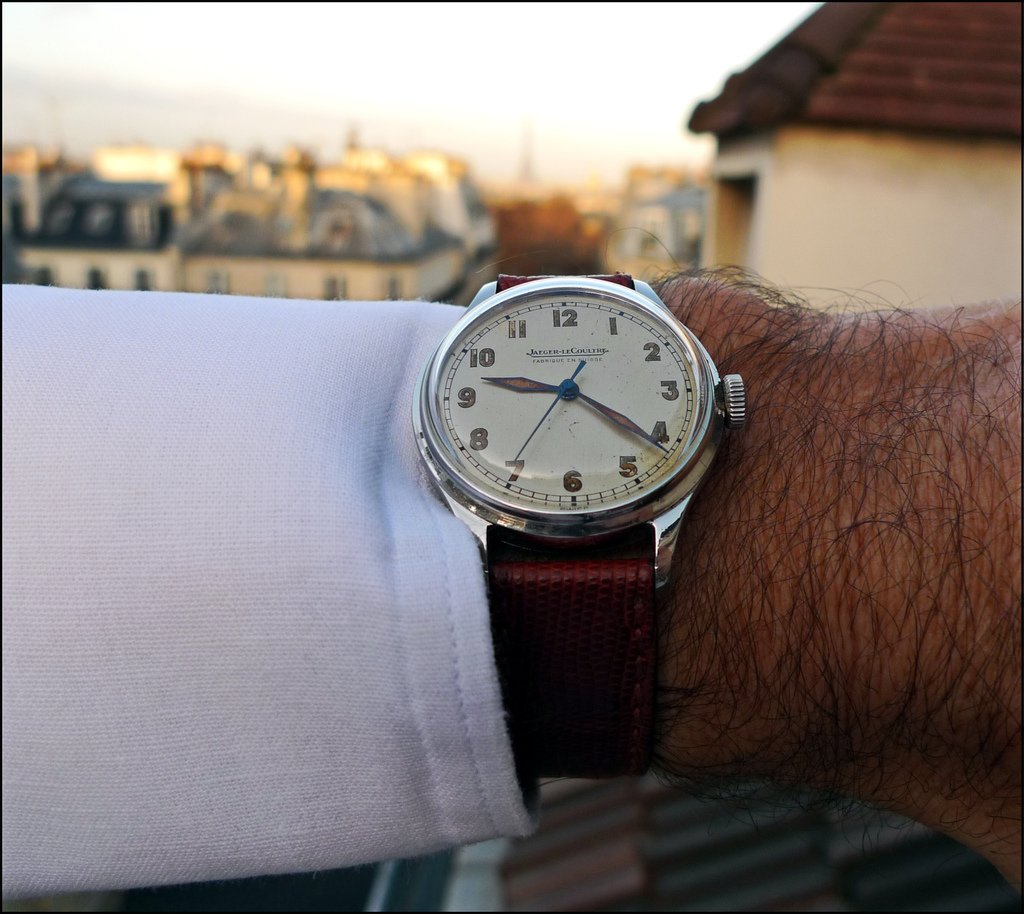
Radium was used for the arabic numbers, as well as for the blue heated hands.
Here, an original dial which, obviously, had hard life:
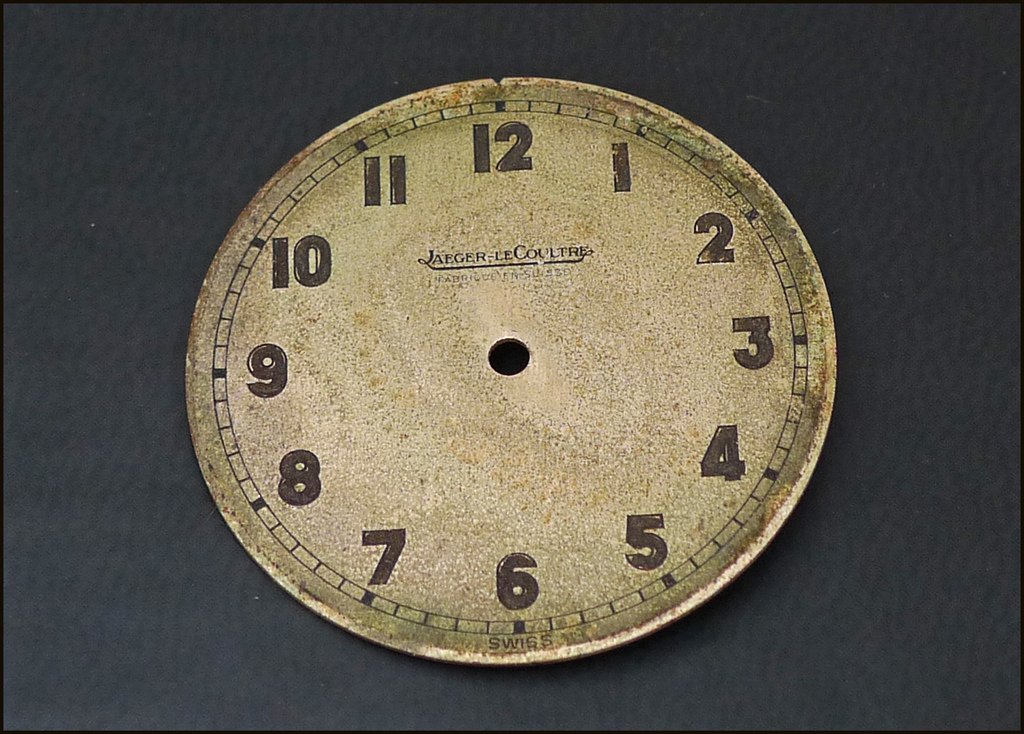
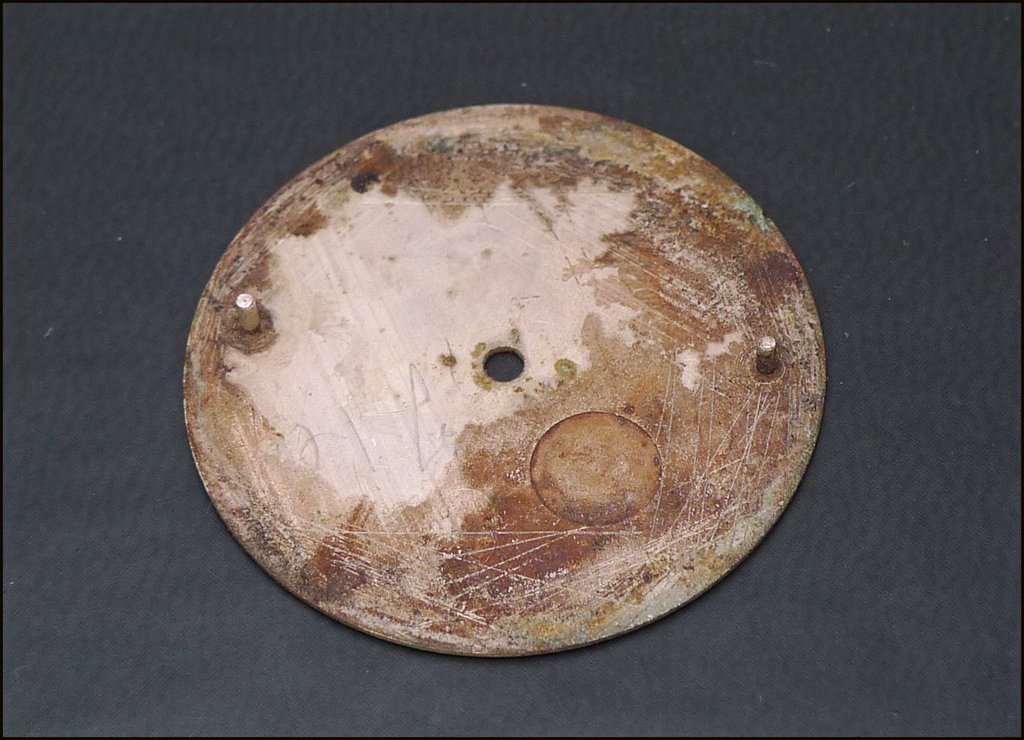
Both hands and indexes are still ( weakly ) glowing in full darkness...Which is always impressive to observe on such an old watch!
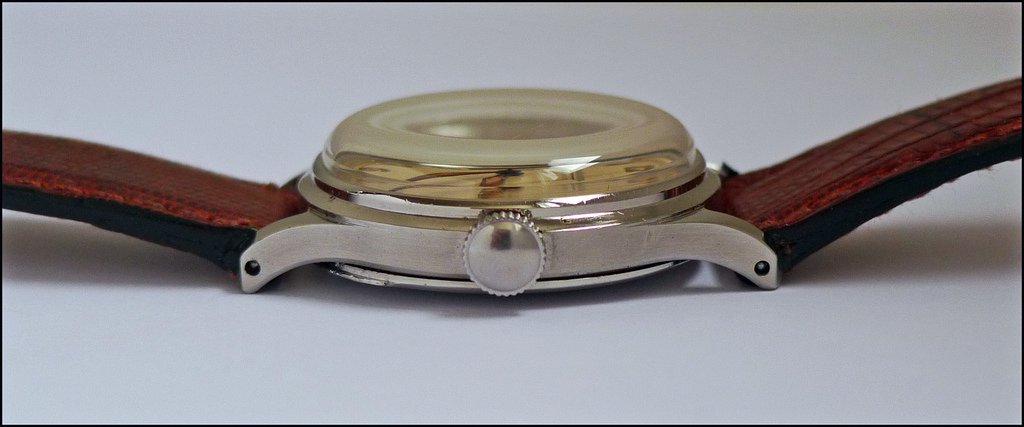
The case, conventional, is nicely shaped, with very harmonious lugs, which are 17 mm large.
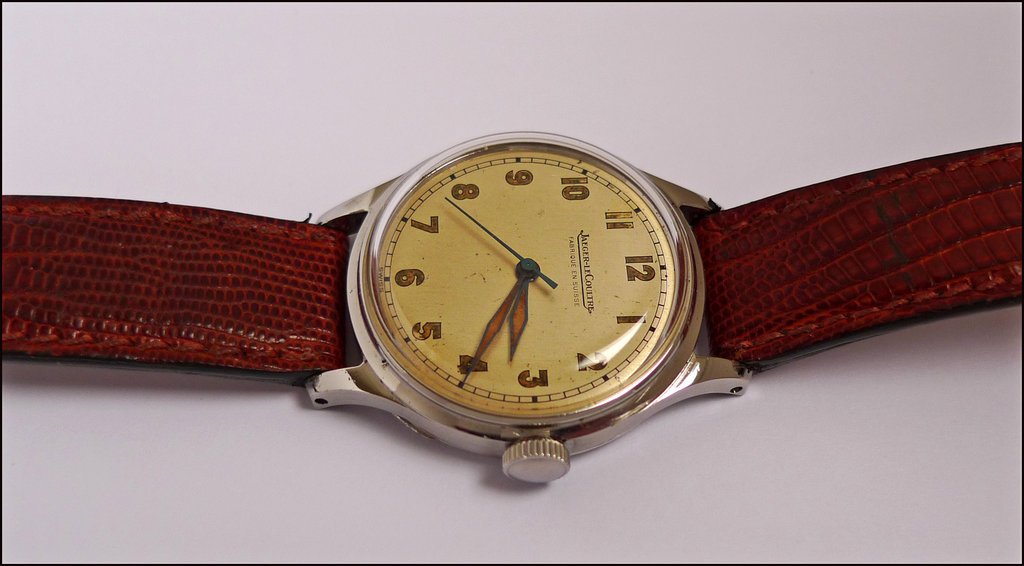
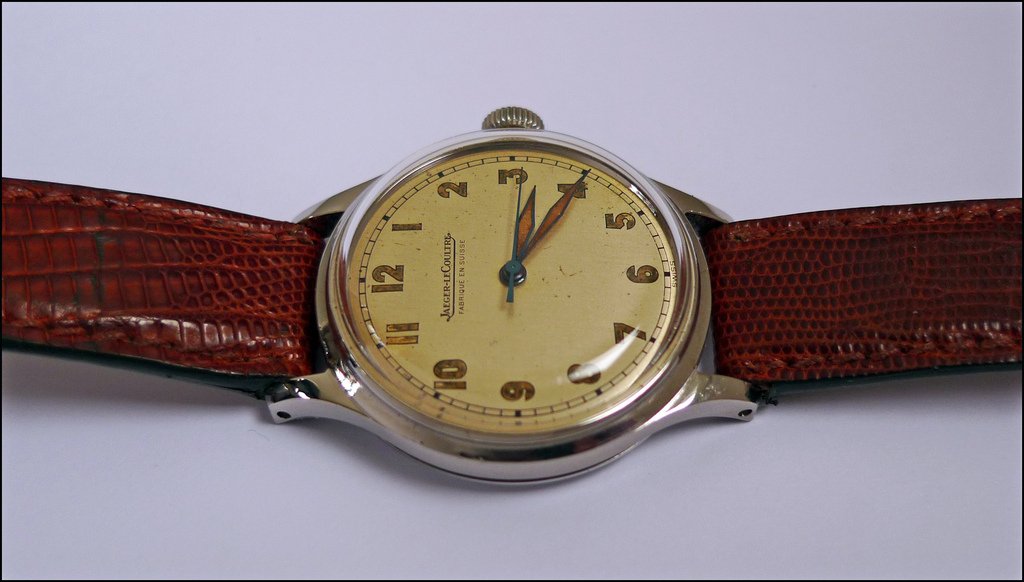
The non signed crown is perfectly sized, not too big nor too small, and well integrated to the case:
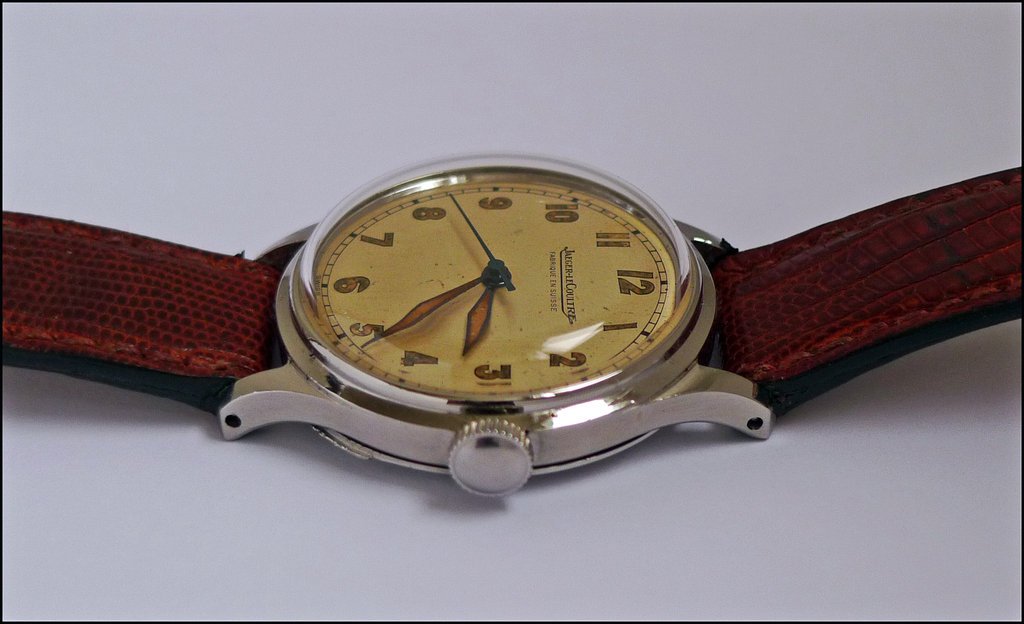
The lugs are drilled, which is not an aberration, as I saw this detail on 8 other JLC SHOM watches, and the plexy, thick and quite slightly domed contributes to the character of this watch.
Here, mine with its twin Sister, the Nr 24:

Or another one, Nr 11:

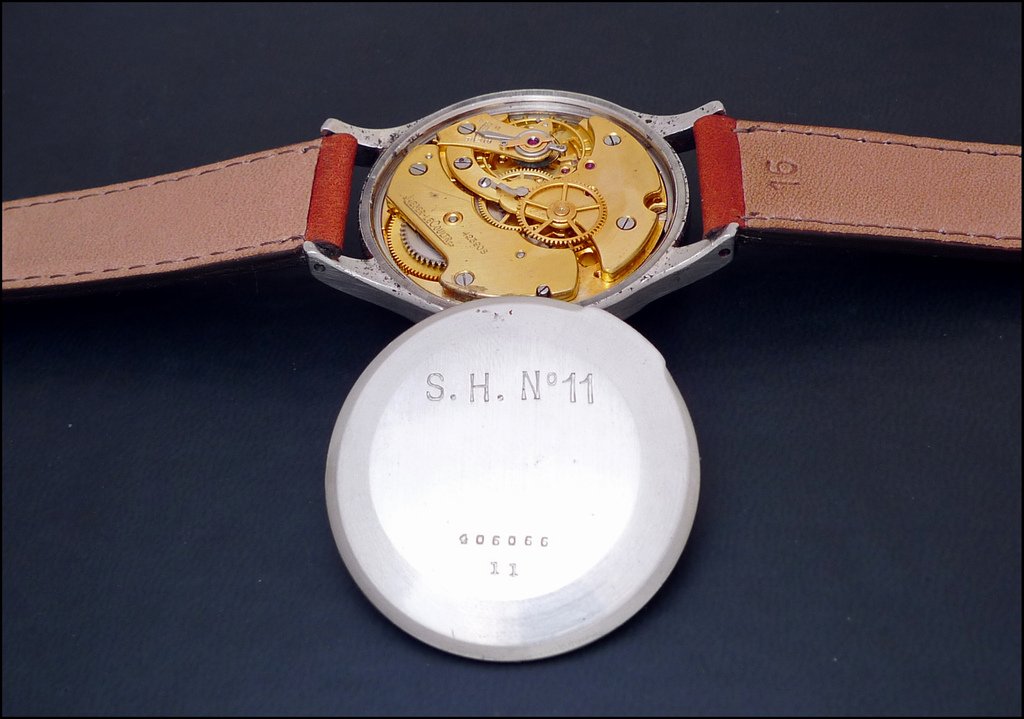
The case back says it all, it tells the story, the History of the watch, with some engraved informations.
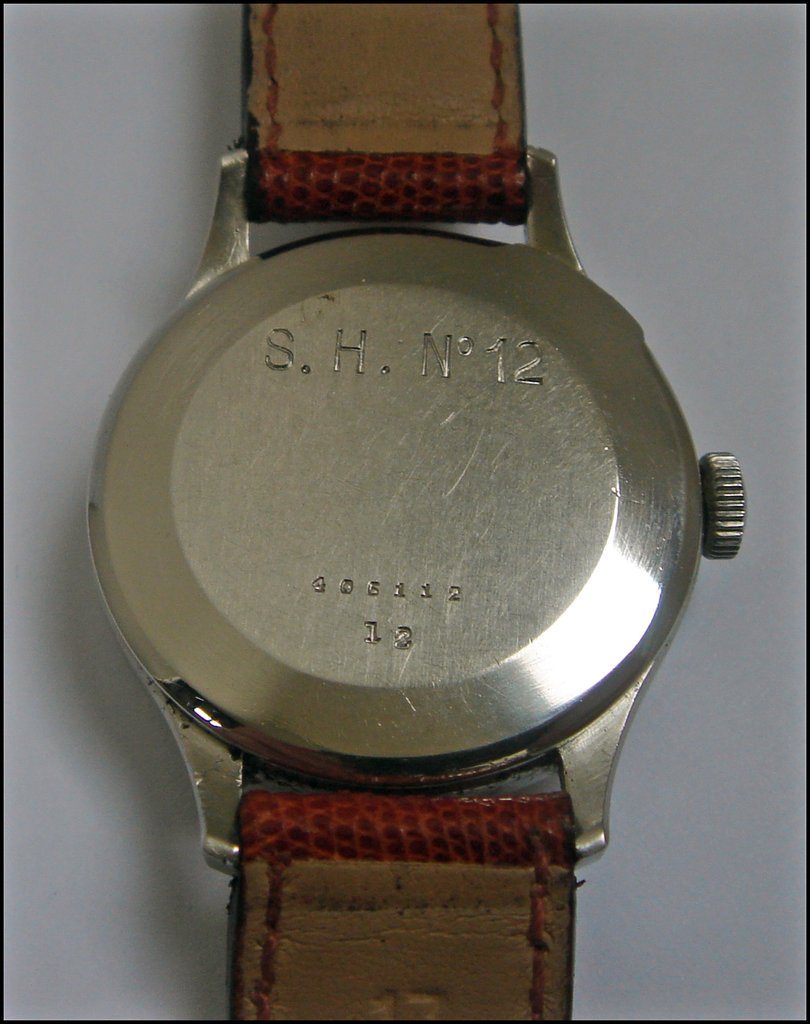
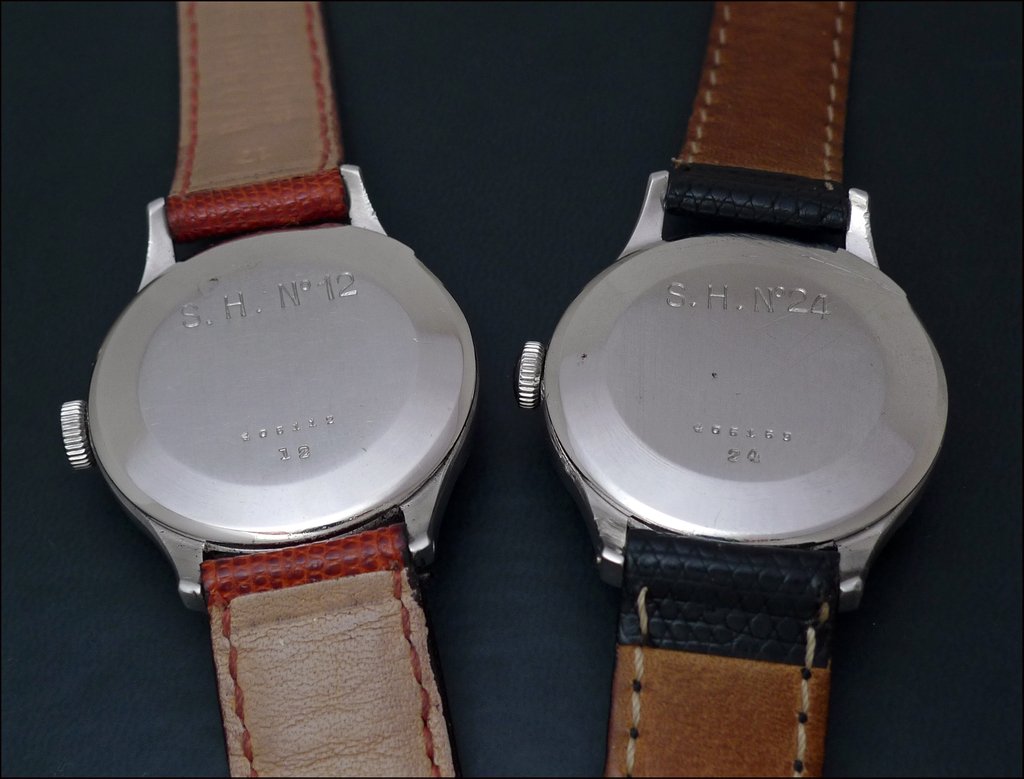
Here are the following engravings:
From the top:
S.H, which naturally stands for Service Hydrographique.
The Number of the watch delivered to the Service: Here, 12, or 24.
Then, the case number.
And under the case number, the number of the watch, which, on this watch, is 12, or 24, once again.
Inside the case back, you have no other mention than the usual " Acier Inoxydable " and the Lecoultre Signature, as shown below:
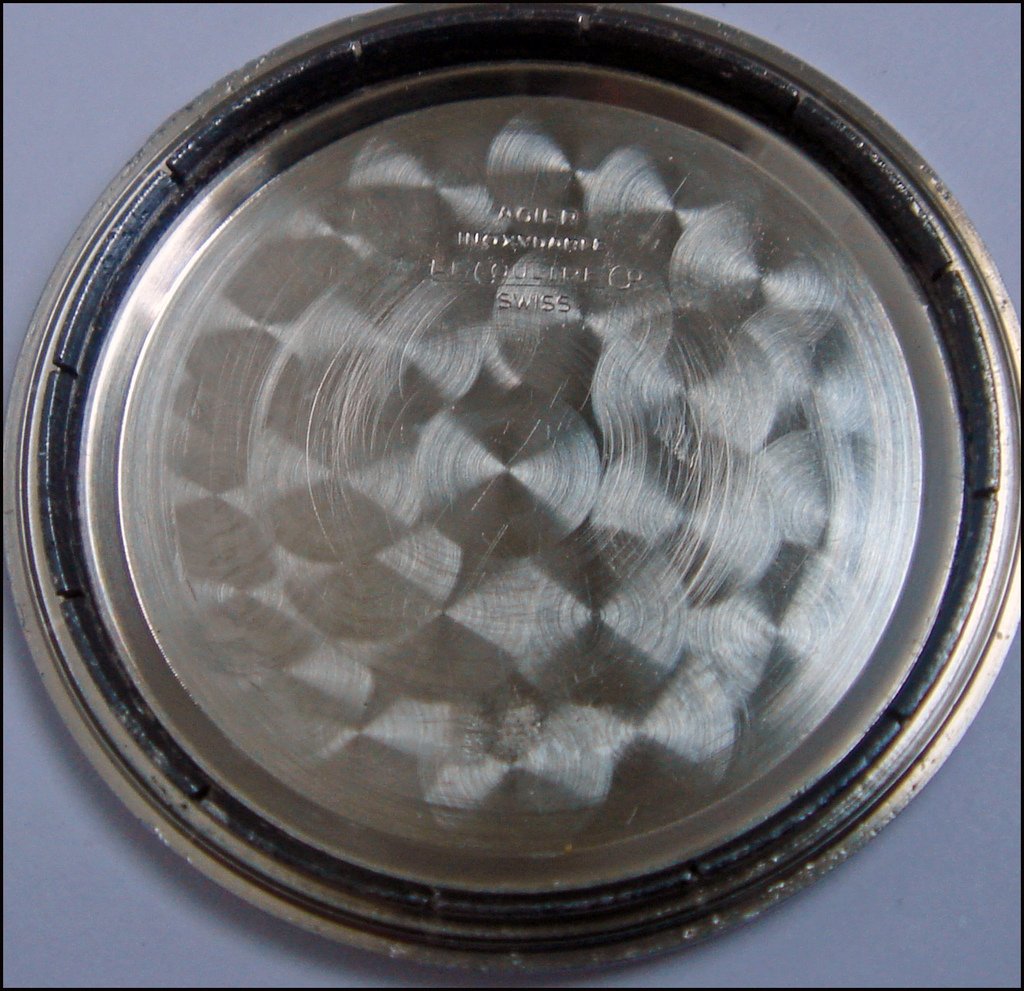
On this watch, JLC opted for a snap back case.
So, what will we see inside the case?
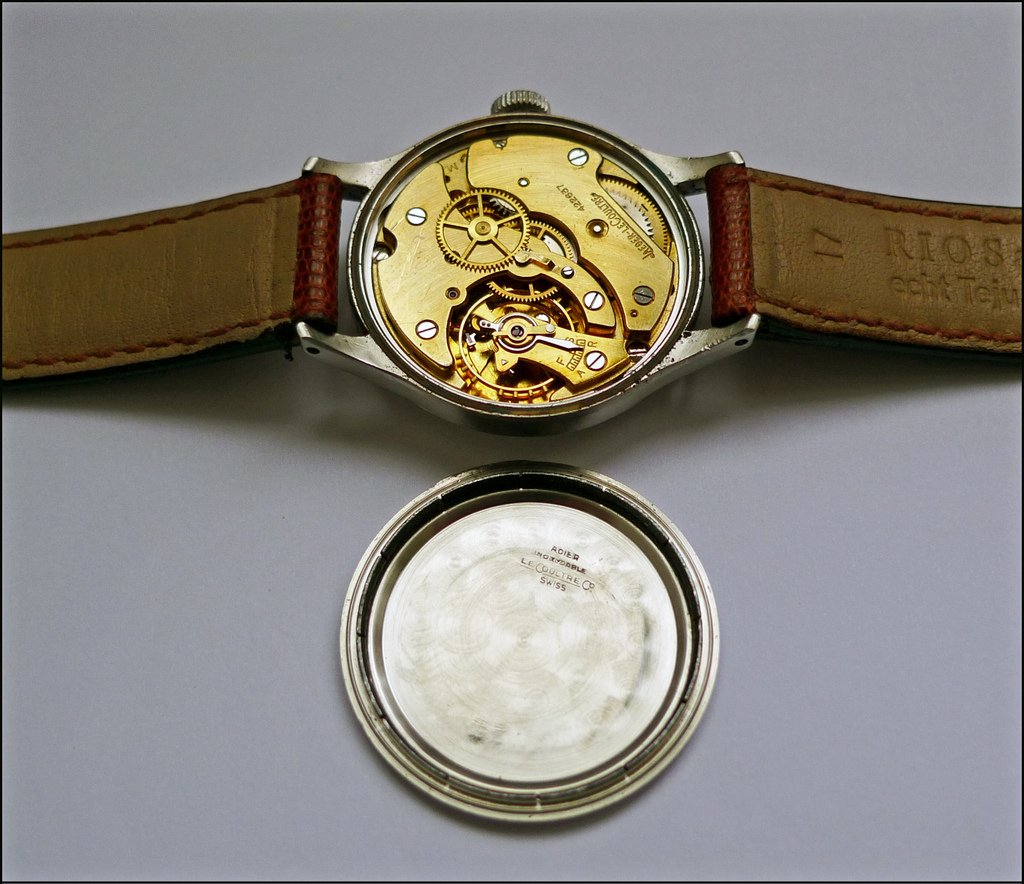
The Caliber P 478, which was introduced in 1945, and produced till 1965.
It has been housed in several models, and around 80 000 were made, during this period.
It is a 28,25 mm big and 5, 25 mm high caliber, fitted with shock protection, ( hence the use of " P " in front of the reference of the caliber ), and featuring a Central Second, which is not hacking.
It is certainly not a Chronometer, at the contrary of the other famous 478, The P 478 BWSbr, which is housed in the Géophysic.
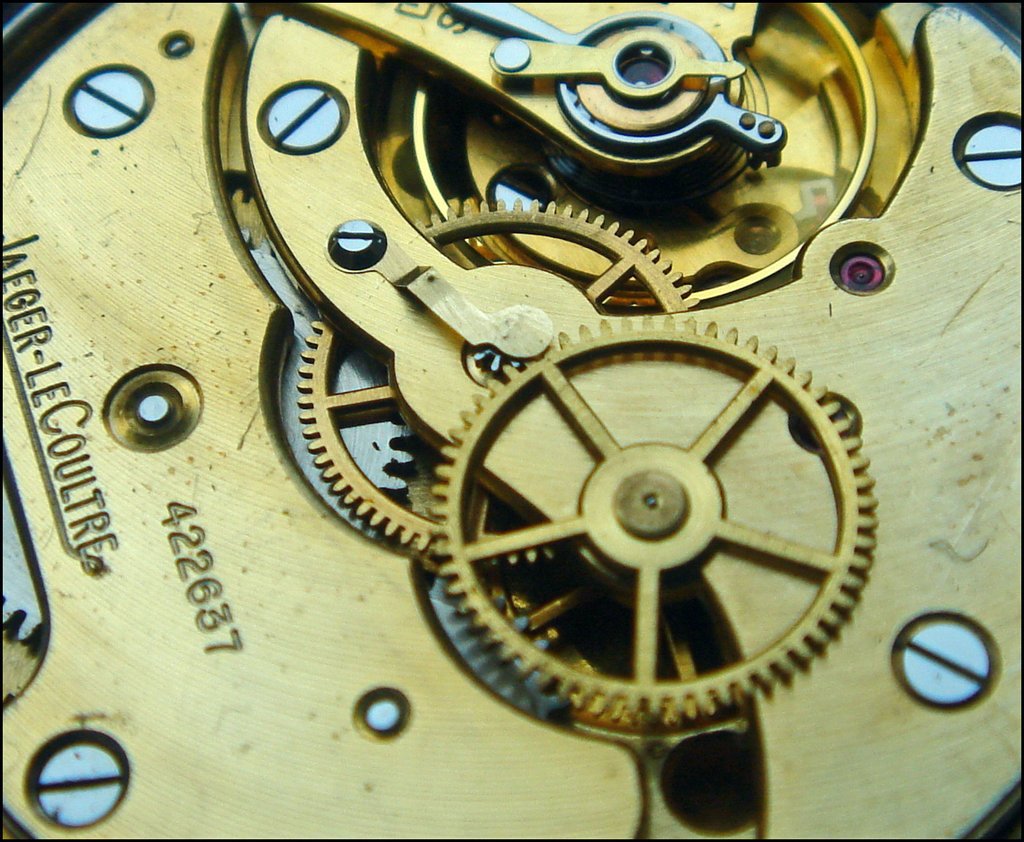
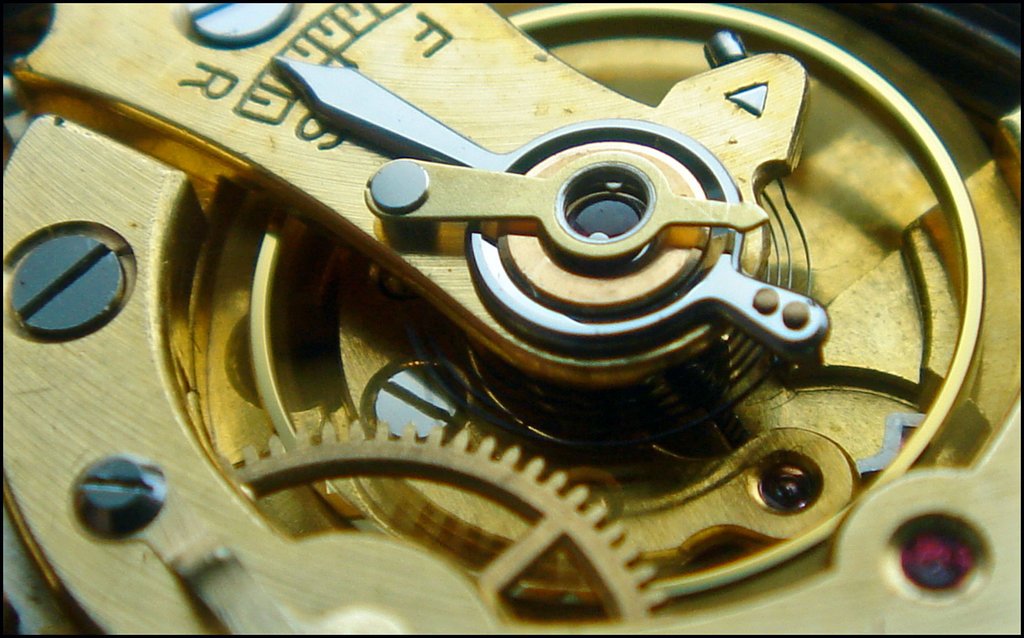
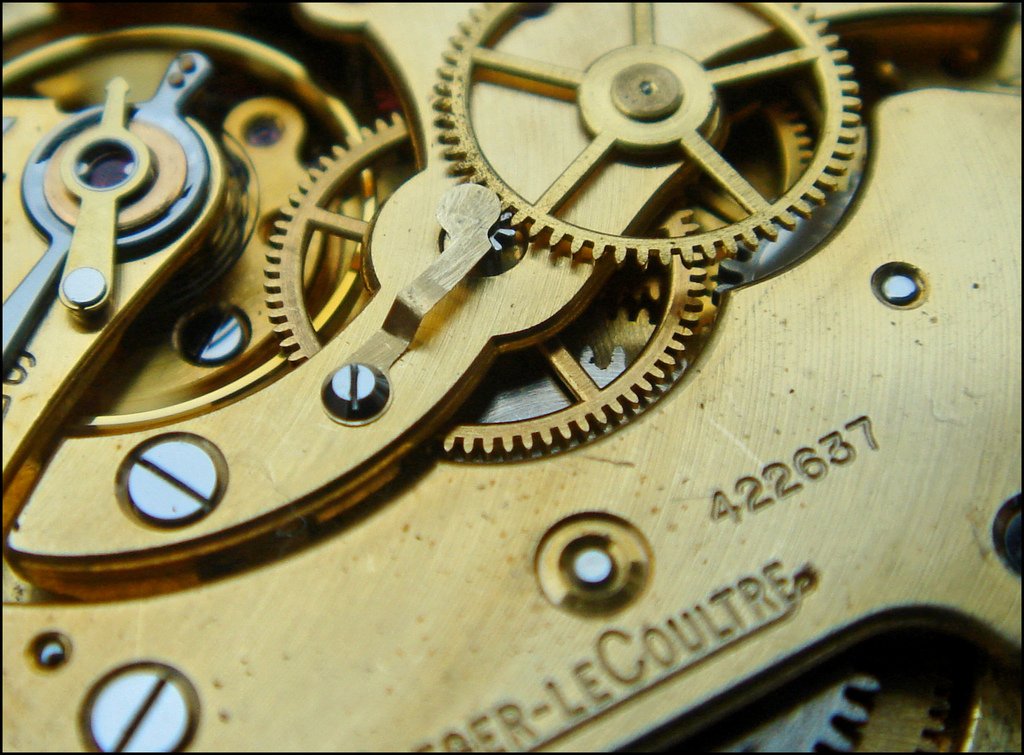
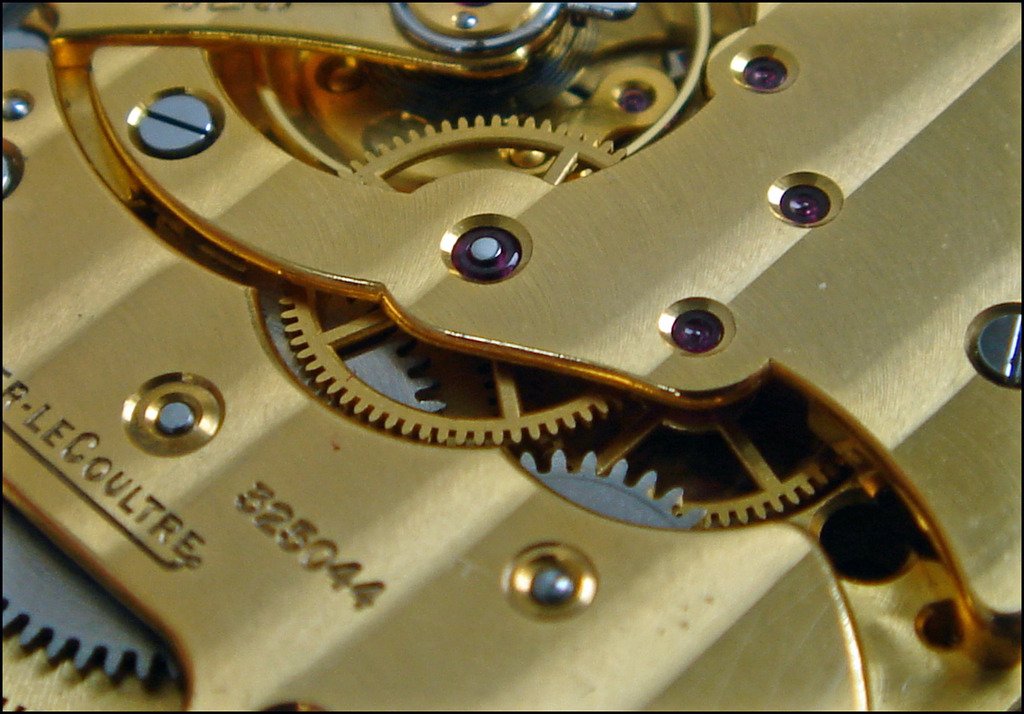
The brass finish of this movement is more rugged, and basic than the 479, or than the 488 SBr / P 478 BWSbr, as there is no Cotes de Genève on the bridges, and the anglages are not nicely worked, for example.
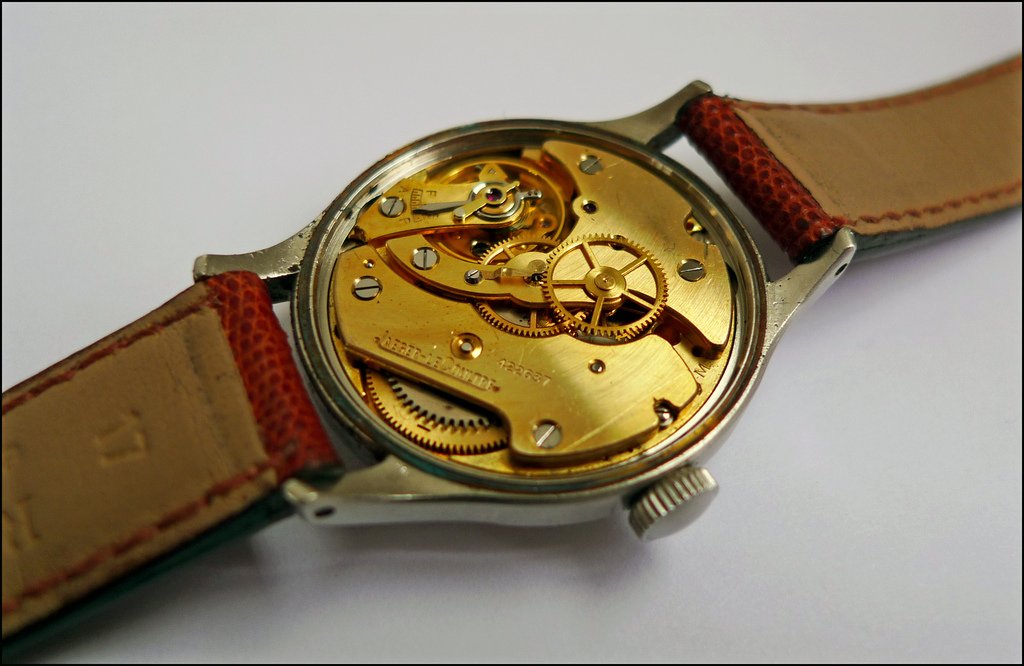
Still, it is a nicely designed movement, which shares an obvious " air de famille " with its more prestigious " brothers ".
Here are some macros of the Cal P 478:
For the record, the Cal 479 housed in the WWW JLC Military Watch from 1944:
I monitered it during a whole week, and it runs only 5 seconds fast per day, which is remarkable for a ( recently serviced ) 63 years old movement!
A superb unknown watch, whose discrete look hides a reliable, well built movement, which keeps a part of Mystery, as the Manufacture archives don't say how many were produced.
I contacted the SHOM which confirmed me that they ordered this watch, along with some other mechanical watches, like Omega, for example, " to perform hydrographic and oceanographic work. The concept of time "is fundamental in hydrography, for the calibration and verification of tide gauges. "

Even if it cannot be considered as a Military watch, as it wasn't obviously used for operations, it is, nonetheless a watch which has its importance, as well as a Pilot Watch, or a Géophysic, and without doubt, belongs to this category of Watches with History.
It just had to be rediscovered!
Hoping that you will enjoy this post,
Best to All,
Nicolas
PS I would like to thank the Heritage Team for their valuable help in providing me the informations about this watch, and the Service Hydorgraphique et Oécanographique de la Marine Francaise for having taken the time to reply to my several e mails.
This message has been edited by amanico on 2010-10-11 11:34:18 This message has been edited by amanico on 2010-10-17 23:31:14 


