Complications
Boris, a dedicated Omega collector, shares a critical first-hand account of an issue with the Omega Caliber 3861, a movement central to the modern Speedmaster Professional. His detailed report, stemming from personal experience and research, offers valuable insights into potential reliability concerns with this updated movement. This discussion provides a crucial resource for current and prospective owners of the latest Speedmaster models.
Hi all,
I am unfortunately coming on this board to report a problem that seem to be affecting the Omega caliber 3861, first rolled out in the Speedmaster Apollo 11 50th Anniversary introduced in 2019, then in the Moonshine in 2020, and finally in the regular production Speedmaster Professional in 2021. I thought this community might benefit from my first hand experience, and the bit of research I have done to try to understand what's happening.
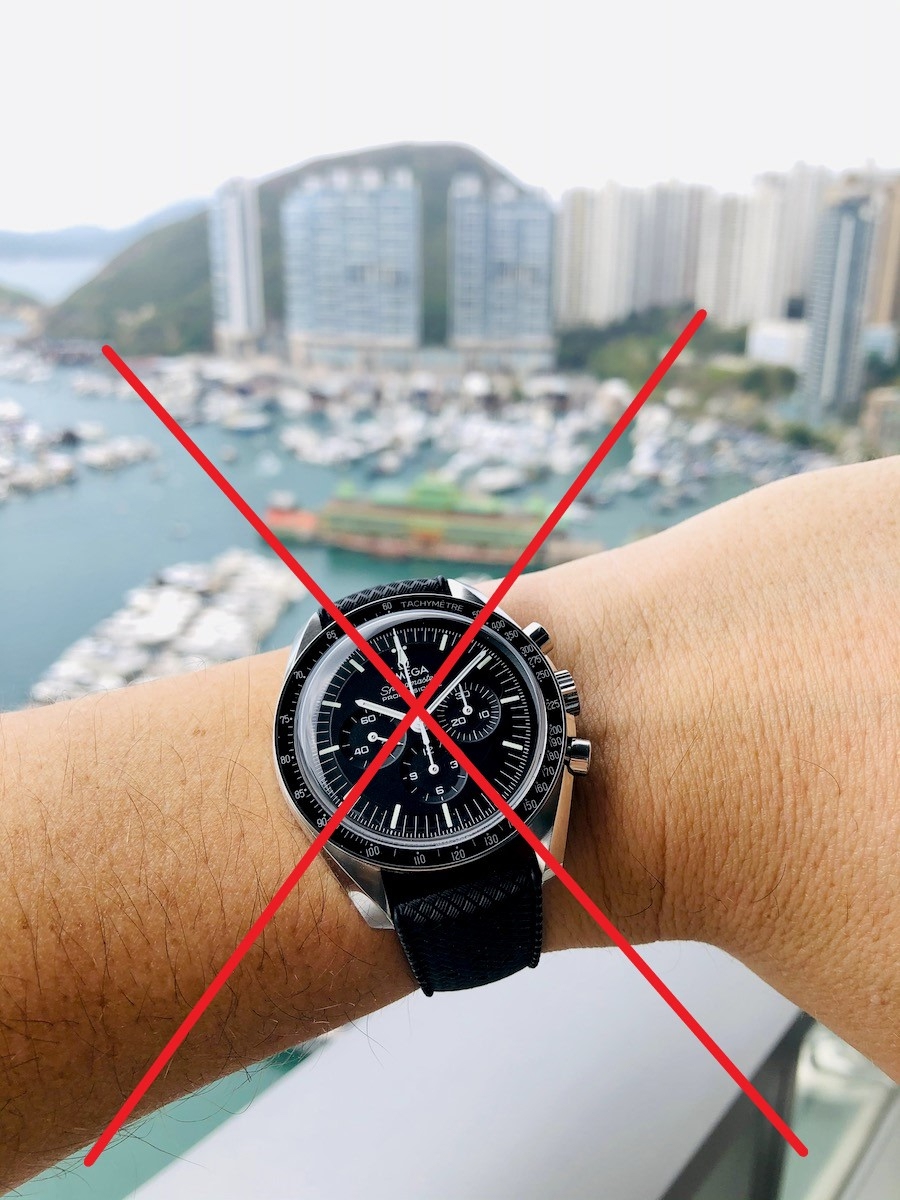
The watch you see above was purchased in February this year, and has quickly become one of my favorite, as Omega has done an amazing job at updating the case, dial, details, bracelet. Plus it has a new movement, the 3861, replacing the 1861 / 1863, fitted with a co-axial escapement and now certified by METAS. It's probably received 80% of my wrist time over the past 5 months, though I don't use it for sports / physical activities (I have my Sinn U50 for that). Originally, I was only using the chronograph function sparingly, perhaps a half dozen time per week, but recently I have been given specific stretches to do by my physio to alleviate some niggles I've been carrying, and have used the chronograph function more frequently. Probably 4-5 times a day for the past 2 months.
Last Thursday, while timing one of those stretches, I noticed that the chronograph second hand stopped at 58 seconds. And that the running second hand at 9 had stopped, too. Only by pressing the start / stop pusher again, and resetting the chronograph, would the running second start again. I tested the chronograph function several times that day, and then again the next day, and the problem occurs every 2-3 instances. Which is annoying, to say the least, on an almost new watch.
I did a bit of research, and came across a thread on Omegaforums, which provided valuable technical information shared by a certified Omega watchmaker. For some reason I am not capable of creating a link to it, but if you google "3861 movement broken", you should easily find it.
In a nutshell:
- in September 2020 the OP in that thread reported an issue with the chronograph function and the power reserve of his Apollo 11. This was later followed by other users reporting the same kind of issues, to various degrees, on their Apollo 11 / Moonshine / Speedmaster Professional
- an Omega Certified Watchmaker (who doesn't work for Omega but routinely services their watches) identified the problem being the center wheel, and more specifically the bushing where it goes through the main plate
- apparently Omega had published in September 2020 instructions to lubricate more heavily this area for 3861's having issues or being serviced, meaning that they had identified an issue with this bushing (which did not exist in the 1861 / 1863) and the premature wear it was causing to the axis of the center wheel
- he subsequently shared that in April 2021 the instructions had changed, and they were now advising to change that bushing altogether with one of a new design
My conclusions from the above:
- Omega is aware since late 2020 of an issue with its 3861 caliber. Difficult to say how prevalent it was, but seeing that there were only 7,000 Apollo 11's and 1,000 Moonshine's, they must still have had statistically enough issues that they felt they had to provide technical guidelines to fix it, even if extra lubrification was just a band aid to what appears to be a design issue
- from April 2021, a permanent (to be confirmed) fix is available, meaning that one would expect watches produced after this date to no longer have this issue
- all the watches produced until April 2021 are susceptible to face this issue. It does not mean that all of them will, as always it will be a combination of luck of the draw and personal usage of the watch that may cause it to happen
I have gone to an Omega Boutique here in HK where I purchased the watch, and the service dealing with the watch was as impeccable as the one I got when I bought it. They advised that they would send it to the local Service Center, and it would take 2-3 weeks for me to get it back, which is reasonable. They provided me with an identifier / password allowing me to check the status of the service online, which is pretty cool.
I hope they are capable of fixing the problem once and for all, as I absolutely love this watch. But I can't help be disappointed that Omega decided to launch such an important model for them in mass production while issues affecting their limited editions had not been fixed. Perhaps I expect too much, and this could (and often does) happen with any new movement, but while I am accustomed to being a beta tester of, say, every new Microsoft Windows version that comes out, I'd have hoped for a different experience from a major watch brand of such reputation. It's not really an issue as long as the watch is under warranty and the service relatively swift, but I'll be really annoyed if the problem occurs again after service. I'll report on this board in a few months time to let you guys know.
In the meantime, if someone was interested in the new Speedmaster Professional, I'd strongly suggest to wait for a few months before picking one up, in the hope that they'd get one of a more recent production where the fix was implemented. I hope this was useful.
The Omega Speedmaster Moonwatch Professional, reference 3861, represents a significant evolution within the Speedmaster collection. This reference updates the core Moonwatch design while incorporating modern technical advancements, maintaining its established aesthetic. It is positioned as a contemporary iteration of a well-known chronograph, appealing to collectors who appreciate both heritage design and updated mechanical performance. The model is offered in various material configurations, providing options for different collector preferences.
This Speedmaster Moonwatch Professional features a 42 mm case, with a thickness of 13.18 mm. The case houses the Omega Co-Axial Master Chronometer Calibre 3861, a manual-winding movement. The crystal protecting the dial is available in hesalite or sapphire, depending on the specific sub-reference. The movement provides a power reserve of 50 hours, ensuring reliable operation over an extended period.
The reference 3861 appeals to collectors seeking a Speedmaster with enhanced precision and anti-magnetic properties, certified as a Master Chronometer. Its availability in materials such as stainless steel and Moonshine™ gold allows for diverse collecting strategies. The consistent case dimensions and movement across these variants underscore a unified design approach, while material choices offer distinct visual and tactile experiences.
I really hope they fix your watch.
It could occur even if one did not use the chrono, i.e. the watch stopping altogether unexpectedly. But I can only assume that actioning the chrono creates more stress on that particular part, and accelerates the process.
Hi Boris, I purchased a Speedmaster Professional, 3861 Sapphire Sandwich in October 2021. After 12 months it has developed the same fault. When fully wound, if you engage the chrono it comes to a complete stop. Its currently with Omega and they have quoted a 12 week wait for repair!!!
I owned both the Apollo 11 50th anniversary pieces since 2019 and haven’t noticed any issues….or yet? Is there a way to stress test it? I do wear the SS version quite a bit and sometimes I left the Chronos running for a day on both but neither had failed. I didn’t pay attention to the power reserve since it’s a manual as I’m mostly focused on automatic watches power reserve….maybe I should test it on both.
I’m surprised to hear this issue happening with a co-axial movement, which is supposed to reduce the wear and tear and extend service periods (albeit by working at the level of the escapement’s interaction with the balance spring, and not at the chrono part of the movement). However, I’m not entirely surprised since the chrono function in this particular timepiece is cam-actuated as opposed to column wheel and vertical clutch. So, in spite of it being NASA flight-certfied, it’s not the most ener
This thread is active on the Omega forum with 29 replies. Share your knowledge with fellow collectors.
Join the Discussion →