
Vintage
valerian1's detailed presentation of his Omega Speedmaster Mark II Racing Dial offers a deep dive into a significant transitional model. His post not only showcases a beautifully preserved example but also provides historical context and technical insights into the evolution of Omega's chronograph movements, particularly the Caliber 861.


Recently arrived and with his permission using some of the sellers pics as my point and shoot (and photography skills!) aren't up to snuff. Not exactly a rare beast, but as I'm trying to amass a representative sample of Omega's 60s and 70s output I had to have a Cal 861 and one of the Speedie 'Marks'so why not go for the first and IMHO coolest?
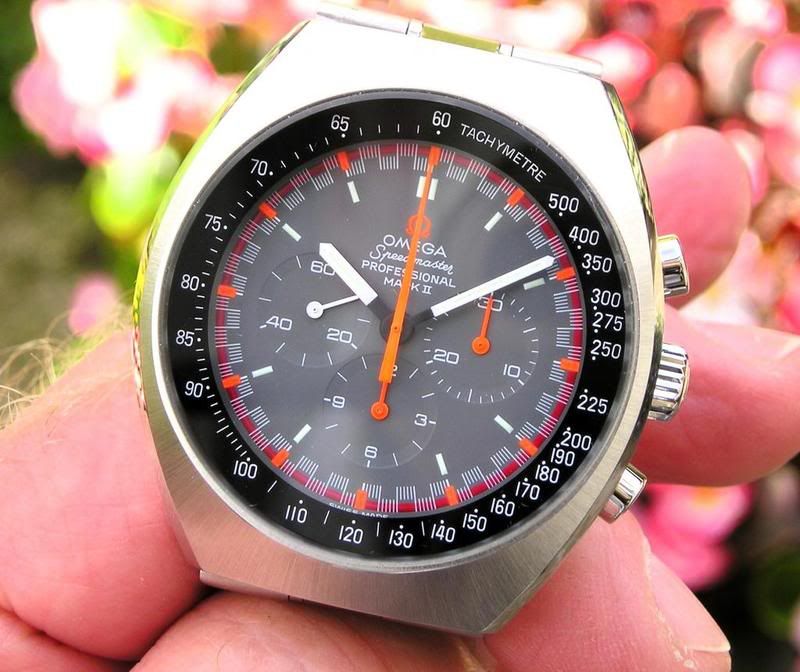
Introduced in 1969, the Speedmaster II was I understand originally intended to replace the original but wiser heads in sales and marketing must have realised the value of an iconic model associated with man's greatest adventure to date, hence it was only in the line until 1972. I have read elsewhere that Omega even presented the Speedie II to NASA for testing as their offical flight approved watch but were basically told thanks but no thanks, which may also have contributed to the relatively short lifespan.
Design features intended to improve on the practicality of original Speedie Pro were; increased water resistance up to 120m from 60m, bringing the tachymetric scale 'inboard' sandwiched between two layers of flat anti reflective tempered mineral glass and of course marking the 'proper' transition from the Cal 321 to Cal 861.
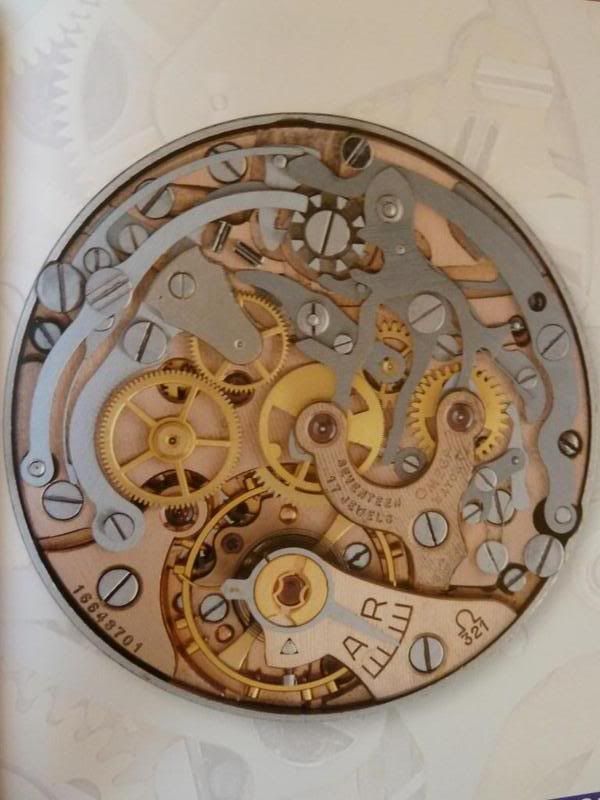
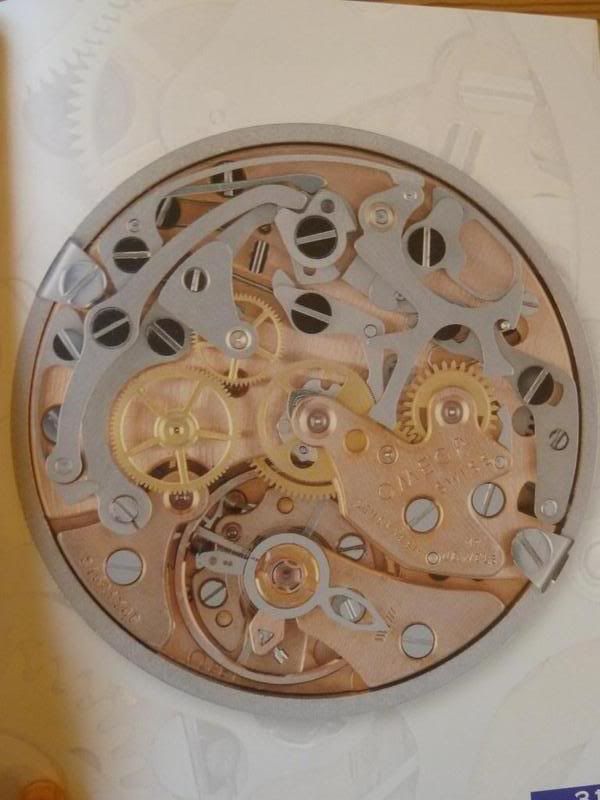
Developed 22 years apart by the same genius, Albert Piguet of Lemania (who also oversaw the devlopment of the fabled Lemania 5100 by Raoul-Henri Erard), the 321 and 861 represent to me at least the twin pinnalces of Omega's chronograph movements. There are many threads extoling the virtues of both but I think it's interesting that the cal 861 was develpoped to take advantage of the technology available at the time as did the 321 in it's day. The 861 used a flat balance and upped the frequency from 18,000 in the 321 to 21,600 to increase accruacy and reliability, the vertical column wheel controlling the chronograph functions was replaced by a flat cam making it easier (and cheaper) to produce and service and the steel chrono brake lever replaced by one made of Darlon - one of the first instances of using synthetic materials in a chronograph movement. A step down in horological quality it could be argued but the fact that it's remained in production pretty much unchanged since 1968 speaks for itself I think.
The barrel shaped case of the Speedie II was very much of it's time as was the use of grey and orange in the Racing dial. However, unlike a lot of late 60's and 70's desing I think it still manages to look contemporary rather than retro. The case finishing with sunburst bezel, polished bevel and horizontal sides is just lovely but v.expensive to refurbish, so when Jack agreed to sell me his Bienne serviced and restored model (he also sent me the original mint dial and all the parts replaced at service) I was chuffed to bits.
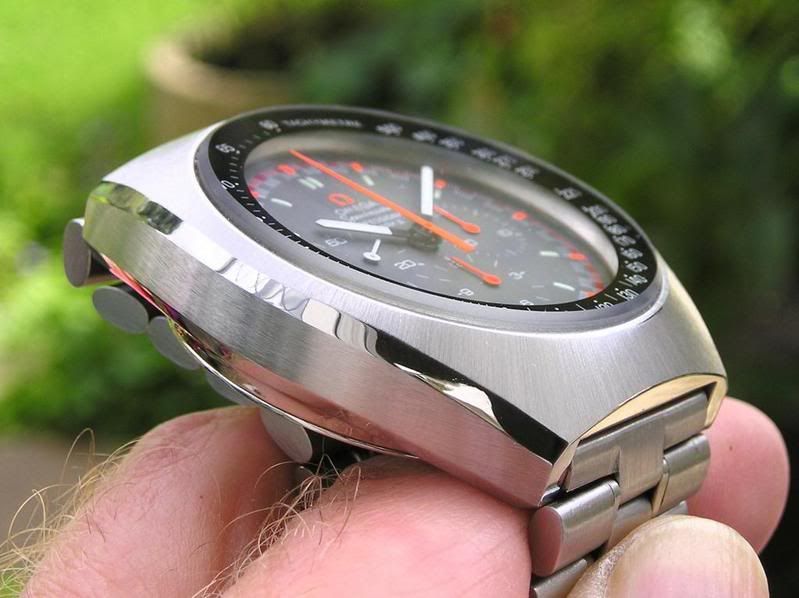

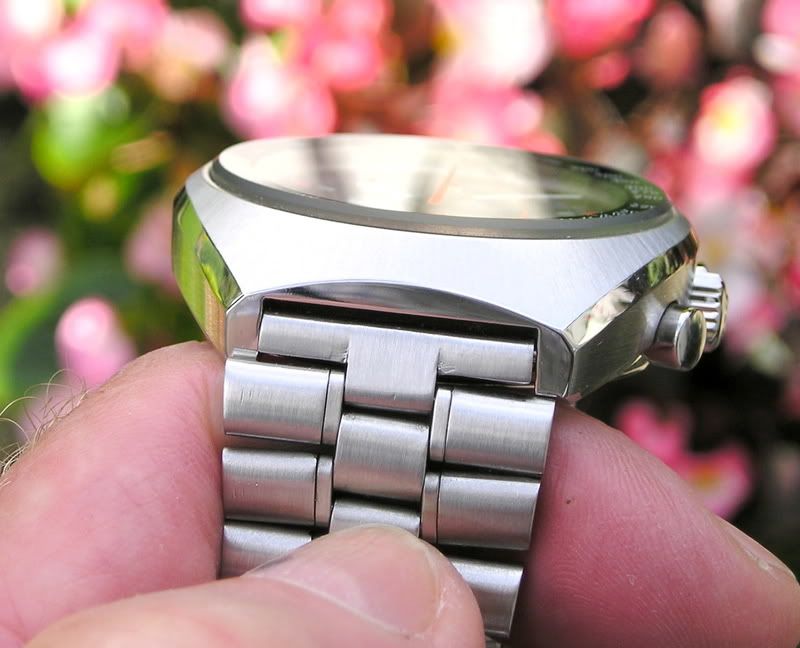
The original 1159 bracelet is extremely comfortable and because of the five facets rather than 3 a lot better looking than the slightly later 1171 (which I've also found to be a bit of a hair puller).


Finances and natural inclinations mean I don't buy often, so acqiuring a watch as well sorted as this one that also ticks so many of my collectors boxes has made me a very happy boy indeed. 
Cheers
Ian
The Omega Speedmaster Mark II, introduced in 1969, represented a significant design departure from the original Speedmaster Professional. It was conceived as a potential successor, featuring a distinctive tonneau-shaped case and an integrated tachymeter scale beneath the crystal. This model was part of Omega's effort to update the Speedmaster line while retaining its core chronograph functionality.
The Mark II houses the manually wound Omega Caliber 861, a cam-actuated chronograph movement operating at 21,600 vibrations per hour. Its robust case design offered enhanced water resistance of 120 meters, a notable improvement over its predecessor. The dial variations included a standard black, a grey with orange accents (known as the 'Racing' dial), and a rarer gold-plated version.
For collectors, the Speedmaster Mark II offers a distinct aesthetic from the more common Professional models, embodying late 1960s and early 1970s watch design. Its relatively short production run from 1969 to 1972 contributes to its appeal, particularly for those seeking a vintage Omega chronograph with a unique case profile and the reliable Caliber 861 movement.
On an auction and ... Lost it for a higher bidder that later I realized that it was a fried (naturally he never sold it to me). It's a wonderful piece with a lovely dial and hands combination and with a case to die for. Congratulations for your new "toy" and for your very nice collection. Cheers, Nilo
When it first arrived I was almost reluctant to wear it as it's so pristine. I've managed to overcome that now but it has been reserved for special occasions (yeah right!) Cheers Ian
When you het one that is so precious and rare, I don't feel at easy wearing it. I sold a JLC Memovox just because I couldn't wear it. Take care of yours, Nilo
...can't be duplicated unless you have the proper milling equipment to do the starburst finish right. It's the only fault of my 1969 (and same original bracelet as yours). Omega won't touch it without doing a full restoration and it currently keeps COSC specs.
I've seen several examples of the work of a watchmaker here in the UK who has a lapping machine that can recreate the mix of sunburst, mirror polish, horizontal and vertical graining on may vintage watches of the period including a Speedie II. Several collectors on a watch forum I use have used him and are really astounded with the results. I can't vouch for him personally as a case refinisher but he did an excellent repair job on my Mariner 1. Drop me a PM if you'd like the watchmakers' details
many years ago i went through what you are going through now and ended up with just over 100 omegas including an original moonwatch, mk2, mk3, 1045, 125, teutonic 861 and also the seamaster versions of the 861, mk3 and most of the olympic models. the whole thing snowballed until i had 300 of the damn things (watches) which in anyones book is far too many so i offloaded most of them and started again. at the time i hadnt come across the purists so had no one to share them with apart from my wife
This thread is active on the Omega forum with 9 replies. Share your knowledge with fellow collectors.
Join the Discussion →


