Marcus Hanke's detailed "Experience Report" on the Porsche Design Chronograph P'6612 offers a candid, real-world assessment of a watch designed for rugged travel. This review is crucial for collectors seeking practical insights beyond initial impressions, as Hanke rigorously tests the watch's performance against demanding criteria. His quest for the "perfect holiday watch" resonates with anyone who values durability and functionality in their timepieces.
More than just function:
The Porsche Design P’6612 Chronograph
by Marcus Hanke
February 2008
Part 1
The perfect travel watch: quest for the “Holy Grail”?
In earlier times, I was amused when reading the reports of fellow watch enthusiasts, who spent a lot of time searching for “the definite” watch, “the perfect” watch, or simply: the “exit-watch”, that would render needless all wishes or the urge for collecting watches, since it incorporates all a lover of mechanical watches wishes to see realised in a timepiece. The “exit-watch” permits exiting the watch collecting hobby.
Of course, nobody ever really found that watch. Normally, some time after they excitedly announced to finally have found their definite “exit-watch”, these poor, haunted souls were caught acquiring yet another watch, or selling the marvellous exit-watch.
Yes, I used to smile at these people, and yet I am a victim of a very similar illness, the quest for the “perfect holiday watch”.
The typical vacation spent by my family and me is travelling around in an offroad vehicle, to visit another place every day, to sleep in a tent, and spend a lot of time hiking in all weather conditions. Consequently, a perfect travel watch has to fulfil several criteria, and yet it seems impossible for me to find it.
The main criteria for a good travel watch are:
1) watertightness
2) easy to read even under adverse lighting conditions, or in darkness
3) comfortable to wear, even in high humidity, high aridity, high and low temperatures, and with a lot of sand between case and skin
4) date display
5) some provision to measure time spans, either by rotating bezel, or by chronograph function
6) in case of a complete loss, the watch must not be so expensive or unique that it is impossible to replace
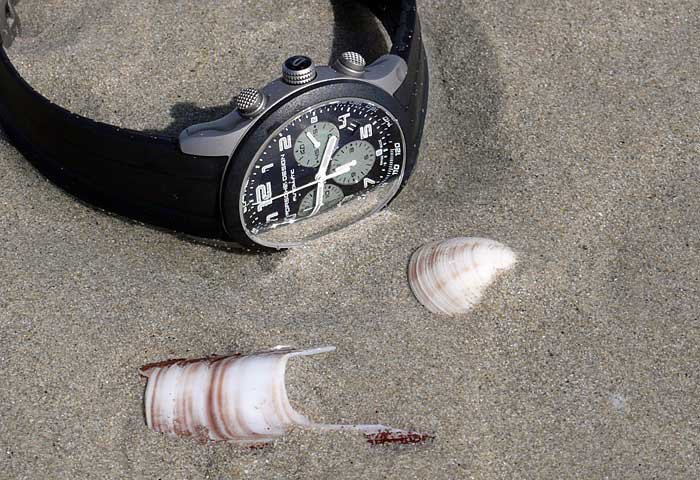
Some will miss the accessory that is commonly considered the sine qua non of a travel watch: the second time zone. However, our type of vacations does not need such an ability. Travel speed is slow enough that we spend most of our time in one time zone, and this can be set by adjusting the normal time display.
Building on that list of necessities, I already had many different vacation watches, and experience brought some other important conclusions:
The case diameter should not be too large, certainly not more than 42mm.
If possible, there should be no sharp edges, neither my wife nor my dog love it to be wounded by razor-sharp lugs or bezel edges.
For those metal parts coming into direct contact with the skin, titanium is very good, since it is not affected by sweat and does not cause any allergic reactions.
A rubber bracelet with simple tang buckle is the best and most solid attachment to the wrist. In sandy conditions, any folding clasps will suffer and eventually get fully stuck.
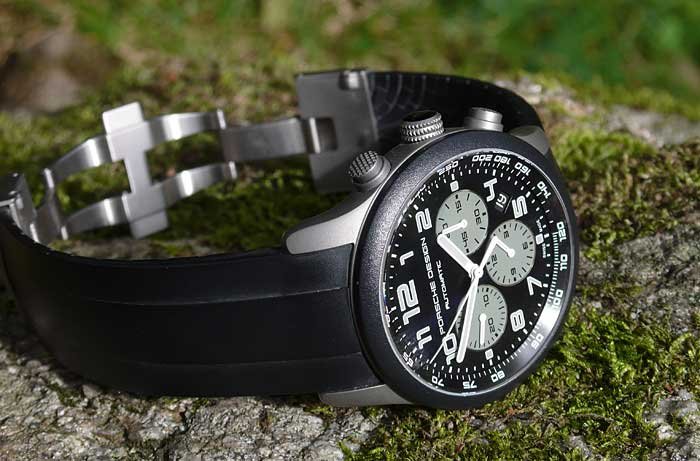
After some more or less disastrous failures, this year’s vacation watch was expected to meet most of the criteria outlined. So let’s see how it performed:
A) General impression:
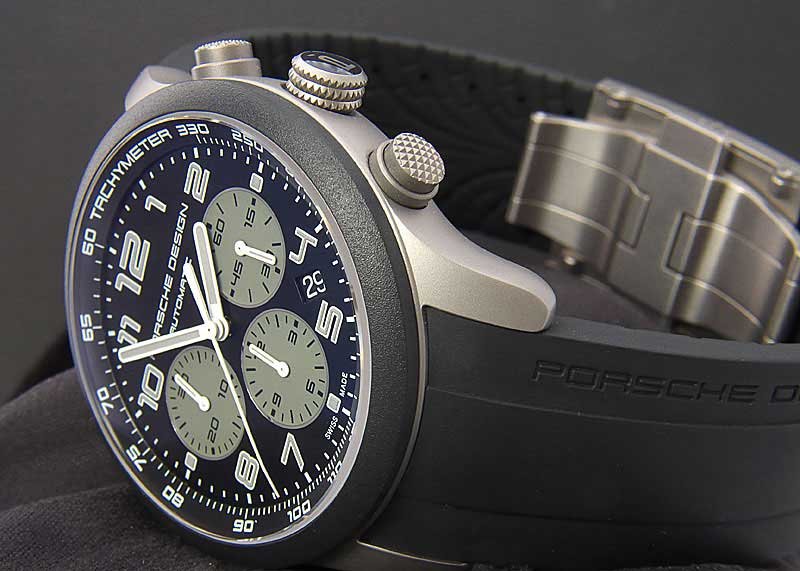
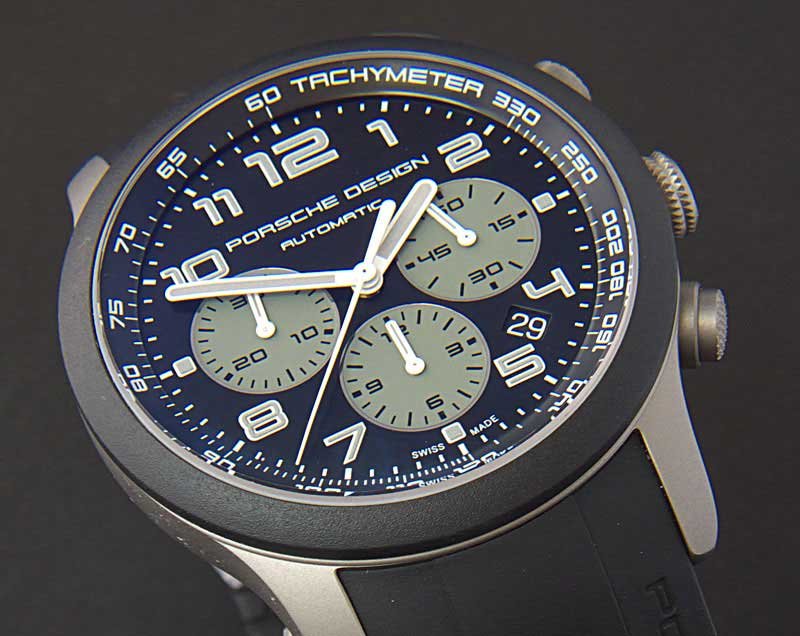
Traditionally, Porsche Design watches feature convincing care for design details, but in all their utilitarian perfection, they often lack these little senseless extras that transform a tool for measuring time into a fashion accessory. This chronograph from the so-called “Dashboard Series” is different, it is chic, looks cool. Especially the olive drab background of the chronograph subdials, with the matching pigmented SuperLuminova on hands and the stylish numerals immediately make it noticed by watch enthusiasts. These olive drab elements were what made me pick that particular watch from a collection of various PD chronographs in the shop’s window; they would make a nice match with the typical outdoor clothes I am wearing when not in the office - well, sometimes even when I’m in the office.
B) Case, crystal and crown/pushers:
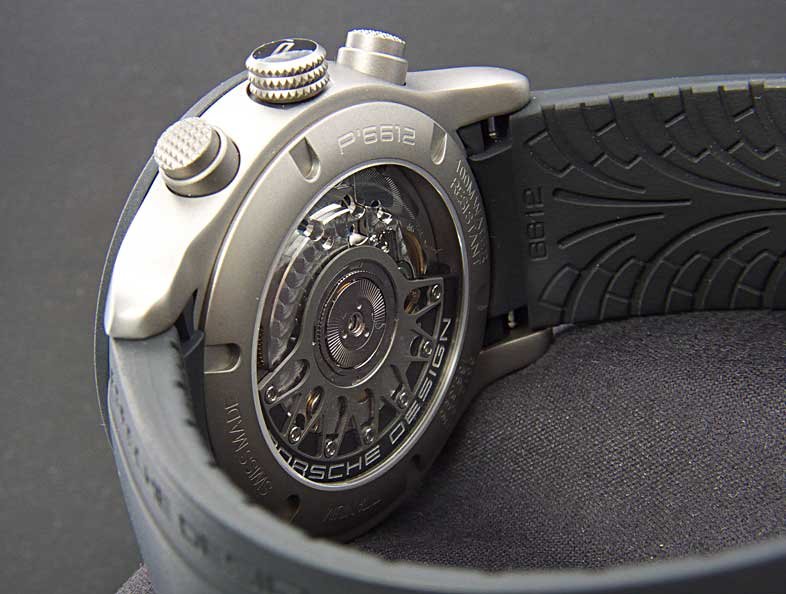
The Porsche Design P’6612 chronograph is manufactured by Eterna, this company having been acquired by Porsche Design in 1995. It has a full titanium case, that follows the classic Porsche Design outlines by avoiding any sharp edges. The case’s main body appears to flow into the lugs, and also the fully threaded display back is nicely blending into the curved outlines. The production of such a case needs is costly, but the effort is rewarded by a wearing comfort that is hardly met by any other wristwatch of comparable size on the market.
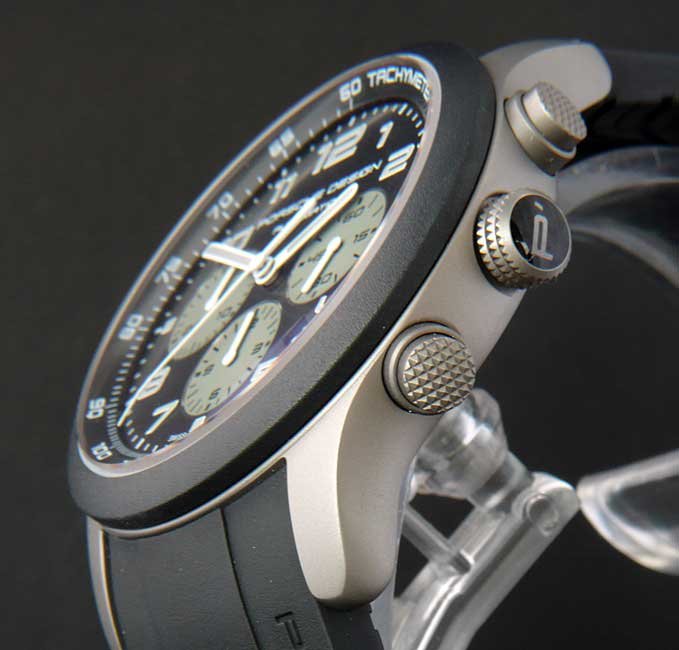
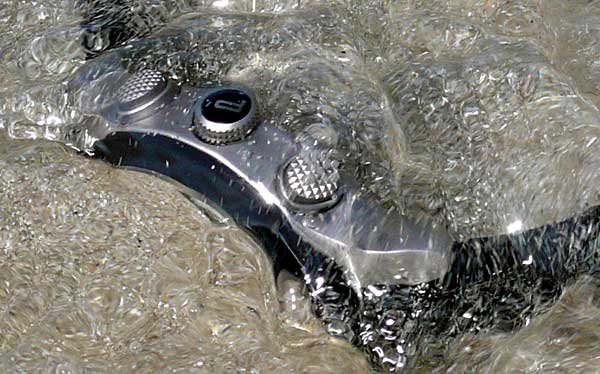
A water tightness rating of 100 meters makes the chronograph suited for all sports and outdoor activities, including swimming. For diving deeper than snorkel depth, I would use a true diving watch, though. Yet with regular gasket replacements and pressure checkups, I am sure the Porsche chronograph would perform well under water.
I was surprised to measure a case diameter of only 40 millimetres. The large crystal and the black rubber-coated bezel make the watch appear considerably larger. The thickness of 12 millimetres, including the domed crystal, is appropriate for the compact dimensions of the movement used. Another factor responsible for the good wearing comfort is the watch’s weight, or better: its lack of weight. Including the rubber strap, the chronograph does not weigh more than 99 grams. However, this advantage is also a handicap: Since the consumer’s perception of luxury and solidity is directly connected to the item’s weight felt, this lightweight watch will never be accepted by non-watch knowledgeables as valuable than one made from steel - even if the latter is considerably cheaper.
In the beginning, I was skeptical about the durability of the rubberised bezel, but my original concerns were unjustified, since until now, the bezel does not show even the slightest traces of wear; it appears as immaculate as it was when I unpacked the watch from its box. Even the needle-sharp, gnawing teeth of our puppy are not able to do any harm to the bezel. Not much worse in this respect is the performance of the bead blasted titanium finish on the case. I know that the titanium oxide surface is prone to scratches, but after more than six months, it is still difficult to notice any scratches on the case sides. I assume the clever design helps to keep the case sides out of the range of harmfully sharp objects.
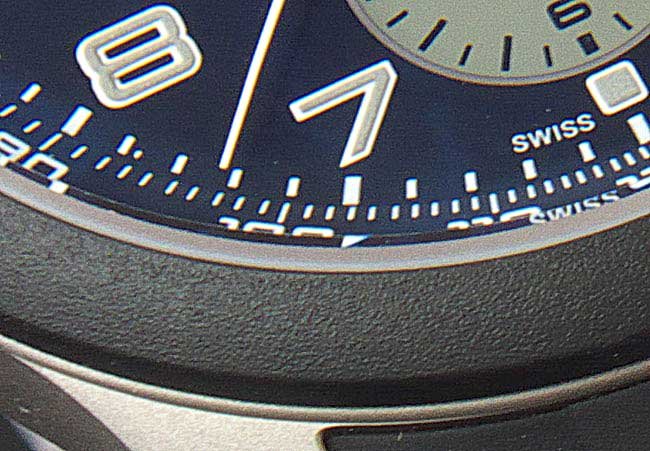
Unfortunately, this positive impression does not include the sapphire crystal on the top. This crystal is slightly domed, but starts with a noticeable step from the bezel; a better blending of the shapes would have been more Porsche-like. This small design flaw, however, is less than negligible compared with a serious quality problem: Already after a short time, not more than a few weeks since the watch was in my possession, I noticed small spots on the crystal. At first they appeared to be dirt, but a close inspection revealed that the antireflective coating was starting to flake off at these places. As if it was suffering from an infection, the coating first showed massive scratches, then completely came off in an ever increasing area.
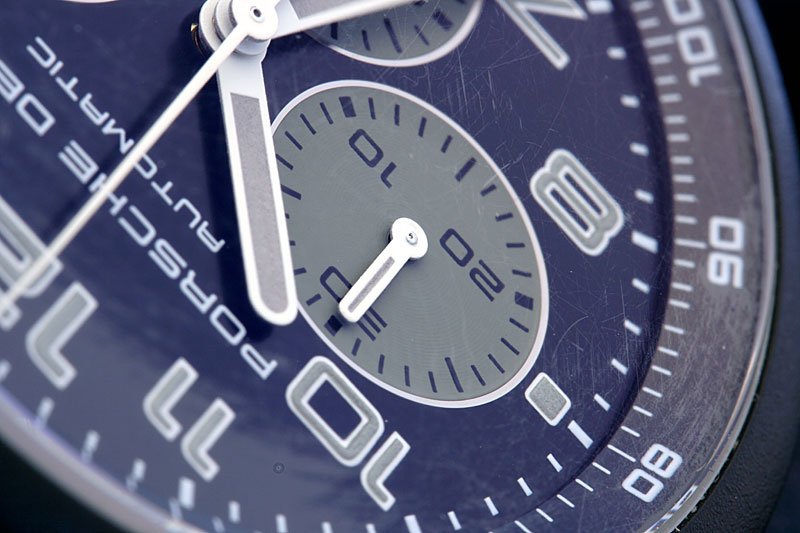
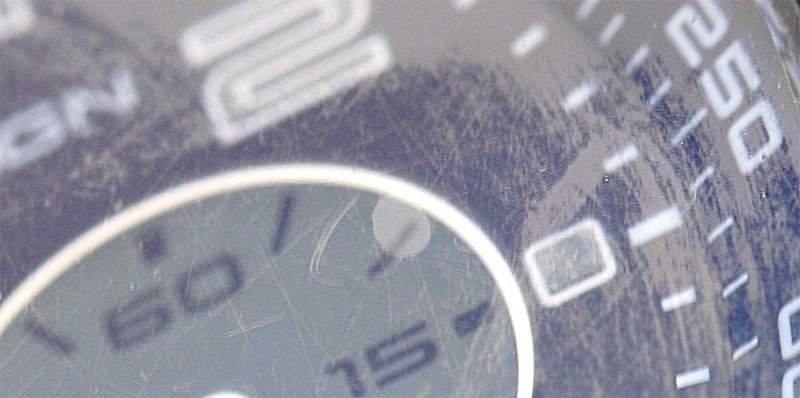
Meanwhile, after eight months, about a fifth of the crystal surface is without coating, which of course is very noticeable, since the domed crystal is featuring very strong reflections where it is uncoated. I am using several watches with an antireflective coating on the outer surface, some of them since many years, and very frequently, even under rough conditions. But never before I have encountered such a massive degradation of the coating. It looks as if it is eaten away by an aggressive fungus.
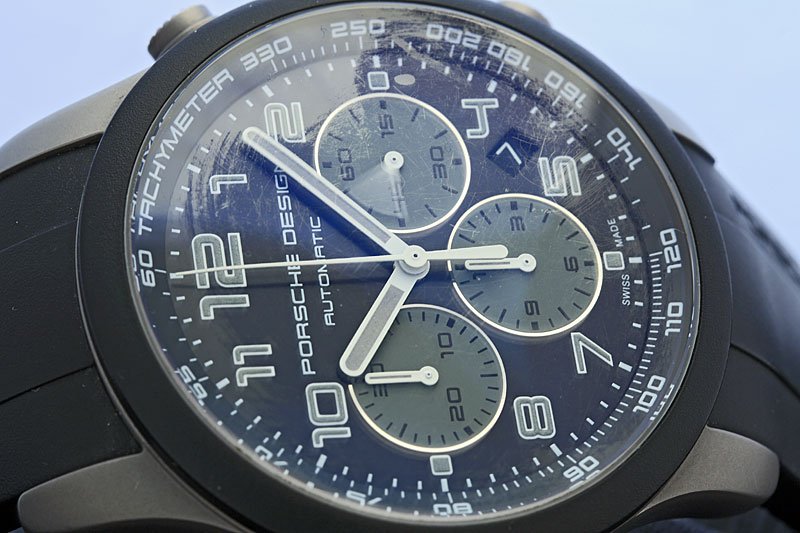
Apparently, this is not a result of normal wear, but an inherent flaw of the coating’s composition. It is impossible that only my individual watch is affected by the problem, since at least one complete production batch must have received the problematic coating. An information I got from a Porsche Design dealer, indicating that he knows about the issue, seems to confirm my assumption. There would be the option to completely polish off the damaged coating. However, the high contrast of the black dial with the white hands, and the clarity of the view on the dial are important design features of the watch, that would be lost, due to the many reflections caught by the domed crystal. Since there is still open warranty, therefore the factory will have to deal with the issue.
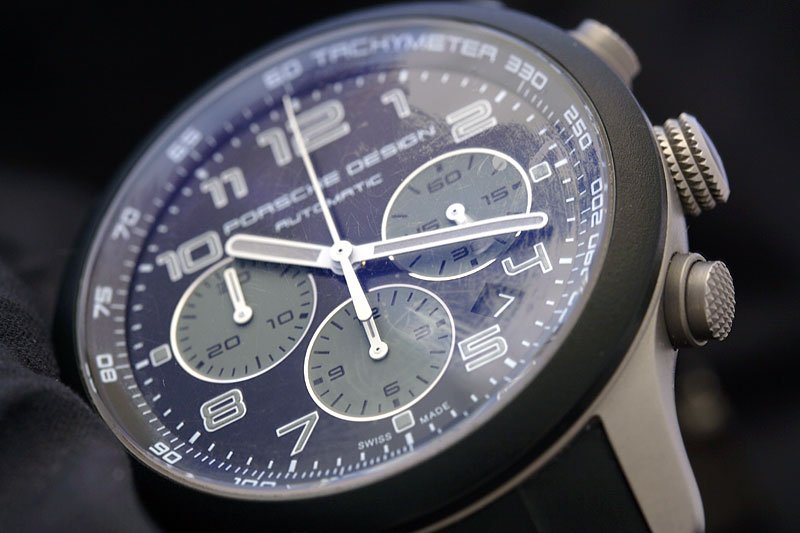
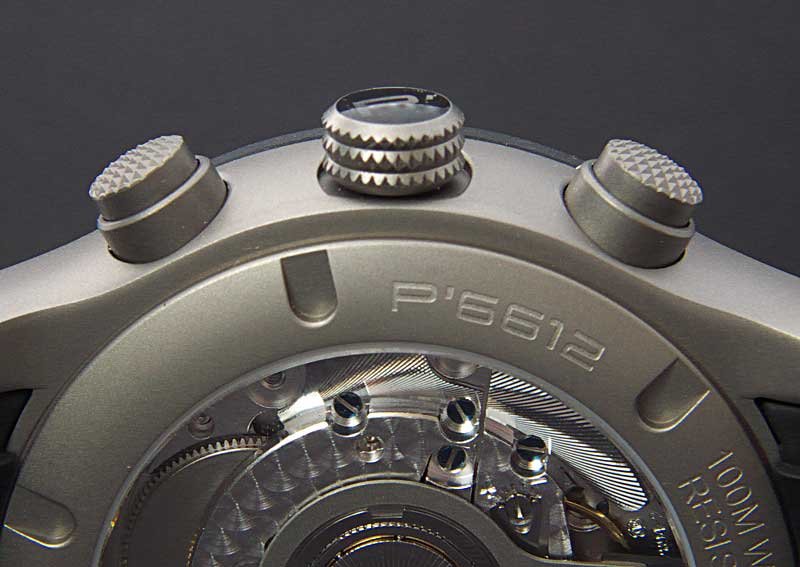
To return to the other, more positive aspects of the watch: The chronograph pushers are not screwed down, what is appreciated, since it is counter-productive for a chronograph if it can be used only after releasing any securing screws. The pushers’ surfaces are finished with a rough hobnail pattern that makes sure finger tips don’t slip. Pusher operation itself is a bit rough, and needs quite some pressure, typical for the ETA 2894 movement used.
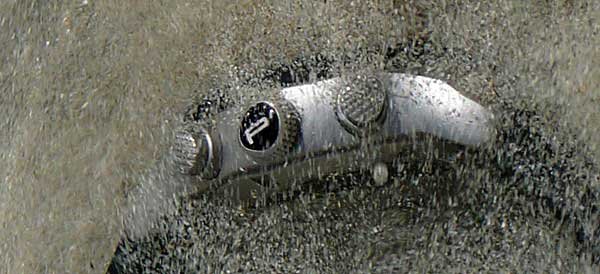
The crown is screwed down, showing a black “P”-logo that is protected by a sapphire inset. Both, the pushers and the crown, look very nice and well finished, matching well the watch’s overall style.
I am astonished to find the displayback’s sapphire crystal also being treated with an anti-reflective coating, albeit on the inner side only. The sense of this effort is beyond my understanding, other than raising the component cost, it is rather fruitless.
Please click here to read Part 2
Copyright February 2008 - Marcus Hanke & PuristSPro.com - all rights reserved
PuristSPro Homepage | ThePuristS Homepage
Comments, suggestions, and corrections to this article are welcome.

This message has been edited by AnthonyTsai on 2008-02-12 06:54:45