Vintage
Baron - Mr Red champions the Rolex 1665 Great White 'Rail Dial' Sea-Dweller, arguing for its recognition beyond the shadow of its Double Red predecessor. He delves into the historical evolution of the Sea-Dweller, highlighting the significance of the 'Submariner' text removal and the rarity of the Great White 'Rail Dial' variant, inviting collectors to appreciate its unique identity.


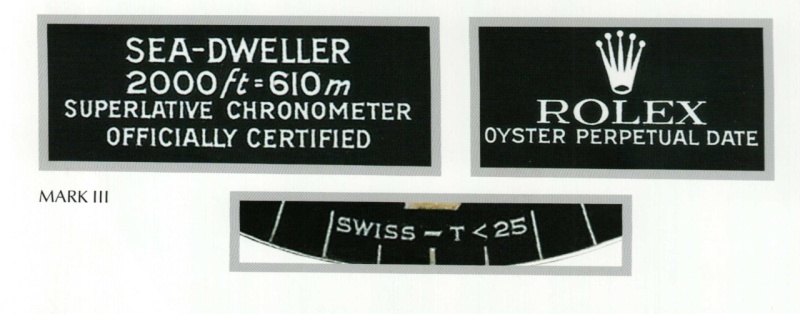
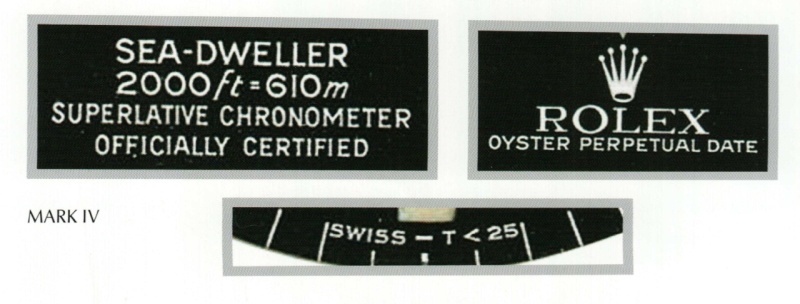
The 1665 Double Red Sea-Dweller (DRSD) has a very broad following amongst vintage Rolex collectors. There are entire websites devoted to the history, details and intricacies of this great watch. Produced for a decade (1967-77) with a multiple of dial and detail variations. It has captured the imagination of the vintage collector. The DRSD, however, has overshadowed a number of other great watches of the same genre.
Most obviously, I am talking about the 1665 Great White. I hunted a Great White “Rail Dial” (GWRD) for a couple of years. I wanted an early and original version with its full package of box and punched papers. Over the same time period, I was also hunting a DRSD Mk3 and DRSD Mk4. I found plenty of examples of the Mk4. The Mk3, of course, is much harder to find. I would say that the GWRD is about as rare as the DRSD Mk3. So, in terms of rarity, the GWRD is an unusual watch. But I think it is sexier than many of the DRSDs for a number of reasons. I would say it is time for the Great White to come out from the shadows of its Red Brother.
The GWRD was released in 1977, undergoing a makeover from the 1665 DRSD Mk4. The 1570 movement stayed the same (indeed all 1665s kept the 1570 movement with hack mechanism). However, the text “SUBMARINER 2000” was removed from the dial, leaving just “SEA-DWELLER”. This evolution of the Sea-Dweller is interesting. Is it a subset of the Submariner reference or is it a reference with its own unique identity? Well, I think it started as a subset of the Submariner group but evolved with its own very unique identity. One no longer thinks of the Sea-Dweller as a Submariner. When the Sea-Dweller was first launched, it is likely that Rolex needed to differentiate it from the standard Submariner, but wanted to attach some of the Submariner commercial appeal to the Sea-Dweller. Hence, at birth, the Sea-Dweller did not have a distinct lineage. The name “Submariner” sat on the dial.
The 1665 Great White was the first Sea-Dweller to actually drop “Submariner” from its dial. Well, actually, that is not 100% accurate. The very first prototype patent pending, nicknamed the “Single Red” did not carry the “Submariner” line, but since there is only one or two of such examples, it is reasonable to say that the first production watch to carry just “Sea-Dweller” was the Great White. One could argue that the watch’s evolution from being part of the Submariner Group to being a Sea-Dweller became crystalised with the Great White when the Submariner name was dropped from the dial.
Like its predecessor, the Great White came with a number of dial varieties. Most experts would say that there are 4 different dial varieties. However, thanks to Chris, on this forum, it now seems that there are five, with Chris showing an example of the Mk0 – the “Big White”. I attach a link here to Chris’s original article.
Here is a scan of the “Big White”, with the first line of text clearly over-hanging the second line of text (overhang marked in red by me). The “Big White” came in a very narrow serial range (5175XXX), pre-dating the Mk1 dial. The Mk0 dial was manufactured by Lemrich & Cie.

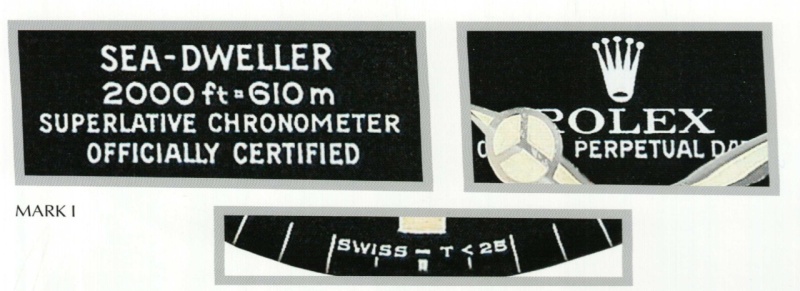
The Mk1 dial came on a serial number in the 5.2-5.7m range but also occasionally from 5.9-6.1m. The text “2000ft – 610m” was written in non-italic font, similar to the DRSD Mk4. The marking at 6 o’clock is also written as SWISS – T < 25, which differentiates it from the subsequent Mk 2 dial. The Mk1 dial was manufactured by Beyeler.

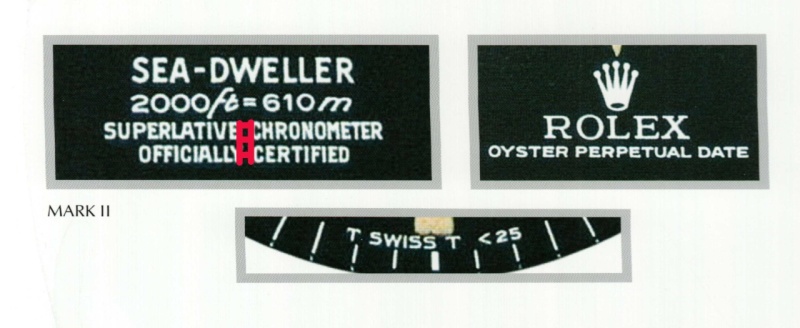
Excluding the Mk0, the Mk2 dial is the rarest configuration. The configuration of the wording SUPERLATIVE CHRONOMETER OFFICIALLY CERTIFIED creates a symmetry between the first two and last two words, leading to what has come to be known as the “Rail Dial” (sorry for my red addition!). Such a configuration can be found across other references (ie the 1655) so is not exclusive to the Sea-Dweller. However, it is the only Sea-Dweller reference to have this trait....other than Comex...(you see Nicolas, a Rail Dial theme gets more complex!)

Another factor that differentiates the Mk2 dial is the 6 o’clock marker which is T SWISS T < 25. Again, this is the only Great White dial variant that has this specific format.
Although one can never be 100% certain on serial ranges, I think it is comfortable to assume that the “Rail Dial” is typically found in a range of 5.7-6.0m.
There are other small variations specific to the Mk2 dial. For example, the style of the “6” in 610m is different in the Mk2 compared with the Mk1. In the Mk1, the 6 is an open 6, whereas in the Mk2 the 6 is closed. It is also correct to say that the font style for Mk2 onwards becomes italicised. Other small variations of this dial include the fact that the hour markers are closer to the minute track than in other dials and the minute markers are somewhat longer too.
One last nugget for the Mk2 is that the dial was manufactured by the Stern Company who also made the 600m Comex dials for the 1665 between 1977-79. There is a rich history to the “Rail Dial” for sure. Stern is also responsible for other Rolex Rail Dials (the 1655 for example). However, establishing this link between Comex and the Great White makes it very cool to my mind given the diving nature of both watches.
The Mk 3 dial has some subtleties too. The Rolex coronet has sharper (or at least more pointed) tips, and the depth rating has a slightly different font with the “ft” and “m” smaller than in the Mk2 dial. Mk3 dials were manufactured by Beyeler.

The Mk4 dial is very similar to the Mk3 with one or two minor differences. For example, the “r” in the word Oyster comes directly under the base of the “R” in “Rolex” above it, whereas in the Mk3, the Oyster “R” is displaced more to the left. One last minor difference is that the hyphen between “Sea-Dweller” is shorter in the Mk4 than in the Mk3. Mk4 dials were manufactured by Lemrich & Cie. The last year of production for the Mk4 before being discontinued was 1982. At least, this was the last time that the 1665 featured for sale in the Rolex catalog.

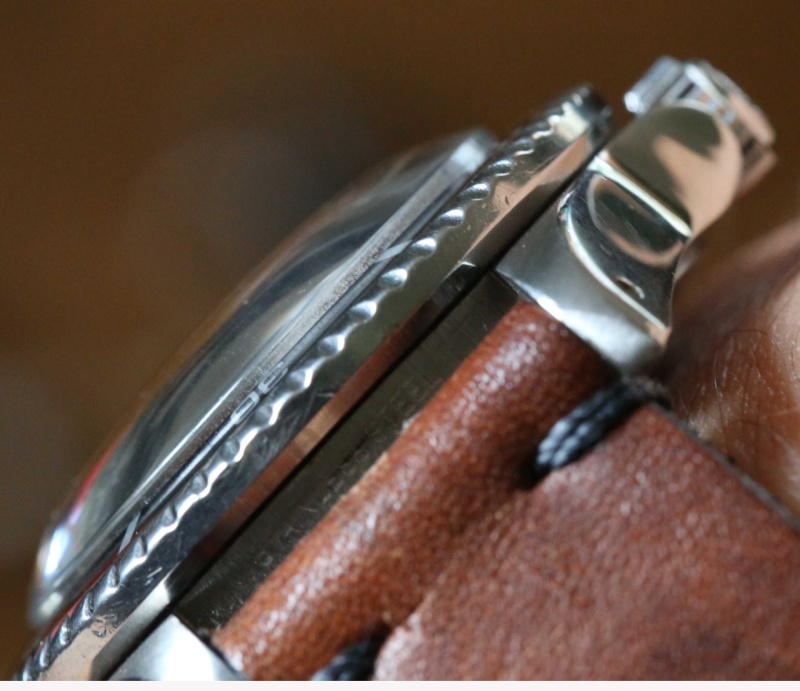
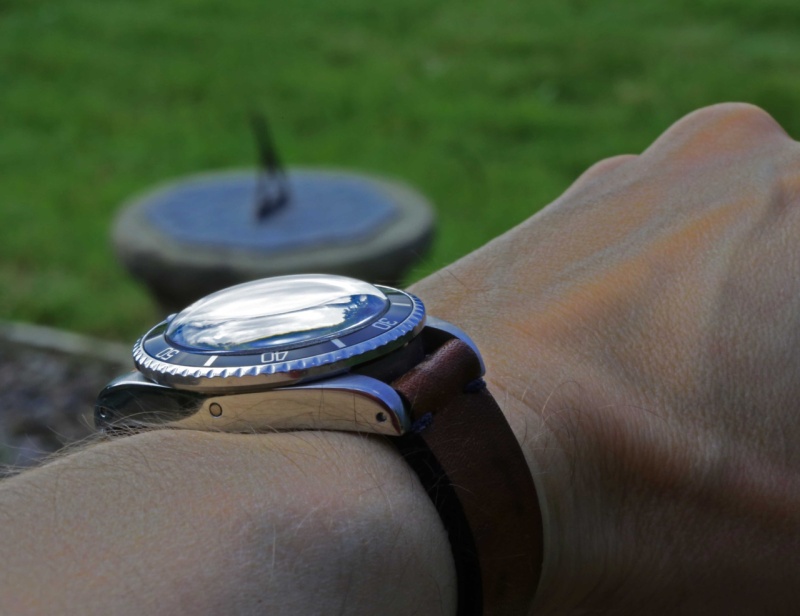
So, these are the dial variants and some of the history of the watch. Now to focus on the watch itself. In particular, the Rail Dial version which, to my mind, is as sexy as many of the DRSDs. The thing with most Sea-Dwellers is their prominence on the wrist. They sit more proudly than the Subs. Now, I don’t mean to infer that they are awkward or bulky. It isn’t that at all. In the same way that a Rottweiler stands in a somewhat prouder manner to a Labrador……that is more appropriate.


The 1665 will always hold a key place in Rolex history thanks to the Helium Escape Valve innovation. Rolex, through Comex, helped develop the first diving watch for saturation diving. At the time of release, the 1665 was not especially successful from a commercial standpoint. In those days, watch fashion was for smaller watches. The thicker case for the 1665 along with its design aimed specifically for professional divers did not make it such an obvious choice for an everyday watch. Of course, a similar story is so often true for so many watches that go on to become desirable to collectors. In today’s world of more fashionable bigger watches, the 40mm case on the Great White is now fairly average. With its super-cool domed plexi, it has a truly vintage look. The watch is, after all, 35 years old. Yet, with the 1570 movement it remains extremely reliable and robust. It is always hard to be definitive, but if I was to select a vintage watch to be a daily wearer, I think the Great White Rail Dial would be my choice.
It is true that the DRSDs get all the limelight. But actually, while that may be justifiable for some of the earlier DRSDs, it is hard to believe that the Great White Rail Dial is not one of the more highly desirable parts of the 1665 stable, with some unique features and great historical links. For me, the link with Comex and the fact that the Great White is the first Rolex to carry just “Sea-Dweller” makes it cool. The link with other Rail Dials such as the 1655 also makes it interesting. Again, that presence on the wrist is another attraction….and lets not forget the Helium valve….. Definitely one for the Cool Wall.
Uhmmm…a Cool Wall…..a Rolex Cool Wall…..there’s an idea. Great White Rail Dial starts the Cool Wall theme and I am placing it firmly in the cool sector.

The Rolex Explorer reference 1655 is a specific iteration within the Explorer model line. This reference is identified by its unique design elements that differentiate it from other Explorer models.
Information regarding the case material, crystal type, and movement architecture is not provided.
This reference appeals to collectors seeking a distinct Explorer model. Its specific characteristics position it as a notable piece for those interested in the variations within the Rolex Explorer series.
Uhm...... I guess you are right!
Like Ed, I can never keep track as well ... Although it makes for an interesting read. Not to mention the passion exuded by Rolex collectors ! The question is, who discovers this "differences" and how does this get proliferated !?!
Thanks for the analysis. I love the white 1665.
I didn't know all these details about the Great Whit, or about the SD RD ( Rail Dial ). It is great to have all these details in the same article, especially for those who are hunting this watch. A superb reference post, Baron. Bravo. Nicolas.
This thread is active on the Rolex forum with 53 replies. Share your knowledge with fellow collectors.
Join the Discussion →