Reference Guide
Bill provides an essential guide for collectors navigating the challenging world of 'unpolished' Rolex cases, specifically focusing on the iconic GMT-Master Ref. 1675. His insights, drawn from watchmaker evaluations and direct comparisons, aim to equip readers with practical knowledge to discern genuinely unpolished examples from those that have undergone restoration.


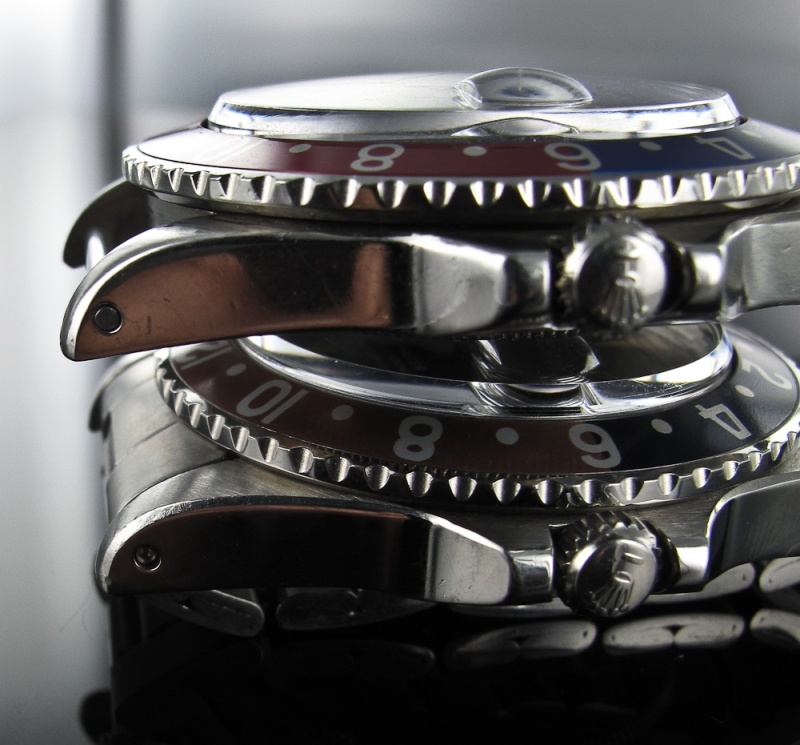

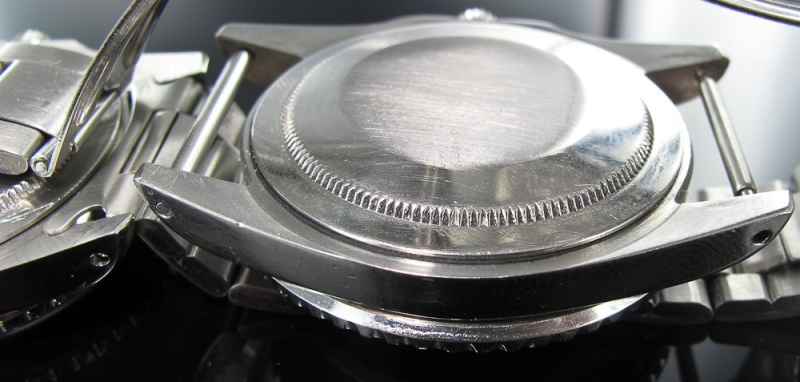
We all know that the dial condition is essential to the quality of a watch. And then next thing is the case. How many time have you heard the claim unpolished case. Probably more times than you can shake a stick at. How can you tell if a case is truly unpolished. Well, be the original owner with a very strong memory. Or try and use your best judgment and follow a few simple guidelines. Simply I wish. I will say however, unpolished case are probably 1 in every hundred that claim to be unpolished. It really is a rarity.
Can RSC recut the lugs and give a great beveled look again sure but you lose some metal and you lose the flatness that an unpolished case enjoys. I don't even think that getting out a set of calipers can guaranty accuracy of the unpolished claim. Rolex case lugs are asymmetric. I know that sounds a little off in a world of precision machining but the reason the lug shape is different on the crown side is to accommodate the crown guards so that side of the case does not appear out of proportion. I think we all have noticed this but think it is either our eyes playing games or an overly polished case. Polishing will make it narrower but for the purpose of validating an unpolished case you can expect to have a slightly smaller lug shape on the crown side. So putting the odd shaped lugs to bed we move on to how can we figure out what an unpolished case should look like. By example. You need to see a good example and compare it to another that we assume to have been polished.


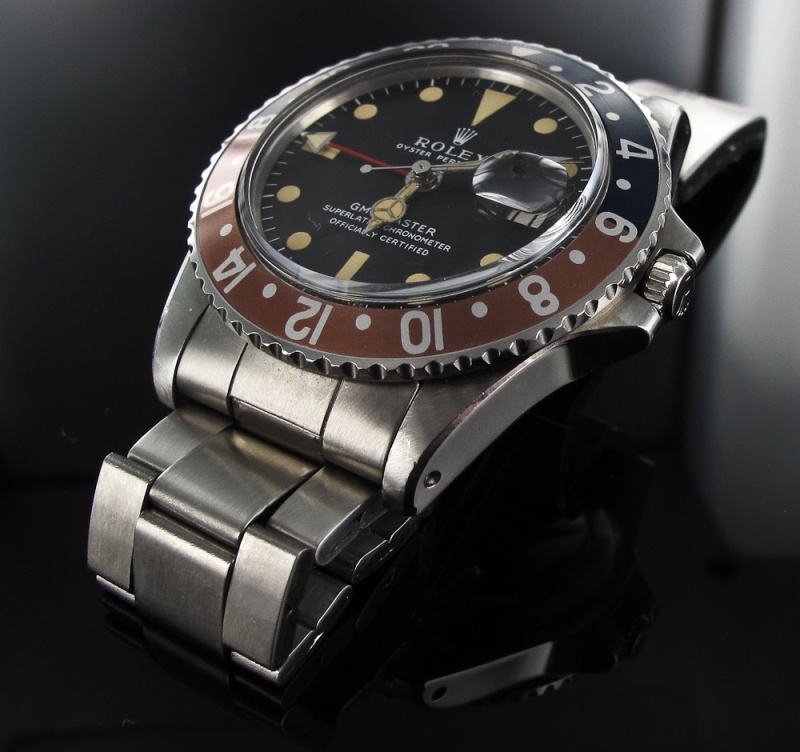
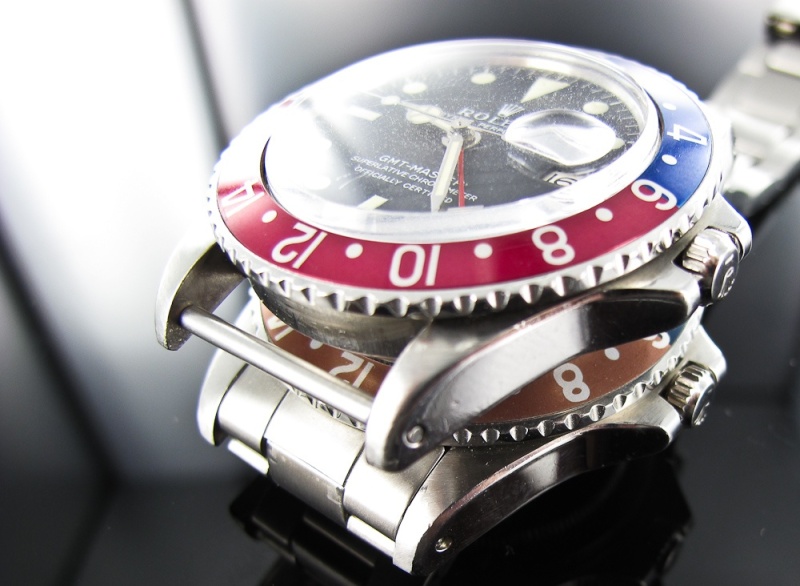
The problem is having a chances to see example so that you have a reference point to help you evaluate what you have seen with what is in front of you. I was lucky enough, after several watchmakers evaluation of the case, to take a few pictures and share some of the points that were made to me. The two watches in question are a 17xx mil from around 1967 and a 200xx from around 1968 with the latter being the one "Unpolished". The one with the bracelet mounted is obviously the unpolished watch in question form 1968.


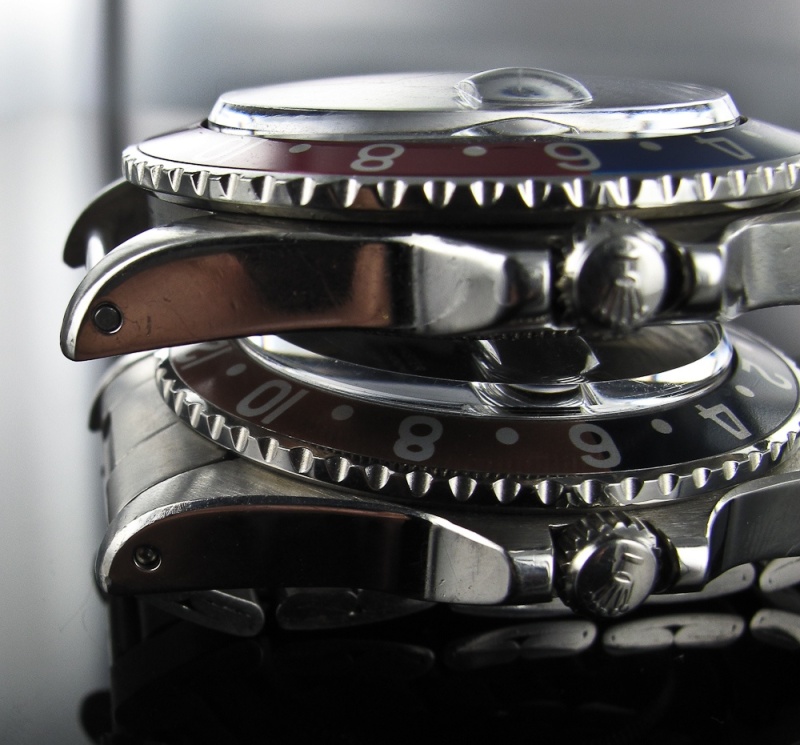
Again as we know nothing is for certain with Rolex but comparing these two examples can give you at least a feel for what to look for in comparing cases.


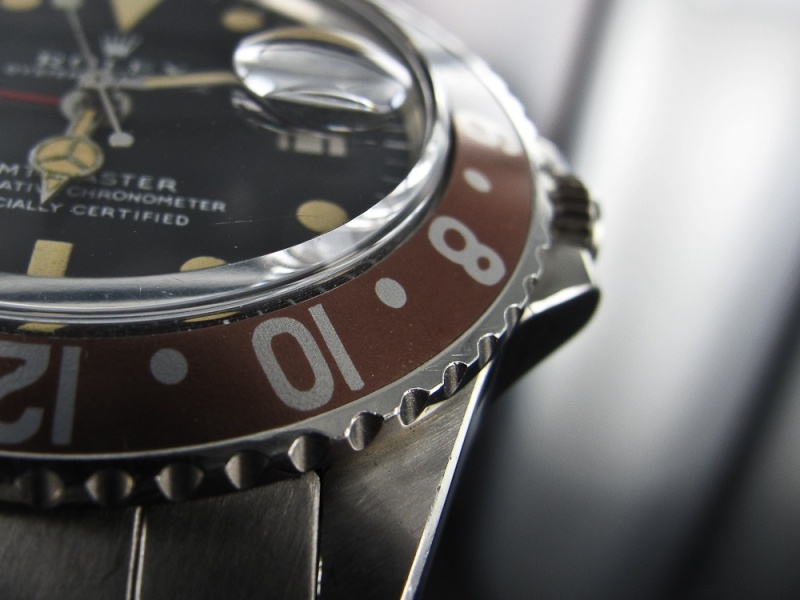
As always having the piece in your hand is really helpful. You can feel the sharp edges on the underside that are so sharp they can almost cut your finger.


The position of the lug holes in comparison to the edge of the lug bevel also really counts for a lot.

Obviously the thickness when comparing two cases is a solid indicator. Not so much in the asymmetric aspect but actual heft is apparent side by side.

The "meat" around the crown guards tells a story also.


Clean line and flat case side.


I hope these pictures can help you in the future to , evaluate, appreciate and understand the condition of a case whether it is unpolished, shirt rubbed, or recut by a master watchmaker.

The GMT-Master reference 1675 is a significant model in the brand's history, representing an evolution from earlier GMT-Master references. It was produced for an extended period, allowing for numerous dial, bezel, and hand variations throughout its production run. This reference is notable for its introduction of crown guards, enhancing the watch's robustness and contributing to its distinct profile. It solidified the GMT-Master's design language, which would influence subsequent generations.
This reference features a 40mm case, available in stainless steel, yellow gold, or a two-tone combination of steel and yellow gold. It is powered by the automatic Caliber 1575, a chronometer-certified movement known for its reliability and a power reserve of approximately 42 hours. The watch is fitted with an acrylic crystal and offers a water resistance of 50 meters, suitable for everyday wear. The bidirectional rotating bezel, typically with an aluminum insert, displays a 24-hour scale.
For collectors, the 1675 is highly sought after due to its long production period and the resulting variety of configurations, including different dial types (gilt, matte), hand styles, and bezel colors (Pepsi, all-red, all-black). Its four-digit reference number and acrylic crystal are key characteristics that define it as a vintage Rolex. The reference appeals to those interested in the historical development of the GMT-Master line and the nuances of vintage watch collecting.
...I now believe that my watches have been polished. Great post
Even if I am always " in doubt " when I read the words " Never polished ". I'd say that the watch you show is a superb example of a case in awesome condition. Has it been very lightly polished before, it is hard to say. The tactile test is also important, but one thing isure, here the real experience is the most important. Comparing, feeling and touching many cases will help to get an idea of what is a case in superb condition. Though, your criterias are excellent, and can be very helpful for th
In addition the watch has a very tight bracelet I 70 that is almost unworn which is also anecdotal evidence that this watch has had very little use on the wrist. I would say it is 10% used. No matter how good the watchmaker is he has to remove some metal to refresh the case and the evidence is hard to hide but only when you have another example next to it to compare. That is the real trick. An expert can give the feel of being unpolished when it stands alone but it will not stand the comparison.
no matter if it has been polished. The information I put up was more of a guide or a standard to measure against other cases and the one I compared it to looks great by itself nice and thick lugs with a worn bevel. But when she stands next to the bench mark we can see the difference. Thanks for looking Bill
... I don't miss anything, but for the sake if it could you add the actual thickness in mm or any other measure. Because for sure if a watch is getting polished will there be some material taken away. What is left, is less than what it should be.. I'm unfortunately on the road, but these measure exist and us a good guideline Best Hans
These measurements are conclusive in sofar as comparing these two example but there is no standard to measure against. If anyone has a similar 1968 1675 pleas try and add some measurements. The last picture I borrowed from the web Credit to Anatol. You can see completely different measurements but they are form a "unpolished" example of a 5513 from 1965. Bill credit - Anatol
This thread is active on the Rolex forum with 23 replies. Share your knowledge with fellow collectors.
Join the Discussion →