Rolex Oyster 7836 Bracelet: A Vintage Reference Guide
Reference Guide

Rolex Oyster 7836 Bracelet: A Vintage Reference Guide

By Bill · Jan 18, 2020 · 14 replies
Bill
WPS member · Rolex forum
14 replies25321 views6 photos
f 𝕏 in 💬 🔗

Bill, a respected contributor, provides an essential primer on the Rolex Oyster 7836 bracelet, a component often overlooked yet crucial for vintage authenticity. His detailed exposé helps collectors understand the specific models and end links associated with this iconic bracelet, bridging the gap between Gilt and matte dial eras. This article serves as a vital reference for anyone seeking to ensure period correctness for their vintage Rolex and Tudor sports models.

14 collectors discussing this on the WatchProSite forumJoin the Conversation →

The Rolex Oyster 7836 bracelet graces many models seen between 1967 to around 1975. The 7836 adored the Explorer 1016 and the Explorer II 1655 (Freccione), a personal favorite the GMT 1675 and even the Milgauss 1019 enjoyed her company. They seem to also share many end links to include the 258,280,358 and 380. It was also used for the Tudor models which include the 7031/2 and the 7159. The Tudor Monte Carlo seems to have their specialized links which include the 282 (correction maybe it was the 382) for the early 7031.


7836 examples


78360 examples


The 7836 and 9315 runs confluent to the 7206 and 6636 bracelets were used on the Gilt era Rolex Submariner and GMT's from mid-1950's to around 1966. Use of the 7206 and 6636 started with the no crown guards like the 6542 but are mostly found from the pointed crown guard 1960 - 1963 and finishing with the round crown guard gilts 1964-1966/7. The 7206 and 6636 shared various end links to include the 64,65 for the early no crown guard BC and mostly using 58 and 80 end links for subs and gmt's.


It seem there was a divergence at the beginning of the matt dials where they split and went 9315 bracelets to the Submariners 5512,5513,1665,1680 and the 7836 went to the other sports models. In addition in the USA it was a rivet C & I bracelet which was a replacement option for the 9315 so there could be some overlap with 7836 bracelets for gilt watches but the date stamp will confirm. What we do see is many more USA rivet C & I bracelet with dates 68 and 68 and higher up to 1971. But there are also early USA rivet C & I from early 60's but less common maybe due to survivability. The Swiss made seemed to be rumored as better quality.


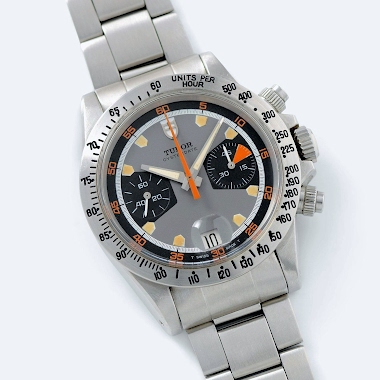
The question started as to what model fits the Tudor Monte Carlo 7159. To my knowledge there are a few but it seems like the most common seen for the 1970 to 1973 period was the 7836 folded links with a 282, 280 or a 380 end link (380B is a Tudor reference so maybe later). They also hand the Rolex logo on the buckle and blades. Later in the period 1974 to 1975 the Tudor logo was on the buckle with Tudor blades. But as always this is just an impression and variants are always out there.


I any case looking around a little you will find the 7836 bracelet used among several models that include

- EXPLORER ref. 1016 (ex. 1972 7836/280)
- MILGAUSS ref. 1019 (ex. 1969 7836/280)
- GMT-MASTER ref. 1675 (ex. 1969 7836/358)
- EXPLORER II ref. 1655 (Freccione) (ex. 3.2 mil 7836 / 380)


7836 generally seen with theses End Links

258 | 280 | 358 | 380 all in  20.0 mm width


So I think we have the 7836 and 9315 as one of the way to delineate the change from gilt dials to matt dials in and around 1967. So much Rolex to learn so little time. Please note this is not a complete bracelet expose just a little primer on the 7836 in relation to a question I got.

Back to the opening question about the Tudor Monte Carlo 7159 one replacement option includes 78360 with 589 end link.


Looking forward to some comments to fill in the wholes. Remember this is not an exact science just stipulations based on examples seen in the wild.


Best

Bill


About the Rolex Submariner Ref. 5513

The Rolex Submariner reference 5513 is a notable example within the Submariner line, distinguished by its two-line dial and lack of a date complication. Produced for an extended period, it represents a core offering for collectors seeking a straightforward and robust tool watch. Its design emphasizes legibility and functionality, aligning with the original purpose of the Submariner series. This reference is recognized for its consistent aesthetic throughout its production run, with subtle variations in dial text and bezel inserts.

The watch features a 40mm stainless steel Oyster case, offering durability and water resistance suitable for its intended use. Powering the reference 5513 is the automatic Caliber 1520 movement, known for its reliability. The crystal is acrylic, contributing to the vintage character of the watch. The unidirectional rotating bezel, typically with an aluminum insert, allows for elapsed time measurement.

For collectors, the reference 5513 is a significant model due to its long production history and the various dial iterations, such as gilt and matte dials, which present distinct collecting opportunities. Its appeal lies in its foundational design and its position as a non-date Submariner, making it a desirable piece for those who appreciate the model's original form. The watch is often paired with an Oyster bracelet, completing its functional aesthetic.

Specifications

Caliber
Cal.1520
Case
Stainless steel
Diameter
40mm
Dial
Black gilt
Water Resist.
200m
Crystal
Acrylic

Key Points from the Discussion

Advertisement
The Discussion
SU
Subexplorer
May 29, 2013

... is another interesting and Complex aspect of our favorite brand. It is specially interesting due to the fact that many vintage timepieces are found with a different bracelet because of a needed replacement during its long service with the original owner. Most collectors like to restore them to the original configuration, and this info is welcomed. Thank you for sharing your information with us! Best cordial regards, Abel.

BI
Bill
May 29, 2013

I think having the period correct bracelet is a nice touch. It seems many like to put modern replacements for safety reasons but the charm of the original bracelet and strange sounds it makes as the bracelet hts is the case is music to my ears. You can consider inserts and crystals in the same complexity as bracelets because they too are many times lost or worn out along the way. And unfortunately find original replacements is very hard. Bracelets have some more flexibility, but service inserts

AM
amanico
May 29, 2013

It will help me to check if the configurations are correct, with my Vintage Rolexes. I must admit that my knoweldge on Vintage Rolex Bracelets is close to zero. Thank you! Best, Nicolas

SU
Subexplorer
May 29, 2013

... riveted links bracelets. I know present made Oyster bracelets are far better and stronger for daily hard use, but for looks, the riveted links have no equal, in my modest point of view. They add to a very cool vintage look and a lot of charme to an old Rolex. Regarding plexis and inserts, also agree that it is another complex (and for me completely unknown) world. Thank you again Bill, for a great reference post. Cordial regards, Abel.

LO
logan
May 29, 2013

Thank you for sharing your information with us! Best cordial regards, Logan

BI
Bill
May 29, 2013

This is still lesson 101 in Rolex school. Class is not dismissed yet...... LOL. I am glad you enjoyed the info. Best Bill

Advertisement

Continue the conversation

This thread is active on the Rolex forum with 14 replies. Share your knowledge with fellow collectors.

Join the Discussion →