Vintage
Baron - Mr Red initiates a crucial discussion on the definition of a "tropical" dial, a term often debated among vintage watch collectors. He challenges broad interpretations, advocating for a specific understanding of this phenomenon as a uniform, natural fading of the dial, distinct from damage. This thread aims to establish a consensus and showcase examples of what truly constitutes a tropical dial.


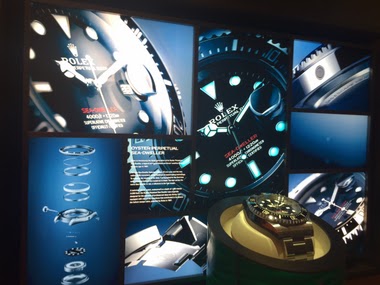
The Rolex Sea-Dweller reference 1665 is a significant model within the brand's professional tool watch lineage, distinguished by its enhanced water resistance compared to contemporary Submariner models. This reference was developed to meet the demands of professional saturation divers, featuring a helium escape valve (HEV) integrated into the case side, a key differentiator from other Rolex dive watches of its era. It represents a period of innovation in deep-sea horology, offering a robust solution for extreme underwater environments.
This reference features a 40 mm stainless steel case, designed for durability and resistance to high pressures. It is powered by the automatic Caliber 1575, a chronometer-certified movement known for its reliability and precision, offering a power reserve of approximately 42 to 48 hours. The watch is fitted with an acrylic crystal, contributing to its water resistance rating of 610 meters, and typically features a black dial with luminous hour markers.
For collectors, the reference 1665 is notable for its functional design and its place in the evolution of professional dive watches. Early examples, often referred to as "Double Red Sea-Dweller" (DRSD) due to two lines of red text on the dial, are particularly sought after. Later versions feature all-white text. The presence of the helium escape valve and its robust construction make it a distinct and historically important piece for those interested in the development of specialized timekeeping instruments.
the miracles of the Brit sun .... LLOOLLLLL besides jokes ( sorry I can't ever resist ... ) in my big opinion ( as I'm a big man in the range of 250 lbs.. LOOLL ) .. " tropical " is a dial naturally faded to a different colour ( most times to brown with many different shades ). a dial is " tropical " when : a) it's almost uniform b) is not damaged ( or at least there are no heavily damaged zones ) here for ex. is an IDF Heuer faded to dark brown ( not completely uniform .. sigghhhhh .. ) :
.....so I am going to compile a form of running "checklist"..... 1) A dial that is unusual by dint of damage is not a tropic. 2) A tropic should be uniformly tropic across the dial and not just in some places. 3) Tropic is a result of dial fade....not water-damage. What do you think of this one?
not my cup of tea and neither my glass of beer ... ( either a bit too damaged and flyblown )
I can understand why it's not their cup of tea. Maybe its the fact of a damaged dial. Tropical can be a very broad term used to describe a color change in the dial and often time I've seen used on dials that have the slightest and darkest hint of brown. Is there a color change? Sure! Is it worthy of being coined with the term Tropical in my book? Maybe not. For me, a true tropical should have perfectly even color change, no water damage, lume plots all full, and print perfectly bright and legibl
......but as you ask....yep, I like it.
1680 with case in the 2.216 range ( case produced in december 1969 and contemporary to PP 1665 ) ; please forgive the lumi replacement insert ( watch from my records checked by me 8 years ago ) :
This thread is active on the Rolex forum with 77 replies. Share your knowledge with fellow collectors.
Join the Discussion →