Vintage
Bill's comprehensive article on the Seiko 62MAS (Ref. 6217-8000) offers a deep dive into Japan's first professional dive watch, contextualizing its historical significance and technical innovations. This detailed guide provides invaluable information for both seasoned collectors and new enthusiasts, shedding light on how Seiko challenged Swiss dominance with an accessible yet robust tool watch. The post and subsequent discussion underscore the enduring legacy and collectibility of this pioneering reference.
The Seiko 62MAS, reference 6217-8001, debuted in 1965 as Seiko’s first professional-grade dive watch. It entered a market dominated by Swiss icons like the Rolex Submariner, Blancpain Fifty Fathoms, and Omega Seamaster 300. The 62MAS — short for autoMAtic Selfdater — was built for Japan’s growing professional diving community and maritime industries, offering robust underwater performance at a far more accessible price than its European rivals.
Before the 62MAS, Seiko’s water-resistant watches were dress-oriented. The new model represented a leap forward in engineering, achieving a 150m water resistance rating thanks to a screw-down caseback, reinforced crystal, and innovative sealing system for its large push-pull crown. Its clean, functional design — matte grey dial, broad luminous hands, and a date complication — reflected Seiko’s focus on legibility and utility.
In 1966, the watch was issued to the Japanese Antarctic Research Expedition, enduring extreme cold and pressure, solidifying its reputation as a reliable tool watch. The model even appeared in the 1977 film The Deep, adding a pop culture footnote to its history.
Seiko used a smaller crown at the beginning of the production run for this watch in 1965. The example we have here is from the first series of 62MAS watches with the 5.5mm crown. Another interesting detail about watches from the first series is that the characteristic dolphin etching on the caseback was etched lighter to begin with, and many have rubbed away due to wear, leaving only the case number on the back visible." The Small Crown was produced for only two months in April and May 1965.


When it launched, the 62MAS cost around ¥13,000–¥15,000 (~$36- $40 USD in 1965), less than a quarter (More like 1/6) of the price of a Rolex Submariner 5513 (~$230 USD). Despite the lower cost, it offered equivalent water resistance to most Swiss rivals: Seiko’s 150m WR was impressive for a push-pull crown (most Swiss used screw-down).
| Model | WR | Movement | Case Size | Crown | Bezel | Notes |
|---|---|---|---|---|---|---|
| Seiko 62MAS | 150m | 6217A, 17j, 18,000 bph | 37mm | Push-pull sealed | Bi-dir | Japanese Antarctic Expedition |
| Rolex 5513 | 200m | Cal. 1520, 17j | 40mm | Screw-down | Bi-dir | Military use |
| Blancpain Fifty Fathoms | 200m | AS 1361N, 17j | 41mm | Screw-down | Bi-dir | French & US Navy |
| Omega Seamaster 300 | 200m | Cal. 552, 24j | 42mm | Screw-down | Bi-dir | Military issues |
| DOXA Sub 300 | 300m | ETA 2472, 17j | 42mm | Screw-down | Uni-dir | Cousteau partnership |
Today, the 62MAS is one of the most sought-after vintage Seikos. Surviving examples in original, unpolished condition with correct bracelets command high prices — often exceeding $4,000–$6,000 USD at auction, with near-mint or boxed sets fetching even more.
Collectors prize two main dial/case variations: early small crown models and later large crown versions. Patina on the grey dial and tritium lume is often considered part of the watch’s charm.
Seiko has paid homage to the 62MAS multiple times — most notably with the SLA017 (2017) and SJE093 (2023) — both staying true to the original’s design language while upgrading materials, movements, and ISO certification.


From a disruptive 1960s tool watch to a 21st-century collector’s icon, the Seiko 62MAS remains a cornerstone in dive watch history — proving that Japan could compete with, and often out-engineer, the Swiss in the professional watchmaking arena.
Image credits: WatchProSite Seiko forum members hmmmcamu, DoesNotTickTock, Mach. Historical pricing and specifications cross-referenced from Seiko archives, period advertisements, and dive watch literature.

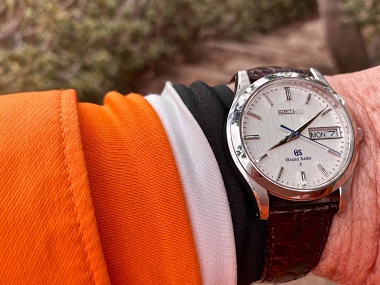
The Seiko 1520 is a vintage mechanical timepiece, part of Seiko's mid-20th century offerings. It represents a period when Seiko was establishing its reputation for reliable and well-engineered movements, often focusing on practical designs for daily wear. These models typically featured robust construction and straightforward timekeeping functions, appealing to a broad market.
This particular reference houses a mechanical movement, emphasizing traditional watchmaking principles over the emerging quartz technology of later decades. The case design is often characterized by its simplicity and clean lines, reflecting the aesthetic trends of its era. While not a high-complication piece, its internal mechanics are designed for consistent performance.
For collectors, the Seiko 1520 holds relevance as an example of Seiko's foundational mechanical watch production. Its appeal lies in its vintage charm, the tactile experience of a hand-wound or automatic movement, and its historical position within the brand's extensive catalog. Well-preserved examples are sought after for their originality and mechanical integrity.
To add, here is the display from Basel World in 2017 showing the original 62MAS (with a description of its history that echos Bill’s), followed by the re-issue unveiled at Basel World- the SLA017. I went crazy for this watch when I saw it and called my local Grand Seiko dealer and was placed at the top of the list. It arrived a few months ago later. They even discounted it. 😊 A number of things are really appealing about this reference. First, the dial is sublime with its greyish/greenish hue. I
They did a great job on the re issue.
This thread is active on the Seiko forum with 11 replies. Share your knowledge with fellow collectors.
Join the Discussion →
![## SEIKO SARJ007 Presage Classic Series 6R5J Automatic JDM [S1520]](https://i.ebayimg.com/images/g/WE4AAeSw9Chpwmm-/s-l500.jpg)