
Service
Bobridley's post on seal integrity for vintage watches remains highly relevant, emphasizing how proper care can significantly influence a watch's graceful aging and market value. His insights highlight the long-term approach necessary for preserving the intrinsic and sentimental value of these timepieces. Understanding the watch case as a closed system is crucial for preventing premature damage from environmental elements.


Seal integrity is an increasingly relevant vintage topic. I’ve touched on this concept with collectors in recent years because of the value of preserving dials, hands, and movements. As collectors/inheritors, our hope is that the watch will age gracefully… producing a patina that is pleasant to the eye as well a condition that will hold its own in the market place. I believe that by caring for the seal integrity can we have the greatest influence toward this desirable combination.
A watch is new only once, and over time the components will age. The aging process, however, is relative rather than constant. Now that we have been observing watches over decades, we can apply these observations to the ongoing care of vintage timepieces. With respect for the sentimental and intrinsic value of these watches, I suggest a long term approach.
The watch case itself is intended to function as a closed system; it should remain dry, lubricated, and clean – free of micro-particles and airborne contaminants. Any lack of seal integrity will allow elements of the environment into the watch. Moisture entry has a fairly predictable outcome. In addition, other elements – airborne micro-residues or toxins – have outcomes, although less predictable. Over time, such elements can cause premature aging – some of it damaging to the watch. They can affect the dial/hand conditions, as well as the condition of the movement. One could say that these elements are a “silent killer”.
Elements of the environment-----the silent killer
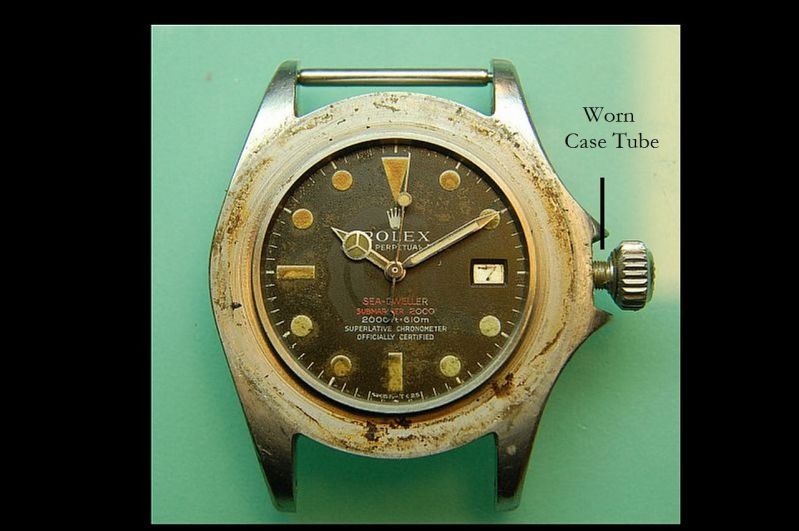
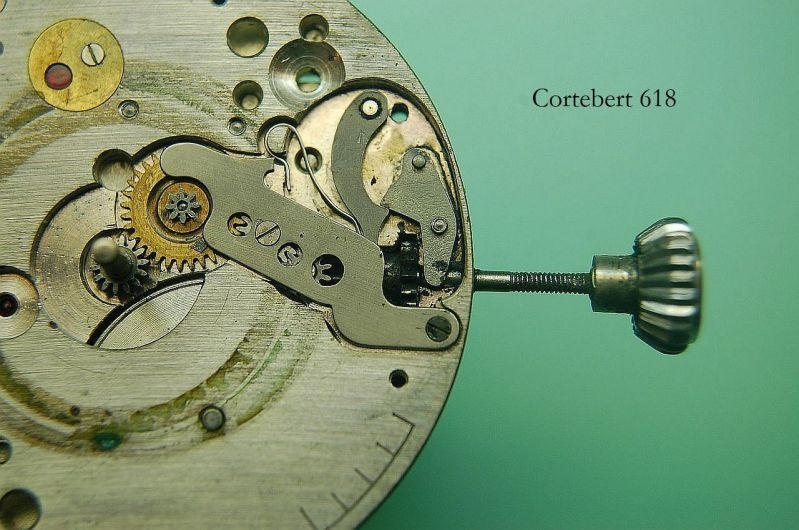
While current technologies enable us to restore, repair, or correct most damage to the components of a movement, case, and bracelet, we have yet to arrive at a point where dials can be restored without affecting their market value. Simply put: when a dial is blemished, there’s no point of return. The dial plate can be refinished but the original finish is gone.
Preserving the current condition of a dial for the next generation
My focus in this discussion is to suggest ways to preserve the dial and hand components, in order to care for what is both precious and valuable.
We have all seen well-preserved dials and damaged dials. Sometimes it appears that there is no apparent logical cause as to why some dials age more quickly than others; however, this apparent random outcome is not a thorough observation. When we divide vintage watches into two broad categories, one category rarely shows dial/hand degradation (these watches have aged gracefully) while the other category reveals random levels of degradation (to a point where some are a blemish to the eye). So, which category of watches seldom degrades?
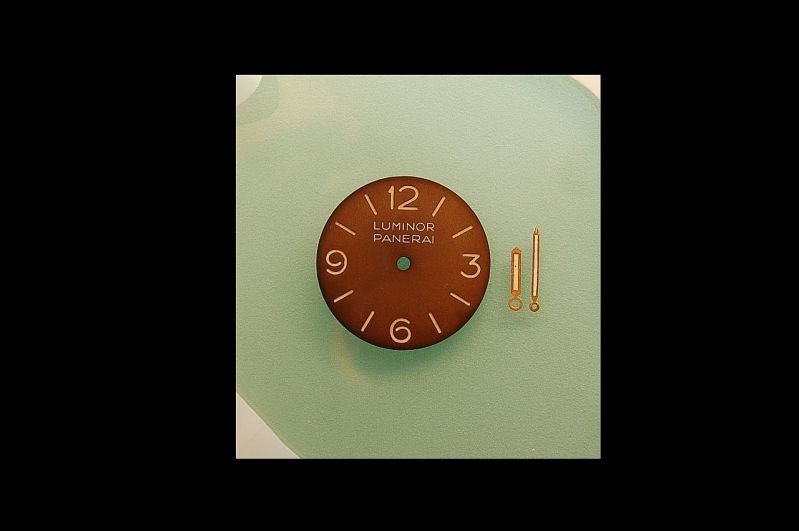
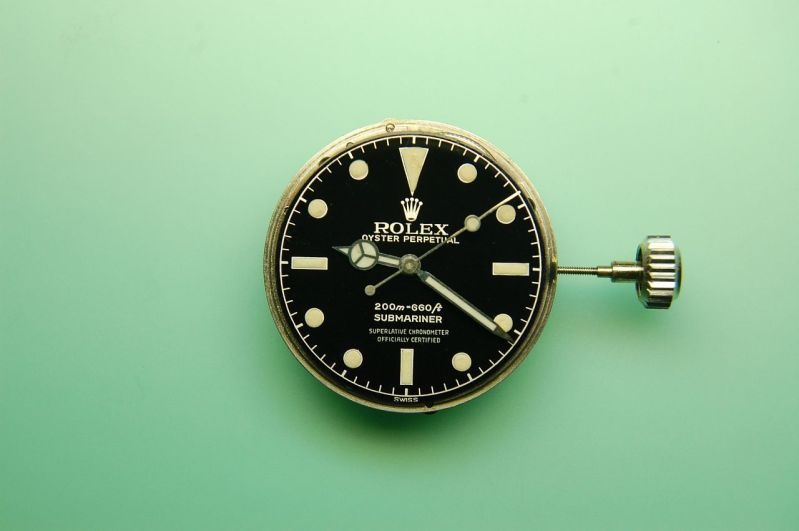
Watches which have consistently remained sealed have the desired outcome
I have personally never observed a painted watch component prematurely oxidize where the seal integrity was good. This is not to say that every mint dial was correctly maintained – some mint dials are preserved randomly even without seal integrity. Yet in a consideration of how to best preserve the current condition of one’s dial, it does seem relevant to consider that mint dials are less common. Why is this?
Most, if not all dials have been at least somewhat affected by exposure to the elements. From this point I make my recommendations regarding seal integrity. In my experience, the best way to ensure the preservation of your watch’s painted/lumed components is to maintain the correct sealing. To do otherwise exposes your prize vintage watch to a roulette wheel outcome where it is less likely to fare well.
Care for it in the short run and it will care for you in the long run
In discussing this matter, we’ve sidestepped the broader issue of periodic service. Owners have varying opinions about service based on experience and personal preference. To proponents of the “If it ain’t broke, don’t fix it” thought, I’ll say “Okay. When it’s broke the watchmaker will fix it”. That is, one will fix what can be fixed. At this stage of vintage restoration, we do not have the same level of influence over dials and hands which we have over rusted and damaged movements. So, while you are placing great faith in the durability of your Rolex movements, we urge you to please consider protecting your increasingly fragile dials.
The specifics for ensuring seal integrity vary according to the case model. There are 3-5 entry ports in most wristwatches: Crystal, Case Tube/Winding Crown, Pushers, Valve (Sea Dwellers), and the Caseback. The seals in these areas do have a certain life expectancy and need to be periodically checked and replaced when necessary.
My current recommendation would be to have the seal integrity of your vintage watch tested. Determine whether or not there is current entry, and evaluate all possible points of entry to determine the need. Then, address the “soft spots” on an as-needed basis; replace components with an eye to maintaining the market value as well as enhancing integrity until the next scheduled maintenance. This process will greatly increase the likelihood of a watch that will age with grace.
Best regards,
Bob Ridley
Bob Ridley, CW 21
Watchmakers International
2807 Blackwood Drive
Arlington, Texas 76013
Unexpected post! Thanks, quite informative and important.
Excellent adivces, too. You raised some very logical points which are mandatory for any watch collector. Thank you! Best, and welcome here. Nicolas
You are the well known Bob Ridley recommended by many within the vintage Rolex circle. Cheers,dreamer
And interesting observation! Some real food for thoughts!
Such informative and educative writing ... Best, Sam
This thread is active on the Officine Panerai forum with 5 replies. Share your knowledge with fellow collectors.
Join the Discussion →