More than a QP: the Harry Winston Excenter Perpetual Calendar (2007)
foversta

Before presenting the Excenter Perpetual Calendar, I would like to quickly browse the history of the Excenter collection which is symbolized by the successful partnership between Harry Winston and Agenhor, Jean-Marc Wiederrecht's company. It is important to know this history to understand why the reasons behind the Excenter Perpetual Calendar presentation in 2007.
The roots of the Excenter collection were defined in 1999 and the First Excenter was released in 2001. All the Excenter share the same off-center main subdial which is the common DNA of the collection. The first Excenter may look simple at first glance but in fact, it is the first watch to feature a bi-directional second hand. Agenhor very thin module (1,60mm) is the 2811 powered by the GP 3306. Of course, we recognize the very specific Harry Winston case with its arch shape parts and the mobile lugs which improve the wearability of the watch.

Second Excenter is the Timezone I presented you here:
harrywinston.watchprosite.com
This watch features a very clever second timezone display which makes it a good partner for the traveller ! Agenhor module is the 2821 powered by the Jaquet (now Lajoux-Perret) 7061 caliber.

Third Excenter is the Chronograph. I made a review of the Ocean version of this Chronograph here:
harrywinston.watchprosite.com
The layout of the dial fully takes advantage of the use of the three retrograde hands and of the off-center main subdial. Agenhor module is the 2831 and due to the chronograph complication, the base of the caliber is the FP 1185.

Back to a more simple watch with the Fourth Excenter: the Biretro. This watch has second and day of the week retrograde hands which give a very nice symetric style to the dial. Agenhor module is the Agenhor 2837, still very thin (1,30mm) and powered by the GP 3196.
Fith Excenter is very different from the other ones: the watch case is not round but rectangular. It is also the most simple of the collection because it doesn't have any retrograde hand. The dial layout makes us think about the Rolex Prince. Agenhor module is the 2861 and the caliber used is the Quartz ETA 980.163.
Sixth Excenter is the Perpetual Calendar and the object of my post is to make you understand why this watch is so special.
The project started in 2006. The main idea was to add another complication into the Excenter collection but due to the fact that the previous 5 watches already had a large range of complications, it was not an easy task to find a new and right one suitable within the Excenter context (off-center main subdial – specific case).

The first Perpetual Calendar (the Biretro) from Harry Winston was presented in 1989 and Hamdi Chatti thought that it was the right time to create a new Perpetual Calendar: the will to release the sixth Excenter gave this opportunity.
To create a worthy successor to the first Perpetual Calendar, it was required to add something that would make the watch special and that would differentiate it from the competition. This addition had to be useful and not a mere gimmick. The experience of the second Excenter, the Timezone, gave the idea: what about a true Perpetual Calendar with a second timezone display? The sucess of the Excenter Timezone gave the proof that Harry Winston clients needed a watch which was able to help them during their trips.
The Perpetual Calendar presented by Harry Winston in 1989 was the first one to use retrograde hands:
A classic Perpetual Calendar watch is maybe the worst watch if the owner needs to frequently set the time due to travels into different timezones. For example, if the owner of the watch travels to the East, he needs to put the watch forward by several hours. If he goes beyond midnight, the Perpetual Calendar mechanism plays its role and the date, maybe the month or even the year can change. Back to his home country, he needs to adjust everything backward, which can be a very painful task if he is not a professional user of the pushers!

The purpose of the Excenter Perpetual Calendar, unveiled in 2007, is to be first Perpetual Calendar designed for the travellers thanks to its second timezone display. This second timezone display is very readable (the yellow hand located on the main subdial) and can be operated very easily through the pusher located at two o'clock. Of course, moving this hand doesn't disrupt the Perpetual Calendar working and it is the key feature of the watch.
Even if the result seems to be very simple, it was a difficult task for Jean-Marc Wiederrecht to build such complication and to reach a perfect behaviour of this second timezone hand. In this context, the work on the teeth and gearings which was done for the Excenter Timezone was very helpful.

Let's have a look now at the dial organization: the main subdial is located on the right side with the moonphases indicator below, a bit like the day&night indicator of the Excenter Timezone even if here it is not in a line with the vertical axis. Month and date displays are done through retrograde hands located on the left side of the dial. The years (using the 1-2-3-L scale) are indicated with a rotating disk. There is no second hand.

The layout of the dial is very balanced even if it is very original when we compare it with dials of classic Perpetual Calendar watches or even with the dial of the first Harry Winston Perpetual Calendar which was a symetric one.
Agenhor module is the 111. It is a quite thin (2,40mm) and large (34mm diameter) module. Once put on the GP 3300 which powers it, the overall height of the movement is 5,60mm. This height, combined with the diameter of the case (41mm) gives a slender and elegant style to the Excenter Perpetual Calendar.


Due to the fact that the module is located dial side, the see-through back of the watch is sober: the golden rotor brings a touch of warm atmosphere while the cotes de Geneve of the central plate have a nice contrast with the perlage of the main plate. The movement finishings are clean, but not eye-catching. It is not a big issue because what we first expect from the movement is its efficiency and its complications.

The dial and the case are more attractive for your eyes: the case has the typical Premier&Excenter case design with its arch shape parts. Its finishings are excellent, I really like the work on the lugs and the crown and pusher integration.
The dial is beautiful thanks to its various details: the contrast of the hands with the main color, the hand beveled parts (look at the different scales on the dial), the moonphases indicator, the guillochage of the retrograde hands sectors, everything contributes to the high quality perception.
On the wrist, even if it is larger than the Excenter Timezone (41 vs 39mm), I have the same feeling of comfort thanks to the mobile lugs. The watch finds easily its place and it is a true pleasure to wear it.


The Excenter Perpetual Calendar is available only with precious case metals (platinum or gold).
Thanks to its useful and clever addition (second timezone indicator), to the beauty of the dial, I'm seduced by this Excenter Perpetual Calendar. Even if I prefer at the end the Excenter Timezone for its handwind caliber and its simplicity, I consider this Excenter Perpetual Calendar as one of the most original and innovative Perpetual Calendar watches of the market.

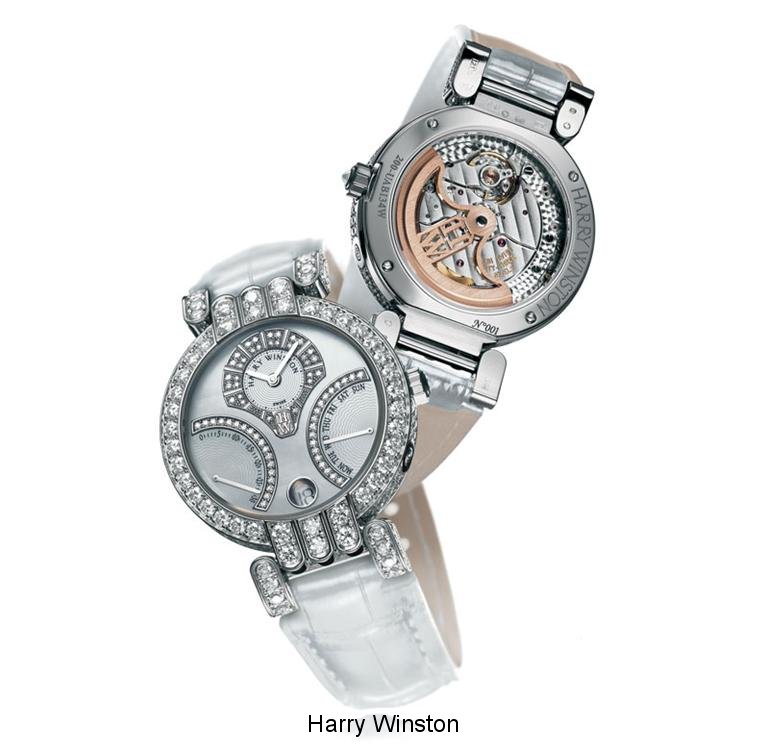
I just want to add that a LE of Excenter Perpetual Calendar was released to celebrate the 20th birthday of the first Perpetual Calendar. On this watch, the retrograde hands sectors were opened to get the ability to see parts of the Agenhor 111 module. The picture below gathers the two watches.

I would like to thank a lot Jean-Marc Wiederrecht for his kindness and availability and for all the information he brought me.
Fr.Xavier
This message has been edited by AnthonyTsai on 2010-08-29 07:43:53 This message has been edited by foversta on 2010-09-05 10:36:05
The roots of the Excenter collection were defined in 1999 and the First Excenter was released in 2001. All the Excenter share the same off-center main subdial which is the common DNA of the collection. The first Excenter may look simple at first glance but in fact, it is the first watch to feature a bi-directional second hand. Agenhor very thin module (1,60mm) is the 2811 powered by the GP 3306. Of course, we recognize the very specific Harry Winston case with its arch shape parts and the mobile lugs which improve the wearability of the watch.
Second Excenter is the Timezone I presented you here:
harrywinston.watchprosite.com
This watch features a very clever second timezone display which makes it a good partner for the traveller ! Agenhor module is the 2821 powered by the Jaquet (now Lajoux-Perret) 7061 caliber.
Third Excenter is the Chronograph. I made a review of the Ocean version of this Chronograph here:
harrywinston.watchprosite.com
The layout of the dial fully takes advantage of the use of the three retrograde hands and of the off-center main subdial. Agenhor module is the 2831 and due to the chronograph complication, the base of the caliber is the FP 1185.
Back to a more simple watch with the Fourth Excenter: the Biretro. This watch has second and day of the week retrograde hands which give a very nice symetric style to the dial. Agenhor module is the Agenhor 2837, still very thin (1,30mm) and powered by the GP 3196.
Fith Excenter is very different from the other ones: the watch case is not round but rectangular. It is also the most simple of the collection because it doesn't have any retrograde hand. The dial layout makes us think about the Rolex Prince. Agenhor module is the 2861 and the caliber used is the Quartz ETA 980.163.
Sixth Excenter is the Perpetual Calendar and the object of my post is to make you understand why this watch is so special.
The project started in 2006. The main idea was to add another complication into the Excenter collection but due to the fact that the previous 5 watches already had a large range of complications, it was not an easy task to find a new and right one suitable within the Excenter context (off-center main subdial – specific case).
The first Perpetual Calendar (the Biretro) from Harry Winston was presented in 1989 and Hamdi Chatti thought that it was the right time to create a new Perpetual Calendar: the will to release the sixth Excenter gave this opportunity.
To create a worthy successor to the first Perpetual Calendar, it was required to add something that would make the watch special and that would differentiate it from the competition. This addition had to be useful and not a mere gimmick. The experience of the second Excenter, the Timezone, gave the idea: what about a true Perpetual Calendar with a second timezone display? The sucess of the Excenter Timezone gave the proof that Harry Winston clients needed a watch which was able to help them during their trips.
The Perpetual Calendar presented by Harry Winston in 1989 was the first one to use retrograde hands:
A classic Perpetual Calendar watch is maybe the worst watch if the owner needs to frequently set the time due to travels into different timezones. For example, if the owner of the watch travels to the East, he needs to put the watch forward by several hours. If he goes beyond midnight, the Perpetual Calendar mechanism plays its role and the date, maybe the month or even the year can change. Back to his home country, he needs to adjust everything backward, which can be a very painful task if he is not a professional user of the pushers!
The purpose of the Excenter Perpetual Calendar, unveiled in 2007, is to be first Perpetual Calendar designed for the travellers thanks to its second timezone display. This second timezone display is very readable (the yellow hand located on the main subdial) and can be operated very easily through the pusher located at two o'clock. Of course, moving this hand doesn't disrupt the Perpetual Calendar working and it is the key feature of the watch.
Even if the result seems to be very simple, it was a difficult task for Jean-Marc Wiederrecht to build such complication and to reach a perfect behaviour of this second timezone hand. In this context, the work on the teeth and gearings which was done for the Excenter Timezone was very helpful.
Let's have a look now at the dial organization: the main subdial is located on the right side with the moonphases indicator below, a bit like the day&night indicator of the Excenter Timezone even if here it is not in a line with the vertical axis. Month and date displays are done through retrograde hands located on the left side of the dial. The years (using the 1-2-3-L scale) are indicated with a rotating disk. There is no second hand.
The layout of the dial is very balanced even if it is very original when we compare it with dials of classic Perpetual Calendar watches or even with the dial of the first Harry Winston Perpetual Calendar which was a symetric one.
Agenhor module is the 111. It is a quite thin (2,40mm) and large (34mm diameter) module. Once put on the GP 3300 which powers it, the overall height of the movement is 5,60mm. This height, combined with the diameter of the case (41mm) gives a slender and elegant style to the Excenter Perpetual Calendar.
Due to the fact that the module is located dial side, the see-through back of the watch is sober: the golden rotor brings a touch of warm atmosphere while the cotes de Geneve of the central plate have a nice contrast with the perlage of the main plate. The movement finishings are clean, but not eye-catching. It is not a big issue because what we first expect from the movement is its efficiency and its complications.
The dial and the case are more attractive for your eyes: the case has the typical Premier&Excenter case design with its arch shape parts. Its finishings are excellent, I really like the work on the lugs and the crown and pusher integration.
The dial is beautiful thanks to its various details: the contrast of the hands with the main color, the hand beveled parts (look at the different scales on the dial), the moonphases indicator, the guillochage of the retrograde hands sectors, everything contributes to the high quality perception.
On the wrist, even if it is larger than the Excenter Timezone (41 vs 39mm), I have the same feeling of comfort thanks to the mobile lugs. The watch finds easily its place and it is a true pleasure to wear it.
The Excenter Perpetual Calendar is available only with precious case metals (platinum or gold).
Thanks to its useful and clever addition (second timezone indicator), to the beauty of the dial, I'm seduced by this Excenter Perpetual Calendar. Even if I prefer at the end the Excenter Timezone for its handwind caliber and its simplicity, I consider this Excenter Perpetual Calendar as one of the most original and innovative Perpetual Calendar watches of the market.
I just want to add that a LE of Excenter Perpetual Calendar was released to celebrate the 20th birthday of the first Perpetual Calendar. On this watch, the retrograde hands sectors were opened to get the ability to see parts of the Agenhor 111 module. The picture below gathers the two watches.
I would like to thank a lot Jean-Marc Wiederrecht for his kindness and availability and for all the information he brought me.
Fr.Xavier
This message has been edited by AnthonyTsai on 2010-08-29 07:43:53 This message has been edited by foversta on 2010-09-05 10:36:05
Comments:

aaronm August 29th, 2010-12:42
I had never seen that LE one with the cut-out dial, that is quite cool looking. One question, I'm assuming that the button at 2 o'clock adjusts the timezone only in one direction, yes? A

foversta August 29th, 2010-13:27
Yes, one direction. It is a pusher, not a crown. Fr.Xavier
aaronm August 29th, 2010-14:08
Then... Is that knurled surround a lock of some sort to keep you from inadvertently pushing it? Kinda reminds me of some chronographs with screw-down pushers I've seen a
foversta August 30th, 2010-13:13
It is a way to put it in harmony with the crown. It is what we call the care of details ! Fr.Xavier
aaronm August 30th, 2010-13:50
So it doesn't do anything, just completes the look? No message body
foversta August 31st, 2010-13:02
I don't understand your question. It's the pusher you use to adjust the second timezone hand. So of course it is useful. It was designed as I told you to be in harmony with the crown. Fr.Xavier
aaronm August 31st, 2010-13:47
What I am asking about is the outside of the pusher g Where it is fluted to match the crown. On some other pieces, that sort of fluted tube around a pusher indicates a screw-down to lock the pusher (I'm thinking about the chronograph pushers on a BP Leman or the like). I was wondering if that is the case h...
foversta August 31st, 2010-15:01
oops sorry, yes, it's pure design for me. No message body

ThomasM August 29th, 2010-20:02
Thank you, Foversta! I've long been a fan of Harry Winston's high mechanical model ranges and as I noted in another "preview" thread, that fanaticism is being elevated to another level... Thanks for sharing these insights with us! TM

dxboon September 2nd, 2010-07:29
I find the layout... ...of the dial on this watch very attractive and nicely balanced. The choice of sober gray with zesty yellow highlights for this timepiece's face is also very much to my liking. I've never seen this model in person, but would love to check it out. It seem...
0-10-10
Load More Comments
Next Article

foversta
An Homage to New-York City: the Avenue Squared
foversta
The Ocean Dual Time and the Premier Excenter Timezone are not the only watches from Harry Winston with a second timezone display. I presented you the Ocean Dual Time last week, highlighting its differences with the Excenter Timezone. This time, I won't need to explain these differences: the Avenue Squared has strictly the same complication (and so the same caliber) than the Ocean Dual Time. The Avenue Squared is an original watch which combines the two timezones display of the Ocean Dual Time with a beautiful rectangular case.
© 2017 - WatchProZine