The Montblanc Watch Manufacture in Villeret – Part One

I will be doing a series of posts on the two manufactures of Montblanc, starting with the manufacture in Villeret. For Villeret, there is just so much to share that I will split into two parts. The first part, which is this post, will focus on the history of the Villeret manufacture, movement development and prototyping and assembly. The second part of the post, which I will share later this week, will focus on the artisanal atelier aspect of the manufacture.
Introduction
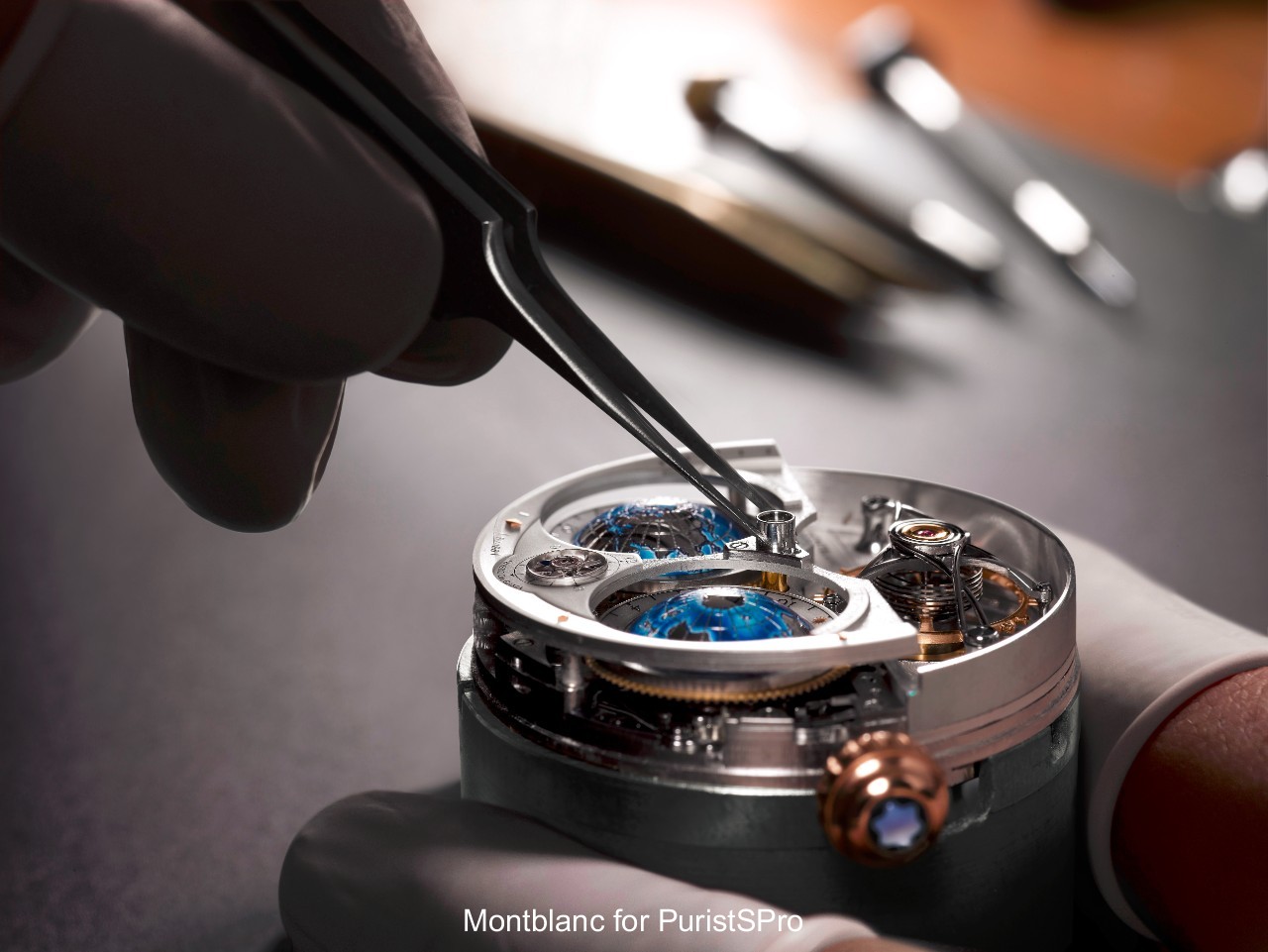
The legendary watch manufacture, Minerva, was founded in 1858, in Villeret. Today, at the same location and building where Minerva was founded, is the Montblanc Villeret manufacture, which is now Montblanc’s Movement and Innovation Excellence Center for his watch category business (I will explain in more details on this new change below under Movement Assembly). It is in this manufacture that Montblanc develops, prototypes and assembles all in-house movements from small highly functional complications such as their famed chronographs, to innovative high-complications such as their Metamorphosis or ExoTourbillons.

Instead of industrializing the Villeret manufacture, Montblanc decided to fully preserve and protect the very traditional methods of fine watchmaking, just as Minerva did since 1858. They decided to dedicate the Villeret manufacture as their watch atelier, where artisanal movement production and finishing techniques and practices are still being carried out, strictly adhering to the traditional know-hows of fine watchmaking in the spirit of over 150 years of the heritage of Minerva.

Brief history
The Montblanc Villeret manufacture has over 150 years of uninterrupted Swiss traditional watch making heritage, an inheritance it has received from Minerva, which was founded in 1858. The skills and knowledge of the Montblanc Manufacture in Villeret have been handed down through generations, starting when Charles-Yvan Robert founded a watch manufacture in the village of Villeret in the Saint-Imier valley. His manufacture, Minerva, gained worldwide recognition as one of Switzerland’s most revered specialists in chronometric functions for precise time measuring.

Minerva invented one of the first chronograph calibres for wristwatches in the 1920s and a mechanical stopwatch that could measure time accurately to the hundredth of a second in 1936 (which inspired the Time Writer 2 project as well as the Timewalker Chronograph 100). Minerva earned a strong reputation for developing reliable chronographs, a tradition I feel Montblanc intends to maintain till today.
Does any Purist remember the Minerva Pythagore developed in the early 1950s? That was another icon of Minerva. If any PuristS have this watch, pls share them here with us!

Movement Protoyping
Julien and Mr Cabbidu had both shared with me personally that the manufacture at Montblanc Villeret could prototype watches very quickly and a key reason is their in-house manufacture of their own balance spring and wheel, plus they design and manufacture more than 90% of their movement parts completely in-house. This reduces the time needed to get outside parts providers to develop prototype parts for the manufacture to build their protoypes (which typically has many “trial and error” phases). This I believe is a key competitive advantage for Montblanc and can also explain how they increasingly churn out novelties, including high complications (cascading from Villeret to Le Locle), at great speed.

At the prototyping stage, once the drawings have been finalized and the manufacturing plans defined, the watchmaker starts to build the first prototype. The prototypes are subjected to testing which can last several months. Only after these trials are completed can the movement go into production. Julien, now based in Singapore, was a master prototype specialist watchmaker in Villeret. I chatted with him on this process before and other than experience, experience and know-how, he mentioned to me that PASSION is the key ingredient required at each step of the prototyping phase, to be able to build and assemble movement prototypes in the most precise way.


Movement Assembly of Montblanc Calibres
As mentioned, the Villeret manufacture is now Montblanc’s Movement and Innovation Excellence Center. The Le Locle manufacture, on the other hand is established as Montblanc’s Watch and Quality Excellence Center. What does this mean? This is the new change that Montblanc’s management has started for the two manufactures, to have more synergies between the two and to tap on the strengths of the diverse manufactures – to combine traditional fine watchmaking with state of the art technology.
From 2015, all the manufacture movements and complications are assembled by the Montblanc watchmakers in the Villeret ateliers from the Nicolas Rieussec calibers, the ExoTourbillon and the LL100 (Twinfly calibre on the Timewalker) to the complications of the MB 29.20 (Heritage Spirit Orbis Terrarum) and the MB 29.19 (Heritage Chronométrie Dual Time). They are then completely tested following the Montblanc quality standards (rate, amplitude, power reserve, etc.) before leaving to Le Locle for the final encasing.


This means ALL existing calibres that are in production, will be assembled in Villeret, even the existing Nicolas Rieussec and Twinfly calibres. In Le Locle, from 2015, there won’t be any more movement development and construction. Le Locle will mainly focus on casing and quality control (I will give a more detailed post next week on details of the Le Locle manufacture). There will be no more distinction of movements from Villeret vs Le Locle. All Montblanc calibres will be developed and constructed in Villeret.
This is a big change to me (such that I had to contact Mr Alexander Schmidt from Montblanc to confirm)! And also a new era for Montblanc watches with a restructure of the two manufactures. I think it bodes well for the manufactures as Villeret had always been at the pinnacle of movement design, prototyping and construction so having Villeret lead the movement aspect of the watch manufacturing process is wise. Le Locle on the other hand, has the industrial scale to handle the encasing (not just encasing of the movement but also the dial, hands, etc) as well as QA and customer service.
I will be providing even more details on the Villeret manufacture as well as the Le Locle manufacture in my next few points. I hope you find these sharings on Montblanc's manufactures interesting so far. Stay tuned.
Cheers
robin


Next Article

The Montblanc Watch Manufactures in Villeret and Le Locle
© 2017 - WatchProZine