Manufacture
SJX's post unravels the intricate details and historical references embedded within 'L'Odyssée de Cartier,' the brand's short film. He meticulously decodes the symbolism, from the iconic panther to key historical figures and locations, offering readers a deeper appreciation for Cartier's rich heritage and its masterful storytelling through cinema.
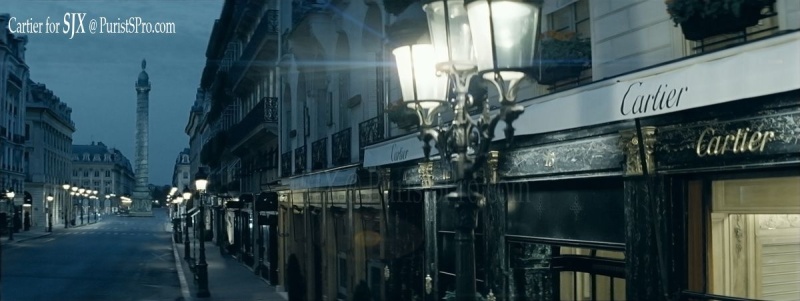
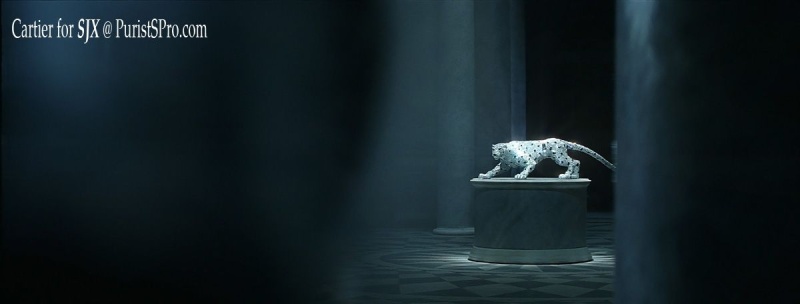

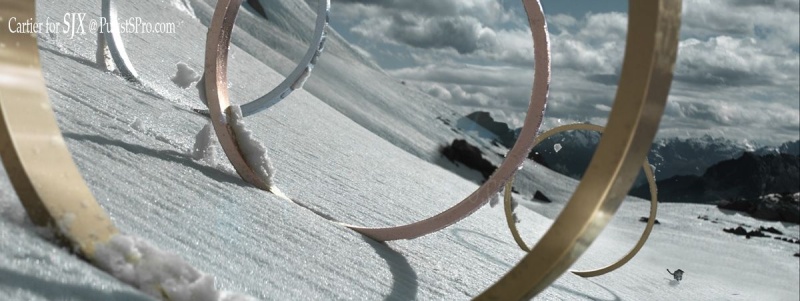
The recently launched short film L'Odyssée de Cartier deftly covers the 165 years of Cartier’s history in three and a half minutes of video. Most of the major themes, personalities and events in Cartier’s history are covered or referenced.
Bringing the viewer through the tale is the panther, a creature synonymous with Cartier since the 1914 when the black and white gold panther motif watch was created by Cartier. But the panther fully developed when Jeanne Toussaint was made creative director of Cartier in 1933. Ms Toussaint, nicknamed “La Panthère” , injected much flair into Cartier’s designs, particularly in terms of animal motifs and shapes.

Jeanne Toussaint

Panther brooch, c. 1949
The film begins at the green marble façade of 13 Rue de la Paix, with the Place Vendome visible in the distance, where the panther springs to lift and leaps over an enormous Trinity ring – three interlocking bands of rose, yellow and white gold.

Through the ceiling the panther emerges in the snowy whiteness of Russia. It runs alongside a sleigh carrying a lady. That is meant to be Grand Maria Pavlovna Duchess of Russia, a great client of Cartier, who, along with her jewels, escaped the Russian Revolution.

Russia was an important market for Cartier prior to the revolution. Pierre Cartier first visited Russia in 1904, and the jeweller created many enamelled objects in the ‘Faberge style’ of guilloche enamel that was popular in Russia.


Across a snow cover cliff and through a corridor of Love bracelets, the panther continues its journey. The Love, or more properly L⊝V e, bracelet is distinguished by its prominent screws, one of which secures the bracelet.

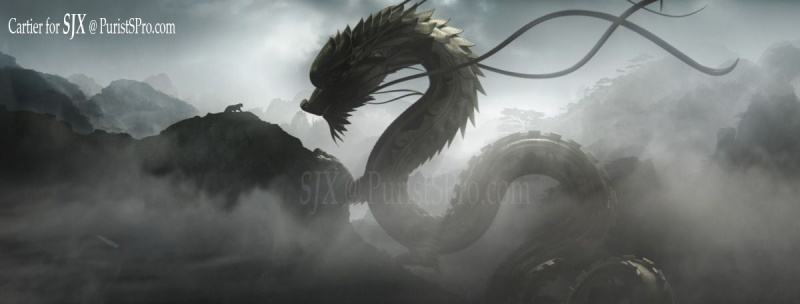
Next the panther arrives in China where it encounters a dragon. This refers to the Chinese influenced Cartier styles in the late 19th and early 20th century. These Chinoiserie objects included items that incorporated Chinese carved jade pieces.


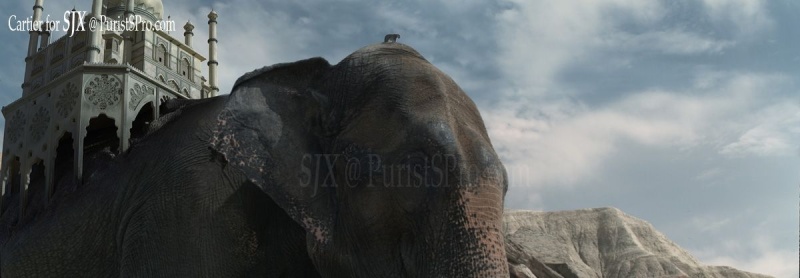
Then the panther emerges in the courtyard of a Moghul palace, carried on the back of an elephant. Standing in the courtyard is a tree with emeralds, rubies and sapphires as fruits, a nod to the Cartier’s Tutti Frutti style which was inspired by Indian motifs.

Some of the coloured gems used by Cartier for these designs were carved by Moghul craftsmen and then reset by Cartier.

And the crocodile and snake in the menagerie were pieces of jewellery ordered by Mexican actress Maria Felix, another famed client of Cartier.

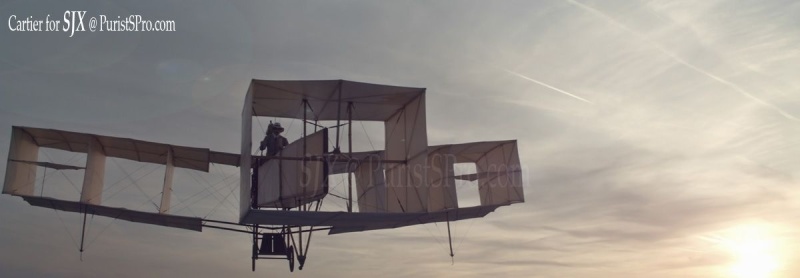
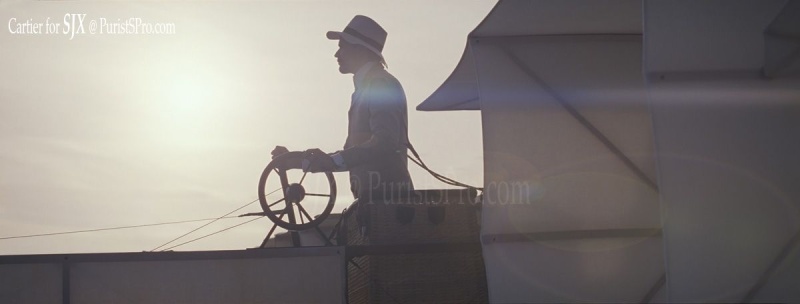
As the panther crosses the back of the giant elephant, Brazilian aviator pioneer Alberto Santo-Dumont passes in his bamboo and silk plane, the 14-bis, which made its longest flight in 1906. In the film Santos-Dumont is wearing a nineties era Collection Privee Cartier Paris Santos Dumont wristwatch in platinum, historically wrong but conceptually correct. Louis Cartier created the Santos wristwatch for his aviator friend in 1904, like its modern counterpart it was square with rivets holding down the bezel.


The panther then leaps onto the plane which magically arrives in Paris – Santos-Dumont flew only 220 metres in 1906 – and passes the Eiffel Tower. From the plane the panther jumps on the roof of the Grand Palais and walks past a clock tower with the trademark Cartier dial – Roman numerals, blued steel sword hands, railway minute track and Cartier secret signature in the number “X”.


After which the panther returns to the Place Vendome, where it enters one of the buildings and ascends the stairs. Inside a room sits a lady in red – Canadian model Shalom Harlow – clad in Cartier jewellery comprising earrings, Panther bracelet and ring.


The film then closes – literally – with the gilt-edged Cartier red box.

Next I will bring you a behind the scenes look at L'Odyssée de Cartier.
- SJX
This message has been edited by SJX on 2012-03-09 22:52:17 This message has been edited by SJX on 2012-03-12 04:12:36Thank you for the quick trip in history...
Everything in the short film is there for a reason. At 1 minute 45 seconds, in the Moghul palace, I noticed this.... The column has an inscription at its base. I think it says "1767". What does it say? What does it mean? Regards, Richard.
I think it's 1907 but I am awaiting a definitive answer from Cartier. - SJX
Not to be a biology nerd, but since I just recently came back from Africa, I'm pretty sure that's a leopard and not a panther.
Cali, Damou and Tiga, trained by Thierry le Portier. - SJX
That was breathtaking, Even just the visuals are stunning, without motion to add to it all. Rishad
This thread is active on the Cartier forum with 9 replies. Share your knowledge with fellow collectors.
Join the Discussion →