Manufacture
SJX provides an exclusive first look at the Cartier Time Art exhibition in Singapore, a monumental showcase of Cartier's horological heritage. His detailed report, captured before the official press conference, offers an intimate perspective on the 159 watches and clocks on display. This article is invaluable for understanding Cartier's evolution as a watchmaker and its diverse design influences.
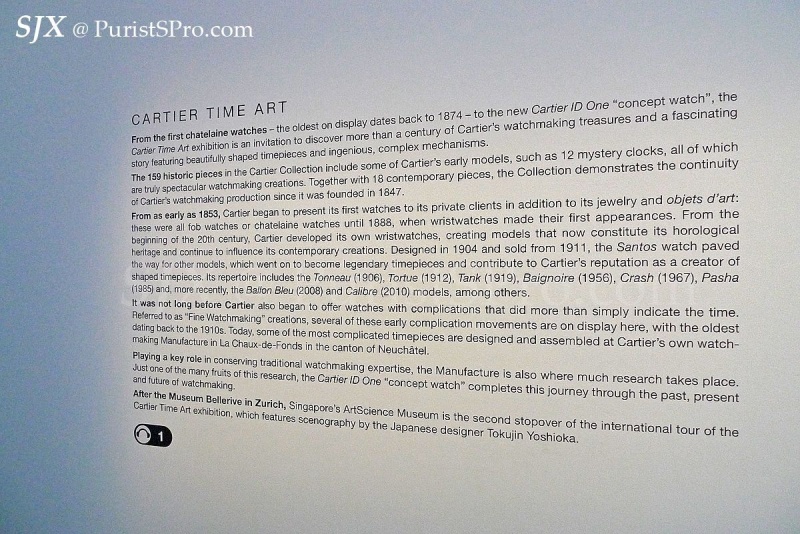
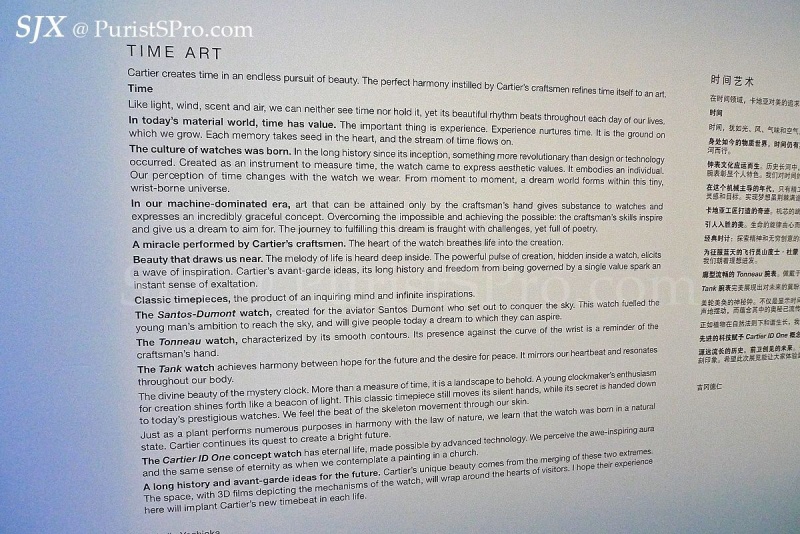
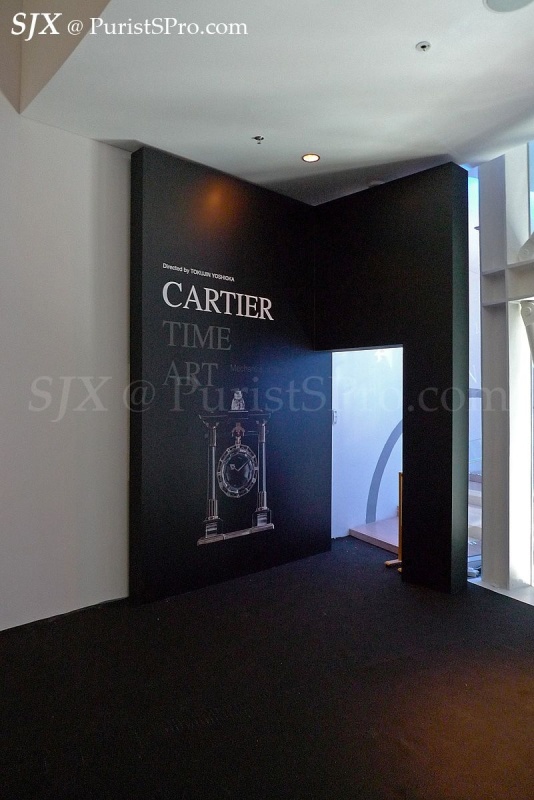
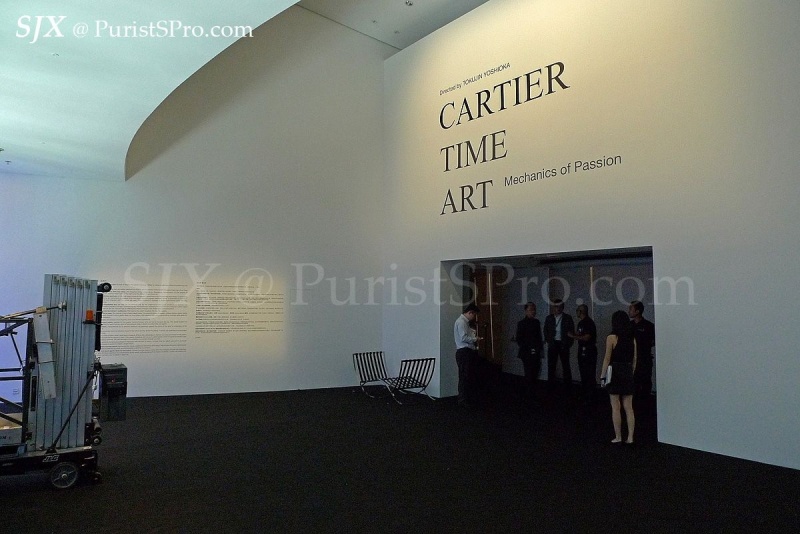
Three days ago Cartier Time Art opened in Singapore. An amazing collection of 159 watches and clocks are on display at the lotus-shaped Art Science Museum in Marina Bay Sands until Feb 12, 2012.


Conceived by award-winning designer Tokujin Yoshioka, Cartier Time Art spans the company's history as a watchmaker and includes the earliest known Cartier timepiece, a chatelaine watch dating from 1874.


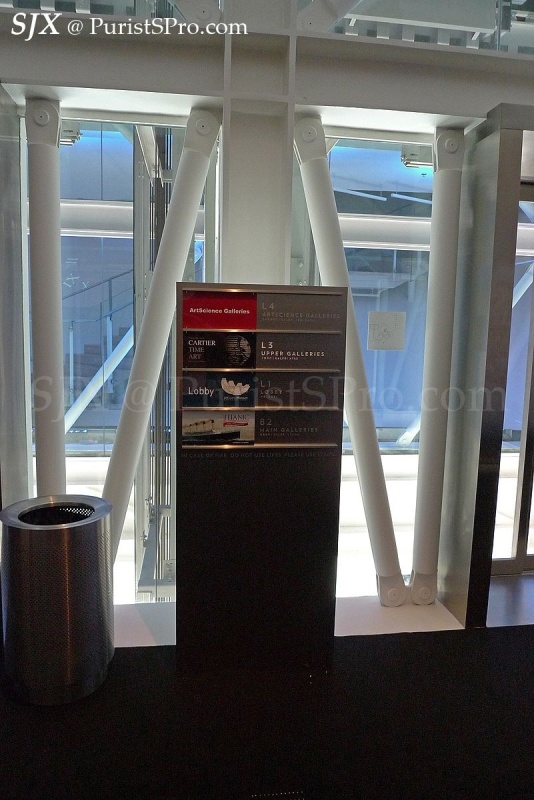
Cartier Time Art is on level three of the Art Science Museum

The morning before the Time Art press conference

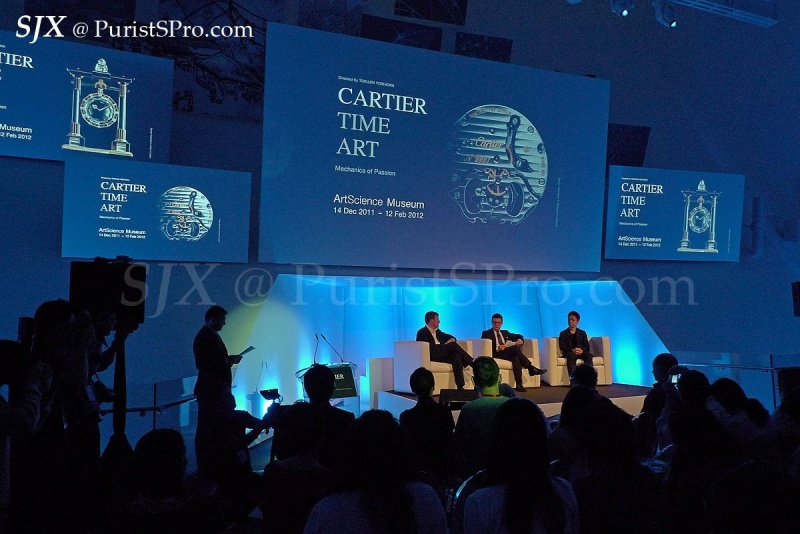
The Time Art press conference with Tom Zaller, director of the Art Science Museum, Pierre Rainiero, Image, Style and Heritage Director of Cartier, and Tokujin Yoshioka, Art Director of the exhibition

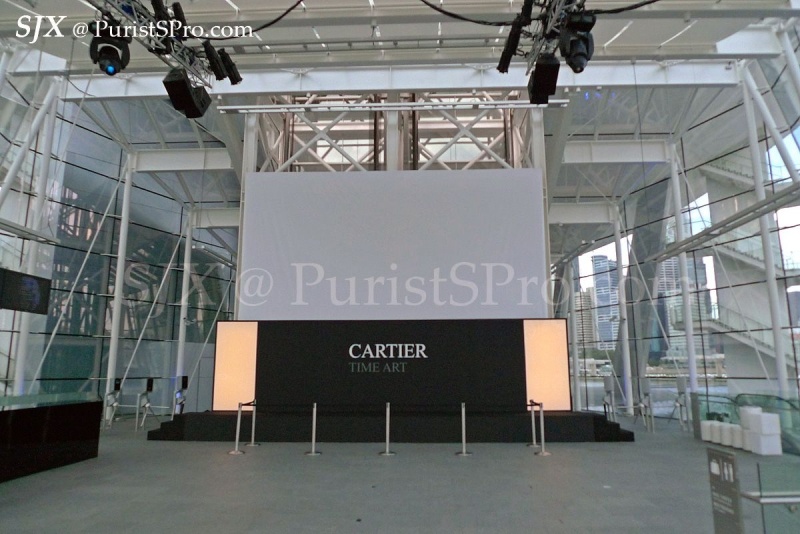
The set-up for the opening party on Dec 13

The books at the gift shop - the massive red book covers vintage Cartier timepieces and is wonderfully comprehensive but incredibly expensive ($500) and heavy (20 lbs) such that it's almost impractical; the white and black Nadelhoffer book is an excellent history of Cartier covering everything; unfortunately the book for the Time Art exhibition is disappointing in its content and illustrations
This report covers the entire exhibition, with each part of the report covering one of the six rooms of the show.
All photos were taken on the morning before the press conference hence the empty galleries. I was very fortunate to be amongst the first people in the world to see this fantastic show.
- SJX
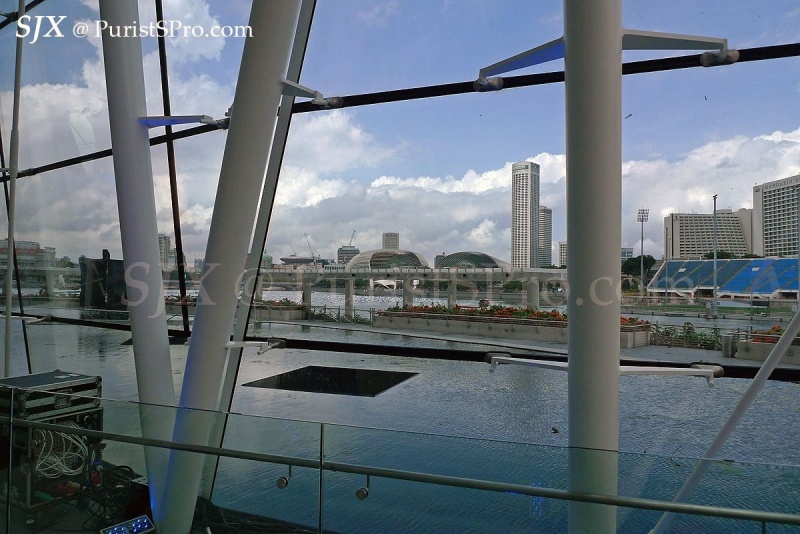
The Art Science Museum and view of the Singapore skyline


This message has been edited by SJX on 2011-12-17 05:53:38 This message has been edited by SJX on 2011-12-23 01:11:34
The first room titled "Precious Time" provides an overview of Cartier's watches and clocks all the way from 1874 to the mid-20th century. There is an eclectic but interesting and significant selection of timepieces on display here including the earliest known Cartier timepiece, various guilloche enamel objects and the clever magnetic clock. Early Santos, Tank and Panther watches are also on show.
The second room explores the various stylistic inspirations the Cartier brothers adopted for their creations, primarily Indian, Chinese and Egyptian. The colourful Tutti Frutti creations often used antique carved emeralds from India. This Tutti Frutti watch has an emerald crystal hence the green tint Cartier incorporated Chinese antiques into many of its works as well. And Egyptian design was popular as well, particularly during the period after King Tut's tomb was opened in 1922. This message h
This room is filled with twelve amazing Mystery clocks. These clocks are iconic Cartier and mesmerizing. The reason for the name is clear, almost the entire clock is transparent and thus mysterious. The mechanism is a simple idea and probably obvious to the discerning reader: the hands are mounted on sapphire discs with teeth on the rim that are driven by gears hidden in the frame and base. Cartier Mystery clocks are extremely scarce, only several dozen have been made over the decades. Consequen
No message body
No message body
No message body
This thread is active on the Cartier forum with 18 replies. Share your knowledge with fellow collectors.
Join the Discussion →