One of the artisanal highlights of this year's BaselWorld was - for me at least - the
,
De Bethune has been a real pacemaker and technology driver from its
first day. The use of (then) exotic materials such as silicon in
watchmaking was pioneered by the brand from La Chaux l'Auberson. As well
as novel ways to think about escapements and regulation...
I
have a real personal affection with De Bethune. It is a company I have
followed with amazement since its very roots. Every new construction was
an exclaim in delight at experimentation. This made the manufacture to
stand out even from other inventive brands. Oh how did I long for the De
Bethune appointments at the watch fairs, eager to learn what progress
their balance 'wheel' (at times more a cross), their regulating
mechanisms and their hairspring made. Even a few weeks could make a real
difference!
Likewise, De Bethune developed a distinct house style in terms of aesthetics as well. The signatory ogival lugs came ab initio,
further refined and remodelled with every new case design. They are
still there today. Dials always were much more than just attractive
eye-catchers and gauges, their were treated with care as a stage for
aesthetic expression. Mr Zanetta's eye as a man of the arts ensured that
every single dial was a well-rounded, but not always easy to appreciate
and digest, but always with aesthetic finesses and a stringent inner
logic consistent with the movement technology under the hood.
It
is this rare mutual fertilisation of a technical (Flageollet) and an
artistic (Zanetta) genius which make this brand to thrive in an
abundance of well-measured creativity. The duo, meanwhile complemented
by CEO Pierre Jacques to free both of them from business related
burdens, appears like a dream team to push watchmaking into the 21st
century and beyond, by strengthening and rejuvenating its core
qualifications acquired centuries ago.
In this sense, I cannot help but consider the watchmaking house of De Bethune as the
modern-day Breguet.
In a way, De Bethune is a complement to another maison which constantly
tries to push the limits, again in a very consistent way and also with a
comprehensive approach to watchmaking (i.e. including distinctive
shapes, an integrated movement philosophy and a rounded horological
innovation scheme):
Richard Mille. I encourage you to read Mark's recent review on the RM035 and the brand in general (click
here!).
When
I looked at the impressive progress De Bethune made in the 10 years
since I visited them first, particularly at its pace, and then compared
it to the size of the brand (in terms of workforce, but also in terms of
output, which was barely 3-digit) I always wondered about its
sustainability. The science and innovation, the 100% in-house production
(even cases, dials and hands), all this must costs immensely, and I
feared that De Bethune would not be able to recover expenses (in the
long term) with a little more than 100 watches per annum.
This is where Pierre Jacques came in, and with him De Bethune started to offer art pieces, highlighting the decorative arts
while being based on existing references as far as cases and movements
go. Output nearly tripled since that time (not only because of the art
pieces, though...) This allowed to widen the range of the brand without
having to invest into further technical developing, i.e. increasing
return on R&D investment and thus fuelling other creative efforts.
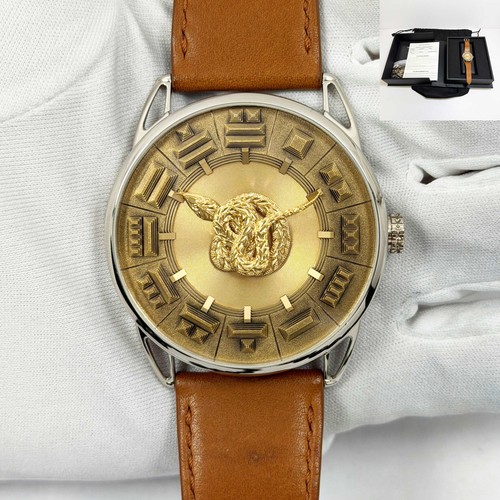
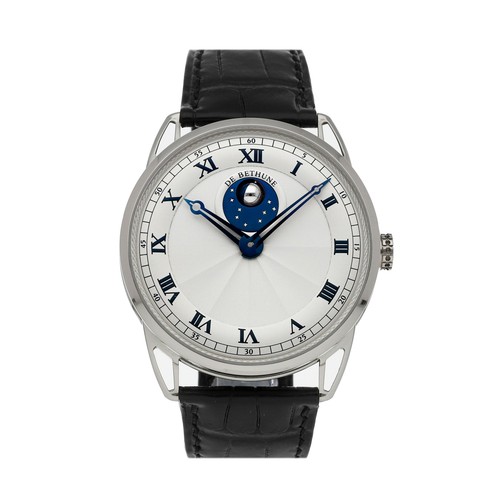
Watches like the DB25 Ninth Mayan Underworld (of 2012, first image below) or the DB25 Imperial Fountain (a set of 12 watches featuring the Chinese zodiac symbols, second image below) belong to these offerings:
With
the two pieces above I finally close the circle to the DB25
Quetzalcoatl I would like to discuss. It is not only the most recent
addition to the artisanal pieces in the DB25 line, it is also, like the
two specimen above, masterfully finished by engraver Michèle Rothen:
Obviously
relieved by the fact that the Mayan people were not correct in
predicting the world's end for the 21 December 2012, De Bethune turned
towards a powerful symbol of Mesoamerican culture, the Quetzalcoatl (composite of quetzalli, describes the large, precious green feathers of the sacred quetzal bird; and coatl,
meaning snake), deity of summer winds as well as the sovereign
protector of goldsmiths and artisans, and the inventor of the calendar.
Quetzalcoatl was worshipped by many Mesoamerican people, including the Mayans and the Aztecs.
Quetzalcoatl
appears in the shape of a feathered serpent coiled within a circle
composed of icons representing Aztec temples from the city-state of Tenochtitlan, see above (image taken from the web).
These
temples indicate hours in a Roman number system (rectangular ones
represent V (5), square ones I (1), respectively), which is quite an
amusing detail...

What a study of three dimensions in a very limited confinement!
The
head of the serpent indicates hours; its tail minutes. The snake is
actually composed of two parts, the top one (carrying the head) mounted
on the center pinion, the lower one (with the tail) on the cannon
pinion.

Going close-up you see the amazing detail work on both head and tail:
Ms Rothen opted for a different
finishing of outer ring and the center. The temple section received a
matte, patinised surface to achieve a warm impression, the inner circle
and the snake were treated to glow with De Bethune's own microlight
guilloché and highly polished feathers, respectively:
Given the right light, this has a dramatic effect:

The movement itself is a known entity and has been used since a couple of years: De Bethune's
Calibre DB2005 is a base movement for the brand, but has a lot of watchmaking delicacies on offer:
- patented annual balance with silicon heart
- self-regulating twin barrel ensuring a 6-day power reserve
- famous triple pare-chute shock-absorbing system protecting the regulating organ
- a silicon escape-wheel and a balance-spring with flat terminal curve ensuring optimal concentric development
- superb hand-finishing
The
Cal. DB2005 has been customised by a mirror-polished base plate on
which one additional temple is set as well as the limitation number.

And just like the dial, the light can inflame a verbatim fireworks of colours on the movement - I have never seen such before:

With
all this wealth of humanities concentrated into one watch, can you
practically wear it? That was an interesting question which both Oliver
and myself tried to answer:

First of all, it wears smaller than its 44mm white gold case would suggest. This makes it perfectly adequate for smaller...

... and for 'standard'-sized wrists alike.
Second, I think the 'brass'-coloured dial architecture is not obtrusive and could help make the watch 'disappear', however...
... a ray of light from your backside and the meeting's 'gone' ;-)
Really, the surfaces finishes are excellently chosen and highlight the
different personalities of the watch at different times.
Probably at this stage the wearer cannot help but just stare and stare and stare...
It is particularly at its rightful
place on the wrist where the landscape dial presents itself in full
glory. The images below also point to a remarkable feat of the De
Bethune team...

...
the apparent slimness of the entire watch. It certainly does not look
like the 'official' 12.5mm would suggest. Yet, the altiplano seat of the
serpent makes you 'how the hell did they do this?'. Indeed,
these altitude intercepts are mesmerising!
The bottom line:When I saw the De Bethune DB25 Quetzalcoatl first I thought, '
well, the Mayan Underworld must have sold well, so we get a rehash'.
While the first might well be true, thinking, watching and appreciating further slowly opened up an entire new point of view:
For me, there is no precedent for the astonishing abundance of
watchmaking perfect combined with historical, arsenal and cultural
continent than what the De Bethune DB25 Quetzalcoatl concentrates within
the confines of its 44mm case.
Moreover, this
timepiece can do without any mind-blowing complication or striking
decorations technique. It is so well-rounded, comprehensive, with
a compellent sense of 'wholeness'.
What Mr
Flageollet and Ms Zanetta are offering here is nothing less than all
their profound knowledge and encyclopaedic recall in their respective
areas of expertise. It offers to the owner all the mastery only a true
work of art, fruit of refined taste and superior knowledge, could
embody.
It speaks to a like-minded audience
who will certainly not fail to understand all the subtleties which
trickle your senses - for a long-time enjoyment and appreciation. If
there are only few who could appreciate it - it does not matter much:
the limitation is 20 pieces!
As such, this watch is priceless. And this is one of those few
objects d'art which
trigger a feeling of remorse for choosing a scientific, and not a
(financially) more rewarding business career... (I'll get over this, for
sure ;-)).
P.S.: Some of the wrist shots are contributed by Oliver.