Review
Crown Comfort (CC) delivers a hands-on review of the Girard-Perregaux 1966 Perpetual Calendar, Ref. 49547, offering a comparative analysis with his cherished 1966 Annual Calendar with Equation of Time. His observations delve into the dial layout, movement specifics, and case dimensions, providing collectors with a nuanced perspective on these sophisticated complications. CC's personal preference and detailed comparison make this an insightful read for those considering a high-complication timepiece from Girard-Perregaux.


Friends,
Some details and observations on the Girard-Perregaux 1966 Perpetual Calendar 49547 from the current collection:
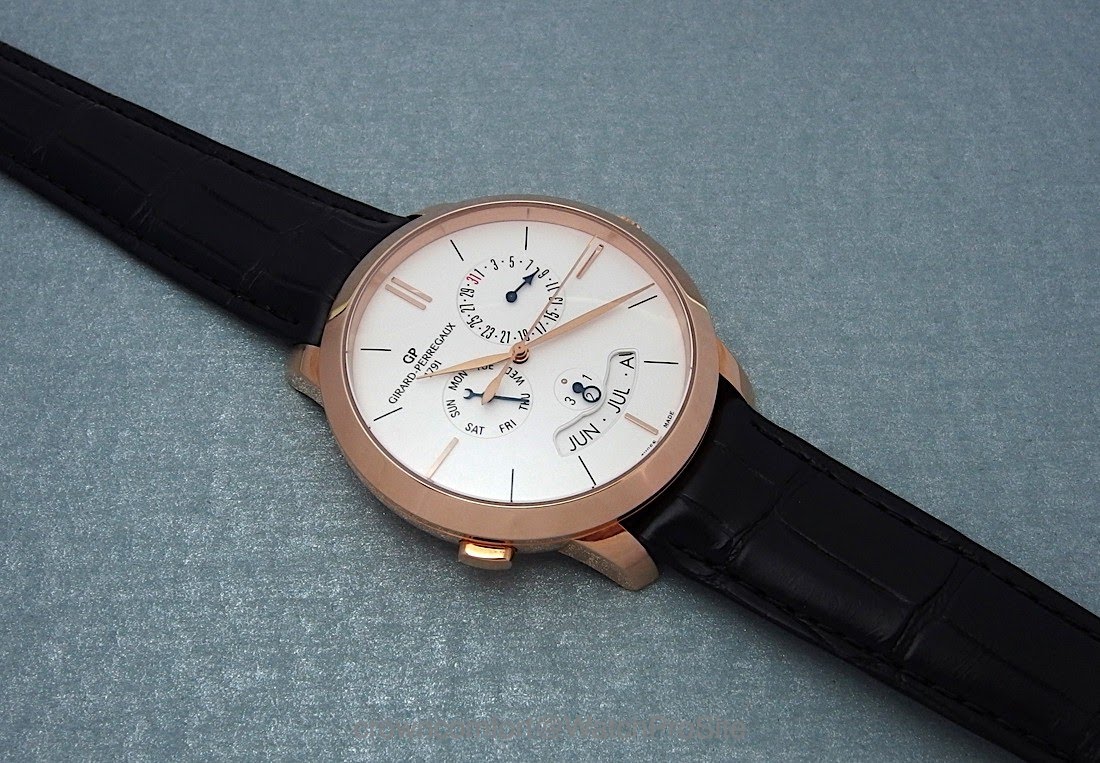
As I had a chance to play with it some time ago and try it on my wrist, so let me share some observations.
As you know, I own the 1966 Annual Calendar with Equation of Time…
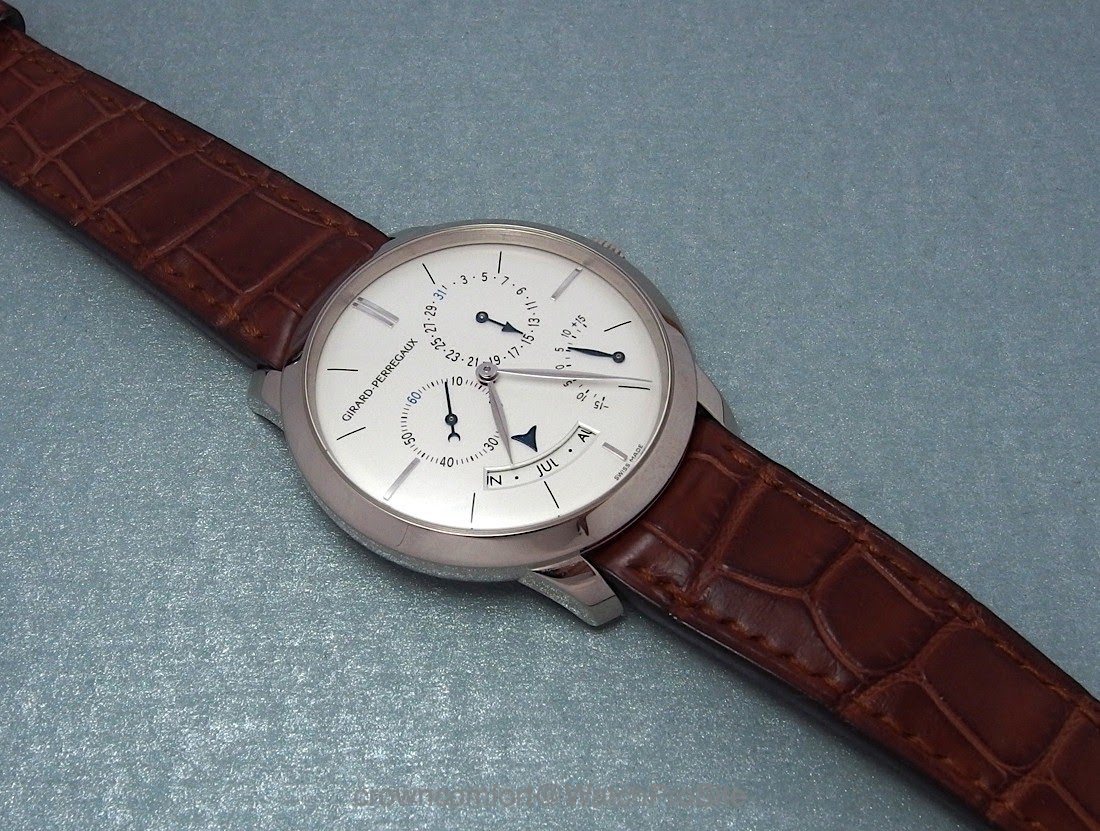
one of my most cherished watches and it is easy to see that the dial layout of the Perpetual Calendar has a close connection with the 1966 Annual Calendar
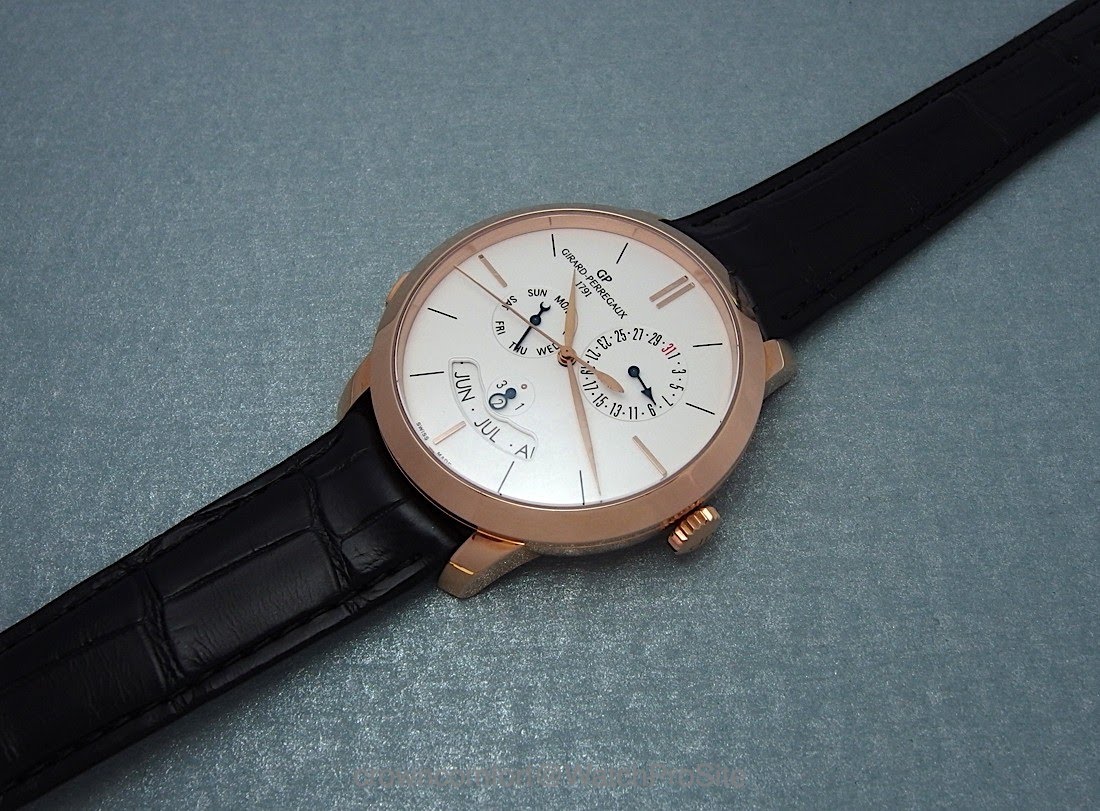
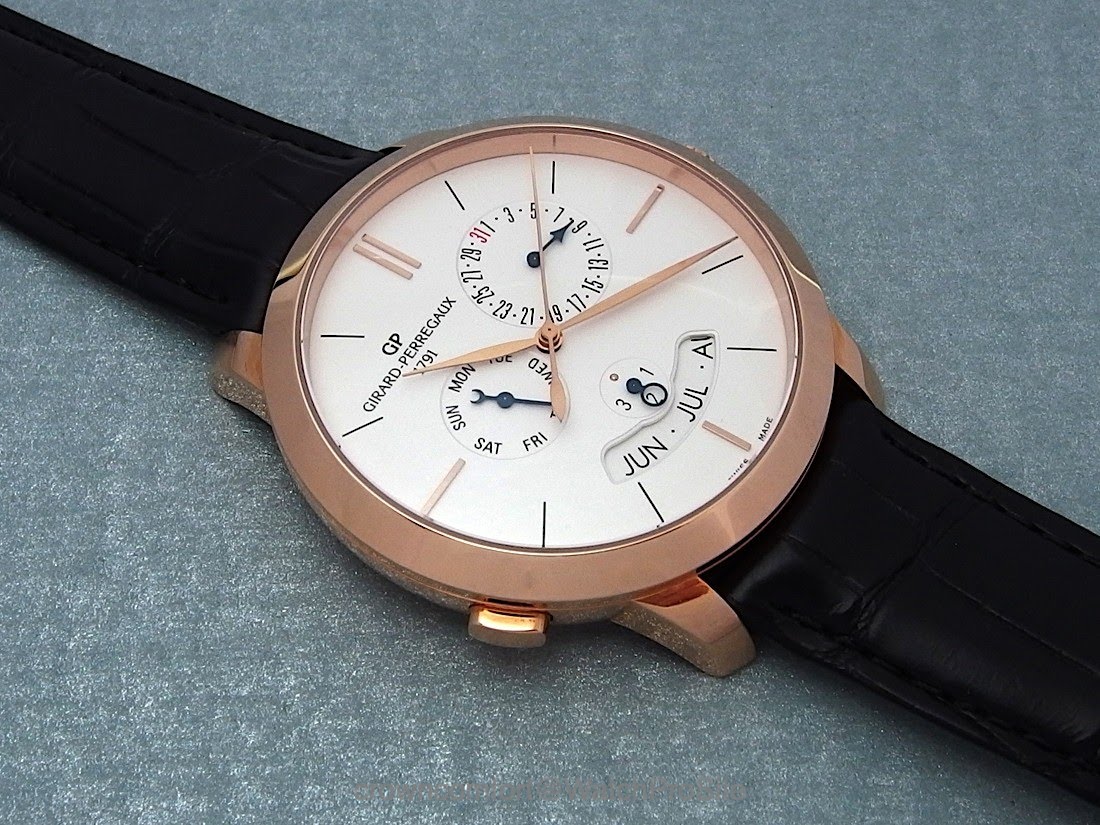
It comes with a similar asymmetrical layout, displaying the months at a rotating disc with a dial opening and the date in an extra small subdial.
The Equation of Time unfortunately has been dropped, possibly to save space on the dial as it now requires a leap year indicator.
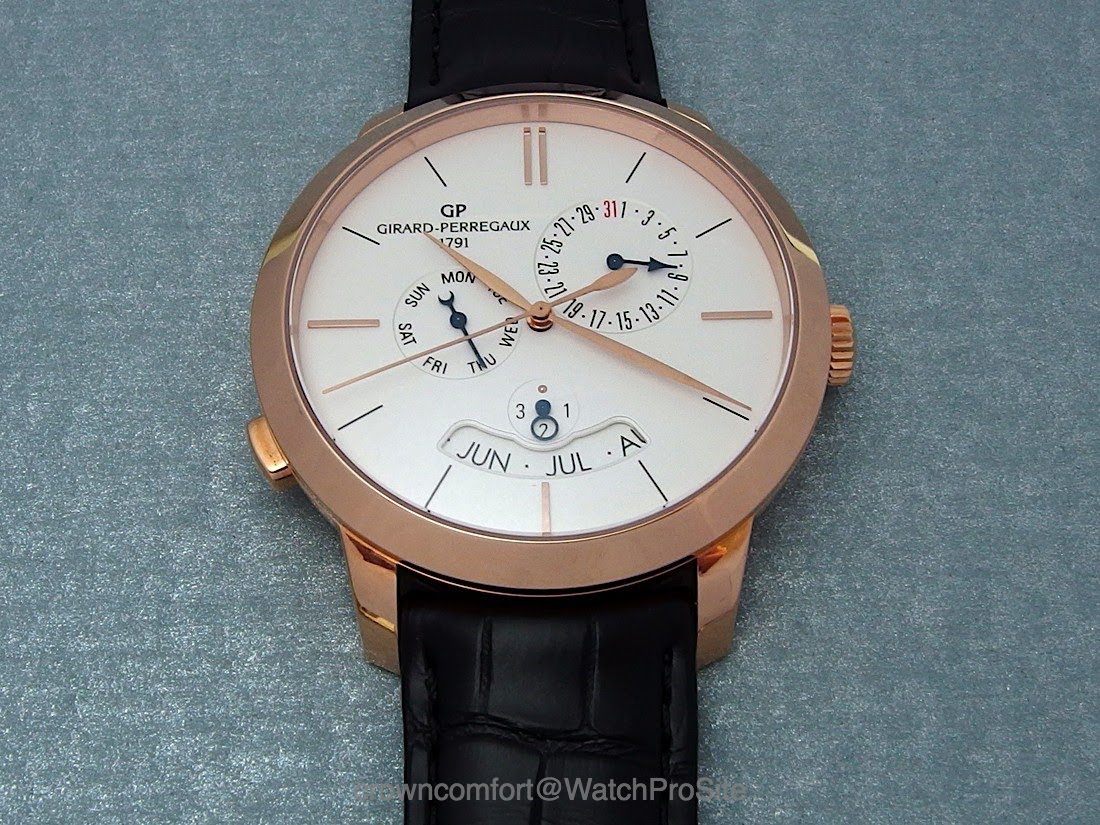
The Leap Year indicator is typical GP and quite playful with the “loupe” style hand. Like that extra touch of being different!
Another difference is that the Perpetual Calendar has a quick date set button at 8 but can still go without extra setting pins.
From the back side no real surprises, you have the Caliber 03300-0096 also with free-sprung balance and Microvar balance wheel, but compared with the Annual Calendar, it seems to me that the “perpetualness” has added quite some thickness to the case. The Case is 41mm in diameter and 12.55mm high, while the annual calendar is 40 / 10.72mm.
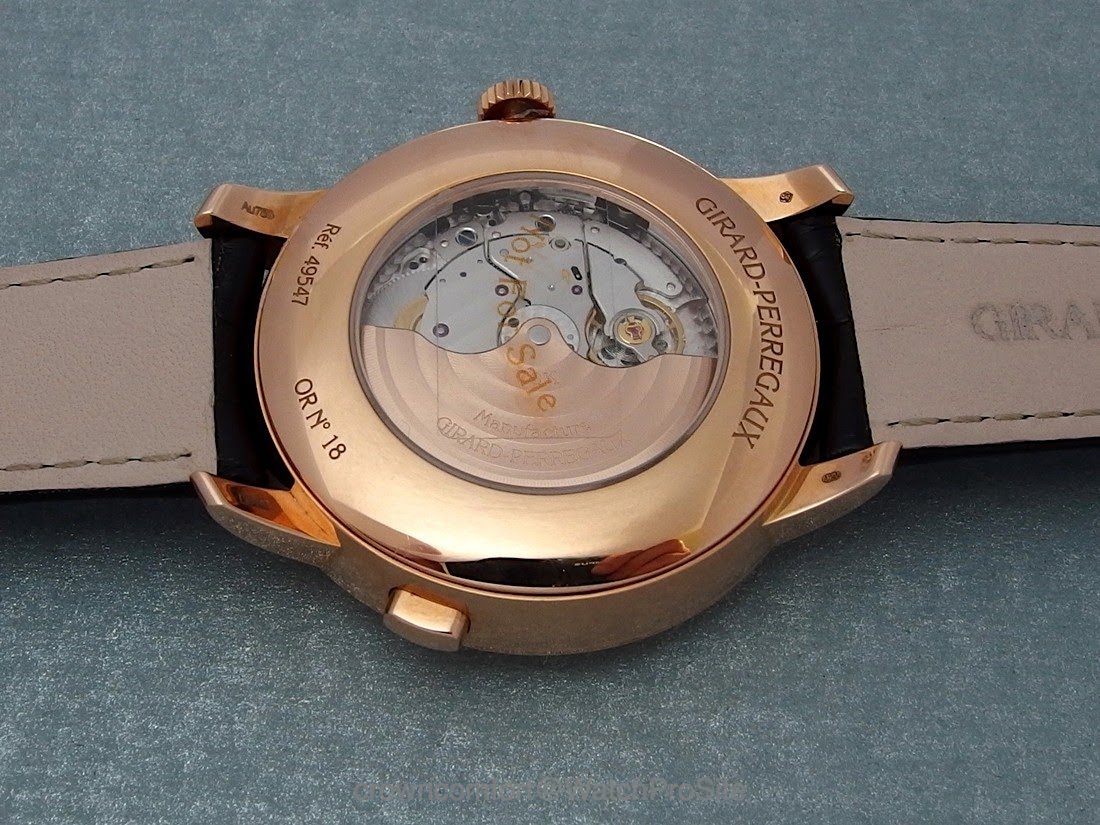
Available right now only in pink gold with the white opaline dial.
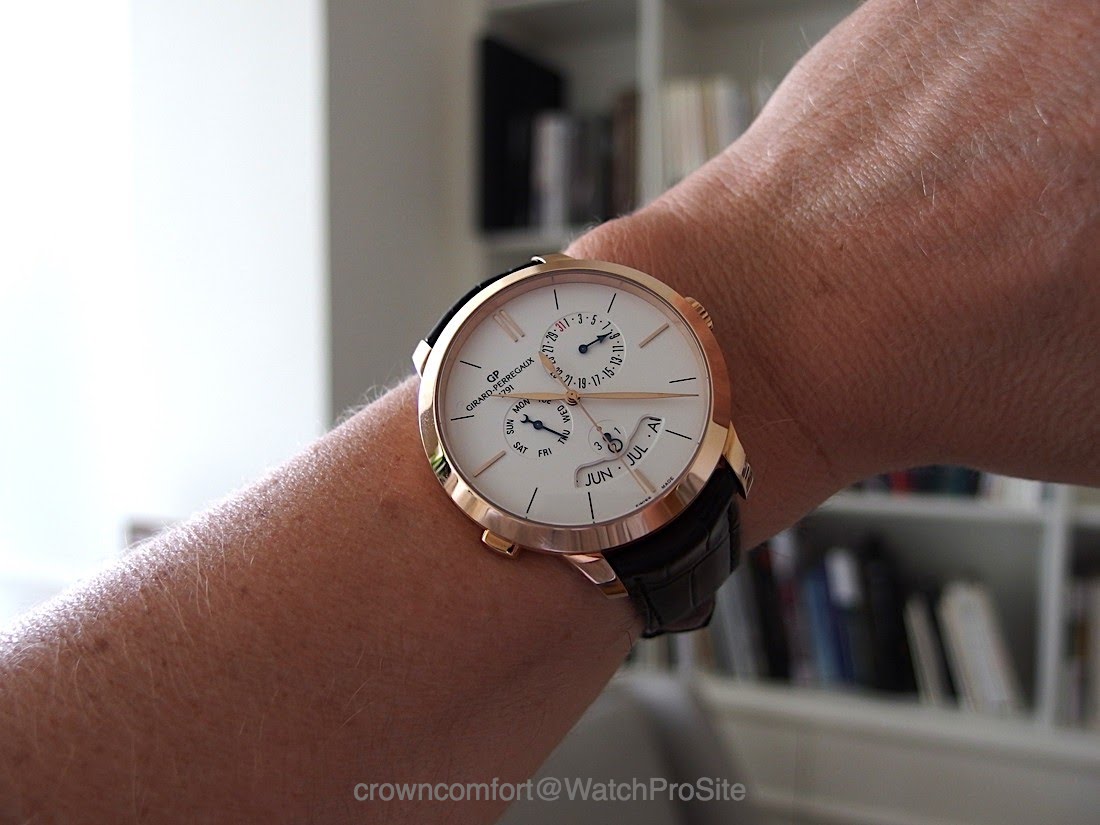
And it works well on the wrist.
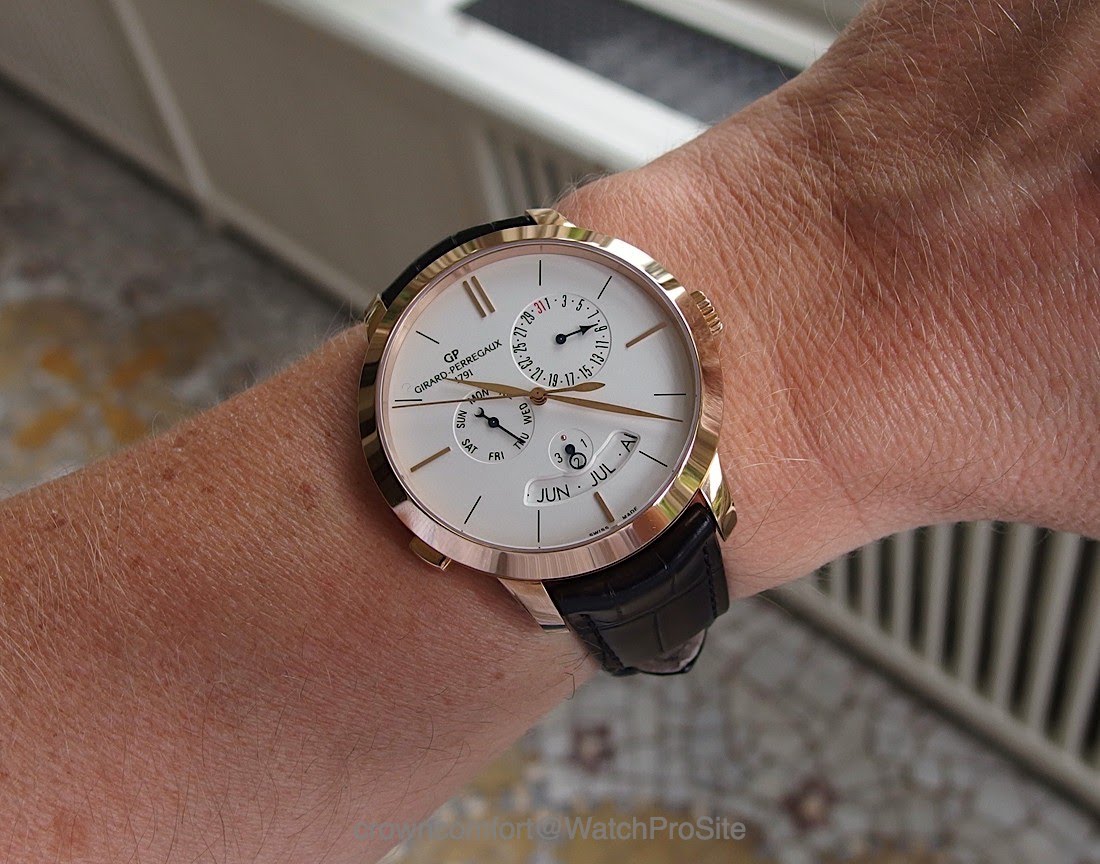
So the question is, which do I prefer? Having a perpetual calendar is of course a much more elegant complication than “just” and annual calendar but then on the other hand, the annual calendar has the Equation of Time. I think I still prefer my Annual Calendar 1966 but if I would be in the market for a pink gold Perpetual Calendar, the GP 1966 would be a worthy contender.
CC
The Girard Perregaux 1966 reference, issued in 2014, represents a specific iteration within the brand's 1966 collection, known for its classic design language. This particular model features a friendly complication, distinguishing it from simpler time-only variants within the same series. The 1966 line generally emphasizes traditional watchmaking aesthetics and proportions, appealing to those who appreciate understated horology.
The watch is housed in a case characteristic of the 1966 series. It typically features a sapphire crystal, offering clarity and scratch resistance. The movement powering this reference is an automatic caliber, consistent with Girard Perregaux's in-house manufacturing capabilities, providing a reliable power reserve suitable for daily wear.
For collectors, this reference offers a less commonly seen variant of the 1966 collection. Its appeal lies in its adherence to classical design principles and the inclusion of a practical complication. While specific dial and hand configurations can be subjects of discussion among enthusiasts, the overall presentation aligns with the brand's heritage in precision watchmaking.
but I really love these beautifully balanced, asymmetrical models. CC, what does the big button on the side of the case do?
Gorgeous watch. I adore the equation of time
Especially the loupe leap year indicator. Definitely a perpetual calendar that doesn’t look overloaded. Thanks for the review, CC!
I adore the assymetric dial combined with the elegance of the 1966 case and lugs.
the button if I recall correctly sets the day of the week.
.. Guess, I would have picked the EoT version with this eclectic complication ! Best, hs
This thread is active on the Girard Perregaux forum with 15 replies. Share your knowledge with fellow collectors.
Join the Discussion →