Manufacture
Girard-Perregaux, the first Swiss watchmaker to open in Japan, collaborates with the Muse dEthnographie in Neuchtel for the exhibition Imagine Japan Neuchtel, Switzerland, June 19, 2014 Girard-Perregaux, the Swiss luxury watch manufacturer, is pleased to announce the opening of the exhibition


Girard-Perregaux, the first Swiss watchmaker to open in Japan, collaborates with the Musée d’Ethnographie in Neuchâtel for the exhibition Imagine Japan

Neuchâtel, Switzerland, June 19, 2014 – Girard-Perregaux, the Swiss luxury watch manufacturer, is pleased to announce the opening of the exhibition Imagine Japan at the Musée d’Ethnographie in the city of Neuchâtel, Switzerland (MEN). The introductory part of this exhibition conceived by the MEN was inaugurated on the historically significant date of February 6, 2014, coinciding with the official commemoration of the 150th anniversary of the first Friendship and Trade Treaty between Switzerland and Japan.
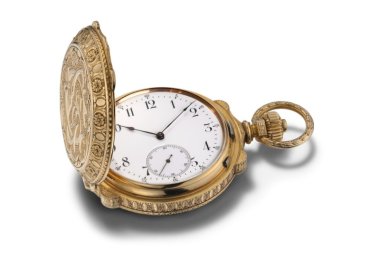
Exhibited in this area are pocket watches exported to Japan by François Perregaux, who pioneered in the mid-19th century the introduction of Swiss watches into the “Land of the Rising Sun.” Belonging to Girard-Perregaux’s own in-house museum, these timepieces are a precious testimony to the links that have tied the Swiss watchmaker, based in nearby La Chaux-de-Fonds, to the Japanese archipelago for over a century and a half.
150 years ago, on February 6, 1864, in the temple of Choji in Edo (Tokyo), a Treaty of Friendship and Trade was signed between a Swiss delegation and representatives of the Imperial Japanese Government. The basis of exceptional relations between Switzerland and Japan, this bilateral agreement was a great diplomatic and economic success, and enabled Swiss watchmakers to officially import their products into Japan.
Aimé Humbert: artisan of the first treaty between Switzerland and Japan
The man who was entrusted with negotiating this agreement by the Swiss Government was Aimé Humbert (1819-1900), also a native of La Chaux-de-Fonds, who was appointed for the purpose as “Envoy Extraordinary and Minister Plenipotentiary of the Swiss Confederation in Japan”. Arriving in the archipelago in April 1863, Humbert had to wait for nearly a year before the Japanese authorities agreed to enter into discussions. He took advantage of these months of waiting to visit the country. He immersed himself in the atmosphere, took notes and collected testimonials, drawings, prints, photographs, etc., which would eventually make up the basic material for the book he planned to publish on Japan. It was one of the oldest residents of the Frenchspeaking community in Japan who welcomed Aimé Humbert and his Swiss companions to the country: watchmaker François Perregaux.
Advertisement (The Japan Gazette , Hong List and Directory, January 1, 1877)

François Perregaux: pioneer of the introduction of Swiss watches into Japan
Born in 1834 into a family of important watch merchants from the neighboring town of Le Locle, and
the brother of Marie Perregaux, who founded with her husband Constant Girard the firm that still bears their two surnames today, François Perregaux left for Asia in 1859. Commissioned by the Union Horlogère watchmakers’ association to establish an export post, he set up shop in Yokohama in 1860, becoming the first Swiss watch merchant to be established in the Land of the Rising Sun, just a few years before the signature of the Friendship and Trade Treaty referred to above. In 1865 the merchant from Le Locle founded in Yokohama the company F. Perregaux & Co. and remained the official agent of Girard-Perregaux until his death in 1877.
Perregaux and Humbert: a fascination with Japan
Initiated before their meeting in Japan, the correspondence between the two men continued after
Humbert’s departure. The diplomat asked the watch merchant to keep him informed of developments in the archipelago. Working on the preparation of his book about Japan, Humbert asked Perregaux to send him any oral accounts or elements of history or legend, etc., that could be added to the material he had already collected during his stay. As is shown by the letters conserved at the State Archives in Neuchâtel, Humbert sent Perregaux to visit photographers in Yokohama so that he could select the most recent examples of photographs available and send them on to him. Girard-Perregaux’s representative on the far shores of the Indian Ocean thus contributed to the preparation of Aimé Humbert’s famous work. Making a major impact when it appeared in 1870,
Le Japon Illustré was published in two volumes by Hachette in Paris.
Left: Portrait of Aimé Humbert (1819-1900) (print by Hébert, 1875, Public and University Library of
Neuchâtel, Inv. Po Ne 2/2)
Right: François Perregaux and Hanzo, his friend and assistant (Girard-Perregaux Archives)

About the Museum of Ethnography of Neuchâtel (MEN)
Originating from the Natural History Collection belonging to General Charles-Daniel de Meuron and
donated by him to the City of Neuchâtel in 1795, the MEN was established in the villa bequeathed by James-Ferdinand de Pury and officially opened in 1904. The collection consists today of approximately 50,000 objects from all over the world. Internationally recognized for the high quality of its temporary exhibitions, the MEN offers its visitors, innovative perspectives on themes linked to current events and the fundamental issues concerning the functioning of human societies.
The Aimé Humbert Collection
The MEN conserves in its archives an exceptional collection of images relating to the Japan of the
1860s, consisting of over 2,500 items (photographs, prints, drawings and paintings) brought together
by the locally-born traveler Aimé Humbert with a view to the preparation and illustration of his work
Le Japon Illustré, published by Hachette in Paris in 1870. After undergoing a major process of research, digitalization, restoration and identification, part of this unprecedented collection has been presented to the general public during the exhibition organized by the MEN to mark the 150th anniversary of the signing of the Treaty of Friendship and Trade by Switzerland and Japan.
«Silk trade shops of Mitsousi» (print provided by Aimé Humbert, Le Japon illustré (Japan Illustrated), Hachette, Paris, 1870, Volume 2, Chap. 35, p. 71)

About Girard-Perregaux
Girard-Perregaux is a Swiss luxury watch manufacturer that traces its origins to 1791. The history of the Brand is marked by legendary watches that combine sharp design with innovative artisanship such as the renowned Tourbillon with Three Gold Bridges, presented by Constant Girard-Perregaux in 1889 at the Paris Universal exhibition, where it was awarded a gold medal.
With more than 80 registered patents, Girard-Perregaux is devoted to the creation of state-of-the-art
Haute Horlogerie and is one of the few watchmakers to unite all the skills of design and manufacture under the same roof — including the forging of the “heart” of the watch, the movement. In 2013, Girard-Perregaux received numerous prizes for its groundbreaking Constant Escapement L.M. timepiece, including the most prestigious one: the Aiguille d’Or of the Grand Prix d’Horlogerie de Genève.
Girard-Perregaux is part of the Kering Group, a world leader in apparel and accessories, which develops an ensemble of powerful Luxury and Sport & Lifestyle brands.
«Girard-Perregaux» pocket watch, circa 1875, imported into Japan by François Perregaux
(Girard-Perregaux Museum Collection)

I would love to see this exhibition! Ken
Hopefully I will have a chance next time I visit the Manufacture... Best Blomman
This thread is active on the Girard Perregaux forum with 3 replies. Share your knowledge with fellow collectors.
Join the Discussion →