In Feburary 2008, on a trip to trans-continental country reckoned to delineate the border between Asia and Europe, the opportunity arose and I acquired a beautifully stunning IWC pocket watch. On immediate return to Singapore the extract from the IWC factory archive was requested and it was promptly sent to me from Switzerland.

The IWC extract from the archive stated that this was a 18K Gold IWC Pocket watch whos heartbeat ticked the venerable IWC Cal 52. Here lay 19 Ligne thickness of the finest hand made & hand assembled pocketwatch movement that was first introduced in 1893 and was the evolution of the 1888 IWC Calibre. The Cal 52 went on to be one of IWC’s most produced movement and its production run lasted for more than half a century, 54 years to be exact.
It had a bimetallic balance that was temperature compensated and the hairspring was of the Breguet overcoil variety.


This fine IWC pocket watch was originally delivered to "Perrett & Berthoud" on "1 April, 1912".
I didn't think much of this information at the time and subsequently sent the watch back to the IWC factory for an overhaul & general service.

In early 2009, I was once again reunited with my IWC pocket watch freshly returned from its holiday in Schauffhausen. As expected 'Probus Scafucia' [translated: ‘quality workmanship, from Schaffhausen’] lived up to its mighty name and the near 100 year old pocket watch was returned in near perfect condition. IWC were so confident of the work done they issued a new repair warranty for 2 years on the watch.


Being the inquisitive bloke, I wanted to know more about this watch and began to take more interest in the phrase "Perret & Berthoud"; and so begins the journey into the world of discovery.


There are some assumptions made in this little essay, some pieces of information that simply cannot be found in public domain (no matter how much my finger’s bled from excessive Google-ing).


What was important was that I discovered a bit of horological history, a bit of Swiss history, a bit of romance, a bit about company takeovers……but will I ever discover the real origins of my pocket watch??
Let us begin here .......... the land of Gold Chaton & Blue Steel hands


LE LOCLE, SWITZERLAND
Le Locle is a municipality in the district of Le Locle in the canton of Neuchâtel in Switzerland. It is situated in the Jura mountains, a few kilometers from the city of La Chaux-de-Fonds. It is one of the smallest cities in Switzerland and is the center of the Swiss watchmaking industry.


The County of Neuchâtel was founded in the 11th century. It became a principality in 1643 and was united in a personal union with Prussia in 1707.
Already an ally of some individual Swiss Cantons since Circa 1400, Neuchâtel became a "Zugewandter Ort" of the whole Swiss Confederation in 1648. After a period of French and Allied rule (1806 - 1814) the union with Prussia was restored, while at the same time the principality joined the Swiss confederation.

In 1848, following a revolution, the union with Prussia was de facto ended and a Republic of Neuchâtel was proclaimed. (The King of Prussia renounced his last rights in 1857, after a failed royalist counter-revolution in 1856.)
In 1848 the Presidents of the Council of State (Présidents du Conseil d'Etat) was formed and in subsequent years perhaps some names related to watchmaking served as its Presidents:
- In 1848 the first ever President of the Provisional government was Alexis Marie Piaget. The rest of the Piaget family were into watchmaking while Alexis was obviously more inclined to take part in the revolution and was the inaugural President of the Provisional Government.
- Jean Edouard Berthoud served twice as president of this council from 1899-1900 and again in 1904-1905. ?Could this person have been related to Louis Edouard Berthoud?
*Historical archive have also shown that Louis Edouard Droz and George Guillaume also serving as Presidents. ?? Could they also have been remotely related to Jaquet-Droz (J*D watches) and Charles Guillaume (Discoverer of Invar used in be-metallic strips of temperature compensated balances in watches) ??
It seems that the some history of the brands may be inextricably intertwined with Swiss history as well.

EDOUARD BERTHOUD FAMILY & UNIVERSAL WATCH
Who is Louis Edouard Berthoud?
On Thursday the 18th of January 1894, the company "Universal Watch" was founded. The two watch manufacturers Numa Emile Descombes (born at Locle in 1863, died 1897) and Ulysse Georges Perret (born at Locle in 1868, died 1933 ) registered the name "Universal Watch" at the rue du Collège for the "production of watch-cases, domes, watch dials, movement, fitted boxes and packaging for watches". In the same year Universal Watch patented a 24 hour indication watch.

Just three years later Numa Emile Descombes dies at the young age of 34. Consequently on the 22nd July 1897, all makes were transferred to the names of Ulysse Georges Perret and Louis Edouard Berthoud.
[I am not able to find any explanation on why Louis Edouard Berthoud took over the business from Numa-Emile Descombes? I did look up a Genealogy site (in French, which is not my native language) and there was a listing for the marriage of one Louis Edouard Berthoud to Catterina Cadetina Descombes. Could Catterina have been the relative of Numa Emile Descombes??
** assumption made that Luouis’ wife is named CatterinaThe site also states that Louis Edouard Berthoud and Catterina Cadetina Descombes had two children: Alice Berthoud (born 25/6/1904) and Paul-Edouard Berthould (born 12/7/1907)]
The brand "Universal Watch" profited from rapidly growing reputation in Europe and the two Americas. The company decided to move the headquarters to Geneva, rue de l'Arquebuse in 1919.
On the 12th of August 1933 Georges Perret died. The management of the company was taken by his son Raoul Perret. Supported by new investors the company changed to "Universal Watch Co Ltd. Genève" in 1934. During the same year the first chronograph wrist-watch with two push-buttons was presented.
In 1935 the company moved to 43, Rue du Rhône with an entrance at the famous Grand Quai, next to Patek Philippe. The name "Universal" was registered. Parallel to this, a chronograph with an additional 12 hour register was presented as a world premiere.
With the registration of the brand "Universal Genève" a new logo was introduced in 1937. Despite of the world-wide economic depression, the models "Compur" and "Compax" were such a great success, that the factory in Geneva could no longer meet the demand. As a result a chronograph factory was opened in Pont-de-Martel in 1941. The famous "Tri-Compax" model was presented in 1944. Selling watches all around the world, Universal was getting a synonym for quality, reliability and good taste.

Louis Edouard Berthoud (born in ? , died 1947) himself passed away on the 3rd March of 1947 just before the introduction of the new precision automatic the new caliber 138 by Universal Watch (Cal 138, Automatic with Microroto).


In 1954 the Company name was again changed to Manufacture Montres Universal, Perret Freres SA, Carouge-Geneve.
In 1955 Universal patented the ‘micromotor’. This enabled them to produce the worlds slimmest automatic watch movements. The company went on to produce the world’s thinnest Quartz analogue movements of the time.
From 1967 the company left the Perret family hands as the family sold it to the Bulova group. (Bulova kept it for approximately 10 years till 1976)
In 1973, Bulova's status as a fiercely independent company came to an end when Gulf & Western Industries, Inc. bought a stake in the company. That interest eventually grew to 29 percent ownership. Bulova's winning streak also began to run out about the same time.
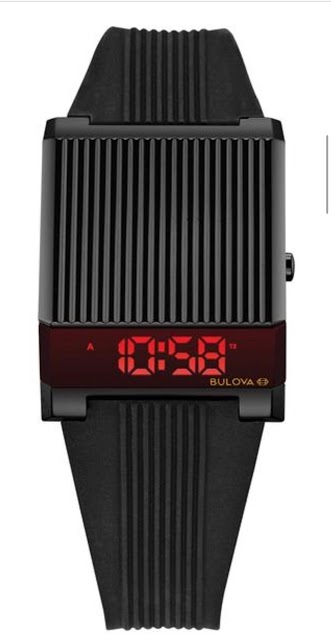
Bulova seemed to have miscalculated the popularity of digital watches and stood by idly while competitors were churning out and selling new quartz digital models in huge numbers. The company eventually started selling solid-state digital watches under the name Computron, but not before falling far behind in the battle for that market.
Ther dramatic inflation of the Swiss franc in relation to the U.S. dollar at that time also made it difficult for Bulova to compete cost-wise, since so much of its manufacturing was done in Switzerland.
For 1975, Bulova company lost $25 million on sales of $204 million.
With losses mounting in 1976, Gulf & Western sold its 26.8 percent interest in Bulova to Stelux Manufacturing Company
After this time the company was sold to a group of investors headed by Montres Universal S.A until they sold out completely in 1986 to the Stelux Group - a Hong Kong holdings company headed by a Mr C.P Wong.
Under the management of Stelux, Universal Geneve was re-launched in 2001.
In 2009 Stelux is still the owner of this brand and they have revived the phenomenon of Universal Geneve’s successful mircoroto concept. The latest watches contain the Microroto UG100 & Microroto UG 101 Movements launched in 2006 & 2007 respectively.

Stelux Holdings International also own Sovil et Titus S.A. and Pronto Watch S.A. Our readers in Asia and Singapore can identify easily with the CityChain group of watch shops and Optic88 Eye care shops which are also owned by Stelux Holdings.
WHO IS “EB”??
A picture speaks a thousand words, I perhaps may be making too many an assumption but there is one that I cannot answer myself and perhaps is buried in the depths of history forever.
Why would Perret & Berthoud who are a watchmaking firm in Le Locle order a IWC pocket watch and have it engraved with the mongram words “EB”?

In about the same time there was also a gentlemen called Edouard Bovet (1797-1849, Founder: Bovet Watch Company), but I believe he made a long trip round to the east and was busy selling watches in Canton China

The mystery of EB…….

Thank you for reading and I hope you were entertained in one way or another.
The pocked watch has an equal chance of being formerly owned by Edouard Berthoud or Edward Bloggs……. perhaps even Ettore Bugatti (*grin*) - u gotta love the Veyron too!

Cordially my kind regards as you begin a brand new 2009