Vintage
Blomman Mr Blue initiates a 'Throwback Thursday' series for Jaeger-LeCoultre, beginning with the year 1964 and the iconic JLC E 161, also known as the Mk 11. His post delves into the historical context of this British Air Ministry watch, exploring its significance and the circumstances of its sale in the mid-1960s. This piece aims to reintroduce a historically important vintage reference to new and seasoned collectors alike.


Friends,
Over at the Girard-Perregaux forum I have been posting a series of “Throwback Thursday” posts.
Now I would like to include Jaeger-LeCoultre in this series.
Let’s start with 1964. Why 1964? What happened in 1964?
Well, the boxer Cassius Clay became Muhammad Ali and the heavyweight champion of the world…

Roy Orbison sang “Oh, Pretty Woman”…

Our dear Jaeger-LeCoultre Moderator Nicolas was born…
And: The British Air Minister is selling out some of their Jaeger-LeCoultre E 161 watches a.k.a. the Mk 11!
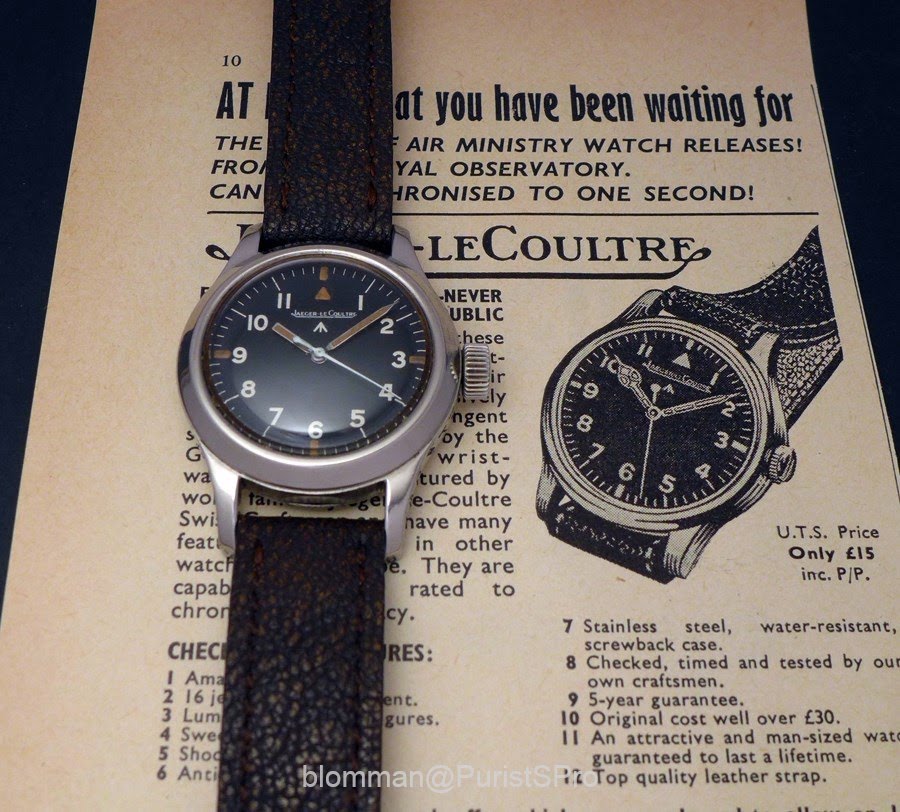
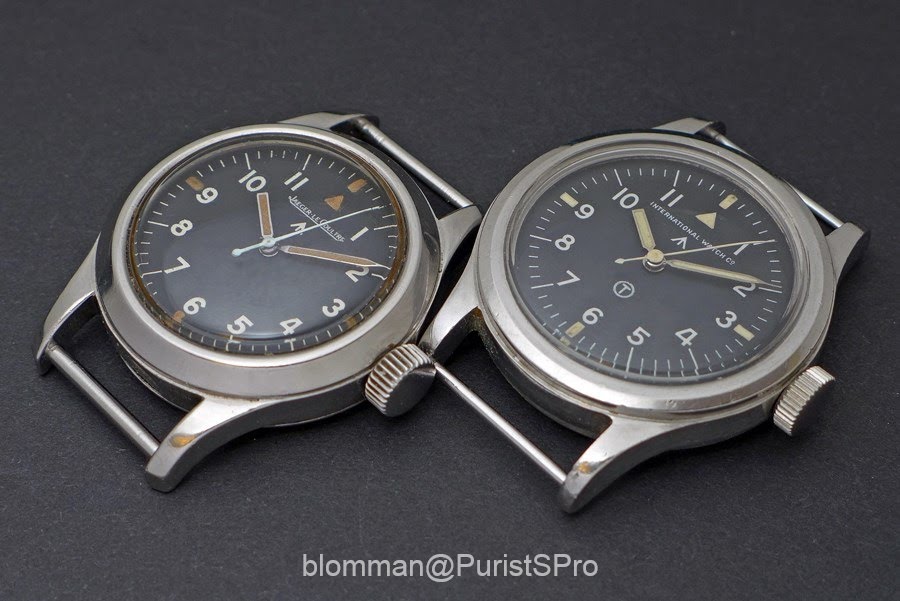
The JLC Mk 11 had only a short run, 1948 – 1953, 2950 pieces in total, compared with its sister the IWC Mk 11 which were produced for several decades and approximate 9000 pieces. (Info credit Markeleventrackingpage)
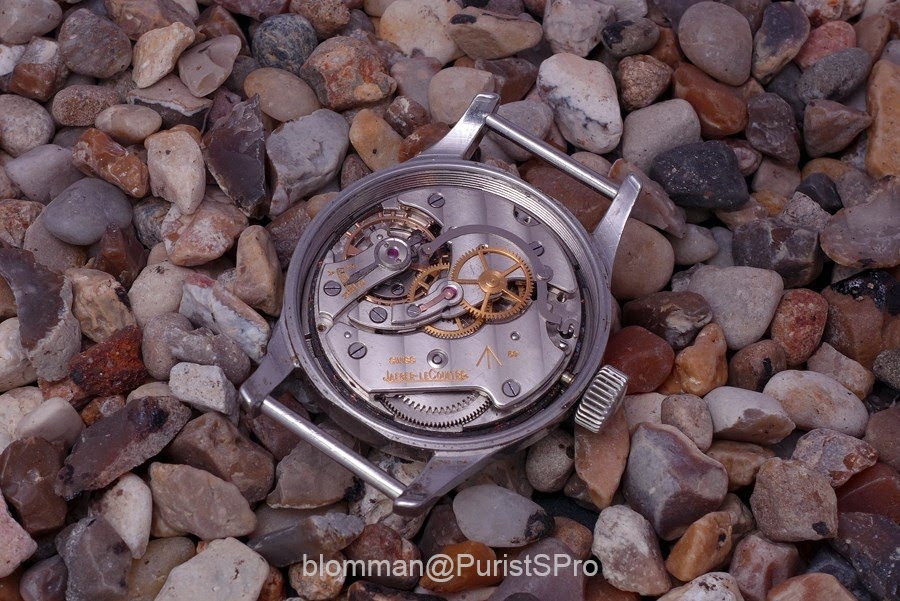
Not long ago we discussed which was the first ever wrist watch chronometer from Jaeger-LeCoultre.
Was it the E 161 with the Calibre 488/SBr?
Interesting to see is the beautiful decoration of the 488/SBr, a Military watch, a tool watch.
Or was it the E 168 with the Calibre P478/BWSBr?
The decoration of the P478/RWSBr is much less than on the Military ancestor.

With the E 161 is that there are no indications of Chronometre on the dial, movement or case.
Compared with the E 168, the Geophysic which has the “Chronometre” stated on the dial.
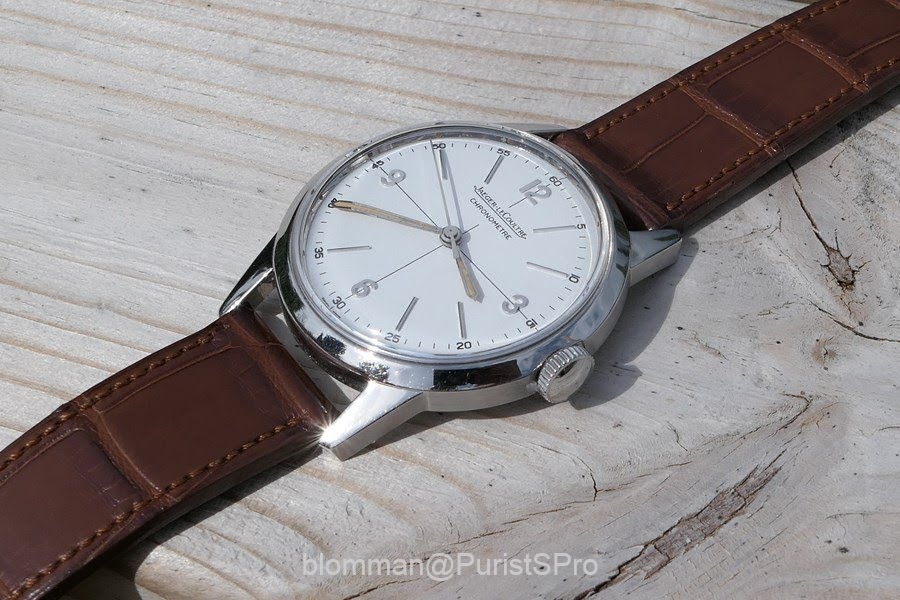
The British Minister of Defence had Chronometre specifications when ordering the Mk 11.
But was the E 161 an Officially Certified Chronometre?
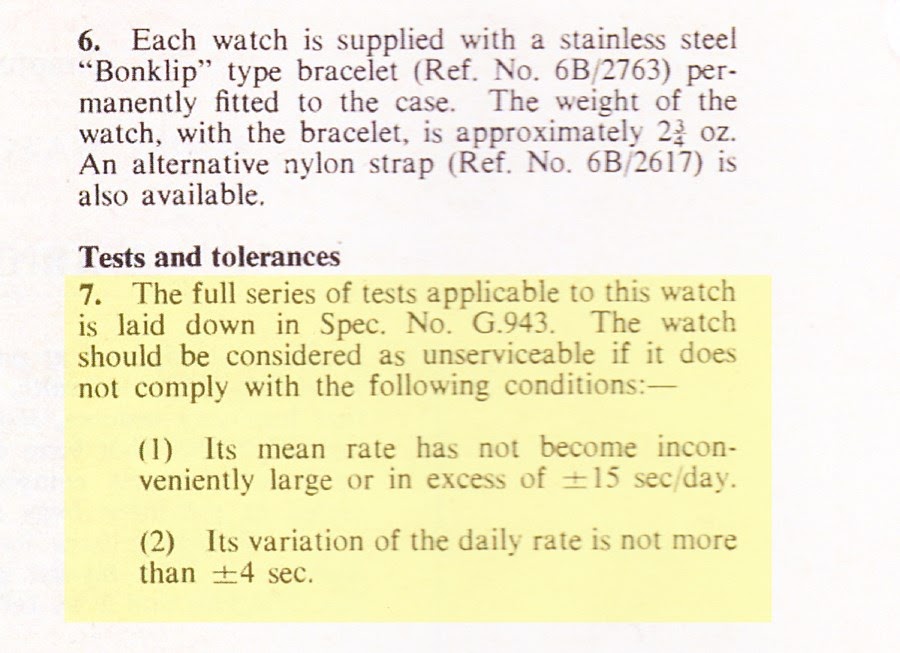
We know that some of the Calibre 448/SBr were sent to the Kew Observatory, the King’s Observatory or as it is referred to in this ad, the Royal Observatory.
“The Cream of Air Ministry watch releases! From the Royal Observatory. Can be synchronised to one second!”
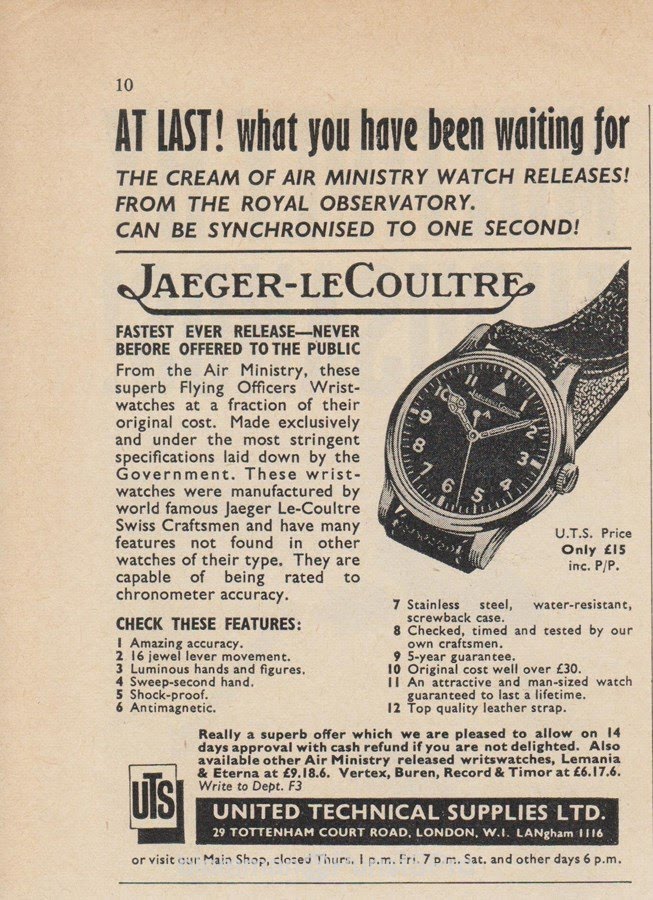
Now the question is if all Calibre 448/SBr for the E 161 were sent to the Observatory or only a few?
The ingress leaves it open for interpretations…
“From the Royal Observatory”, i.e. all of them has been there?
“Can be synchronised”, it has been proven that the Calibre 448/SBr is able of Chronometre specifications but not all has been sent to the Observatory?
Further down in the ad its stated “They are capable of being rated to chronometer accuracy”.
Capable..? So, no real conclusive here more than – yes, at least some of the Calibre 448/SBr for the E 161 were in fact sent to the British Observatory.
Question is, were all of them Chronometre officially certified?
If yes, why is this fact not presented anywhere else?
Why no indication on the watches?
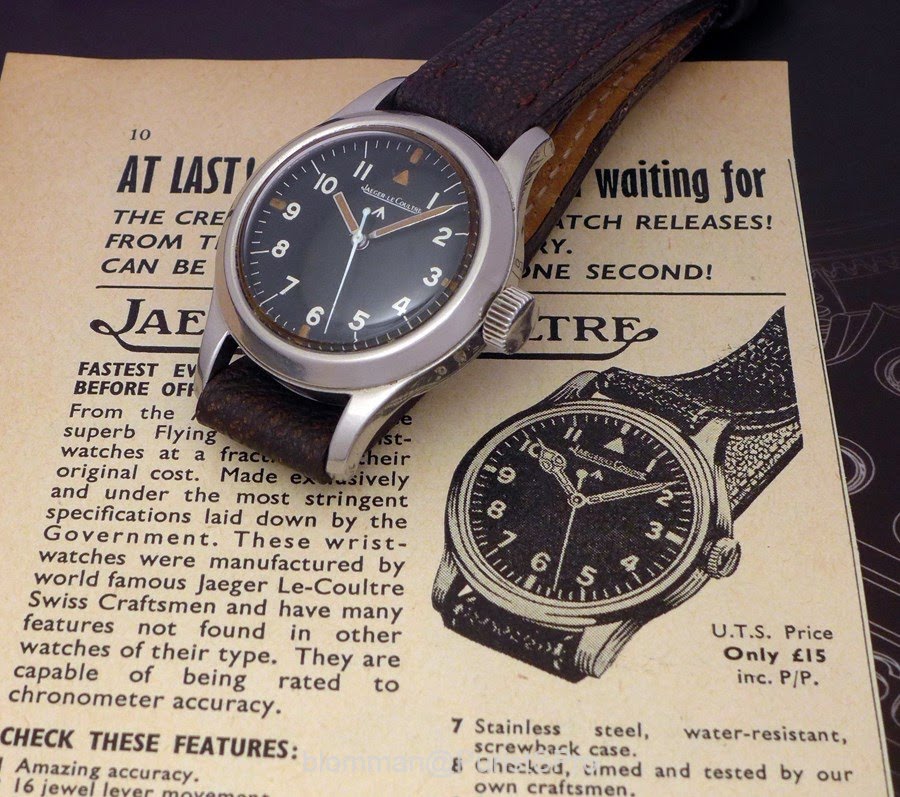
One day we might get the answer…
Best
Blomman
PS. I recommend to read the full ad, a lot of fun and interesting details here.
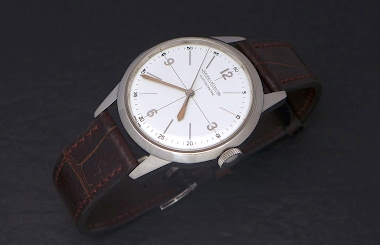
The Geophysic E168 is a notable reference within the Jaeger LeCoultre Geophysic series, originally introduced in 1958. This particular model is distinguished by its robust construction and precision engineering, designed for scientific observation and accuracy. It represents a period when watch manufacturers focused on creating instruments capable of performing reliably in challenging environments, emphasizing technical merit over decorative embellishments. The E168 is recognized for its clean dial layout and functional aesthetic, reflecting its purpose-built origins.
The case of the Geophysic E168 is crafted from stainless steel, measuring 35mm in diameter. It houses the manual-winding Caliber 478BWS, a movement known for its precision and anti-magnetic properties, featuring a hacking seconds function for accurate time setting. The watch is fitted with a domed acrylic crystal, contributing to its vintage character and period-appropriate design. The solid case back further underscores its utilitarian design, protecting the movement from external influences.
For collectors, the Geophysic E168 holds significance as an early example of a highly technical watch from Jaeger LeCoultre. Its appeal lies in its historical context and the engineering principles it embodies. Variants of the Geophysic line are sought after for their understated design and the quality of their movements, making the E168 a key reference for those interested in mid-20th century precision timekeeping instruments.
at 15 quid, I have one in every colour The Movement is really something and oh I love those hands on yours. Thanks for sharing. CC
But there were several dial/hands combinations. Thank you, CC! Best Blomman
.... £15 in 1965 is never more than £300 of today's money. If they could make them for £300, why is it 20times the price nowadays? Best, É.
As for this watch, yes, the question is very relevant. Were all or some of them submitted to Kew Teddington Observatory? I thought all of them were, now I am doubting. You are right to compare its movement to the Geophysic, whose movement is not decorated, surprisingly. Now I see what you had in mind, when you wrote some weeks ago that you wanted to post something about the Geophysic and the Mark 11. I have something in my mind, too, when it comes to compare these two watches. I am surprised to
I have several in stock, just need to find time to do all the research and writing... Indeed, it would be interesting to know if all movements was sent to the Royal Observatory. Historic importance - that is another interesting topic we should add to the list! Best Blomman
This thread is active on the Jaeger-LeCoultre forum with 36 replies. Share your knowledge with fellow collectors.
Join the Discussion →