Manufacture
SJX provides an in-depth tour of the A. Lange & Söhne manufactory in Glashütte, offering a rare glimpse into the meticulous processes behind German watchmaking. This comprehensive report covers everything from the initial manufacturing and finishing of parts to the intricate assembly and rigorous testing, including the brand's in-house hairspring production. Readers gain insight into the unique blend of traditional craftsmanship and modern technology that defines Lange.



A visit to the Lange manufactory in Glashütte
An tour of the Lange Uhren factory in Glashütte covering the manufacturing and finishing of parts, assembly and testing, including in-house hairspring production
By Su Jia Xian (SJX)
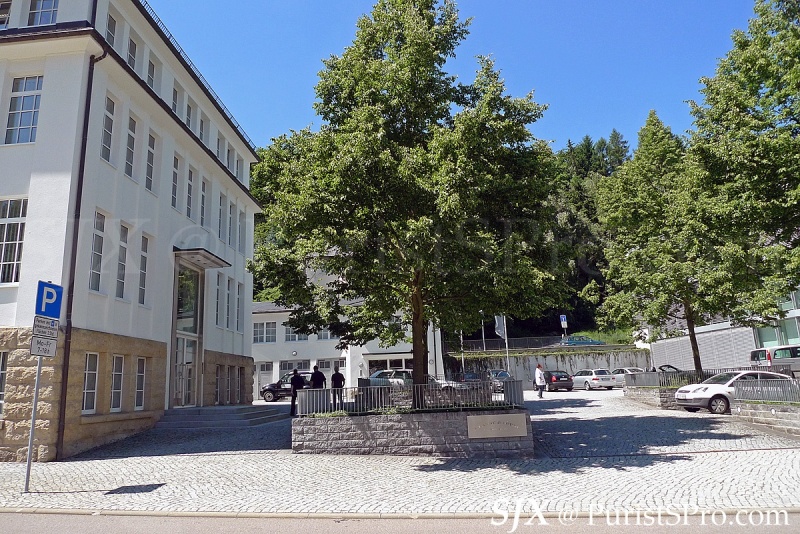
Lange watches are today made at the Lange I and Lange II buildings on Altenberger Straße. Originally the premises of clockmaker Strasser & Rohde, Lange set up here after the company was re-established in 1990 because the original Lange building at Ferdinand-Adolph-Lange-Platz 1 was owned by the town of Glashütte and unavailable.
Fortunately in the year 2000, the town of Glashütte agreed to sell Lange the building at Ferdinand-Adolph-Lange-Platz 1 which was not only the Lange workshop but also the residence of the Lange family before the war. Today the building houses the administrative offices of Lange, as well as the service and restoration departments.
Funnily enough, Glashütte Original sits in between the two Lange sites on Alterberger Straße and Ferdinand-Adolph-Lange-Platz. Across on one side from Ferdinand-Adolph-Lange-Platz 1 is Nomos while opposite on the other side sits casemaker SUG, partially owned by Sinn. Glashütte is the centre of German watchmaking.

The Lange manufactory seen from Altenberger Strasse
My guide for the tour was Arnd Einhorn, Lange’s Director of PR, and someone who has been with the brand since almost day one. It was my tremendous pleasure to be shown around the manufactory by Arnd.

Arnd Einhorn
This report will take you through the manufactory. Since being re-established, Lange has gradually grown its technical and manufacturing capability for movements. Lange has invested a tremendous amount in its factory, especially given its small output. Most notably it makes it own hairsprings. While there is no official word on this, I would surmise Lange also makes components for other Richemont Group companies. If you can only read one post of the eight parts I recommend clicking on the one covering hairspring manufacture.


Above: The main lobby of Lange
This epic post is largely factual with lots of photos. I will post a concluding article later on, after readers digest this. But to sum up my feelings about Lange Uhren: it is a small manufacture staffed by talented, but also proud yet humble, craftsmen and women – there are 450 staff making only a few thousand watches a year – who believe they are making the best watches in the world – and in many ways they are right.
My future posts will cover other aspects of Lange, including restoration and the town of Glashütte itself.
This message has been edited by SJX on 2010-11-19 07:26:58Lange's trademark German silver plates and bridges start out as blanks which are first polished flat (below). Then they are drilled and machined into the requirement components in another area. Milling and drilling of larger parts, like bridges and base plates, are also done in this department. Below: German silver plates in various stage of completion; notice they are gilded and engraved before they are machined Steel and brass parts are also machined. Because of the extreme precision required,
Small components with complex shapes are produced via wire erosion. Put simply this technique utilises an electrical discharge in a wire which cuts through the material. Blanks are stacked and then cut several at a time.
Parts are then subject to quality control, to ensure the tolerances of the entire part, including thickness, wide, size of holes, are up to par. This is done optically, by comparing the component to a template. Some aspects of certain parts must be precise to millionths of a metre! The measuring centre below is mounted on a one-tonne granite block to ensure there is zero vibration when measuring the part. This micrometer compares the sample against a reference on the computer.
Since 2003 with the Double Split, Lange has been making hairsprings to equip a portion of its production, mainly the high-end, complicated models. During the GDR days, hairsprings could not be imported so the state-owned watch enterprise, Glashütter Uhrenbetriebe (GUB), had to make its own hairsprings. Reiner Kocarek, the resident hairspring specialist, used to work for GUB and it was there he acquired the requisite knowhow. The hairspring begins with the raw Nivarox alloy which Lange buys
Lange is of course well known for the remarkable finish applied to its movements. Consequently, out of approximately 450 employees, 70 work on finishing movement components, which is undoubtedly one of the highest ratios in the industry. There really isn’t much more to be said about Lange’s finishing except that it is outstanding so I will let the pictures tell the story.
One of the trademarks of German movements is the engraved balance cock (which was, along with the three quarter plate appropriated from the English). Engraving is a simple process: a burin (a chisel with a sharp tip) is used to remove metal. But it is done freehand and requires immense skill. Engraving a balance cock for instance takes about an hour. Lange has a team of six engravers, led by Helmut Wagner. They are responsible for the engraved balance cocks, as well as custom engraving work. The
This thread is active on the A. Lange & Söhne forum with 52 replies. Share your knowledge with fellow collectors.
Join the Discussion →