Review
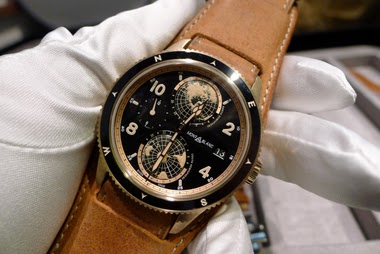
amanico presents a compelling comparative review between the Montblanc Villeret 1858 Tachymeter and the Patek Philippe 5070G, challenging traditional perceptions of luxury chronographs. This article delves into the nuances of movement size, case dimensions, and overall aesthetic harmony, prompting collectors to reconsider what truly defines high horology beyond brand prestige. His detailed analysis provides a fresh perspective on value and craftsmanship in the competitive landscape of fine watchmaking.


The Rolex Bubble Back, reference 1858, represents an early example of Rolex's self-winding waterproof wristwatches. This reference is part of the broader Bubble Back family, characterized by its distinctive domed case back designed to accommodate the thicker automatic movement of the era. It showcases Rolex's foundational efforts in developing robust and reliable automatic timepieces for everyday wear, laying groundwork for future Oyster Perpetual models.
This particular reference features an 18k white gold case, measuring 38mm in diameter. It is fitted with a sapphire crystal, protecting a silver dial. The watch is powered by an automatic movement, specifically the Boucheron 1858 caliber, offering a power reserve of 42 hours. The fixed bezel and leather strap complete the watch's classic presentation.
For collectors, the reference 1858 holds interest as an early and relatively rare iteration within the Bubble Back series, especially in white gold. Its larger case size for the period also makes it appealing to modern tastes. The presence of a date complication adds to its functionality, distinguishing it from simpler time-only Bubble Back models and highlighting Rolex's early integration of practical features.
I think Richemont did the right thing pairing them with Montblanc (who otherwise had no horological history behind them). It's akin to the Swatch Group making the legendary Lemania the inhouse movement manufacturer for the modern Breguet brand. The result: Both watch brands are now backed by serious mechanics who can "play" with the big boys.
The 5070 comes from a temple called Patek but if you look really closely into the watches themselves then the vote has to go to the 1858: - in-house balance spring is a must for a distinctive piece of horology - movement made from maillechort is also ueber traditional Yet the 5070 feels a bit better when operating the chrono but it is not a mayor argument. From the design point of view the 1858 looks young from the front and very, very classic from the back, so classic that you do not need to be
There will be a gap of, at least 25 000 Euros between these two chronographs in gold... Which I don't find justified, in my opinion, at least. Other than that, I totally subscribe to your point of view. Best, my friend. Nicolas
The MB dial looks better proportioned. The case/bezel compliments the dial-to me the 5070 case/bezel is too big for the dial (I know I am in a very small minority in that opinion but I never cared for this reference-prefer 5170). And there is no comparison, in my mind, with the movements-the Minerva competes with the Dato; the Lemania does not. I'm going to duck out now while all the PP fans throw stones at me!
and will compare it then to my 5070P. A blue dial vs. blue dial. Best Kari
a matter of taste but the 5070 has always negatively reminded me of how GP and Zenith squeeze a small movement into a modern size and the registers look crowded & too close. it\'s handsome. Yet It just does not look harmonious to me. I do appreciate as Nicolas writes that it harkens to historical chrono design. but humbly say that it is definitely a ref that was helped by the Patek brand halo. and yes on the other hand the 5170, just a beauty to look at. I think of the 5170 as like the ALS 1815
This thread is active on the Montblanc forum with 67 replies. Share your knowledge with fellow collectors.
Join the Discussion →