hmmmcamu's detailed explanation of dry and wet pressure tests offers crucial insights into watch water resistance, a topic of perennial interest for collectors. His post, featuring a vintage Omega Seamaster 120, highlights the importance of proper testing for both modern and heritage timepieces. Understanding these methods is essential for anyone looking to ensure the longevity and integrity of their watches, especially those intended for aquatic use.
A pressure test is usually either a DRY (air test) or a WET (water test).
Air test, also known as a vacuum test, the watch case is placed in an air testing machine with a fine measuring needle resting on the watch glass. Then, air is removed from within the machine causing an air vacuum around your watch. The air pressure inside the watch will try to equalize with the air pressure outside the watch creating a very slight bend in the watch glass. The needle resting on the glass measures the amount of bend. After a minute the measurement should be checked to see if it has changed. If the measurement is now different, then some air has escaped from the watch signifying a leak. If the measurement remains the same, the watch is probably air tight. An air test is quick and doesn't use water. Unfortunately, watches with a thicker glass sometimes don't bend so no change will be measured and the test is inconclusive. If the watch glass is domed, the needle can sometimes move across the glass slightly causing an inaccurate measurement. Another problem with air testing is that no exact pressure is defined and only shows that a watch case is air tight but now how air tight.
Water test involves placing the watch in an air pocket above some water inside a water testing machine. Air is pumped into the tank increasing the air pressure inside the tank and after a minute or so the watch is submerged in the water. The air inside the water tester is then released slowly. Like air testing, if any air has leaked into the watch before submersion, it will try to equalise with the lower pressure outside the watch. If this happens, it is visible as a constant stream of bubbles coming from the position of the leak. The important thing to point out is that air is escaping from the watch and not water entering it. If there is no stream of bubbles then the watch is air tight. This method is also superior to air testing in that the amount of air pumped into the machine can be altered to test for different water pressures e.g. 100 metres, 30 metres, 50 metres and so on. Water testing takes a little longer than an air test but is substantially more accurate and shows the exact position of any leak. This of course means that any necessary repairs will be completed faster and could cost less.
PHOTO:
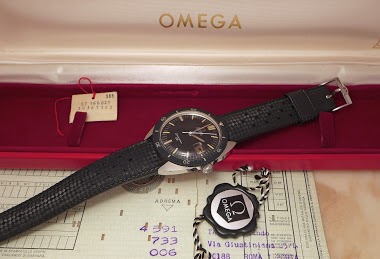
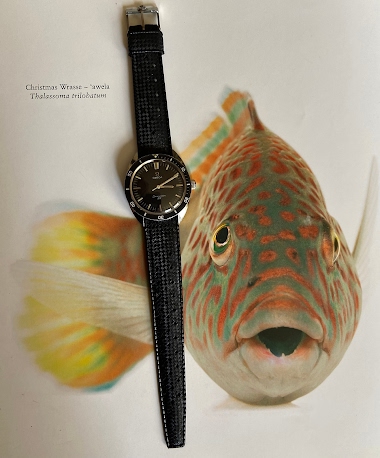
My 1967 OMEGA Seamaster 120 back from FULL Overhaul performed by Omega service center brought back to 1967 factory specs, and yes a watch made in 1967 passed both dry and wet tests


About the Omega Seamaster Ref. Seamaster120
The Omega Seamaster 120, introduced in 1967, represents Omega's early foray into professional dive watches, positioned as a more accessible alternative to the Seamaster 300. It offered robust water resistance in a more compact and versatile case design, appealing to both enthusiasts and those seeking a capable sports watch for everyday wear and light diving activities. This reference helped solidify Omega's reputation in the burgeoning dive watch market of the era.
This particular Seamaster 120 features a stainless steel case, often with a diameter around 37mm, and is typically powered by an automatic mechanical movement, such as the Omega Caliber 552 or 565, known for their reliability. The watch is characterized by its rotating bezel, often bi-directional, and a screw-down case back, contributing to its water resistance. Dials varied, but commonly featured luminous hour markers and hands for legibility in low light conditions.
For collectors, the Seamaster 120 holds significance as a transitional model, bridging the gap between earlier Seamaster models and the more specialized dive watches that would follow. Its enduring design and robust construction mean that well-maintained examples can still perform to their original specifications, as demonstrated by successful pressure testing. It offers a tangible connection to Omega's heritage in aquatic timekeeping.
Specifications
- Caliber
- Omega Caliber 552 or 565
- Case
- Stainless steel
- Diameter
- Approximately 37mm
- Dial
- Black
- Water Resist.
- 120 meters
- Crystal
- Acrylic