Author 219 explores the unique challenges polo presents to mechanical watches, featuring insights from Richard Mille ambassador Pablo MacDonough and the RM030 St. Tropez Polo Club Limited Edition. The article highlights how Richard Mille engineers timepieces to withstand the extreme physical impacts of the sport, contrasting it with other high-G activities. This piece delves into the intersection of high-performance sports and advanced watchmaking.
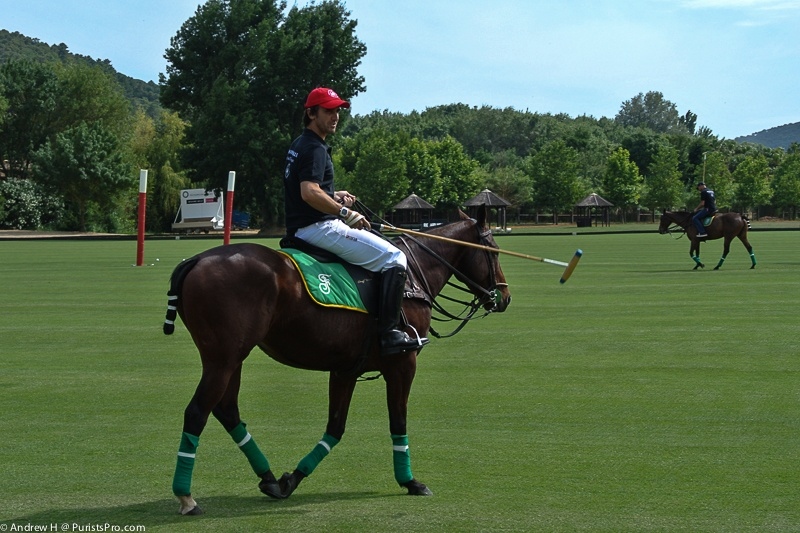
Pablo MacDonough, Richard Mille's polo ambassador looked down at his watch, back at me, and simply stated: "Polo is the hardest sport on a watch; more than racing cars, more than tennis or golf, it just is. That's why we gave so much thought to the RM053 watch that Richard designed for me. It is asking a great deal of a mechanical watch, with a finely timed movement, to take the same punishment as the rider and horse." He almost sounded sorry for the watch! Somehow it was not the watch's fault that it had to be subjected to the same brutality as the rider and animal.
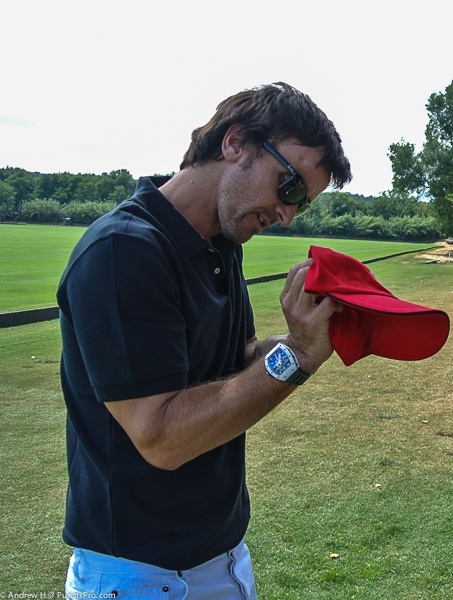
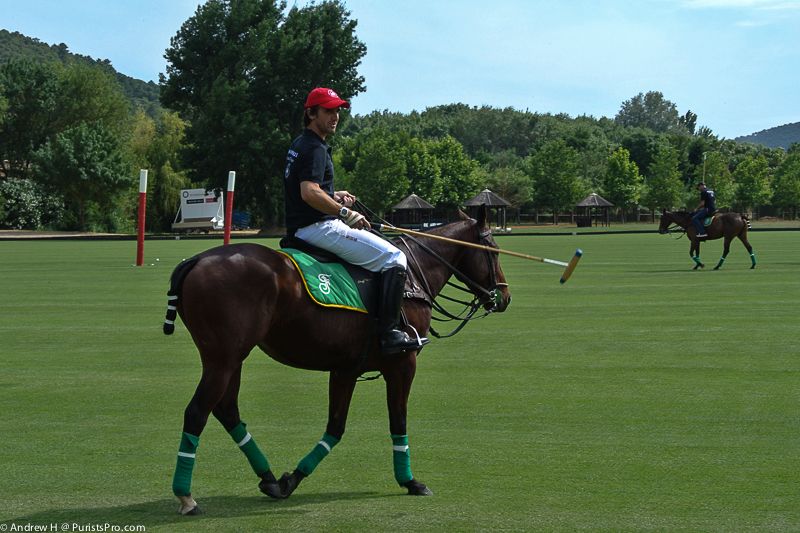
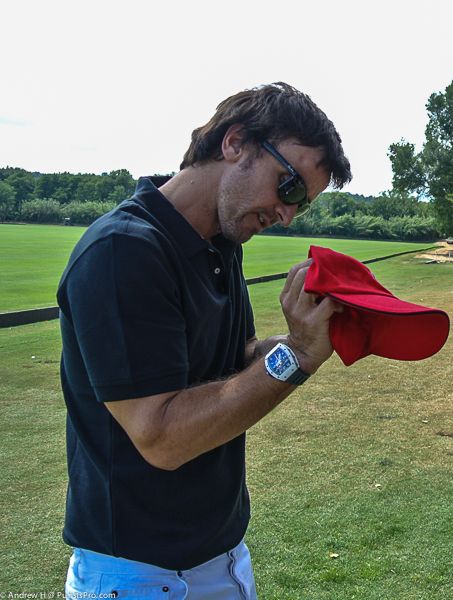
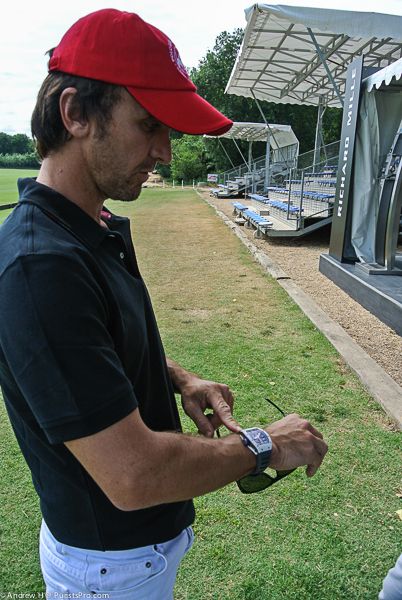
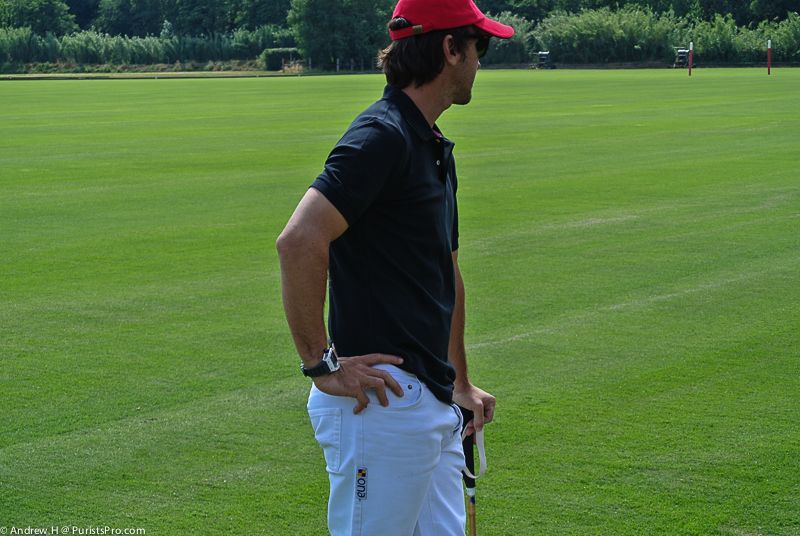
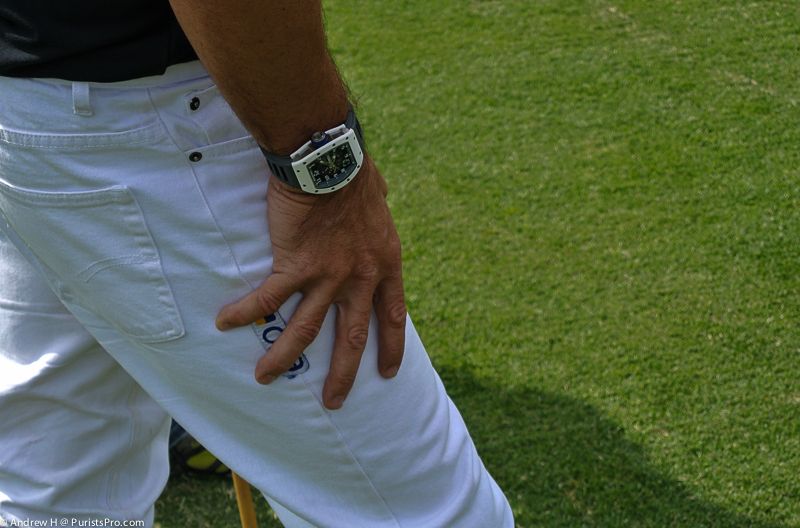
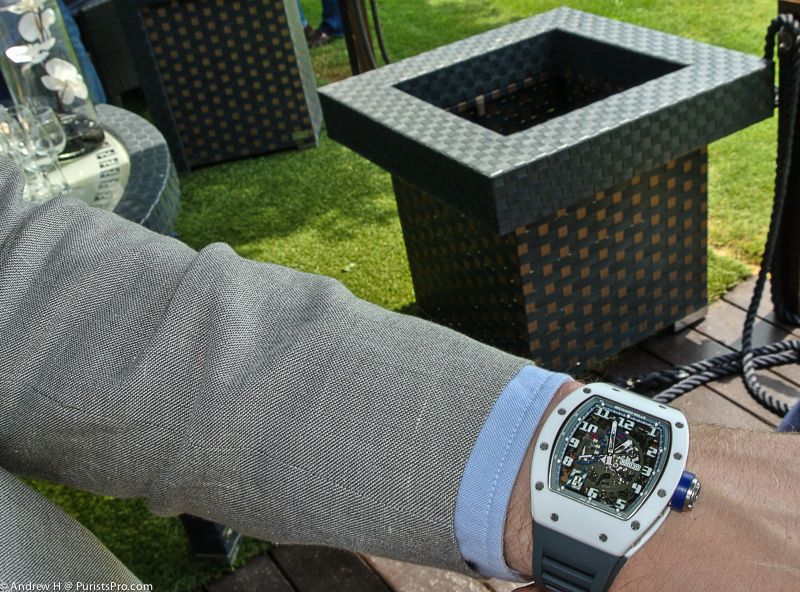
[Pablo with the RM030 Saint Tropez Polo Club watch on his wrist].
The punishment metered out during a polo match is not the usual G-force and constant pressure that comes with racing and subjecting watch and driver to lateral forces around the turn. No, the punishment that a polo player subjects a watch to is more of the physical kind: the impact hits that come from mallet, ball, or even with the ground!

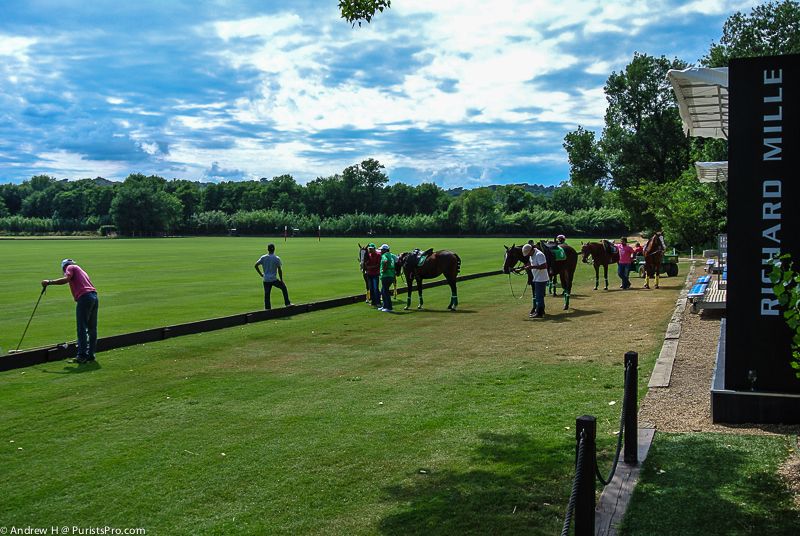
Polo as a sport might not be the preserve of Kings anymore, but it certainly is the sport of the higher income and the well-healed set! Not necessarily for the equine minded, but it certainly helps. Talk to any polo player for any length of time and the conversation naturally turns to horses, where they are kept, what the frailties and strengths are. There is more to the game than simply sitting on the horse and wielding a mallet. It requires an adeptness of skill, both as a horseman, and with a mallet that has a contact edge of only (approximately) 2cm by 7cm, while galloping along at 30 miles per hour. To get the heights of the sport that Pablo occupies, you have to be both dedicated and talented.

Pablo has been a brand ambassador for Richard Mille since 2011. Initially with the Richard Mille Polo Team, where Pablo was playing with Prince Bahar (among others), Richard came into sponsor the team when he was looking to become involved in the sport. It was sponsoring the team that led to Richard considering taking on a brand ambassador and in that Pablo was the ideal candidate. One of the world's top players, if not the top player (at the time he was rated number one), he is one of the few in the world with a ten goal ranking. So, by January 2012, Pablo Macdonough was announced as a Richard Mille sport ambassador.

Since becoming the Richard Mille ambassador Pablo has now switched teams (to Ellerstina) and spends his year globe trotting with the polo season. The polo season is a perpetual motion following the spring sunshine temperatures. There are three months in the US: February to April; from May to July in the UK; August sees the polo set move to Spain, to Soto Grande); and then the remaining months of the year are spent in Argentina. In his early thirties at the moment (with a decade of top level play already completed) Pablo reckoned that his career would last until he was about forty.

The next thought that occupies the mind is logistics. Polo is not the kind of sport that allows you to sling your equipment in a kit bag and get on the next flight. There is a rather large four legged piece of equipment that is necessary for the sport and which would be hard to fit in any 'kit bag' for a plane. This logistical problem is made worse as each player requires a number of horses per game. For players in Pablo's sphere of ability, it requires that a working stable of horses are maintained in the US, UK, and Argentina, with about eight to ten polo playing horses available in each of the locations. So I asked how many horses he may have to keep, to keep the availability of playing horses maintained. After reflecting for a minute or two, Pablo came up with a staggering total number of horses: (including foals, fillies) of about 400 horses worldwide. Basically having sufficient polo horses to ride around the globe requires a top player to run a horse business to sustain both the income and animals for the game. As Pablo explained: everything depends on the horse. Pablo has his own horses; and the team he plays for guarantees a certain number of horses. The more horses the better chance of winning. Horses get injured all too frequently; polo is a brutal sport. Horses also suffer mentally. Horses have to be brave, but also of a quiet mindset. They can get scared at the slightest thing: the field, a mallet, even a particular colour on a shirt!

Players are rated on a goal scoring scale from zero to ten. Up to six goals the club committee to which the player belongs will decide. After playing in tournaments, and in as high-ranking tournaments as possible, outside adjudicators will decide. The outside adjudicators will see how the player plays and will make recommendations. Pablo's promotion through the goal system was rapid: from seven to eight goals it took two seasons; from eight to nine, another two seasons; and nine to ten a season after that. It is possible to lose the ten goal ranking, but Pablo felt it was more important to win tournaments such as the Argentine Open.
Polo is arguably the first sport to inspire a watch design, and it remains an inspiration for watch manufacturers to this day. The impact resistance a watch has to have in polo, as against the everyday, is considerably more severe. There are several areas of impact that can affect the watch: the ball, the mallet, and the ground!
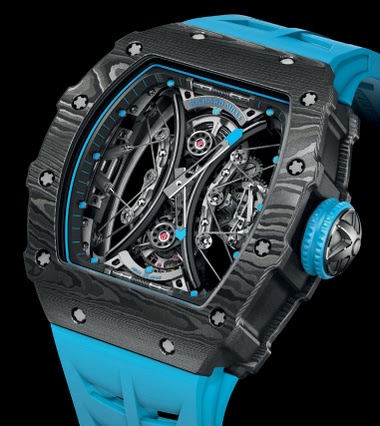
In describing the RM053 watch that Richard designed specifically for him, and for polo, Pablo described it as: "… a unique brand. All the watches are different. The idea to have such a specific complicated watch such as a tourbillon to play polo, the idea was just unbelievable! You can build a tourbillon watch for tennis, for golf, or for racing, but polo is the worst. I was quite amazed that he was willing to make such a complicated watch for playing polo." For the moment, Pablo plays with the RM010 and RM035 while the RM053 gets looked at.

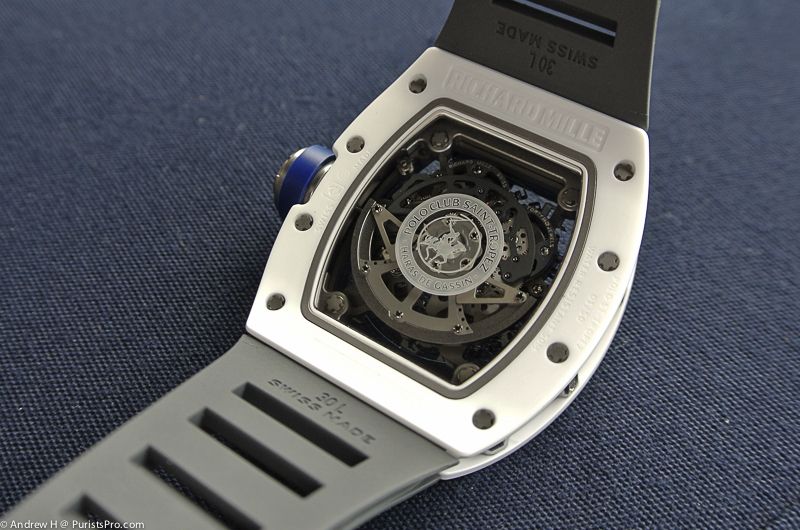
The one element that Pablo kept returning to was the quality of the watches. The success at testing a variety of watches, and what Richard can learn from the shocks to each of them, have led to Pablo wearing a number of watches for testing on the battlefields that are the polo clubs of the world. There has been an RM010 (Black Knight), a RM035 (with "chronofiable" testing), and currently the RM030 Limited Edition for the St.Tropez Polo Club. Chiefly, for the latter watch, Pablo is subjecting the ATZ white bezel and the RM030 movement to the same beating as he has the other watches.

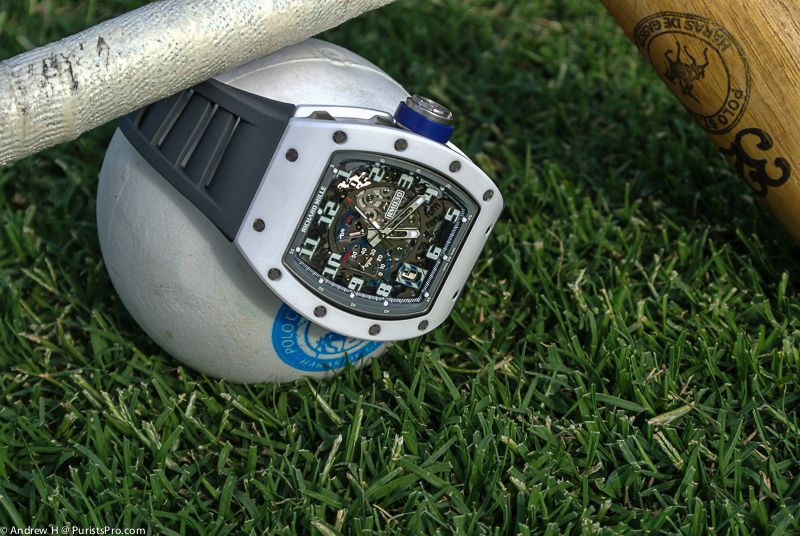
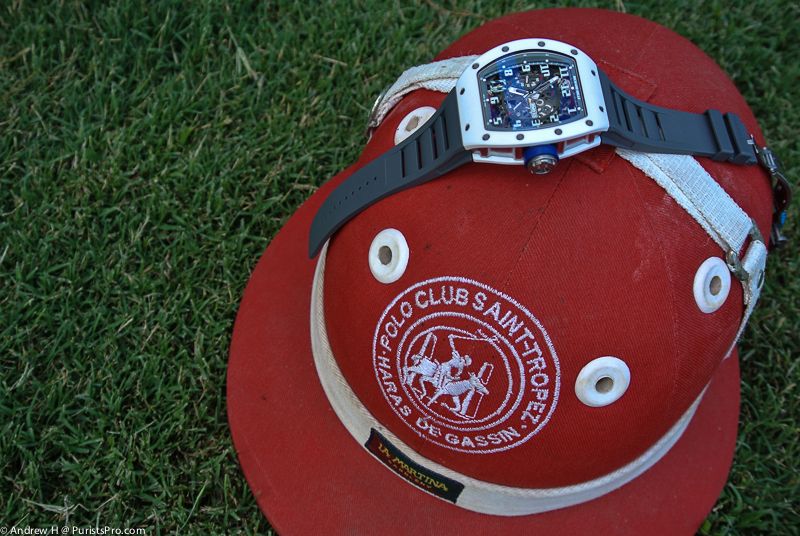
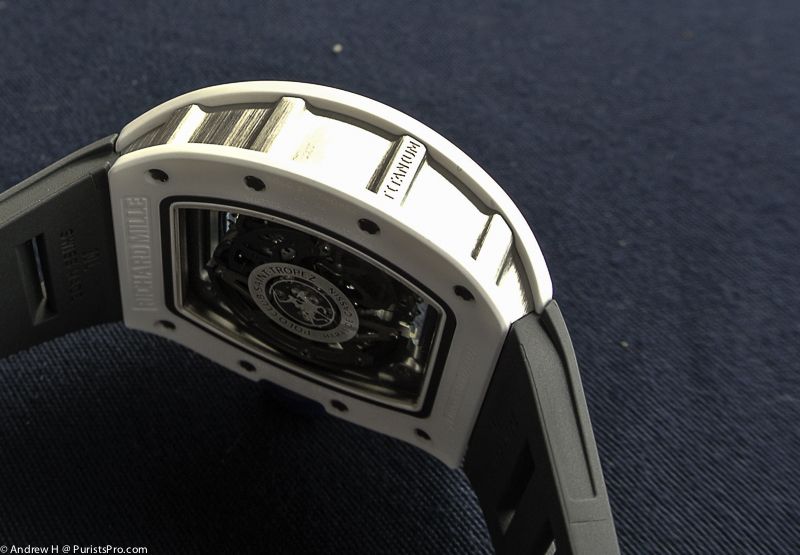
The RM030 St.Tropez Polo Club watch is the second in the series that Richard has produced for (what Pablo described as) the club that arguably has one of the best competition fields in the world. The first watch produced for the club being an RM011 in the same colour scheme. Not being a fan of chronographs generally, the RM030 is more to my liking. I have found from wearing watches with ATZ bezels to be very comfortable on the wrist. ATZ was the material that Richard started to use for the white watches having tested out a number of esoteric white materials in developing the RM038.

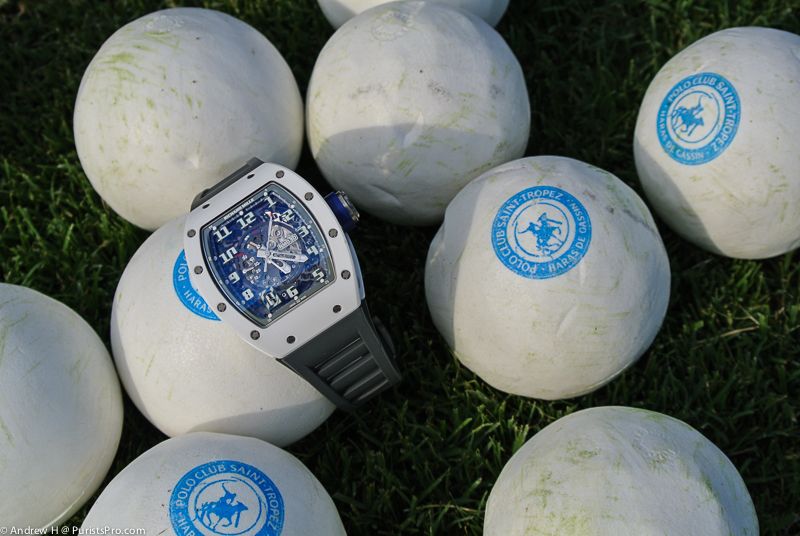
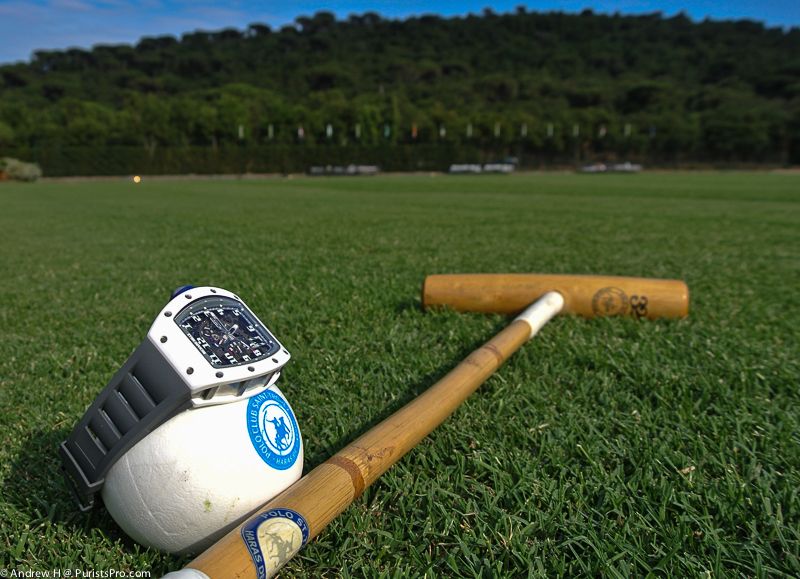
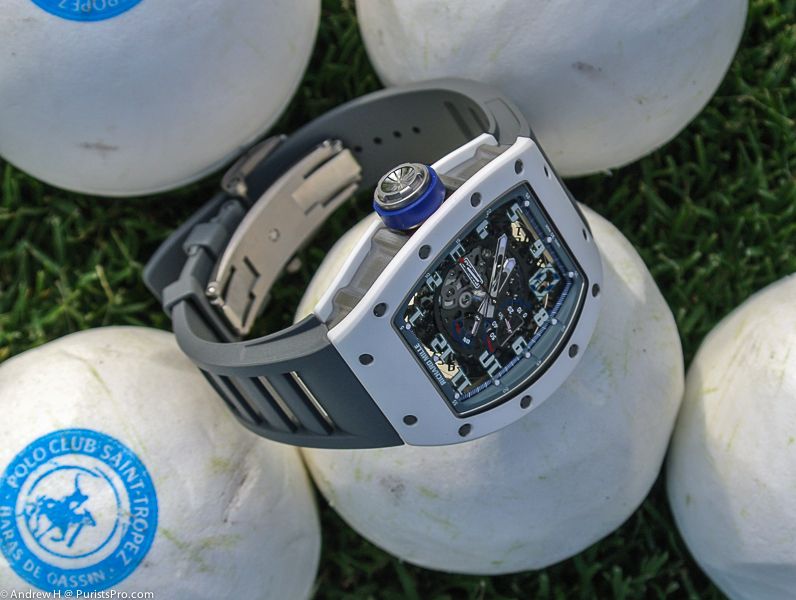
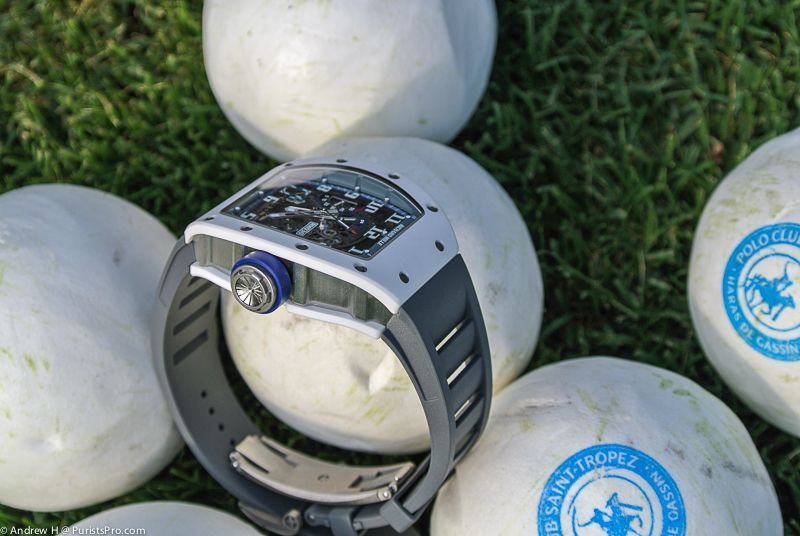
ATZ is more commonly known as alumina toughened zirconia (ATZ) and is a composite ceramic made from tubes of aluminum-oxide powder injected at high pressure. Because of this, the high-pressure injection increases rigidity, reduces the material's porosity, and delivers a scratch resistant material that is second only to diamonds. The comfort of the ATZ bezels with your wrist can also be explained from the fact that the normal use of the material is in medical implants (would you believe!). Hence, it is a rather perfect material for a polo watch. The bezel maintains its colour, is highly resistant to the knocks and impacts that the sport will deliver, and yet will remain comfortable next to the skin on the wrist. Take a look at the watch with a set of polo balls: note how the mallet impacts on the plastic. The watch bezel does not suffer a similar fate.

To my mind the movement also makes more sense. Although the watch movement is the standard (if you can call it that) RM030 automatic, with the clutch operated detachable rotor, the movement makes most sense in use when there is a considerable chance that you might overwind the mainspring given perpetual use. Wielding a mallet back and forth would potentially overwind that mainspring. When both barrels are fully wound, the rotor declutches from the winding system, ensuring they are not overwound. In addition to the 55-hour power reserve indicator on the dial you also get an "On/Off" indicator telling you whether or not the watch is currently being wound. Winding only begins again when the power reserve falls to 40 hours.

Pablo's list of injuries make it sound as if he is a Hollywood stunt man who removed all the safety equipment. He pointed to his right eye: "I have no more bone remaining above this eye. A mallet took it out!" It took five surgeries to repair that area of Pablo's face. Perhaps some ATZ was used in the reconstruction? He did not know! The rest of the injury list would keep an ER in full time employment for a month! His nose has been broken three times, the arm injuries, pulled muscles on the shoulder, Pablo cannot even remember the times he has fallen off. The last bad one was at the Argentine Open semi-final 2013.

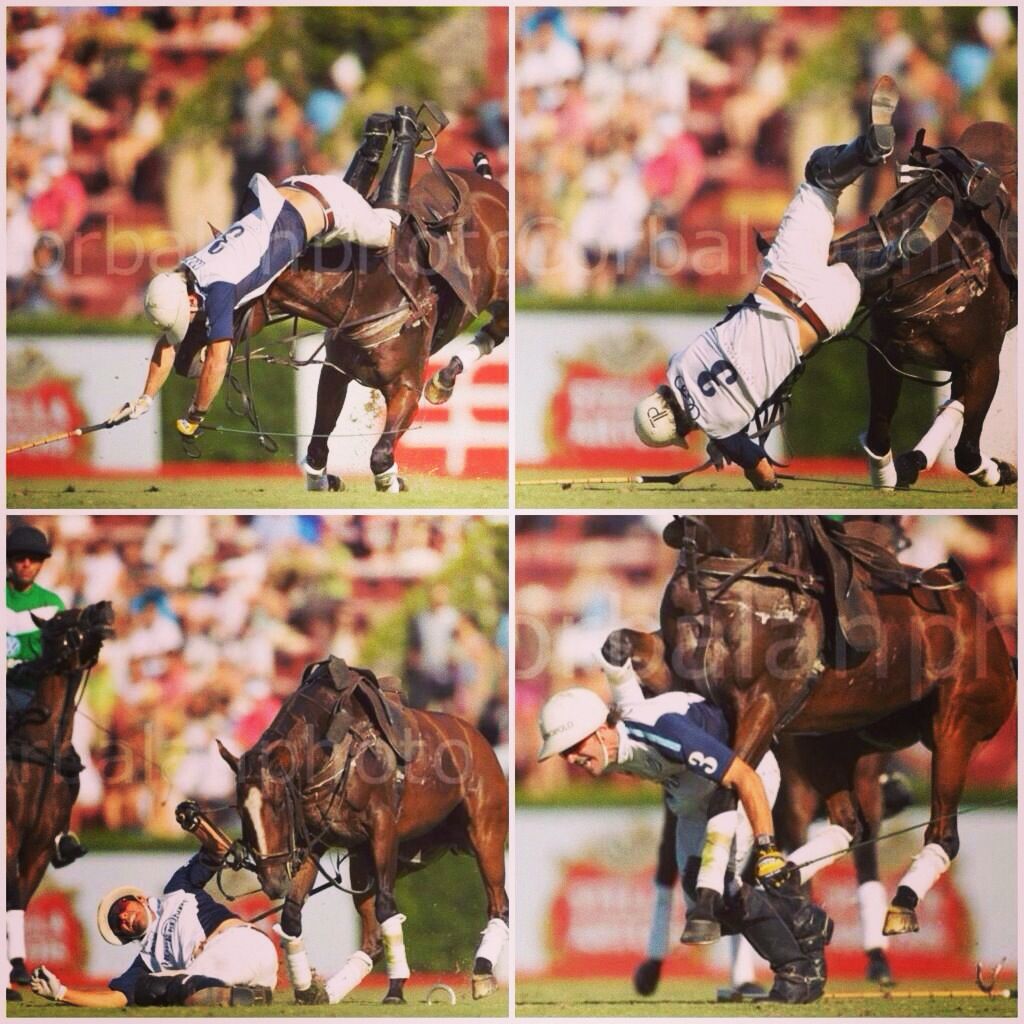
As the interview was drawing to a close, and to prove his point, Pablo picked up his mobile phone. "Here, let me show you!" he said. Scrolling through the photos on his phone, he stopped, clicked on one of them and handed the phone to me. Sure enough, there was the photo, rider and horse in perfect dis-harmony, Pablo airborne, horse airborne for that matter, and the element taking the first impact was the (you guessed it) - the watch. The RM010 Black Knight for those who are interested. "Did you get up and finish the match?" A wry smile from Pablo: "Yes! Of course! I was lucky on that occasion. I won too! And the watch survived!"
Andrew H
Epilogue: for those of you who want to see the picture I was looking at on Pablo's phone and the full effect of the fall on the watch: a series of photos from the Argentine Open 2013:
About the Richard Mille Automatic Ref. RM010
Richard Mille RM010 Automatic
The RM010 represents Richard Mille's automatic offering within the RM 010 series. This reference was produced from 2005 to 2015, establishing it as a decade-spanning model in the brand's catalog. The RM010 designation indicates its positioning as an automatic variant within Richard Mille's numerical reference system.
The 39mm case is constructed from titanium and features a fixed bezel configuration. Sapphire crystal protects the skeletonized dial, which reveals the mechanical components beneath. The watch houses the RM010 automatic caliber, providing 55 hours of power reserve. Water resistance extends to 50 meters, and the timepiece is completed with a rubber strap.
This reference appeals to collectors seeking Richard Mille's distinctive aesthetic in an automatic format. The titanium construction and skeletonized dial presentation reflect the brand's technical approach to watchmaking. The ten-year production span from 2005 to 2015 makes this a relatively accessible entry point into Richard Mille's automatic collection for contemporary collectors.
Specifications
- Caliber
- RM010
- Case
- Titanium
- Diameter
- 39 mm
- Dial
- Skeletonized
- Water Resist.
- 50m
- Crystal
- Sapphire
About the Richard Mille Flyback Chronograph Felipe Massa Ref. RM011
The Richard Mille RM011 Flyback Chronograph Felipe Massa represents the brand's RM 011 series, distinguished by its flyback chronograph functionality within a 40mm case format. This reference was produced from 2007 to 2020, establishing it as a multi-year production model within Richard Mille's contemporary lineup.
The watch features a 40mm titanium case fitted with a fixed bezel and sapphire crystal. The skeletonized dial construction provides visibility of the internal components. The automatic RMAC1 caliber delivers 55 hours of power reserve, while water resistance extends to 50 meters. The timepiece is completed with a rubber strap.
This reference appeals to collectors seeking Richard Mille's flyback chronograph complications in a titanium construction. The 13-year production span from 2007 to 2020 makes examples readily available across different production periods. The 40mm case size and rubber strap configuration position this model for those prioritizing technical complications within Richard Mille's sports watch category.
Specifications
- Caliber
- RMAC1
- Case
- Titanium
- Diameter
- 40 mm
- Dial
- Skeletonized
- Water Resist.
- 50m
- Crystal
- Sapphire
About the Richard Mille Automatic Declutchable Rotor Ref. RM030
The Richard Mille RM030 Automatic Declutchable Rotor represents the brand's approach to haute horlogerie complications, featuring a mechanism that allows the wearer to engage or disengage the automatic rotor. This reference was produced from 2012 to 2020, positioning it as a contemporary offering within Richard Mille's technical collection.
The 43mm case is constructed from titanium and fitted with a fixed bezel and sapphire crystal. The skeletonized dial provides visibility into the mechanical components. The watch houses the RMAS7 automatic caliber, offering 55 hours of power reserve. Water resistance is rated to 50 meters, and the watch is completed with a rubber strap.
This reference appeals to collectors interested in Richard Mille's technical innovations and contemporary haute horlogerie. The declutchable rotor complication and skeletonized architecture cater to enthusiasts who appreciate visible mechanical complexity. The eight-year production run suggests steady availability within the secondary market for collectors seeking this particular technical execution.
Specifications
- Caliber
- RMAS7
- Case
- Titanium
- Diameter
- 43 mm
- Dial
- Skeletonized
- Water Resist.
- 50m
- Crystal
- Sapphire
About the Richard Mille Rafael Nadal Ref. RM035
The RM 035 represents Richard Mille's skeletonized manual-winding offering within the RM 035 series. This Rafael Nadal model features a distinctive open-dial architecture that exposes the mechanical components, positioning it as a technical showcase within the brand's contemporary lineup.
The 43mm case is constructed from NTPT Carbon, fitted with a fixed bezel and sapphire crystal. The skeletonized dial reveals the manual-winding RMUL3 caliber, which provides a 55-hour power reserve. Water resistance is rated to 50 meters, and the watch is completed with a rubber strap.
Produced from 2012 to 2018, this reference appeals to collectors seeking Richard Mille's signature technical aesthetic in a manually-wound format. The NTPT Carbon construction and skeletonized architecture position this model for enthusiasts who prioritize material innovation and visual access to the movement mechanics over traditional dial presentations.
Specifications
- Caliber
- RMUL3
- Case
- NTPT Carbon
- Diameter
- 43 mm
- Dial
- Skeletonized
- Water Resist.
- 50m
- Crystal
- Sapphire
About the Richard Mille Tourbillon Bubba Watson G-Sensor Ref. RM038
Richard Mille RM038 Tourbillon Bubba Watson G-Sensor
The RM038 represents Richard Mille's integration of tourbillon complications with G-sensor technology, positioned within the brand's technical sports watch category. This reference combines the visual drama of skeletonized dial architecture with mechanical complexity, distinguishing it from conventional tourbillon offerings through its sensor functionality.
The 40mm titanium case houses the manual-winding RM038 caliber, providing 70 hours of power reserve. Sapphire crystal protects the skeletonized dial, while the titanium construction ensures durability with 50-meter water resistance. The watch is completed with a rubber strap, emphasizing its technical sports orientation over dress watch applications.
Produced from 2013 to 2018, the RM038 appeals to collectors seeking contemporary mechanical complexity combined with modern materials technology. The five-year production window creates defined scarcity parameters, while the tourbillon and G-sensor combination targets enthusiasts of horological innovation. The skeletonized dial treatment provides visual access to the mechanical elements, satisfying collectors who prioritize movement visibility.
Specifications
- Caliber
- RM038
- Case
- Titanium
- Diameter
- 40 mm
- Dial
- Skeletonized
- Water Resist.
- 50m
- Crystal
- Sapphire