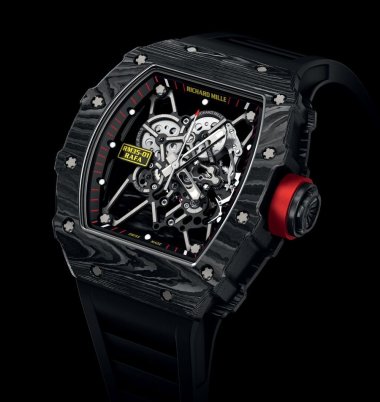
Andrew H (219) provides a compelling review of the Richard Mille RM035, comparing it to its groundbreaking predecessor, the RM027. This article delves into whether the RM035 can replicate the 'unbearable lightness of being' and awe-inspiring impact that defined the RM027, exploring its technical innovations and wearability.

When the RM027 first appeared on the scene, I was fortunate enough to be provided with the one of the prototypes to try out. (http://richardmille.watchprosite.com/show-forumpost/fi-18/pi-3766246/ti-602166/s-0/) At the time I thought it was an act of brilliance and in witnessing some of the reactions of people over the years, to the RM027’s lightness and stark features, nothing has dimmed or detracted from my views on the watch. I still see it in the person’s smile; that realisation that here is watch, haute horologerie at the very frontiers of what a mechanical watch can be and do, and for all the wizardry and design, it is as light as a piece of paper, yet can withstand a 400G+ impact.
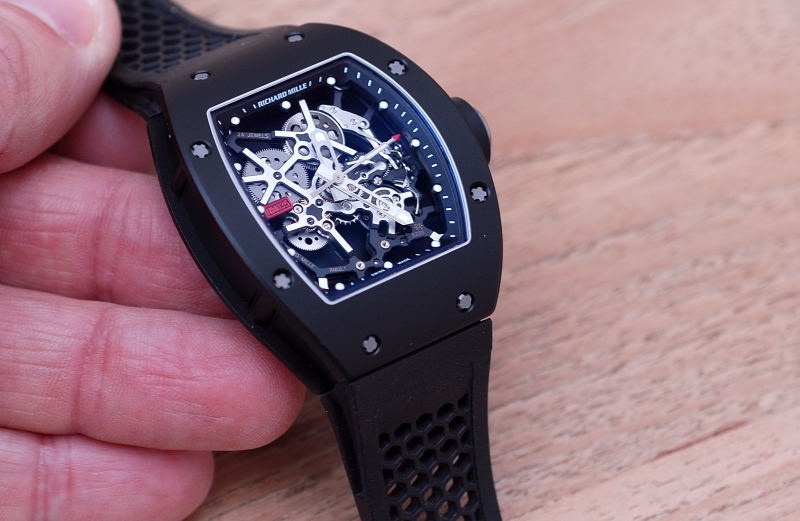
The question then is what can the RM035 offer? Can the RM035 offer the same awestruck reaction as its more illustrious sibling? The look is similar, the case a coated lightweight metal, and the movement is proprietary to Richard Mille. So does the RM035 measure up?
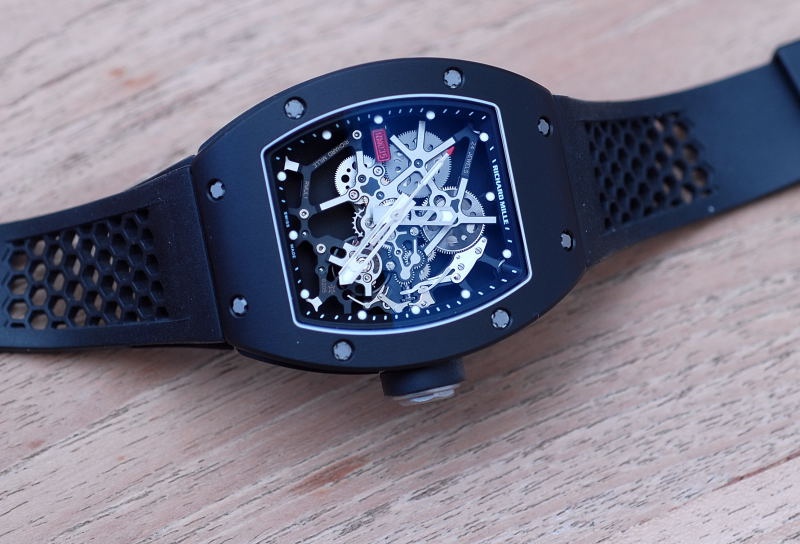
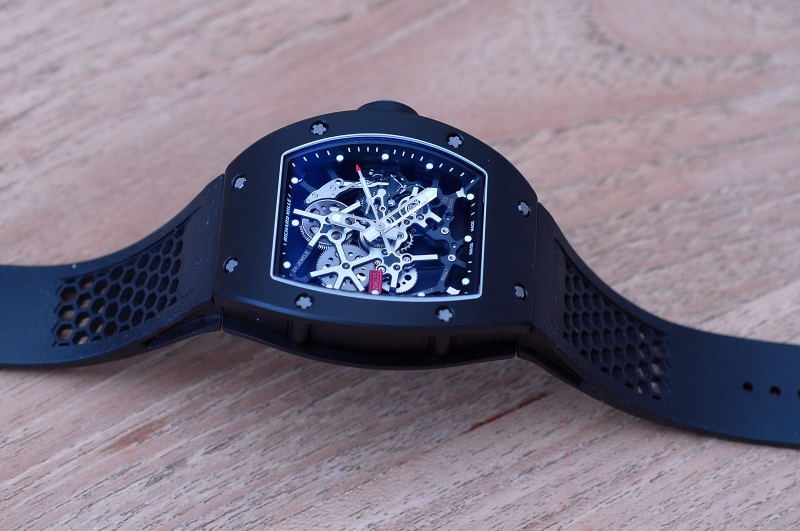
To cut to the chase, the short answer is a resounding ‘yes’. The loan watch I had for this review was shown around friends and others in the watch industry, and there was still the same look of surprise and bewilderment on the faces and the expression: “It’s so light, as if nothing, ... you can hardly feel it on your wrist!” And that is the magic right there! That lightness of being: as if nothing weighs you down. The watch that feels as if it is not there and yet can take the most extraordinary punishment and brush it off as if it had not happened.
To ensure the point Richard had the watches certified ‘Chronofiable’. ‘Chronofiable’ sounds a bit of a mouth full – and almost a made up name - but it does have meaning and application. Devised in the 1970’s as a way to accelerate the aging on a watch to test both the time keeping properties of the movement, Laboratoire Dubois SA (yes - the same people who also make the chronograph modules for the RM011) use it to test batches of the complete watch (http://www.laboratoiredubois.ch/SiteLaboDubois%20anglais/html/C_Chronofiable.html). There are two extreme temperature tests on the movement (0°C and 50°C) to check the power reserve and the winding velocity (for automatic movements). Testing what happens with the ageing of a watch consists of linear and angular accelerations with accompanying shocks as well as changes in temperature and humidity. The tests last a total of 21 days and that corresponds to about 6 months of effective wear. In total there are around 20000 shocks ranging from 250 to 5500 m/s2. There are also temperature variation tests on the complete watch at 17°C, 30°C and 57°C.
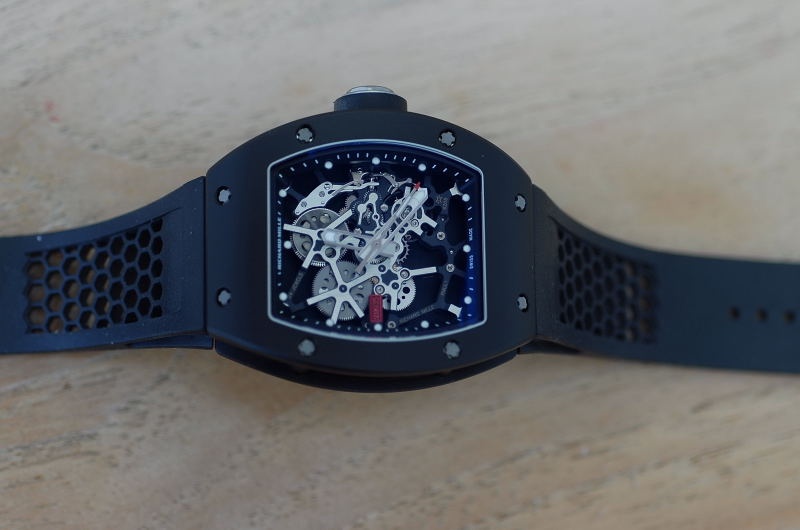
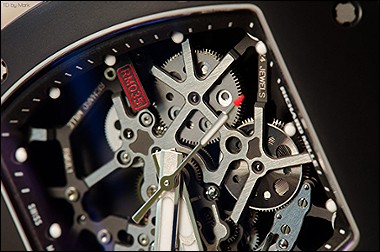
The movement itself is arguably the first inhouse Richard Mille. While the gear train and the layout of the movement resembles the Vaucher automatic, there is good reason as the movement parts are from Vaucher! However, the movement has now been altered to a manual wind. The winding is smooth and while you wind the watch, you can see the main spring barrels rotate. The main spring barrels require winding a fair amount as this was formerly set for an automatic wind, but that only adds to enjoyment of watching the movement wind. The movement, with titanium plates, weighs a mere 4.3grams.
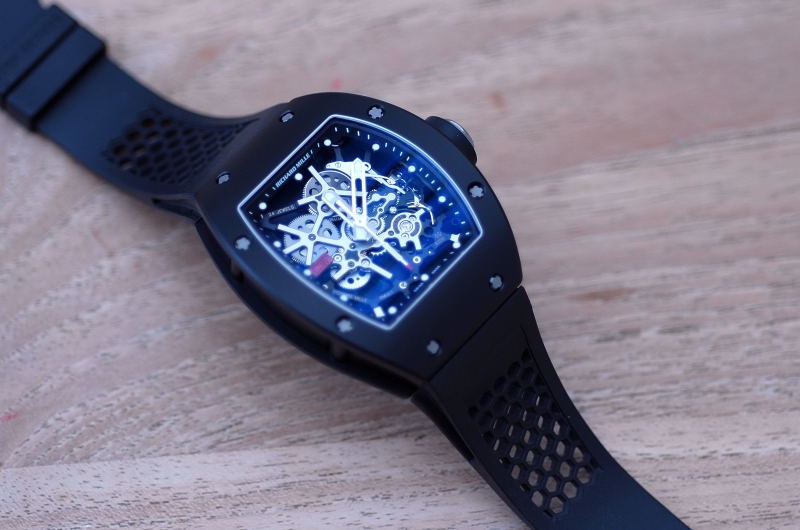
The movement is well finished and while I would have liked a little more depth to the movement; the movement is after all the guts (or literally the nuts and bolts) of a flat automatic movement by Vaucher. That Richard has then managed to get depth to the movement in the case is to his credit and to the owners delight. Differences in finishing on the surfaces of the lattice plates, or on the movement gears, provide that depth and differences in light are reflected across the surfaces on the movement plates and gears. Various elements either have a brushed surface (main plates), or black polishing (time setting levers), or the screws now have polished heads. There is a lot of ‘traditional’ work that has gone into the movement to make the various elements visible and ‘catch the light’ at various angles.
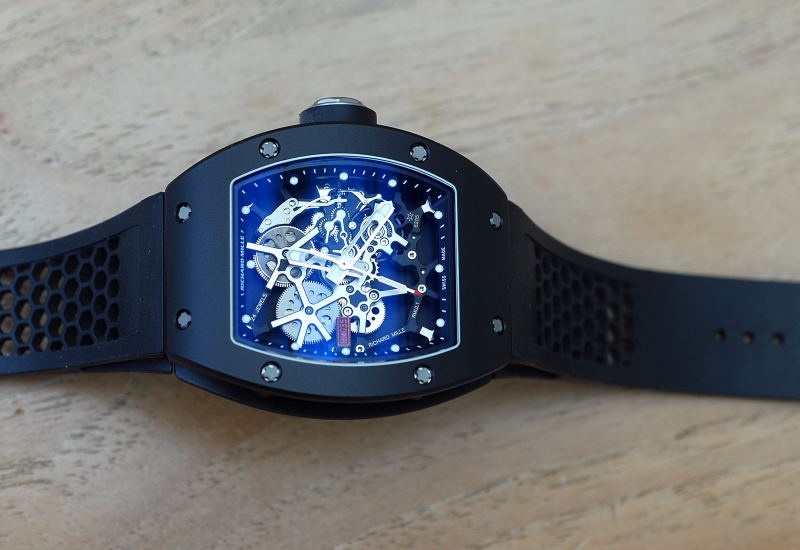
What the movement does reveal is all the inner workings: from the winding, to the time setting, to the operation of the movement in keeping time. The escapement has been altered over the Vaucher settings. The escapement is now free sprung and as such provides a ‘purer’ movement. I have to confess that I would like a little function to the watch. I am a ‘sucker’ for the hand wound time only movement, but a power reserve in the upper left hand side of the watch (if possible) would provide a little more depth to the dial/movement.
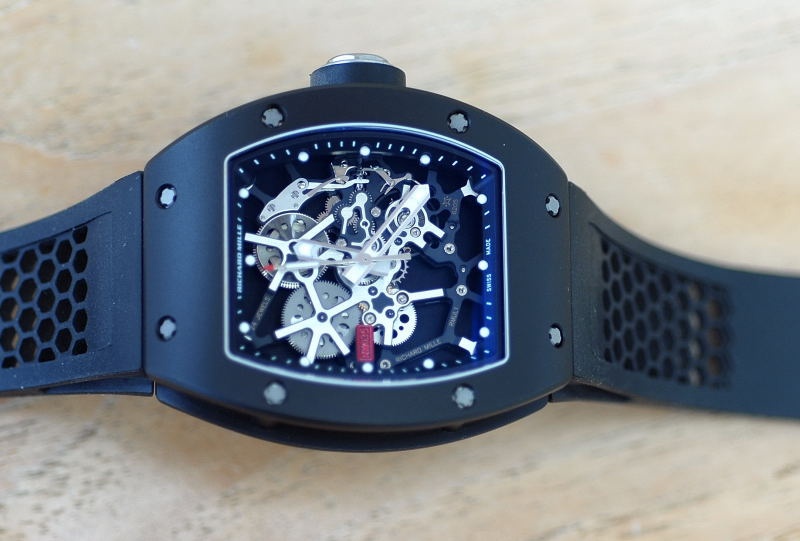
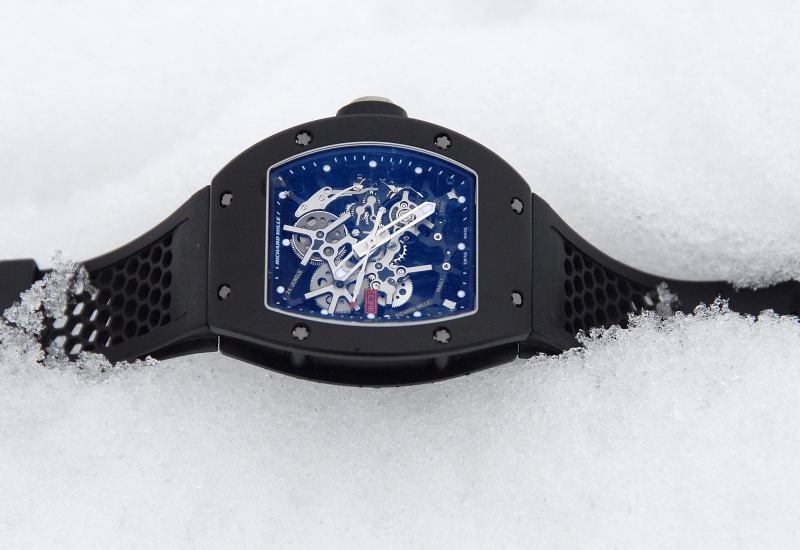
The case is still the (iconic) Richard Mille tonneau form and the size and design of the case harks back to the early days of Richard Mille (around the time of the RM002 case size). In some respects, the RM035 reminds me of the RM006 in feel and quality: a new movement, a new case material, a watch for extreme conditions and use. The new case for the RM035 is one of the new generation cases that Richard has developed. Richard has been playing around with various new materials such as carbon nanotubes or aluminium alloys. The case for the RM035 is a magnesium-aluminium alloy making it extremely light and rigid. However, magnesium on its own does not react well with water or moisture in general. In fact, it can corrode easily.
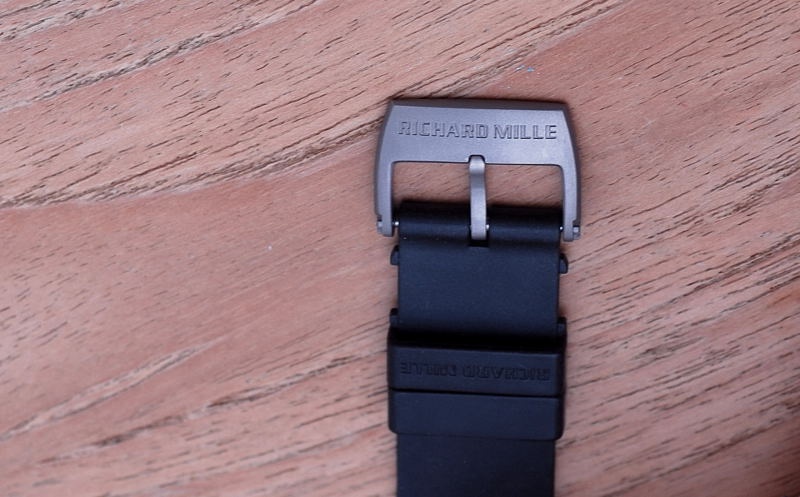
[Have to say that the use of the tang buckle makes the watch more comfortable to wear]
To overcome the problem, and provide a coating on the sensitive raw metal, the alloy is coated with magnesium and aluminium crystalline oxide ceramic (otherwise called ‘spinels’). The spinels are actually a naturally occurring phenomenon in various semi-precious rocks; however, a synthetic form is used on surfaces such as the RM035 case. What makes the surface so resistant to corrosion and wear, as well as being biocompatible comes from the lattice structure of the oxides themselves. The actual formula: MgAl2O4 tells a story. It tells the story that if the ions per oxide are smaller for one part of the lattice structure than another part, then the smaller part can occupy the holes between molecules because of a charge factor. This maximises the lattice energy if the ions are similar in size and creates a regular lattice for the molecular structure. Such bonding makes the surface of the crystalline oxide ceramic very tough and inert: there is no spare positive or negative charge. To give the toughness of the crystalline oxide ceramic some form of number, the coating ranks approximately an 8 on the Mohs scale; which approximately corresponds (as the scales are not strictly comparable) to a 1800 – 2000 Vickers. In short, a lot tougher than most steels and hence, not easily scratched (although not impossible either).
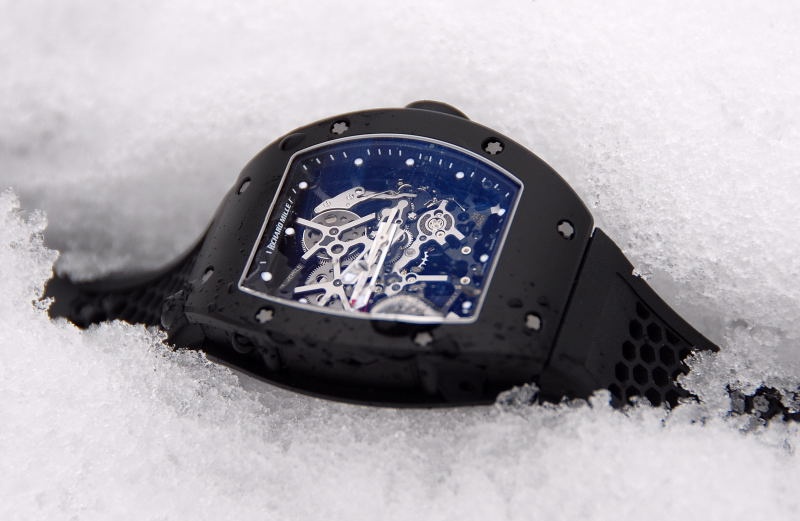
I don’t really play tennis or golf, so in some senses, the watch was lost on me for playing either sport. But I love to ski! And so I took the watch here:

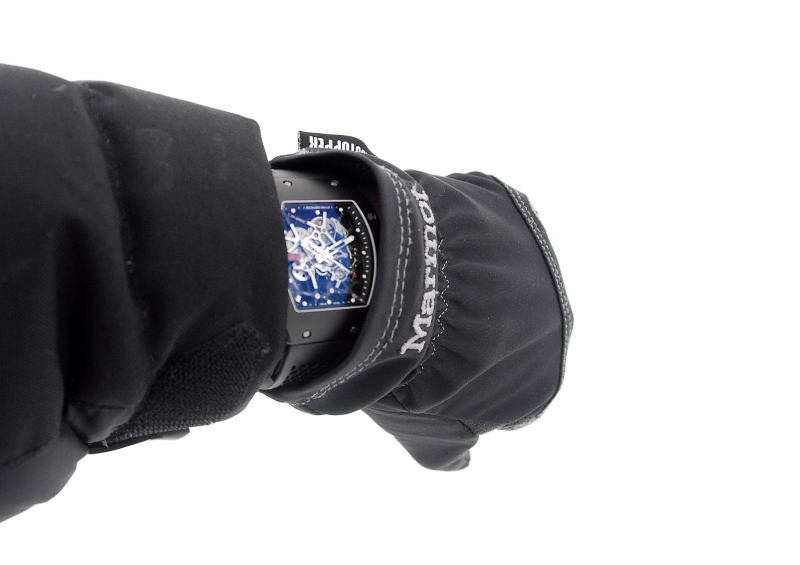
Normally, I don’t wear a watch skiing and am reliant on someone else telling me the time or just skiing until I get tired (doesn’t take too long these days!). Normally a watch will irritate my wrist with the ski jacket and the fleece underneath. But you really do not know the RM035 is on the wrist. So I tried it out. Given my skiing ability these days this is definitely a shock resistance test! The falling used to hurt my pride more than my joints, but these days, its more the actual fall that hurts so the watch was potentially going to get hit and hit at some speed. And despite the fact that the impact tests were given a number of tries, the watch came through with no problem. The time keeping was excellent and ‘chronofiable’ has meaning.

You might be thinking that a medium five figure sum is quite a lot for what looks like a basic time only watch. But to think in that fashion would miss the number of cutting edge material science techniques that are at work in finishing the watch. The watch is basically an ultimate sports watch. Light enough on the wrist not to feel its presence; highly resistant to corrosion on the case; to shocks on the movement (and the finishing of the case). It is no surprise to me that the odd professional sportsperson has been spotted with a RM035 on the wrist. The watch is genius in terms of the finishing of the elements: it is the cutting edge of material science and how to make it useful in watchmaking. What looks basic is in fact at the technological frontier. This is where Richard is at his best and it shows. The RM035 is a worthy sibling to the more technical RM027, and loses nothing in terms of what the watch is as an extreme condition mechanical watch.
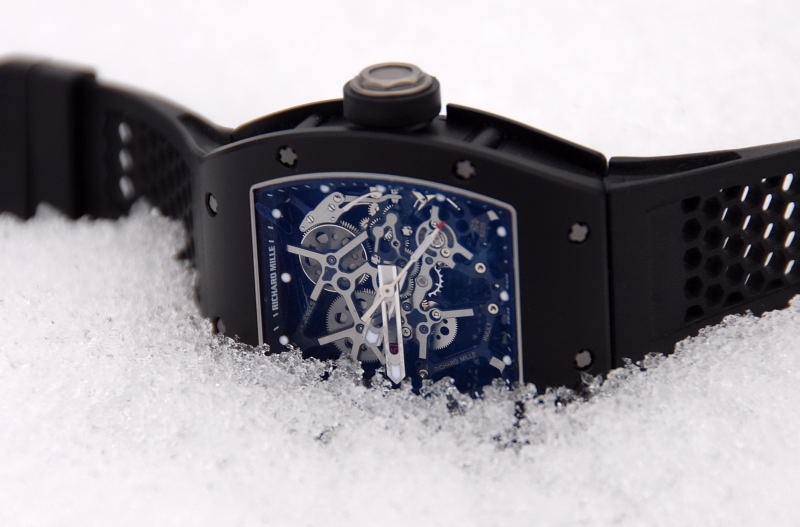
I loved it, and as with its more illustrious sibling (the RM027), I had trouble handing it back. If I wanted, and could afford, an everyday sports watch, the RM035 would be my choice. Wear it, use it, keep the time of day with it; it really is the every person watch for every condition.
Andrew H
This message has been edited by AnthonyTsai on 2012-02-26 11:49:06 This message has been edited by AnthonyTsai on 2012-03-08 08:01:02