
pifpaf
511

A day at Workshop with Thomas Prescher.
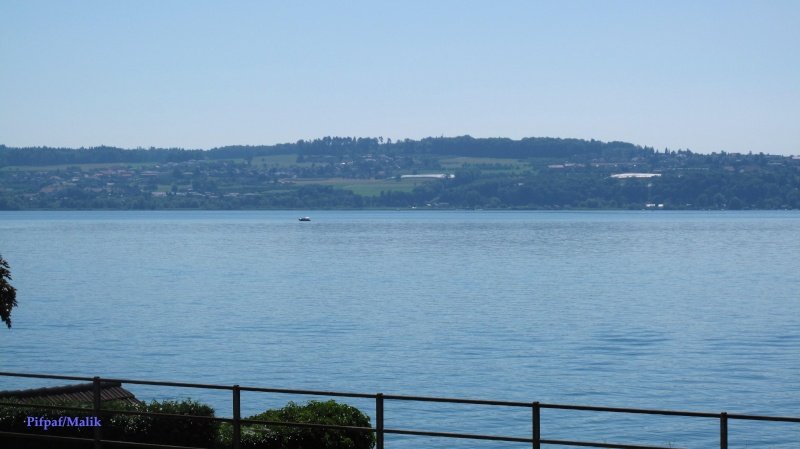
Twann « Douane » (Customs) in French, is the municipality that determines the language barrier between the Swiss Germany and Swiss Romande.
It is in this symbolic place that Thomas Prescher is established, we find, in his watch the same influences Franco-Swiss and Saxon.
The town is beautiful, as I arrive during is work, as Thomas did everything (he owns a huge micro-compagny of 2 people, including himself), I patient, preferably outside his workshop to take somes pictures of his work environment, this magnific landscape change from the usual industrial areas...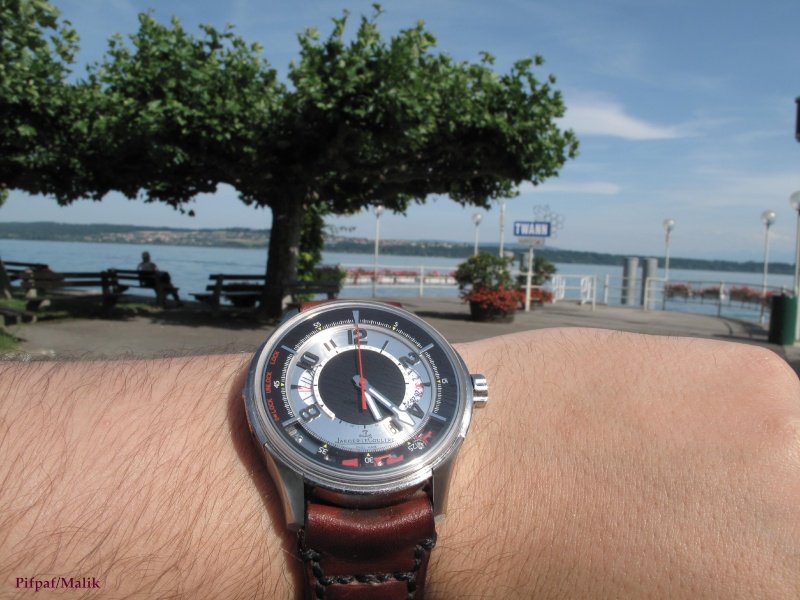
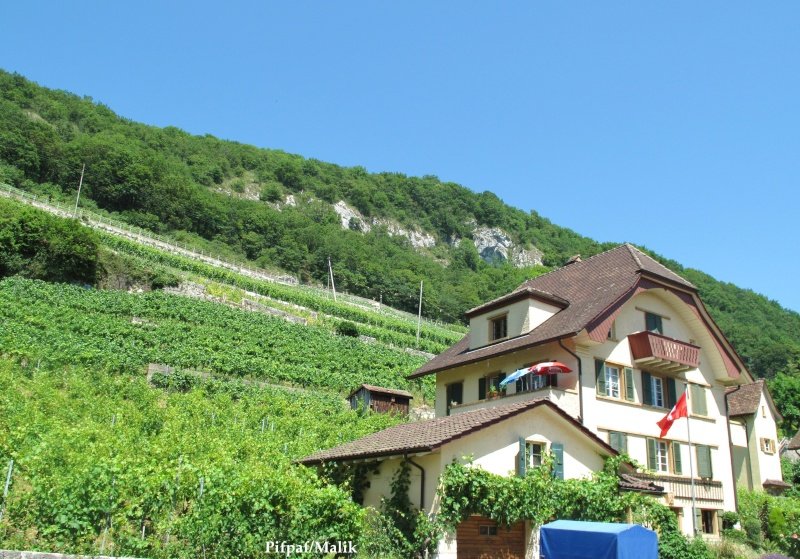
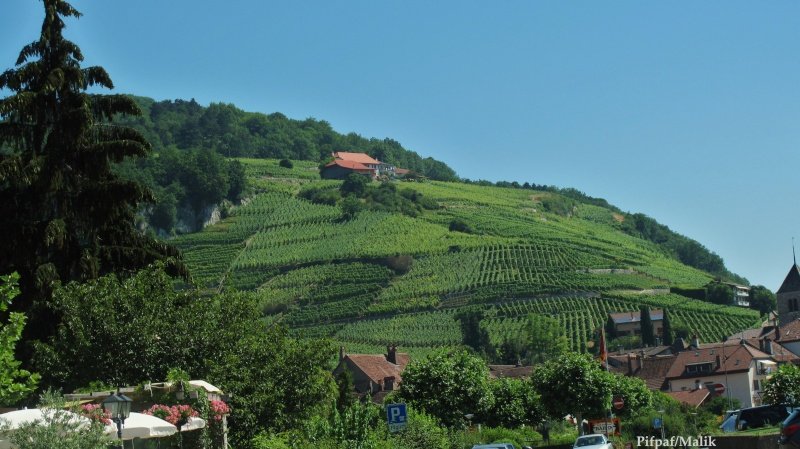
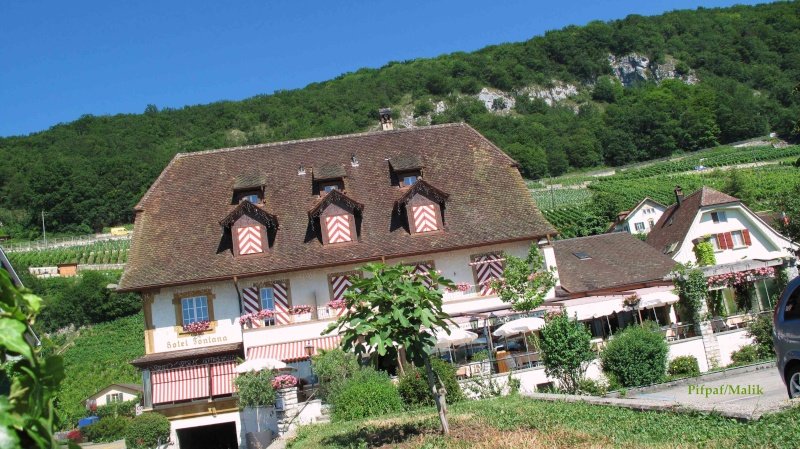
In many aspects, I think I touch the antithesis of Rolex. I arrive in a workshop of 50m ², with an anlone CNC 5axis, and Mark, the assistant of Thomas, CNC operator.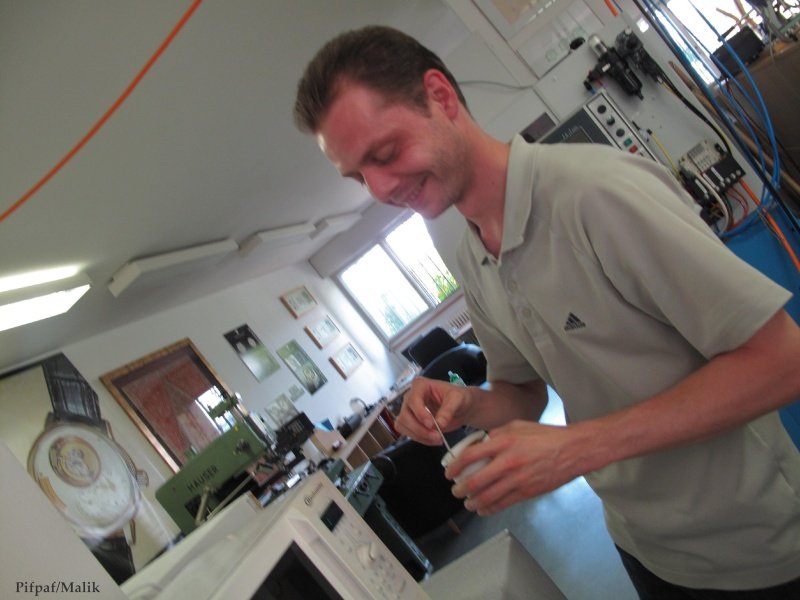
While orbiting around the CNC, gravitational point of the workshop, finishing tools, workbenches, computers.
At the the exception of saphires, blances wheels/spiral and somes ancient dial, everything is produce in the workshop.
And systematically finished at hand, unlike many independent (not even talking about the Indus, who is Industrial, so maximum machines and minimum peoples), and in the manner of Dufour, Thomas is a leading designer and finisher of his watches, so the commercial watchmaker and real watchmakers synchronyze, something (too) rare!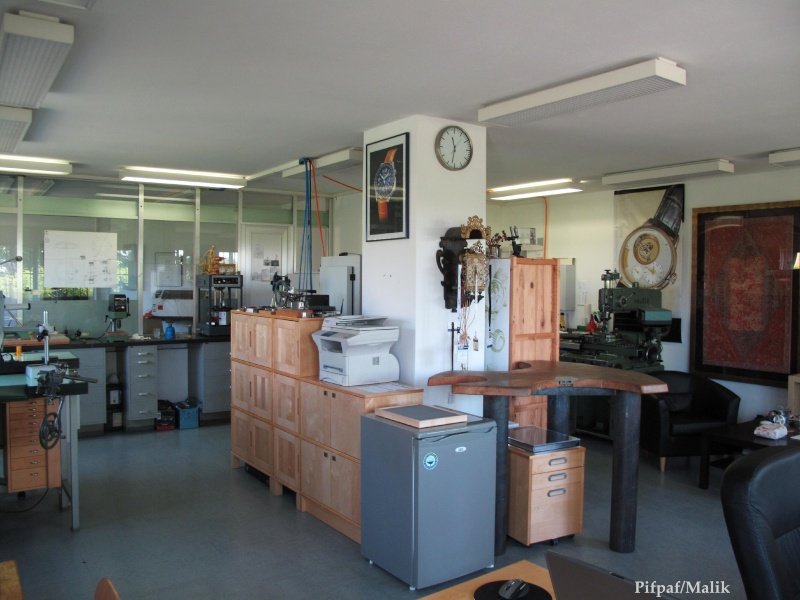
The ancestor of the CNC, good luck!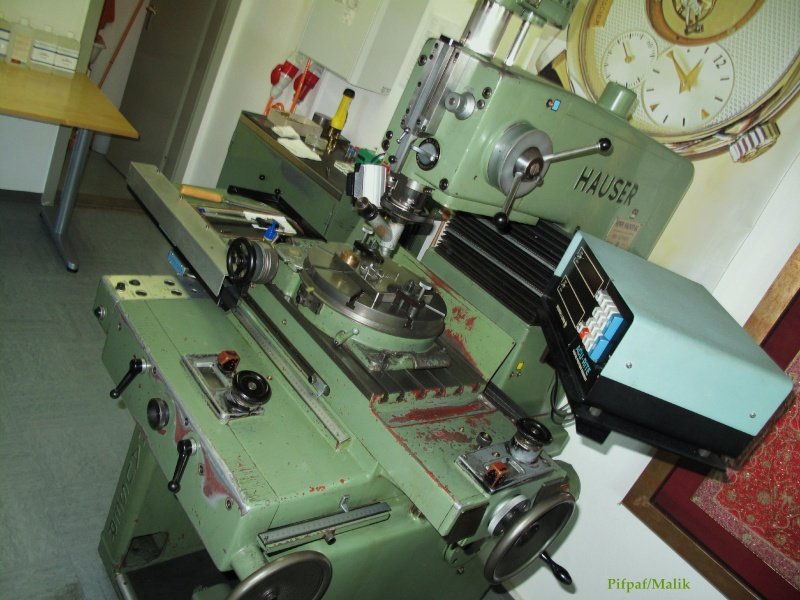
Workbench: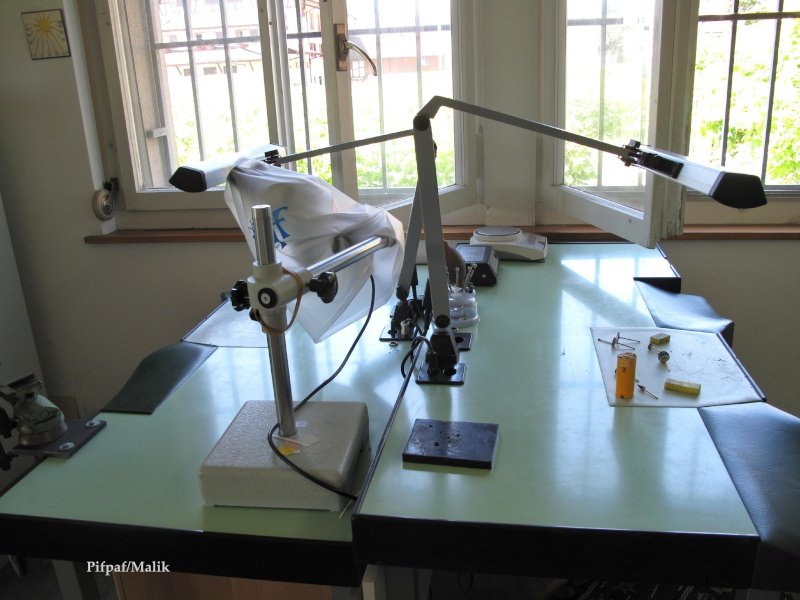
The classic turn: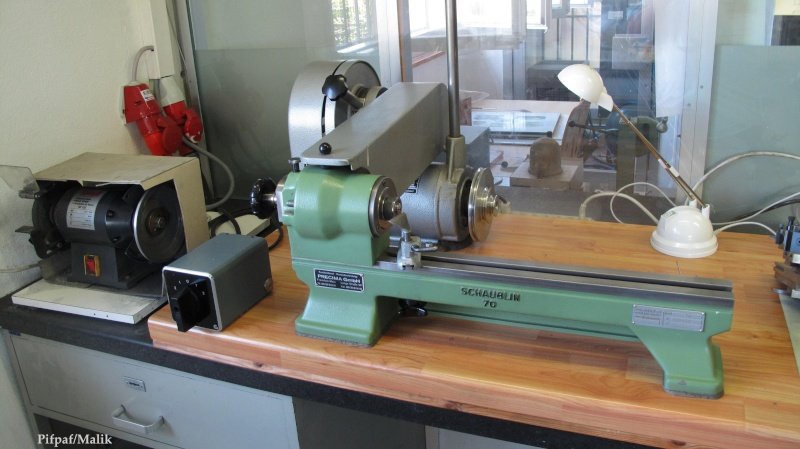
The tool for making dial printing, it requires great skill!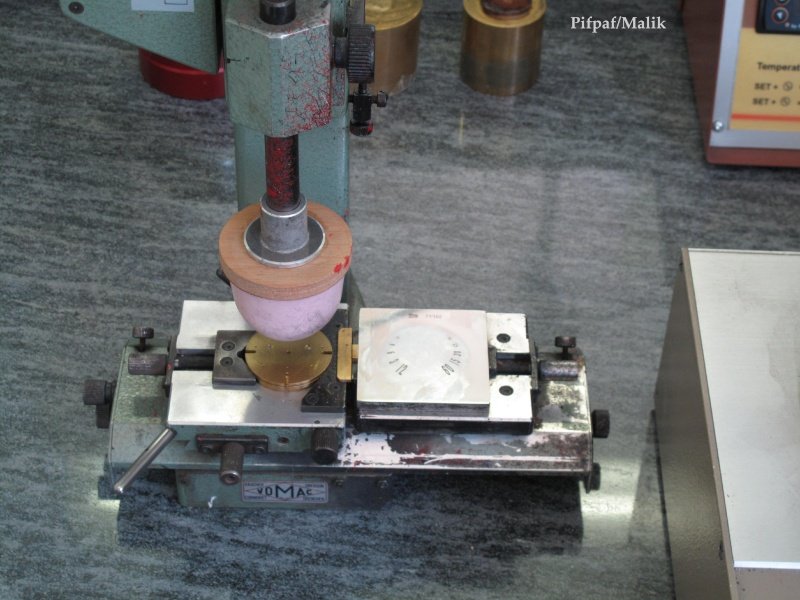
The highlight of the workshop, the CNC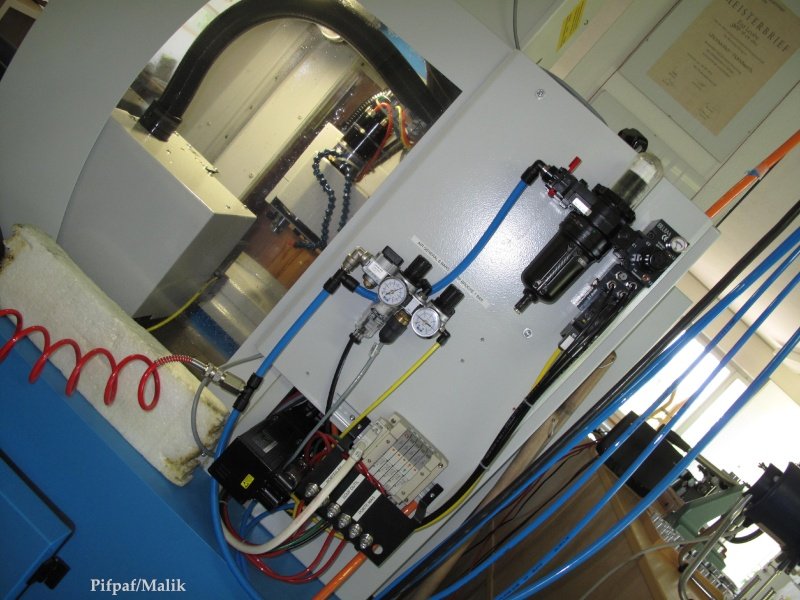
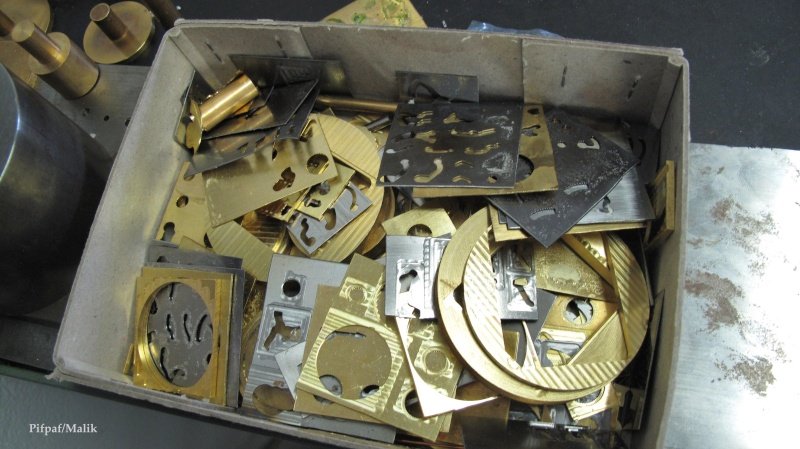
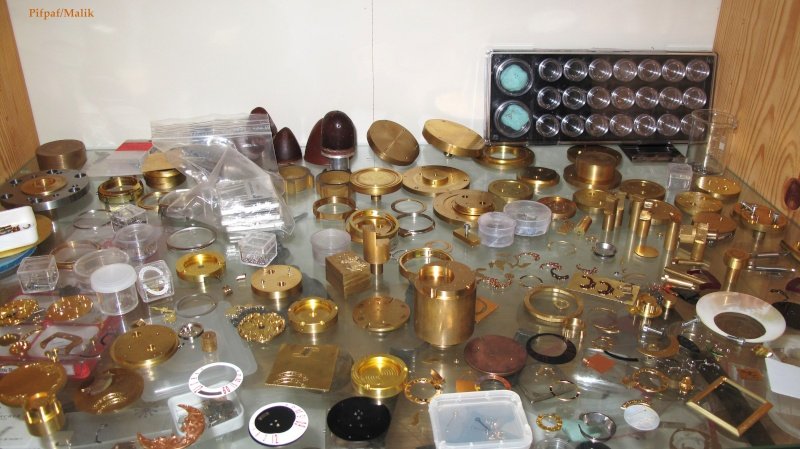
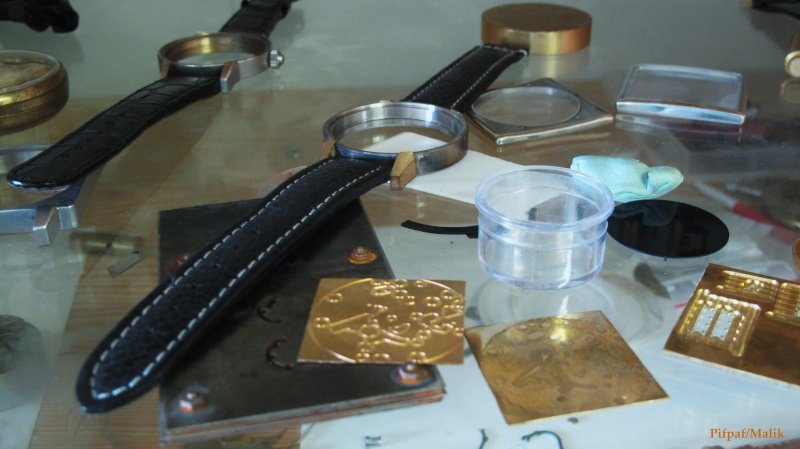
The preparation of the electroplating, a small side Dr. Strangelove, represent!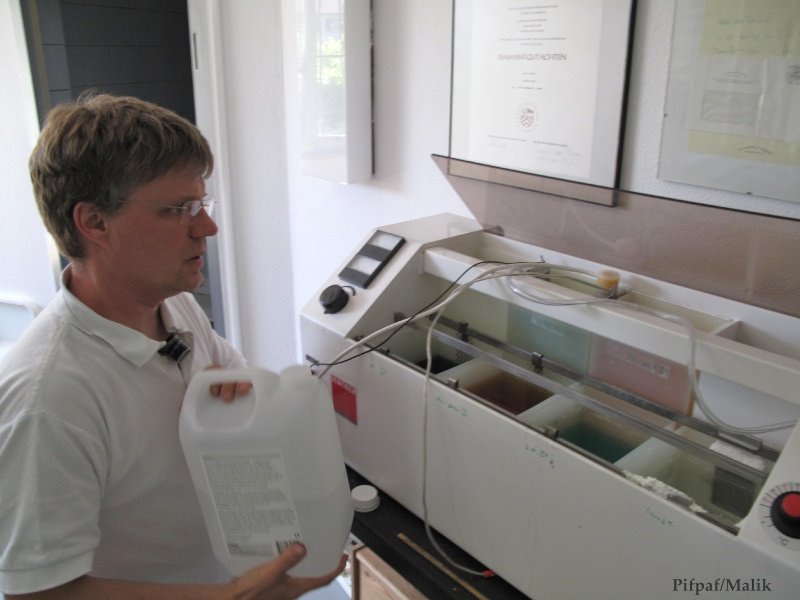
As the idea of the meeting is a workshop, so we're at work, it's always fun for a French to be giving orders, by a former German naval officer speaking French. Great moment of happiness! Hogan's heroes handcraft B-Uhr. Too good.
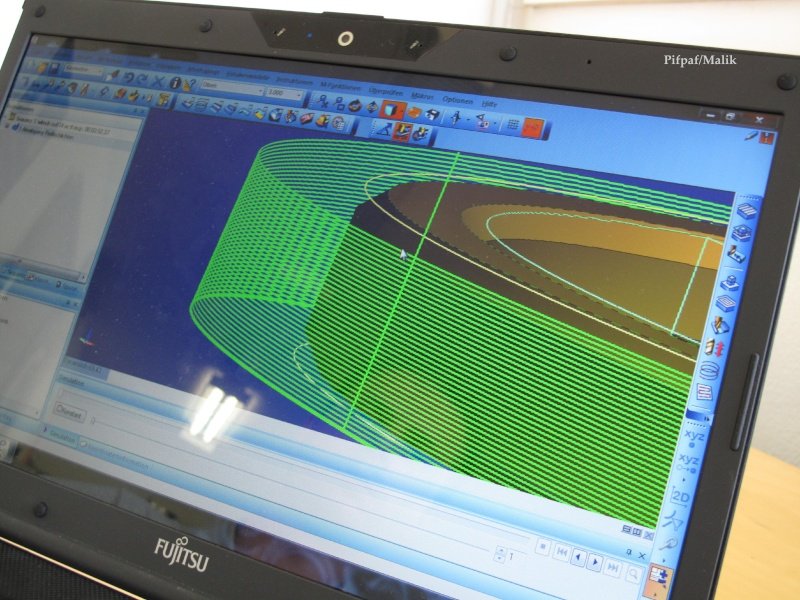
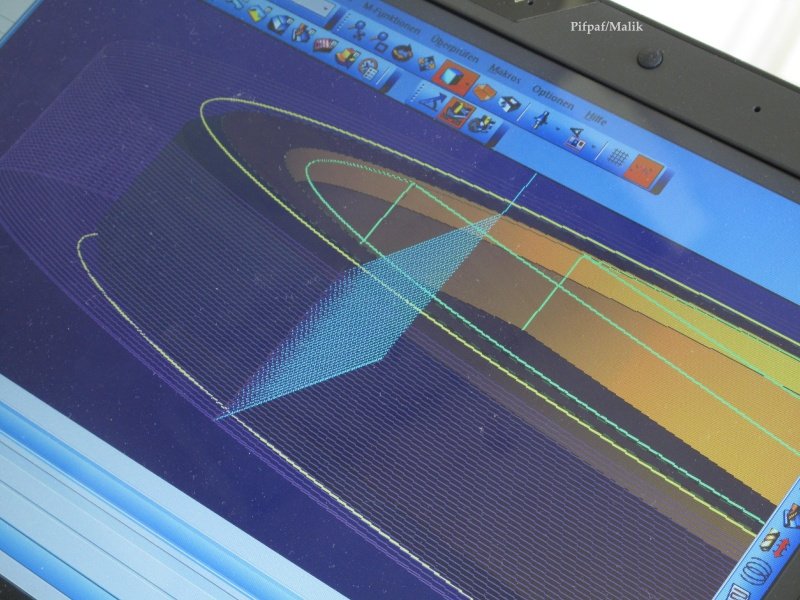
The design begins by AutoDesk, I want to produce a balance, so we start with a circle that we will narrow gradually, adding, ribs, part of the operations is semi-automated, however, the production is quite long.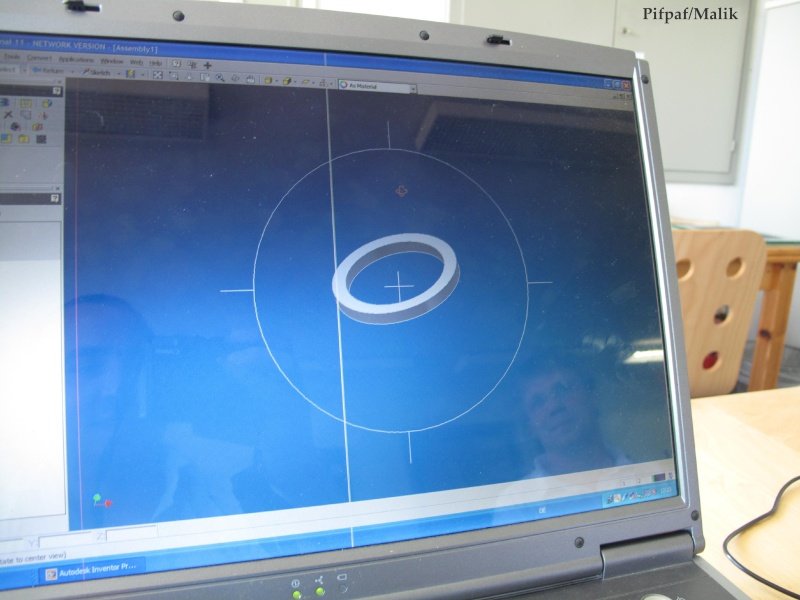
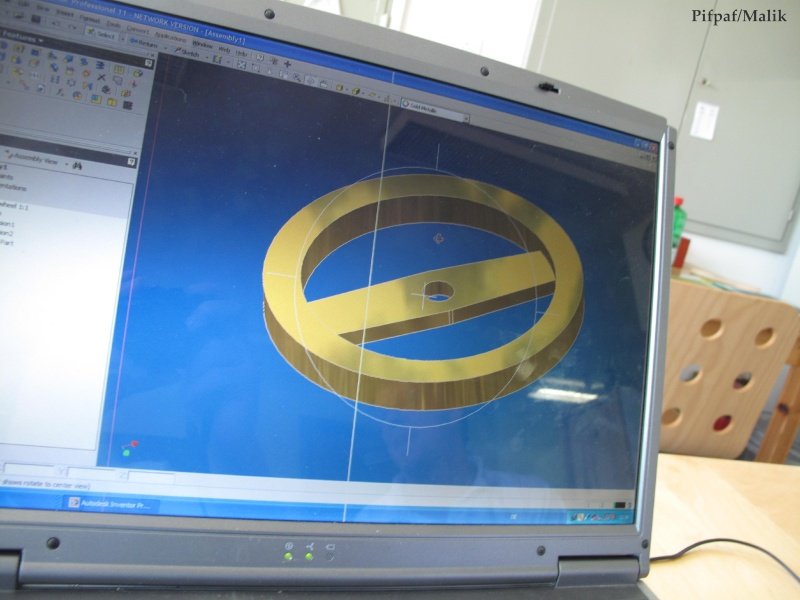
Back from lunch, Mark, retrieves the file Autodesk, for play the part of production with CNC, everything is set for grinding, cutter size, number of turns, speed, angle grinding, it requires a great experience.
The piece is not buffed at 90 ° but at 45 degrees to reduce the strain on the materials.
This part is the most delicate, failures mean a material break of 20000 francs.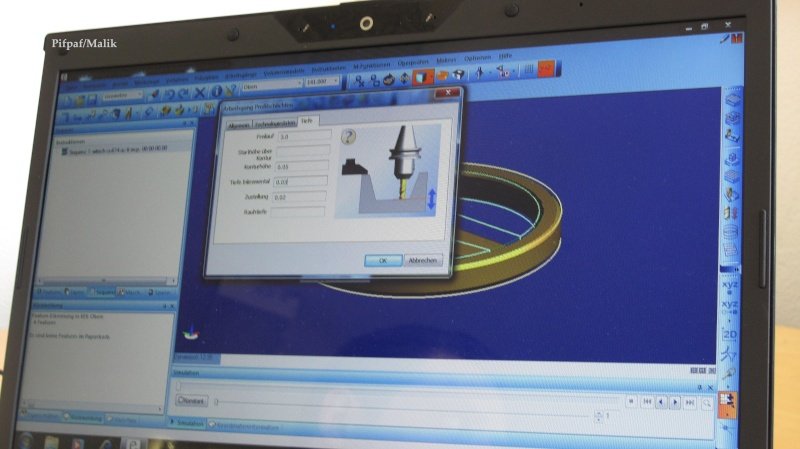
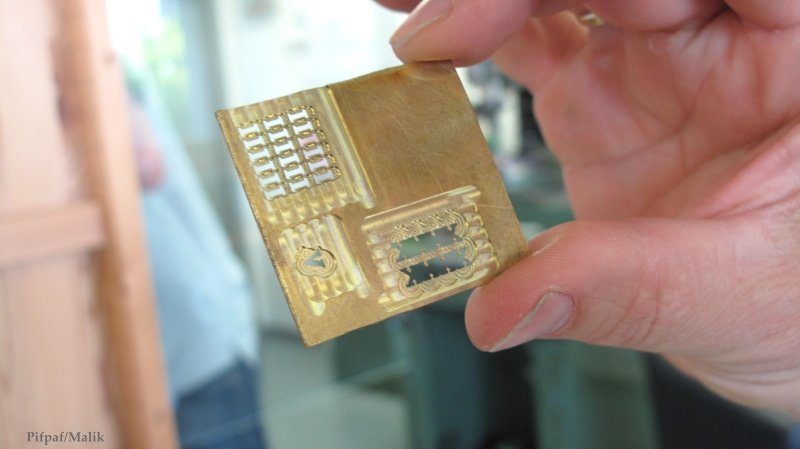
We must prepare the pieces before placing in the CNC, cutting into a block of brass with a saw, I broke two blades on a square of 5cm ², Thomas worked on brass, according to him Maillechort requires years of rest before be chemically stable, and therefore is poorly suited to the production of Thomas (below 10 watches parts per year), the piece should be brushed before to remove impurities.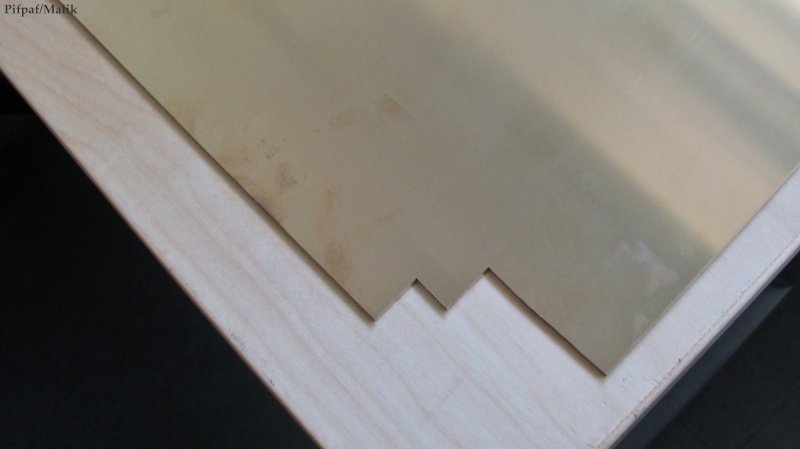
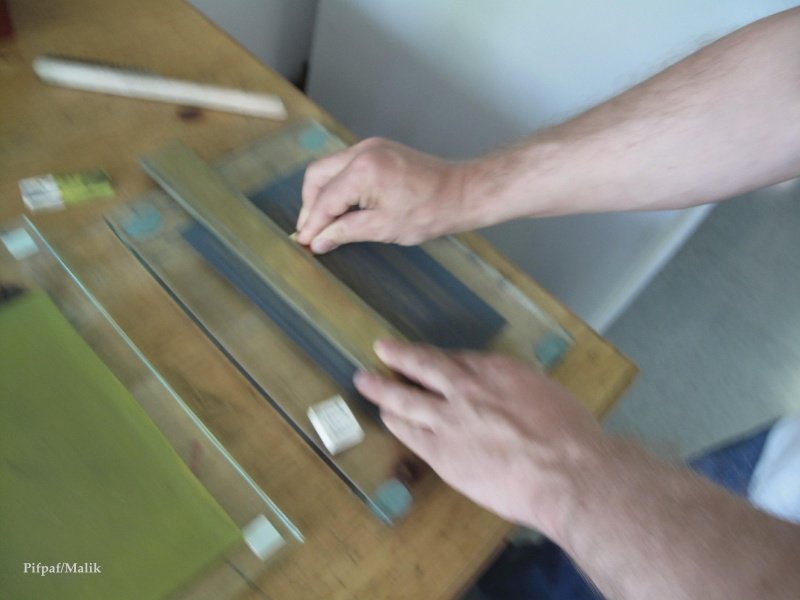
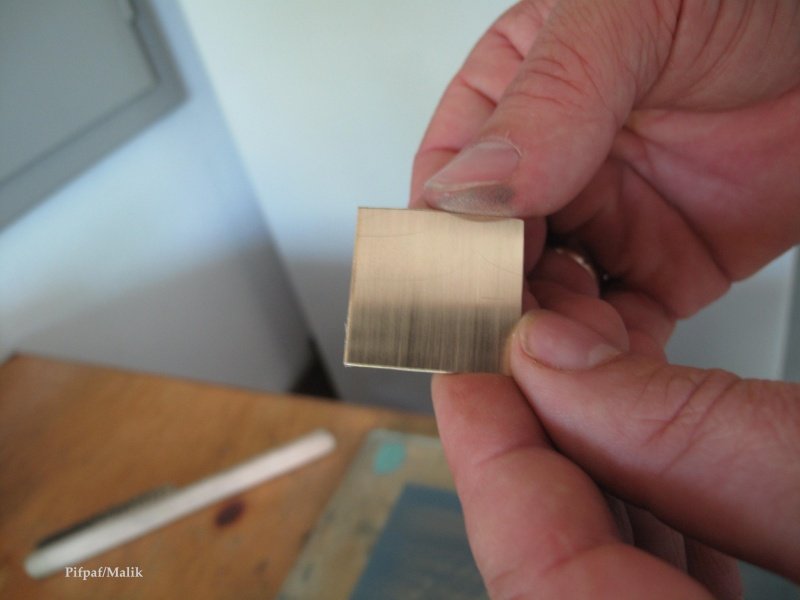
The piece finally arrives in the CNC, tolerance grinding on usual grinding is normally about 2 thousandths of a millimeter, such precision is not obtainable on series of parts because of the heating equipment, Thus the high precision at the output of CNC is reserved for very small series.
For comparison, De Bethune worked on tolerance of less than 2 hundred of millimeter, which is already ultra-precise, what is suggest to you the tolerances performed on machines that produce very large numbers of watch parts.
NB, the tolerances are a bit higher here insofar as we working on a piece of demonstration.
The machine work is always impressive, and the smell of cutting oil and metal dust ,remind me that I'am in a factory.
Vidéo:
www.dailymotion.com
The work is far from finished, the piece is unglue of the support (it had previously stuck to the support) by heating over a flame, it is then cleaned with acetone, then we end-up by cutting at hand Then comes the trimming, and a succession of electroplating baths. The piece of brass finished covered with gold.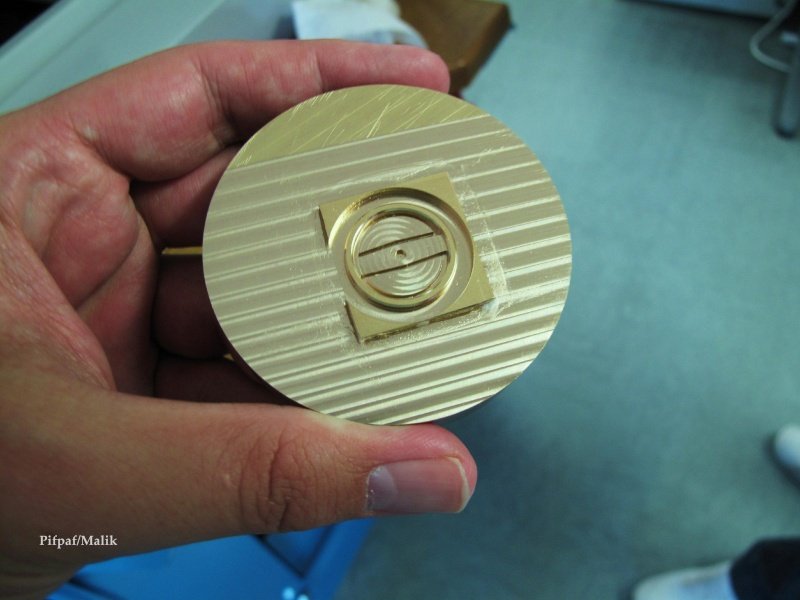
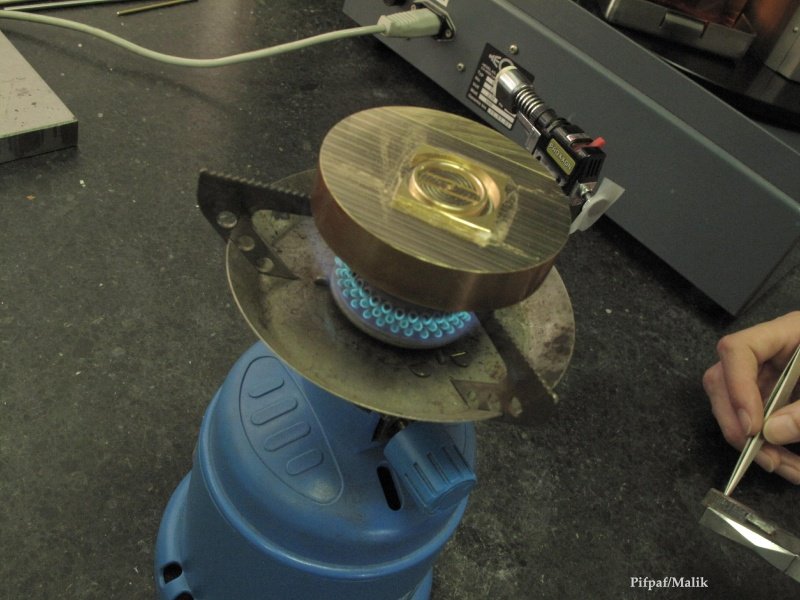
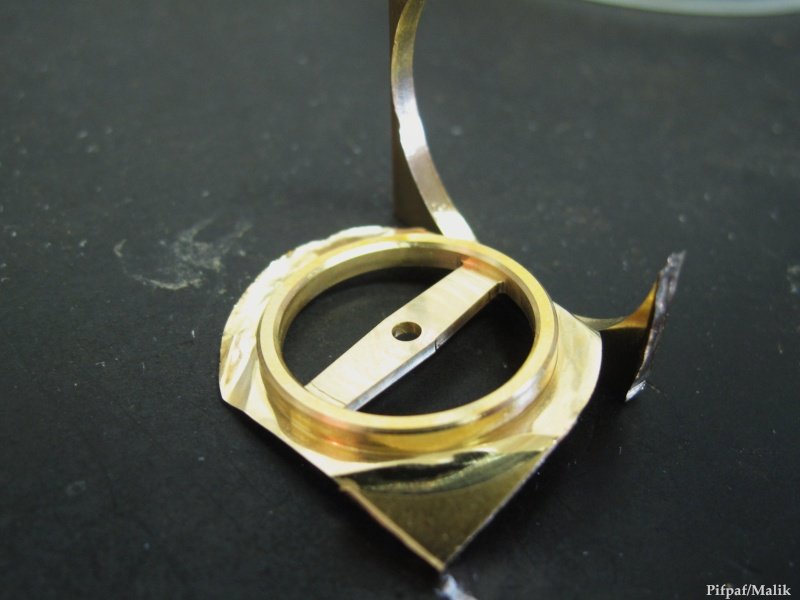
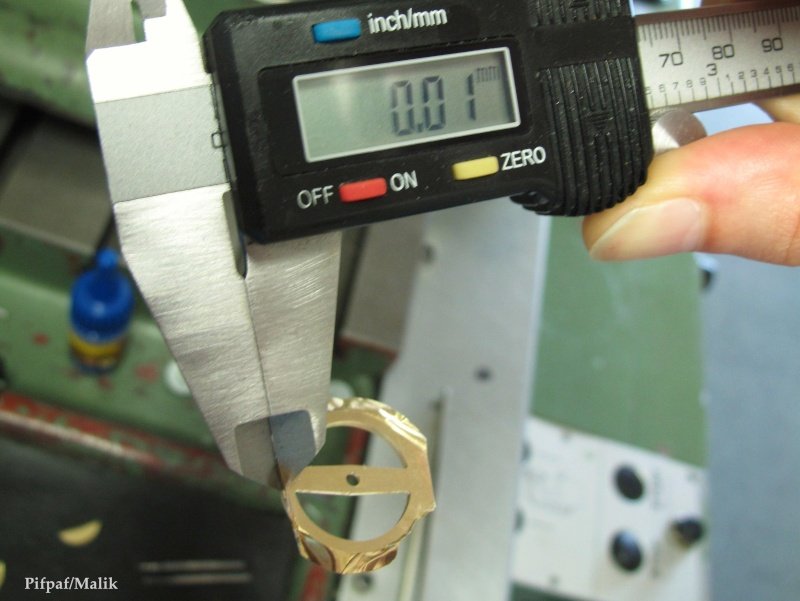
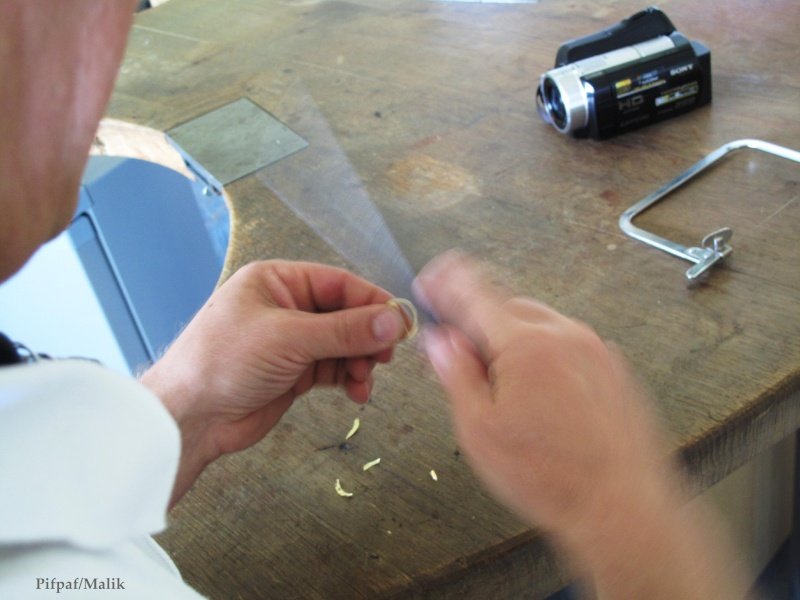
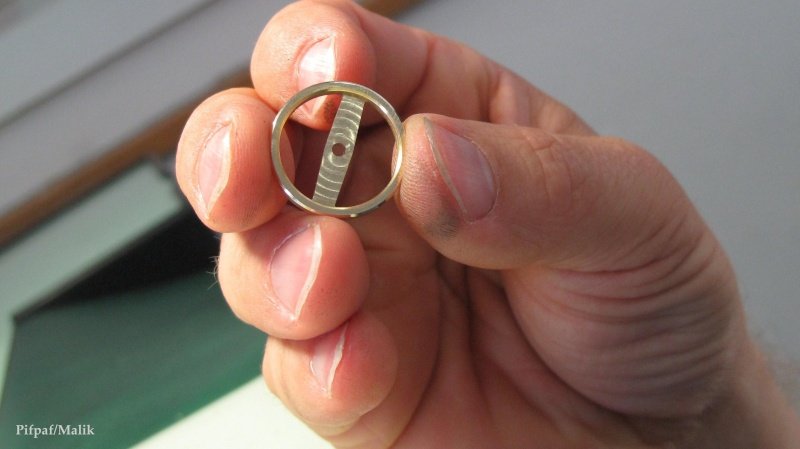
This operation, take all afternoon.
A grinding of a platinum casing requires several days, with a lot of used equipment, which explains in part the prohibitively high costs platinum case, machining of any part on a small scale severely limits production.
In general, non-industrial production multiplies the production time for a watch part, however, this lack of process, can have very low tolerance margins, so a minimum of controls and releases.
Astonishing isn't it? " I just made a sandwich, without telling you zbout watchs.
Some of the photos come from Basel, the others were taken to the workshop.
In some aspects we find the spirit of the pioneers of the clock in parts of Thomas, an explosive mixture of finish total gross smelter , and very high finishes.
This spirit is claimed by Thomas, who cites the Muslim craftsmen that incorporated voluntarily defaults in their frieze, not to imitate the divine purity.
Like in a pita or in a vintage Breguet, we find this spirit of genius handyman, that miss so much in great houses.
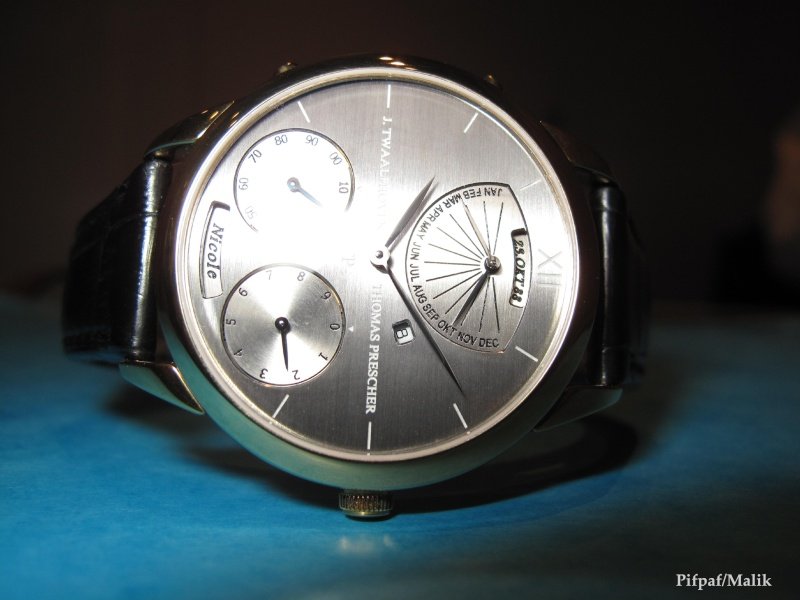
My favorite watche (with the brilliant double tourbillon cushion case), is a QP of madness, I meet it for the first time.
Its particularity, all indications are needles and pass by the central axis.
The QP system is very complex (Thomas describe it to me longely) and does not leave right to error in the machining of parts.
The result is fabulous, I finally found a few that compete the QP DB15 with the crazy gray dial.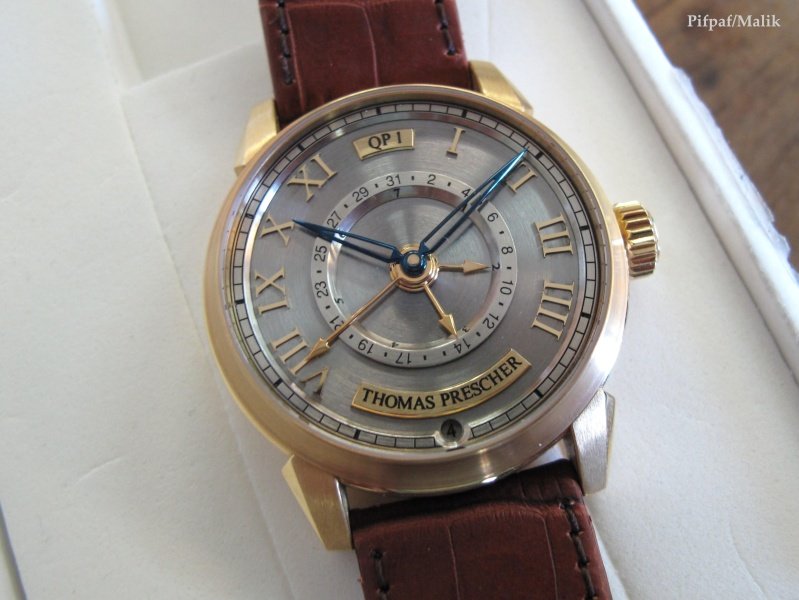
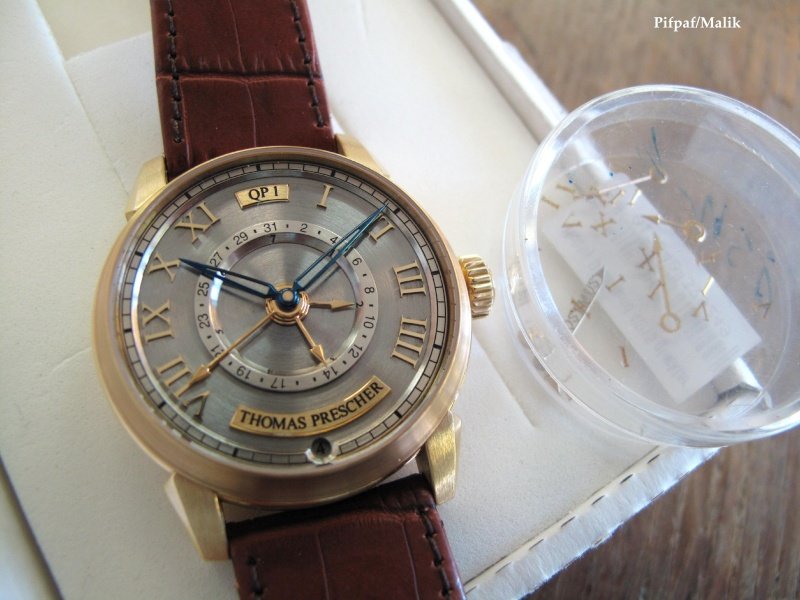
In fact, I prefer the dial, brushed rhodium and gold Roman index stark offer an impressive contrast, is beautiful and perfectly readable, despite a consistent thickness (15mm) for little 39mm in diameter, the watches falls perfectly on the wrist, my only one big regret, an indication of the leap year by window at 6 o'clock, it breaks some of the initial absolutist concpect that is to pass all the indications of QP through the central axis without windows/counters.
Beyond prohibited sexual practices on Dipteras (in French we have an expression, « enculer les mouches », fucking fly ), this watch is a real concentrates of technology and aesthetics.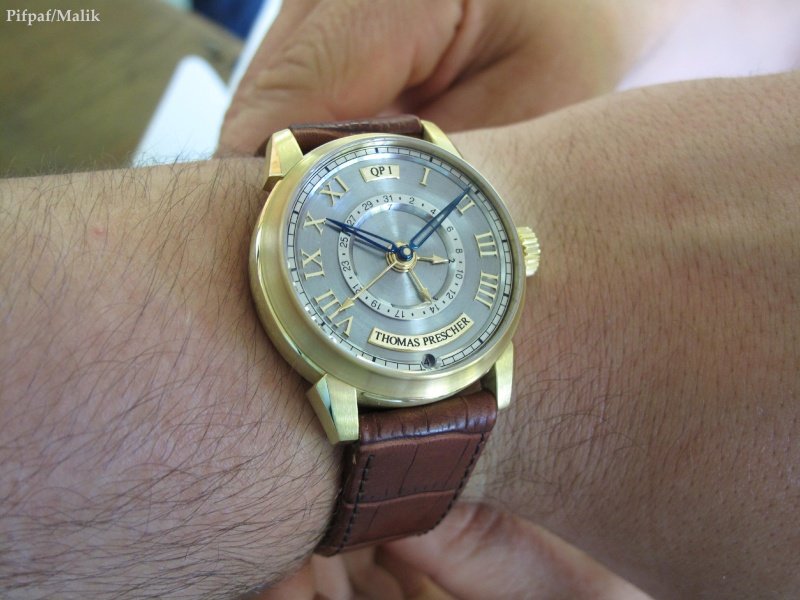
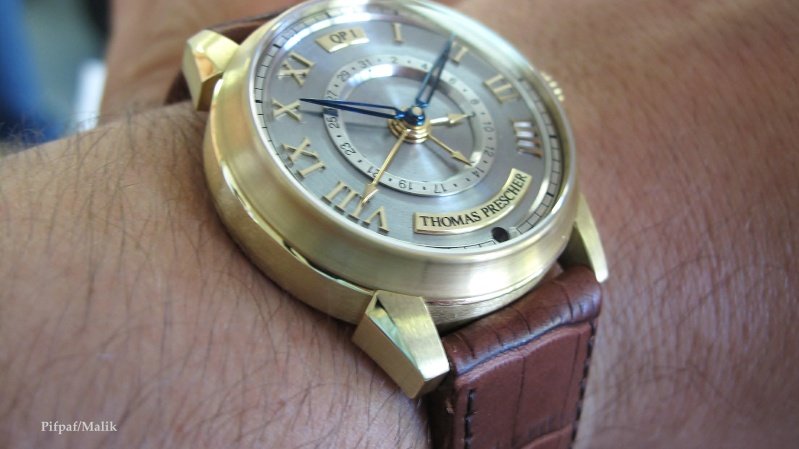
I'm really in love with the QP, the dial spun me a huge blues from Paris, this dial offer « Haussmanian » contrasts between the hardness of rhodium Brushed and the heat of indexes in yellow gold reminds me probably the gilt decoration on gray buildings Parisians.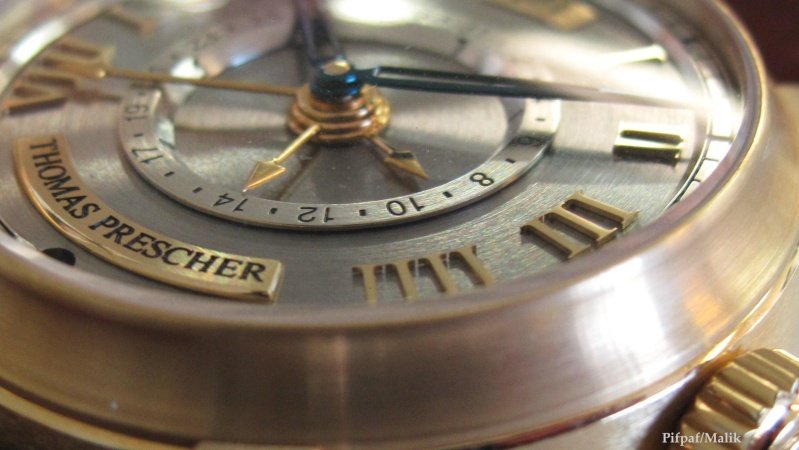
Side movement, I much prefer the DB15, but the price of this watch is more content, are price is 80000 francs, against about 100,000 francs for the De Bethune.
Anyway, we touch the highest of modern QP, these two watches cheesing traditional OP of watchmaking industry.
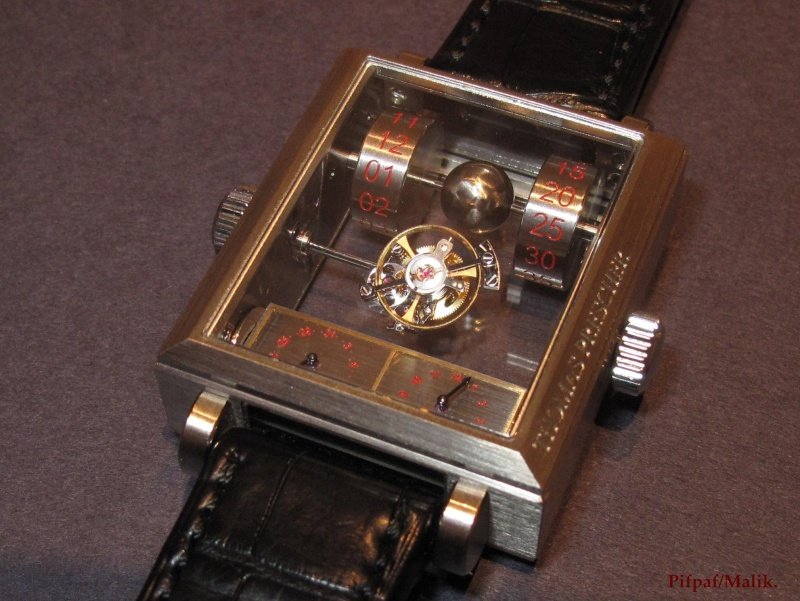
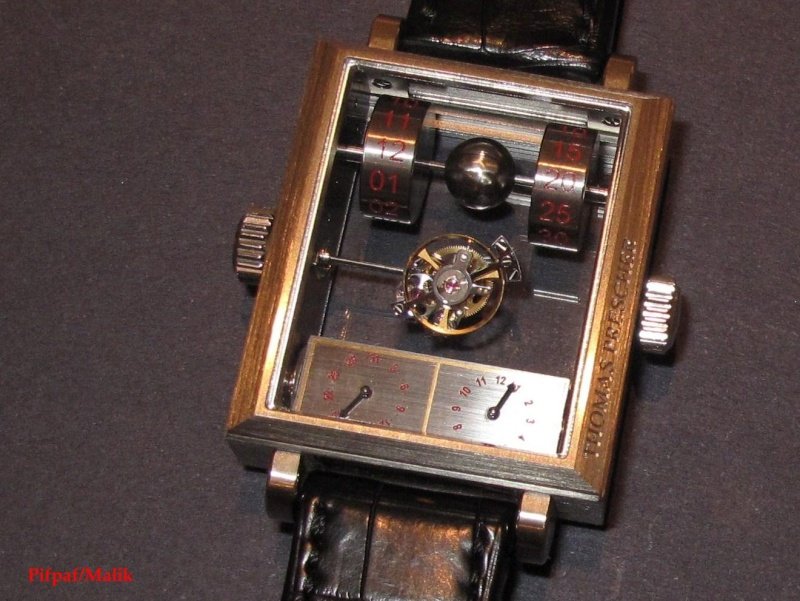
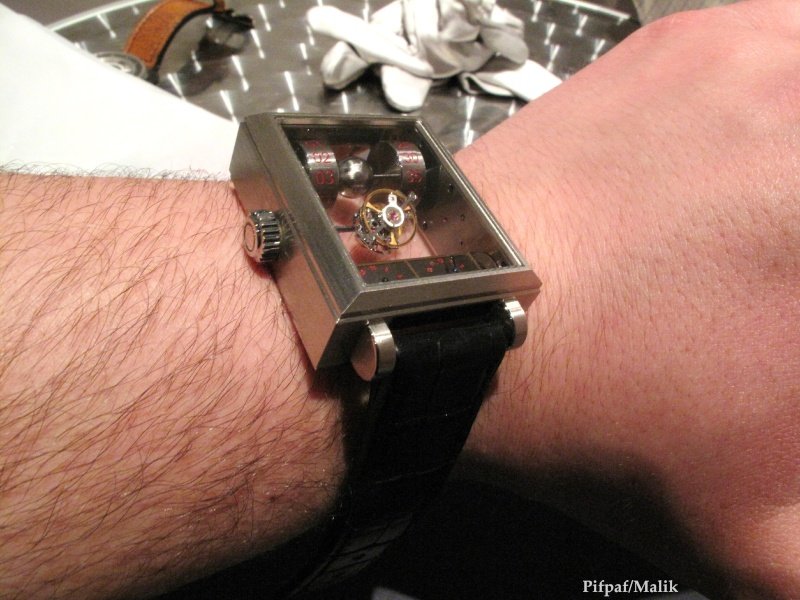
The other piece that I still find magic, this is double axis tourbillon, with its cushion case, fabulous dial, is made by a subcontractor, and originality of the case gives to this watch a purity that not reach the other rotating tourbilllons of the market.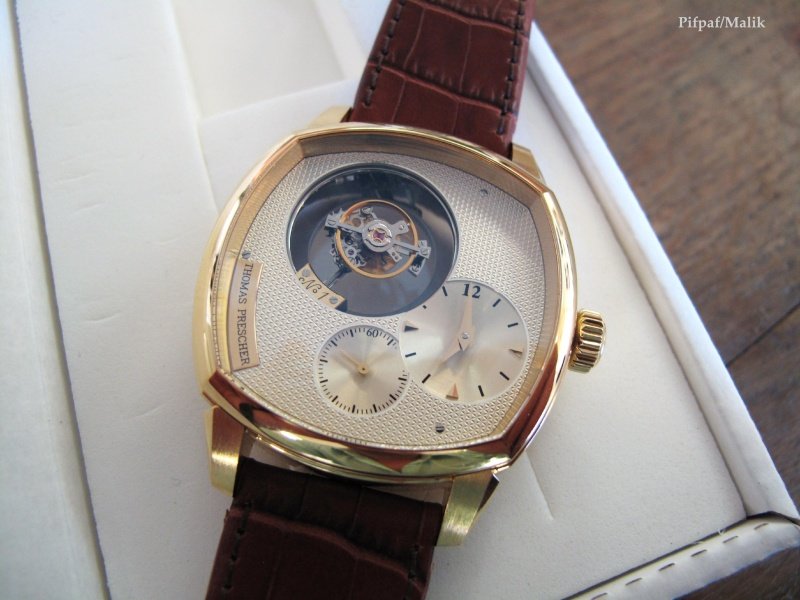
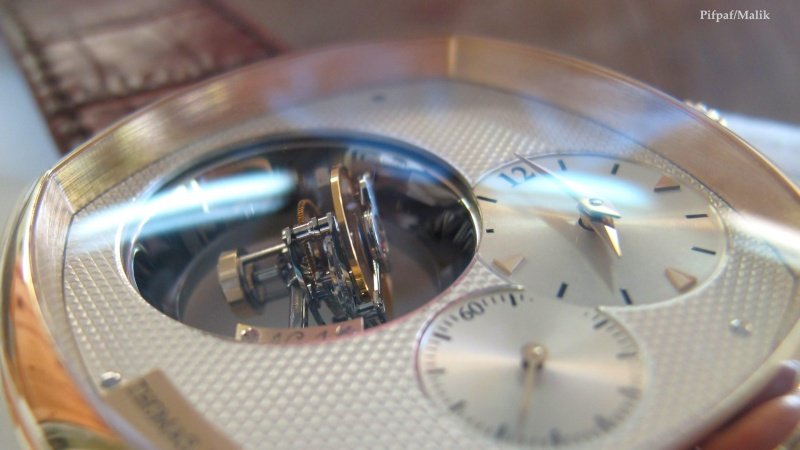
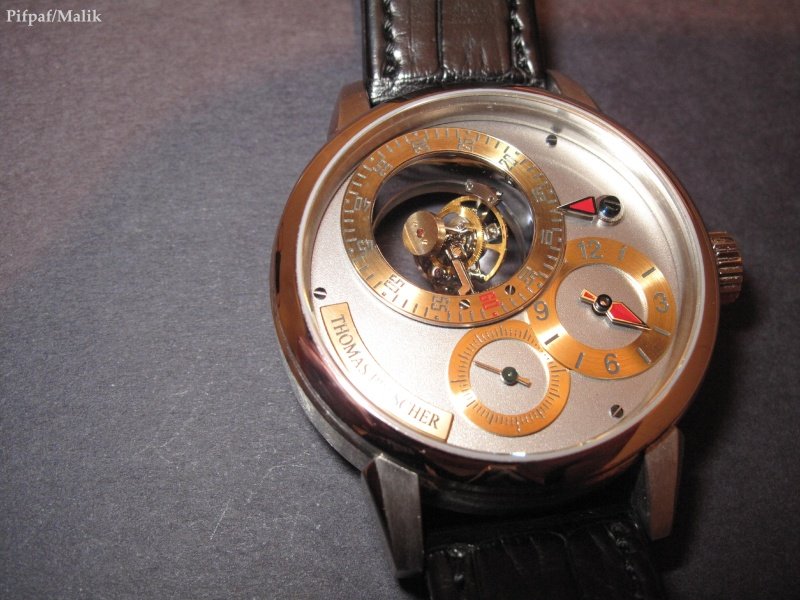
Other pieces that I had the chance to see over the meeting with Thomas.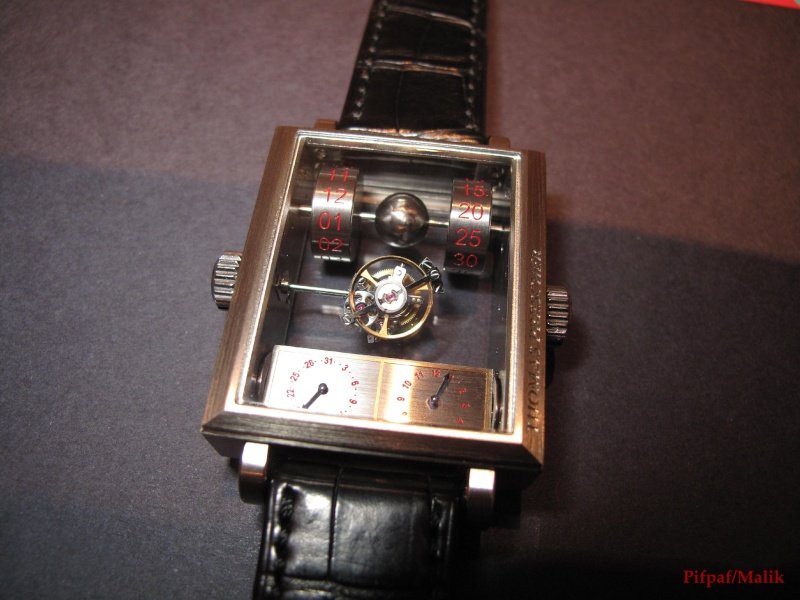
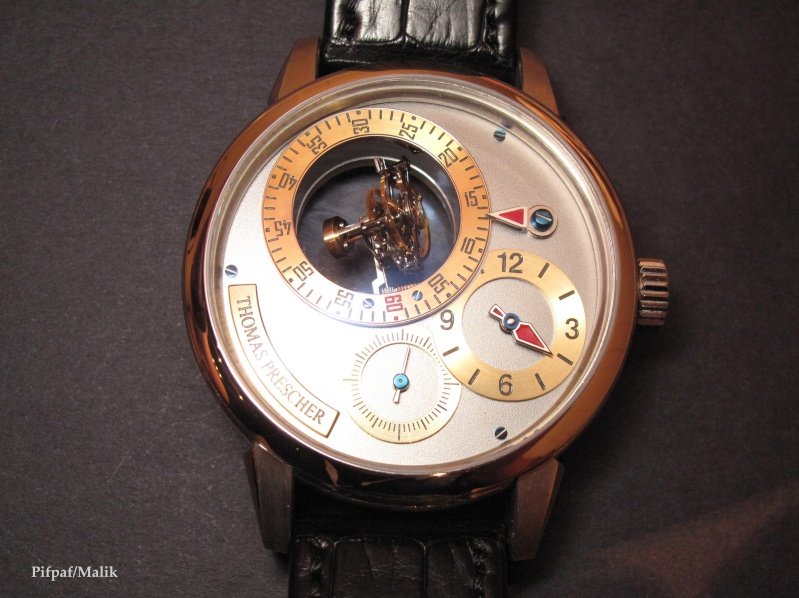
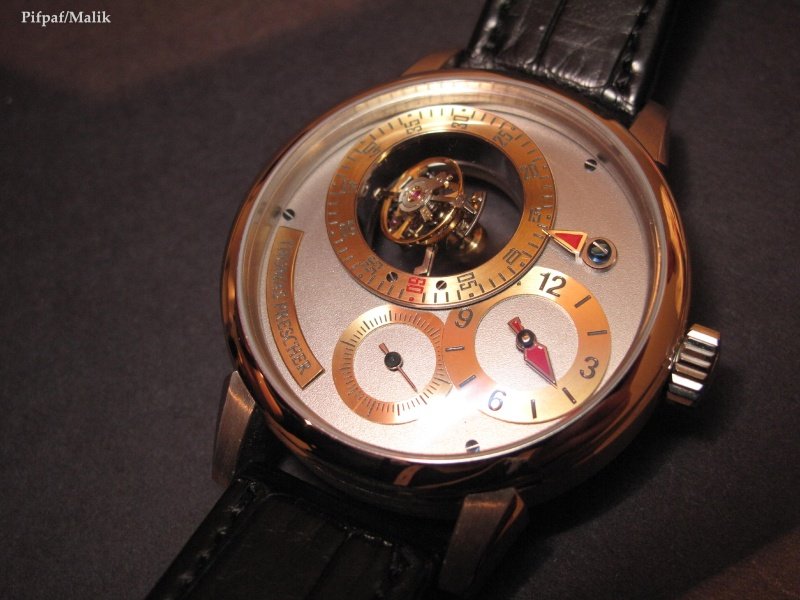
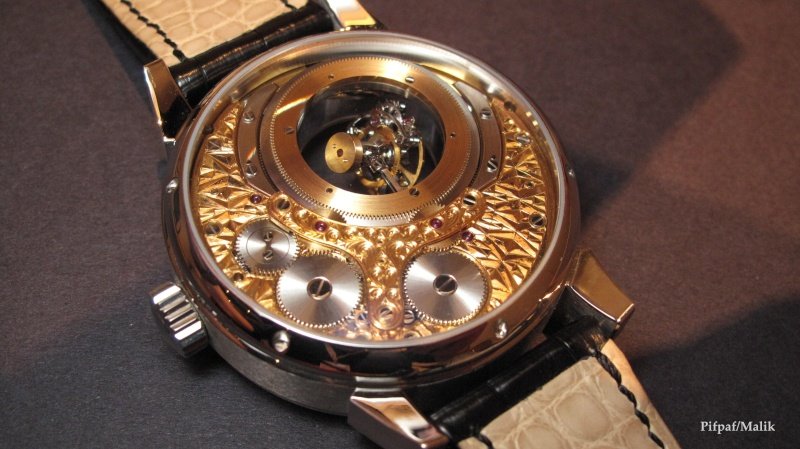
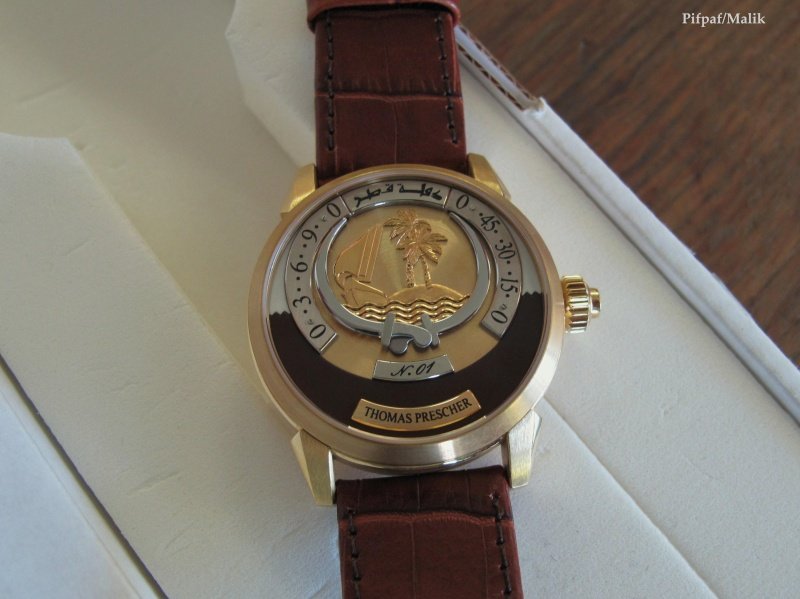
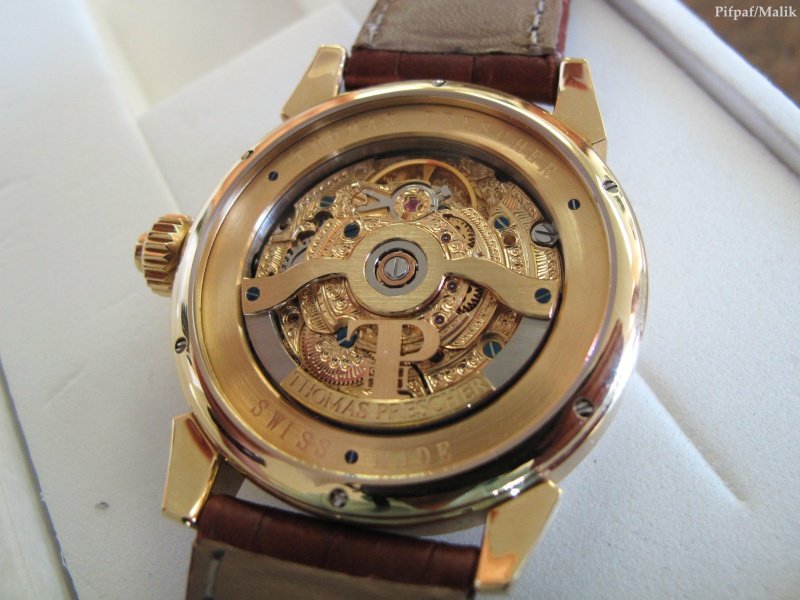
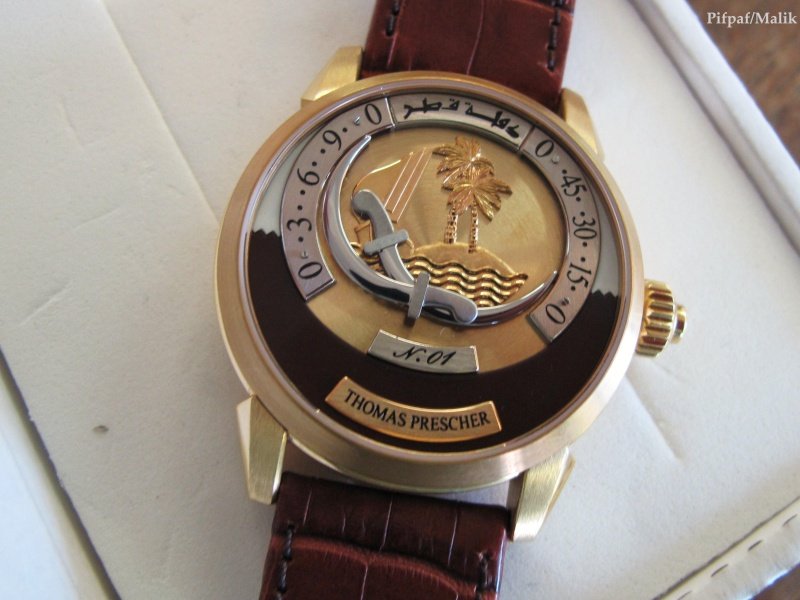
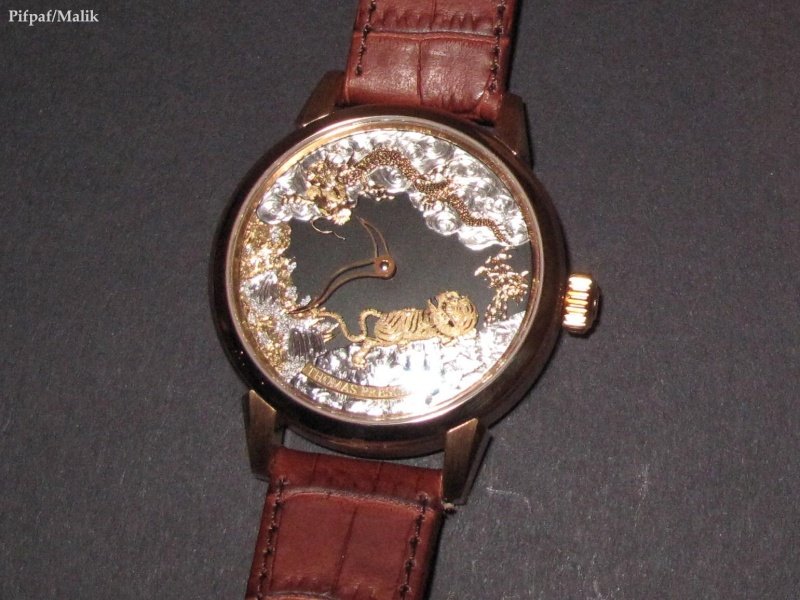
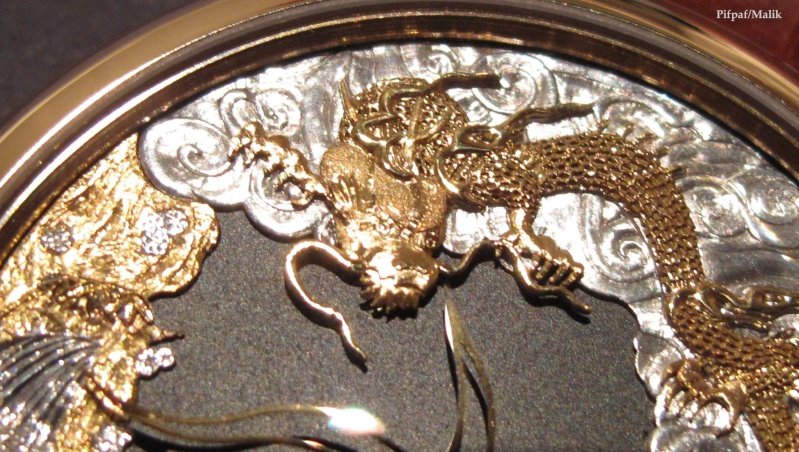
Thomas thank you for having me and discover his work, thanks to Marco for the organization.
I'm having somes difficulties to forgetting the magic of some watches particularely this crazy QP.
The company is called, "Thomas Prescher Haute Horlogerie", today the term is so overused that I'd call it more precisely , "Thomas Prescher hologerie véritable" (true horological) as Thomas is a true handcraftsman.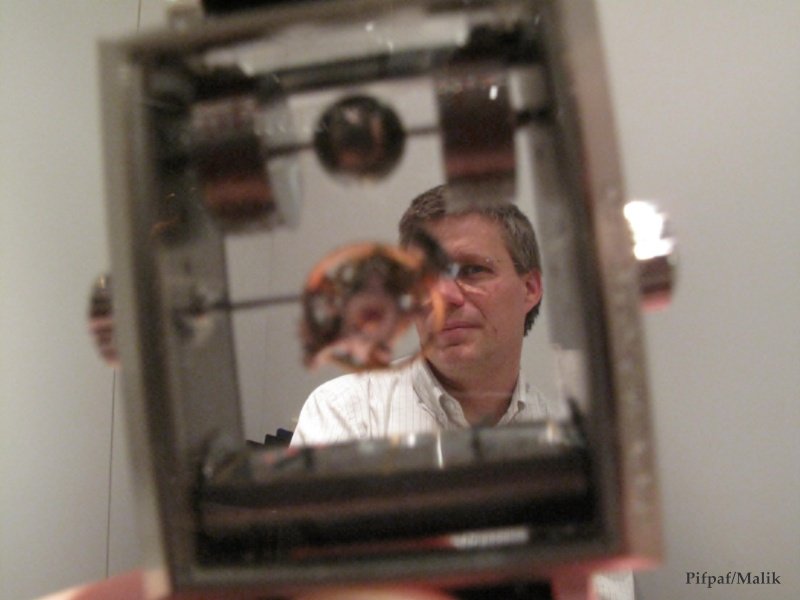
A day at Workshop with Thomas Prescher.

unique creations

Thanks for the report...

Incredible creations
Thanks pifpaf for the in depth


His Perpertual still looks damn good



Wonderful post!
