
PeterCDE
10167

A final batch of pictures from the VC booth at SIHH...
G'day,
we?ve discovered the art of enamelling and what it needs to engrave a VC before, so here?s the last of the "classic" decorative techniques - engine turning/guilloche work.
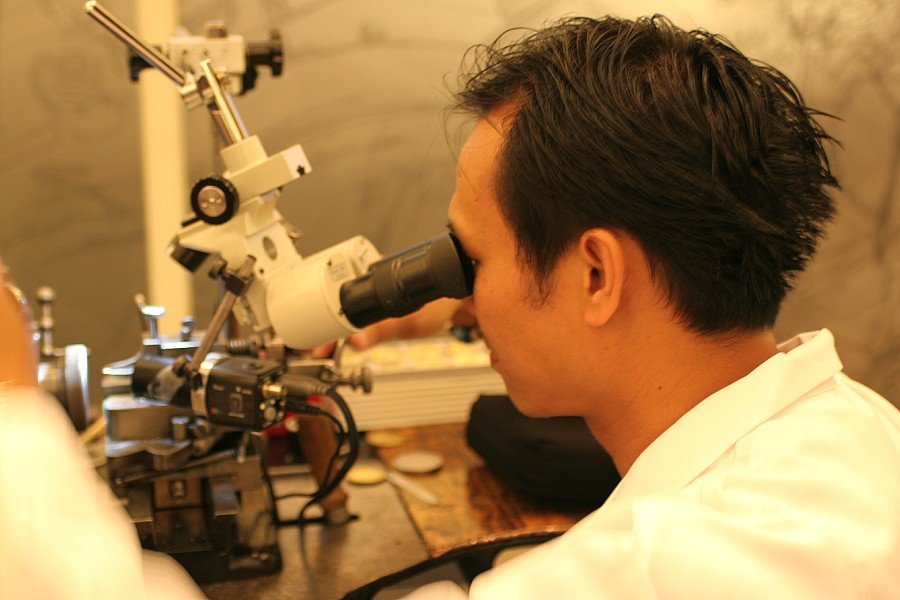
Vacheron Constantin hosted a "guillocheur", which allowed to follow the steps of work and admire the final workpieces. What may look like an optician at work actually is the rose engine, with binoculars attached; after all, we?re looking at workpieces with patterns that rarely exceed a mm:
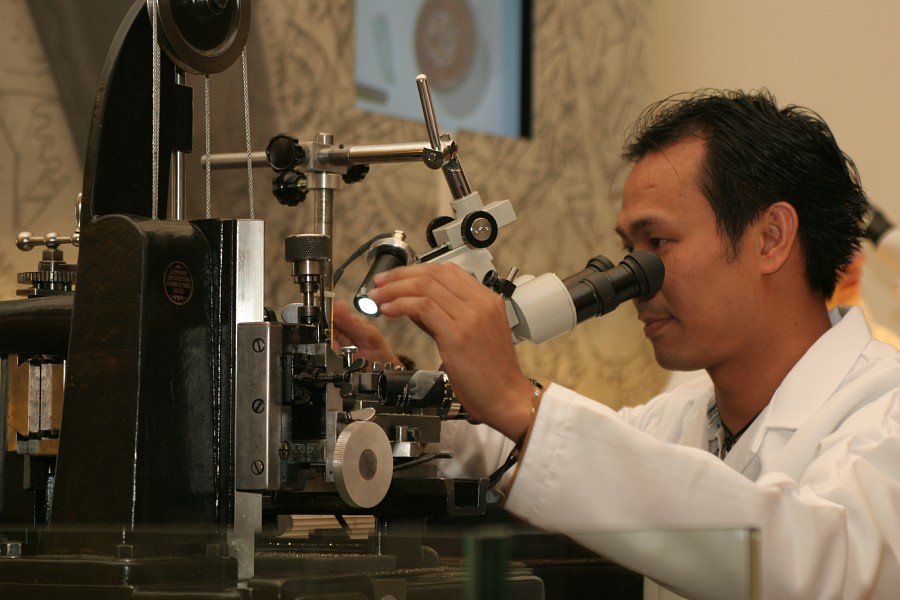
The rose engine is very likely a lathe or an engraving machine; actually guilloche work means to remove material in a pre-defined shape by means of a burnisher, which requires very accurate work to achieve an equal result. The smaller the workpiece AND pattern get, the more difficult it is and the smaller the scale, the larger the machinery!
Besides, a large machine does have a tremendous benefit in that it provides increased stability. Engraving and guilloche work utilizes heavy forces and even slight motion of the workpiece in the machine is likely to destroy the whole thing, in which case one has to start from zero again.
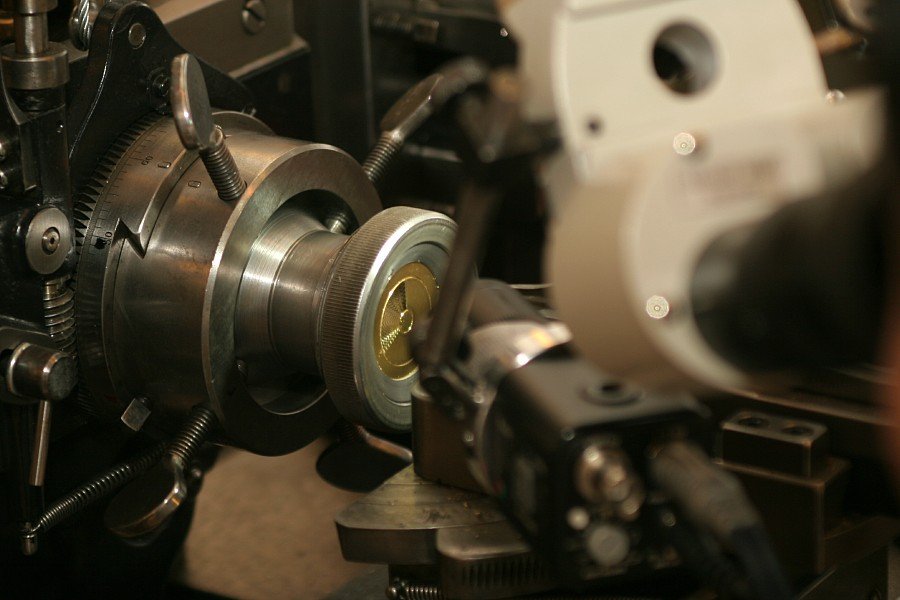
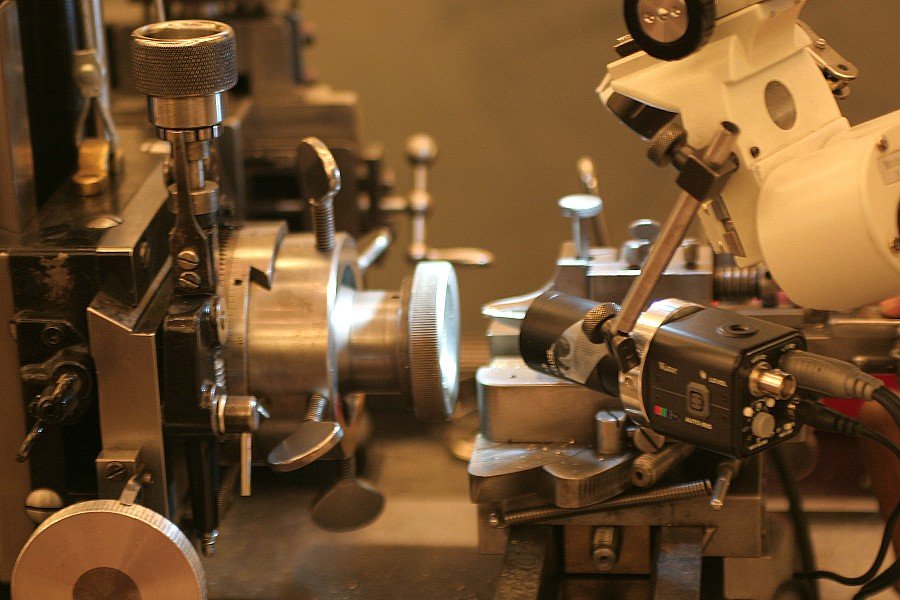
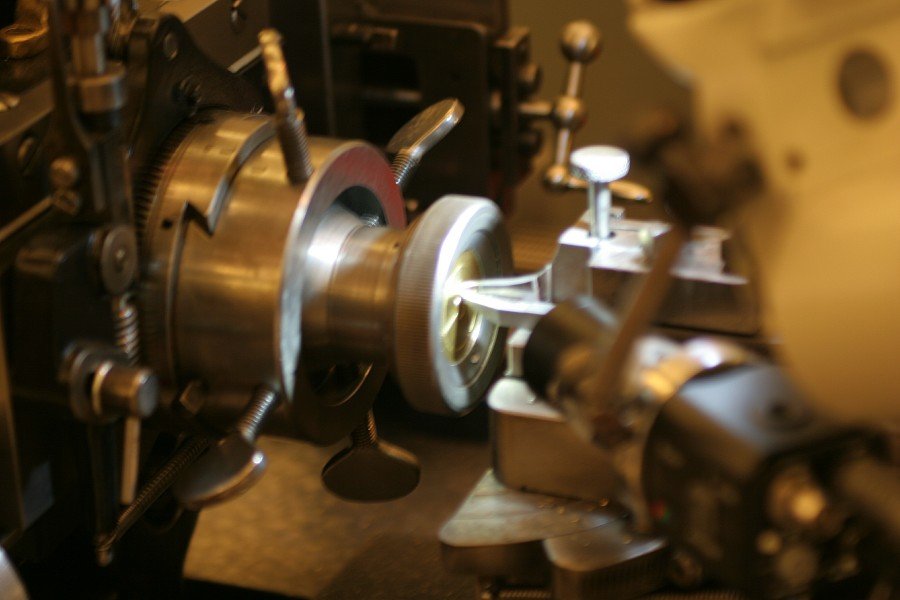
And action...
A video camera attached to the machine transmitted live feed to a monitor, which allowed to observe the work in progress. That?s been a great idea, especially if keeping in mind the dial blank under work measures only about 27mm!
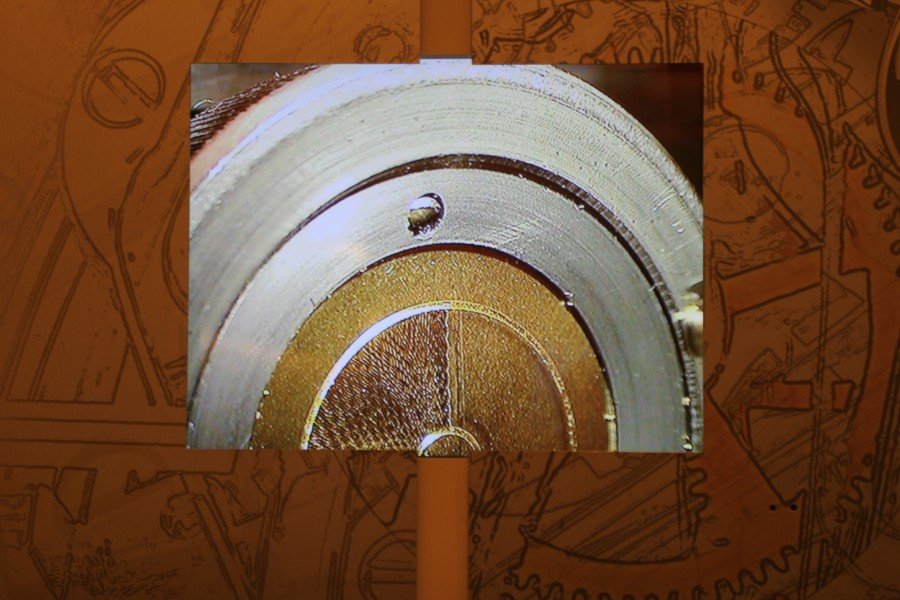
Guilloche work is a time-consuming task and requires skills, knowledge and patience. It?s not just pushing the button on a machine, but the slides are hand-guided and thus each workpiece will be different from the next.
Besides, i like guilloche decoration very much and it?s been a great pleasure to see things in the making!
Kudos and sincere thanks to Vacheron Constantin for a most pleasurable presentation during the show!
Greetings from Germany,
Peter

Vintage
Uncover the truth behind the Vacheron Constantin 'Wright Brothers watch' (Ref. 287275). Tick Talk investigates its provenance, challenging marketing claims.
13 replies4100 views

Manufacture
Explore the Vacheron Constantin Les Cabinotiers Grand Complication Phoenix, a unique piece showcasing exceptional hand-engraving and complex horology. Discover insights from its creation and collector perspectives.
30 replies4074 views

Collection
Mike H reviews his Vacheron Constantin Traditionnelle LE (2 rue de la Paix) in pink gold, highlighting its stunning hand-guilloché dial and exquisite finish.
28 replies11399 views