
PeterCDE
10167

A message by Dr. "Gino" Macaluso - Girard-Perregaux Research and Development
Dear enthsusiasts and GP fans,
it is with great pleasure i share these informations and perspectives (but one answer also) directly from the source.
- Girard-Perregaux Research and Development
During the International Salon de la Haute Horlogerie 2006, (SIHH, International Exhibition of Fine Watchmaking 2006) Girard-Perregaux will present several novelties in the area of the watch movement.
Here, the Manufacture will unveil in particular two automatic winding mechanical movements, 8 3/4 ligne (19.4mm) and 13 1/4 ligne (30.0mm) calibres, new complications and a version of the brand?s famous Tourbillon with three sapphire bridges.
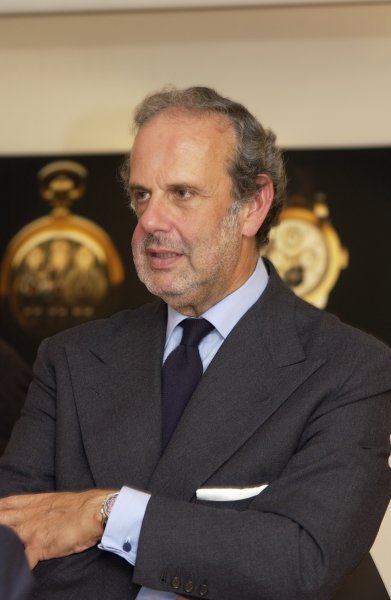
Dr. Luigi "Gino" Macaluso
CEO of Girard-Perregaux and SOWIND Group
Luigi Macaluso also points out: 'in parallel with the programme of new movements development aiming at completing the Manufacture?s movement portfolio, Girard-Perregaux is investing in basic applied research into watchmaking and chronometry.
In particular, Girard-Perregaux is an active member of a research group into applications of new materials, such as silicon into watchmaking, and, more precisely the escapement of movements.
The Girard-Perregaux R&D department is also concentrating on the development of a high-tech escapement, according to an innovative concept fundamentally different from the Swiss pallets system. The name of this project, the ?Constant Project? is a reference to Constant Girard, the genius and innovative watchmaker, creator of the Tourbillon with three gold bridges and other watchmaking sophistications around the middle of the 19th century. This type of revolutionary escapement will be fitted to high end Girard-Perregaux models and is planned for 2008'.
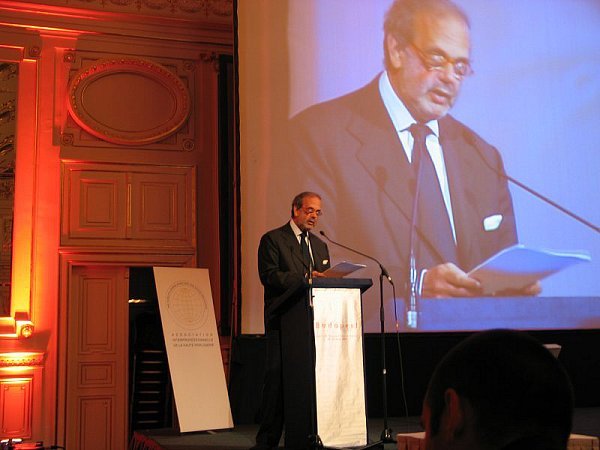
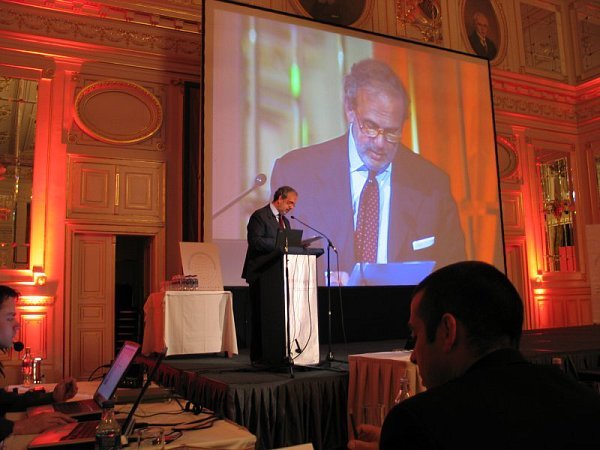
Dr. Luigi Macaluso
I find this both surprising and most promising - not only for SIHH 2006, but 2008 and 2018 in the same degree.
Making a manufacture movement from scratch requires a lot of efforts in the long run; as Dr. Macaluso frequently puts it, it?s a marathon race rather than a sprint. This includes the R&D work, but just coming up with a movement design only is not the understand of GP. It thus needs to execute and produce own creations, in a creative and independent spirit.
GP is among very few manufactures in Switzerland and while some create one movement, in the very near future GP will do all of them. This is certainly special, the more so keeping in mind the brand is still small and privately owned, not being a part of any major conglomerate.
Chances are not bad the year of 2006 will see a variety of new manufactures and this way, the market may become a little more difficult to oversee. At Girard-Perregaux, the construction work of the R&D department does not rely on outsourced specialists or "bought in" designs, but every new unit stems from an idea of GP?s staff. Personally i find this to be an important difference; it may not be apparent or even visible from the outcome, but it?s certainly a lot more efforts to entertain the personal ressources and infrastructure for a complete R&D department.
As Dr. Macaluso mentions this aspect, i?d guess a few notes on chronometry might be appropiate.
Chronometry is often regarded the crown of watchmaking; basically it is the science of how to create accurate timepieces. This includes not only a highly detailed knowledge about how these things do work, but it requires to know the underlying physics as well as the required steps to transfer the abstract research into working movements.
This may give an idea it?s something different than just to bring a movement to tick; making outstandingly accurate movements ever since was regarded the highest achievement in watchmaking and historically, over the past 2 centuries most awards celebrated this science.
Simplified one might say the decorative elements represent the aspect of art in watchmaking, while chronometry is an aspect of science.
In this context, GP always spend considerable efforts on research and development. That?s mostly apparent from pieces between 1850 and 1910, but also from pieces of the 1960?s, when GP introduced both the very first high-accuracy fast-beat movements that were possible to buy for the public but also the first (and for many years, the only) commercially successfull quartz movement.
An earlier post gives some randomly choosen examples and while not every development was patented, one may get the idea: GP does have serious expertise and experience in this field.
This may be even more apparent when looking at some figures.
Since 1856, Girard-Perregaux received more than 1.000 awards and prizes in timing contests and exhibitions.
The brand was awarded with a special prize by the Observatory Neuchatel in 1872 for a new record set by movement number 84409 (timed only 22/100 of a second off); as noted in our earlier coverage by AHCI-member Thomas Prescher on a historic Three Gold Bridges Tourbillon, these high-end watches were not made to incorporate a delicate mechanism for the sake of being a complicated and very expensive watch then. But almost all of them did pass the severe tests of the Observatories, which might be seen as a sort of "super-COSC" test. A "competition movement" is a nomenclature serious collectors are certainly familiar with, so it may say a bit about the tremendous efforts and achievements by GP when they managed to produce a respectable number of these mechanisms.
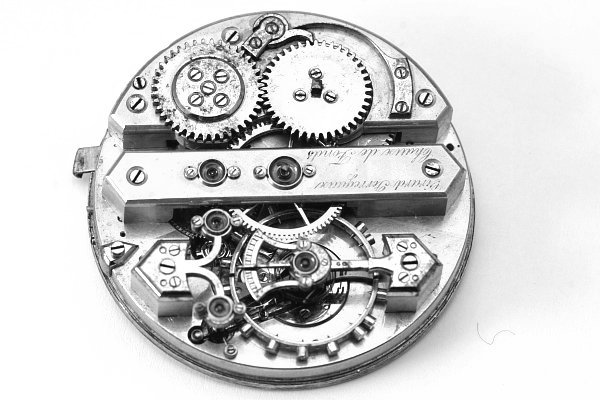
GP pocket chronometer with spring-detent escapement
certified at Observatory Neuchatel, class "C", in 1876
In 1967, GP was awarded with the Centennial Prize for the tremendously successfull fast-beat movement technology. Keeping in mind only the most accurate movements, which usually represented months and years of development, refinement, tuning and tweaking, did participate in the Observatory Competitions, the high number of prizes may give some idea how much GP did care for outstandingly accurate movements.
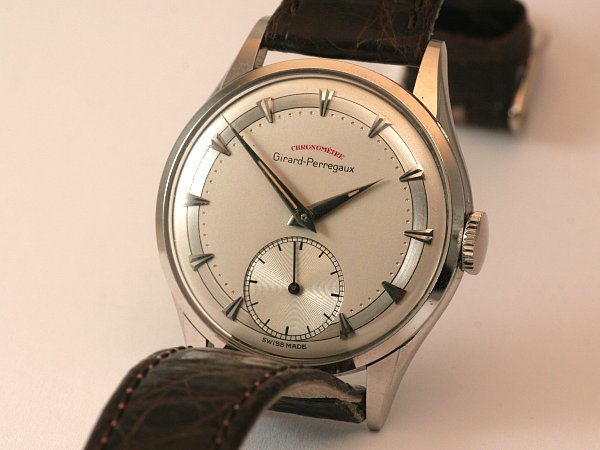
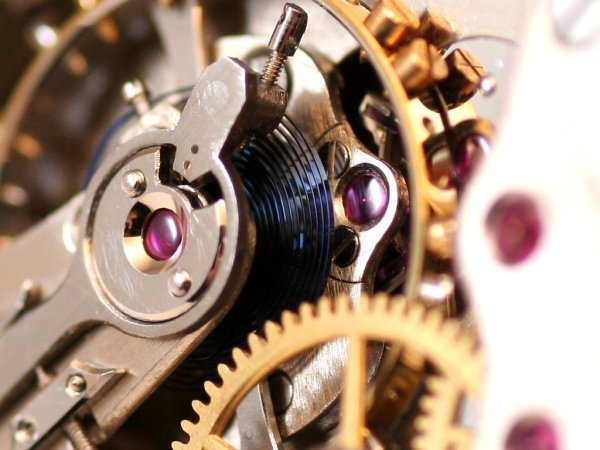
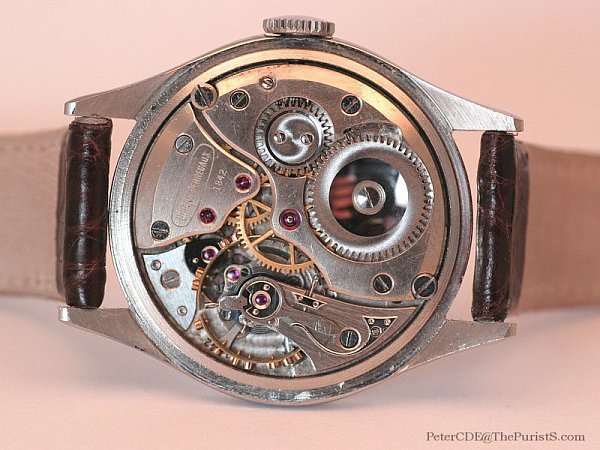
competition chronometer with swiss lever escapement
GP modified ebauche for a unique piece; only two made
certified at Observatory Neuchatel in 1961
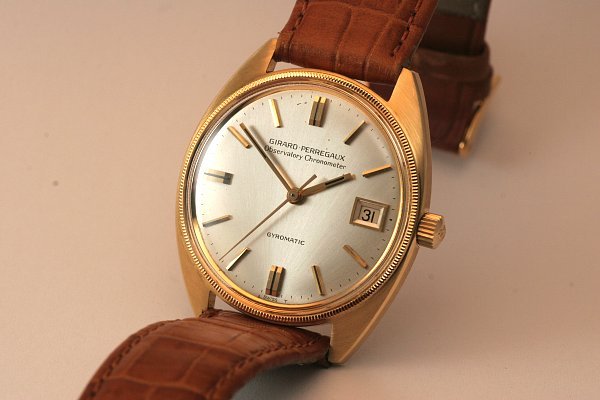
"Observatory Chronometer" with fast-beat movement
GP was the only brand to submit swiss movements of serial production that managed to pass the severe tests of Observatory Neuchatel
certified in 1965
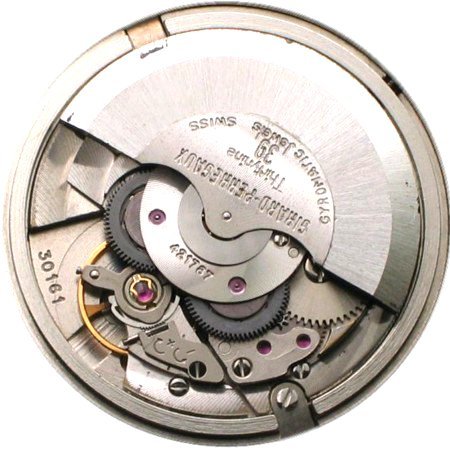
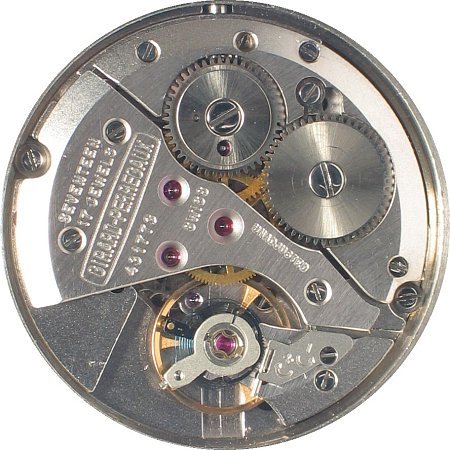
fast-beat movements, automatic (left) and manual (right) winding
GP even did more - other than creating a few units for research and development, the brand cultivated a technology for the sake of the customers. The fast-beat technology became part of the brand?s regular offering soon after release of the first Observatory certified units and brought thousands of customers a watch of superior timekeeping abilities. Unlike other brands, GP even went so far to guarantee the timekeeping to work on the wrist; this may show the research and development was not for the sake of being different, but for the sake of offering a better watch.
And what was able to withstand the scrutiny of an observatory competition did well proof to work in a more civilian use; any of these watches passed the COSC tests with the highest rank, which was indicated by "especially good results" on the certificates.
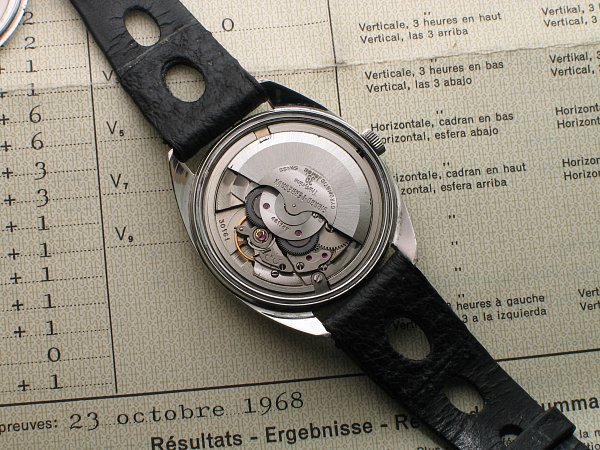
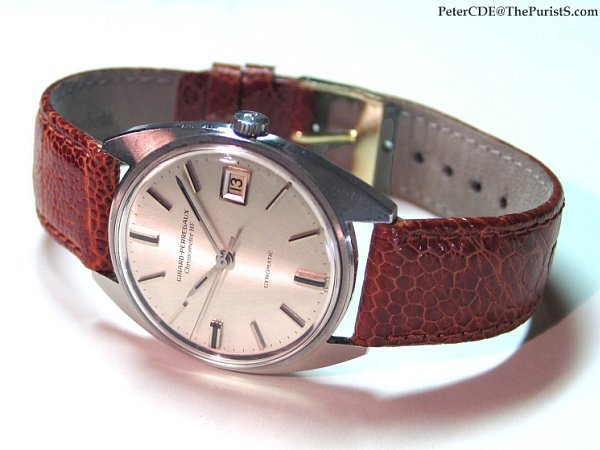
GP fast-beat chronometers of late 1960?s
The experience gained particularly in the 1960?s is not lost today and if not for the serial production of the fast-beat chronometers almost exactly 40 years ago, modern movements might not utilize the today common beat rate of 28.800 A/h that did proof to be the best equilibrium of precision, reliability and long-term performance for millions of timepieces since then.
Unlike many other brands, it is not unusual at GP for staff members to be with the brand for 30 or 40 years (and some even longer). Therefore it can happen today the same watchmaker who made an Observatory Chronometer in 1965 is still doing movements today - and it does happen. Of course new technologies, new materials and new methods of quality control, testing and assembly are integrated in the R&D work and the production at GP today. Still making an outstandingly accurate and reliable watch is partially a question of experience either and the experience gain from practical work over decades of watchmaking is a treasure handed down to new staff members at GP.
To shorten a long story, one might see that creating a movement is one thing. Making a nicely decorated movement might be another, but creating an above-average accurate movement probably requires more skills than usual.
Personally i find it most encouraging to know GP today spends considerable efforts and money (as Dr. Macaluso noted earlier, about 10% of the brand?s annual turnover) in this regard. Simply because it?s promising not only to result in interesting movements and beautiful creations, but even more so in something that really works on our wrists!
In this sense, i think it?s good news!
And, as you may noticed, the message by Gino unveils the answer to our earlier quizz:
During SIHH 2006, Girard-Perregaux will present a Three Bridges movement that incorporates bridges made of sapphire crystal. That?s for sure a promising idea and most likely to be an exceptionally beautiful piece, while the specific challenges in doing such a watch (of which there are many!) will be shared later. Actually the parts pictured earlier are the raw blanks for the bridges and i?m confident there will be additional informations soon.
My thanks to all who took part in the quizz and submitted their guesses - and my respect, in that you were pretty close! "Chapeau"!
Greetings from germany,
Peter

Vintage
Explore the Girard-Perregaux Vintage 1966 Palladium, a limited edition honoring GP's chronometry heritage and the 1966 Neuchâtel Observatory Centenary Prize.
16 replies6400 views

Vintage
Explore a 1914 Vacheron & Constantin Observatory Chronometer. Discover its Geneva and Kew trial results, Guillaume balance, and how to obtain reissued bulletins.
33 replies16942 views

Community
PeterCDE's 10,000th post reflects on 6 years as a Girard-Perregaux moderator, community, and passion for watches. A heartfelt thank you.
13 replies2746 views

Review
AndrewD reviews his Girard-Perregaux 1999 Chronograph Ref. 4946 with a cream dial. Discover its 38mm case, Caliber 3370, vintage design, and why this limited-edition piece is a collector's favorite.
52 replies48692 views

Independents
Explore KIH's exclusive visit with independent watchmakers Philippe Dufour and Olivier Muller. Get a rare look inside Dufour's atelier and his meticulous craft.
49 replies23584 views

Manufacture
An exclusive interview with Dr. Luigi "Gino" Macaluso, CEO of Girard-Perregaux, discussing his vision, passion, and the future of the brand. Discover insights from a true industry champion.
7 replies3048 views