MTF
[PuristS]
13383

A Purist'S Quest (photos) >>
Dear Forumners,
I have moved to Singapore, which means that my crazy idea of retiring from work and from watches are both unsustainable ideals. So, what watch away from the madding crowd could I feature in my first watch foray on this horological haven? How about a r-e-a-l watch that embodies One Man's Ideals and that really is touched by him? A watch that is even rarer than a common-or-garden Dufour or Halter? A watch that could not be made until the maker made his own tool first? 
I made enquiries about the progress of the first two batches (#1-6 and #7-xx) of the Volker Vyskocil V-30/45-01-A (henceforth called VA in this report). Volker was kind enough to take time to reply in English. I have taken the liberty to edit some of the Anglo-Saxon spelling and grammer but maintain the technical meaning. Any mistakes are mine alone and no doubt clarification can be sought from Volker. I must stress that Volker's English prowess is 10,000% better than my German in-ability !
Much of what he wrote is too technical for li'l old me but I am sure the WIS-geeks will understand
Initially, I was reluctant to post because such a teaser report could have stirred up trouble for Volker, in the form of criticism about the delay in delivery. You know what nit-picking people WIS-types can be .
With his permission, I am posting some back-room information that could help true purists understand the extra quality being injected into your VA watches. I am sure that after reading this, you will be patient and secure in the knowledge that your watch will be the best that a man can do, to realise a personal and purist ideal.
I hope the community will refrain from "diss-ing" the man and distract him from his work...nay... his Art. Please recognise the angst he feels for continuing improvements to the VA. I am nominating Volker as one of our honorary PuristS.
Best regards,
MTF
#############################################################################
Volker Vyskocil's e-mail QUOTE START:
I am a little bit behind my original time schedule. To be exact: nearly one year for the first 6 watches (first batch). I will try to compensate this time shift to half-year for the second batch. I hope I can deliver the 2nd batch in Sep/Oct. this year.
Why did it take so long for the first series? One reason:
When I started 2.5 years ago, I thought it would be OK to test the watches on a "ordinary" timing machine.
When the time has come to test the watches, I changed my mind. I was thinking about "How must a ?good? test look like"?
The answer to this question took nearly 2 to 3 months of hard work and a little bit of headache.
The main testing procedures are as follows:
1. The torque of the mainspring (the barrel) is measured.
2. The torque at the fourth wheel is measured.
3. The amplitude in addition to the torque of the mainspring is measured(where torque is needed to reach an amplitude of xx degrees)
4. The rate of the watch in the 6 positions.
5. The rate in different temperatures (from 4 - 35 degrees Celsius)
6. The rate in addition to the amplitude (isochronisms)
7. All tests are documented in a book, which will come with the watch.
To do the tests in the way that I want, it was necessary for me to build my own testing equipment. So I had to find a sensor to measure the torque (especially as torque at the fourth wheel is relatively small) and I had to write the programs for the test procedure.
To test the watches at different temperatures, I build a special kind of acrylate glass-dome that can be heated and cooled down by a Peltier element. Cooling down give me some headache because at the beginning it was only possible to cool to 10 degree Celsius below room temperature. I managed it, by changing the heat exchanger on both sides of the Peltier element. An interesting story for another time....
My last big challenge was to measure and log the data with a personal computer. It was a new for me to think about signal filtering and to optimise the signal triggers, so that the results are as exact as possible and that they do not scatter as much as results I get with bought-in testing equipment.
Especially about the long testing period:
I know that you can buy ready-made systems, but I am not sure if I can implement them into my system, in the way that I want. Good equipment is very expensive. With my system I am now very flexible. The dark side of this success: measured results show errors in the power transmission and the regulating system, in horrible clarity!
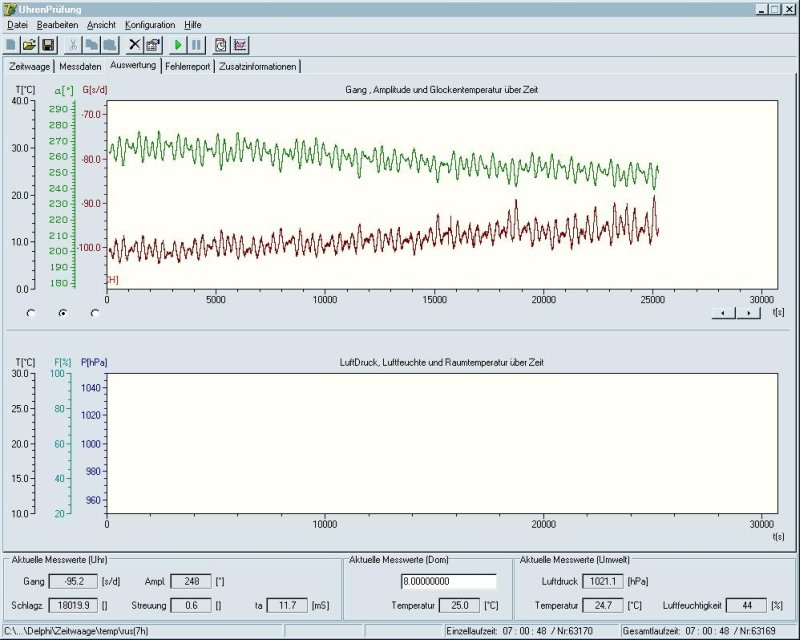
For example a screen shot of a test of an older watch. The two lines in the diagram show the rate and amplitude over the time. You can see the changing of the amplitude (a result of change in the power transmission) and as a result of this, also the changing of the rate (?Anisochronism? in German). The time interval here is 25000 seconds (7hours). It is not necessary for the test that the watch has a loss of more than 90 sec a day. It is only interesting to see if the rate will be constant -90 sec a day.
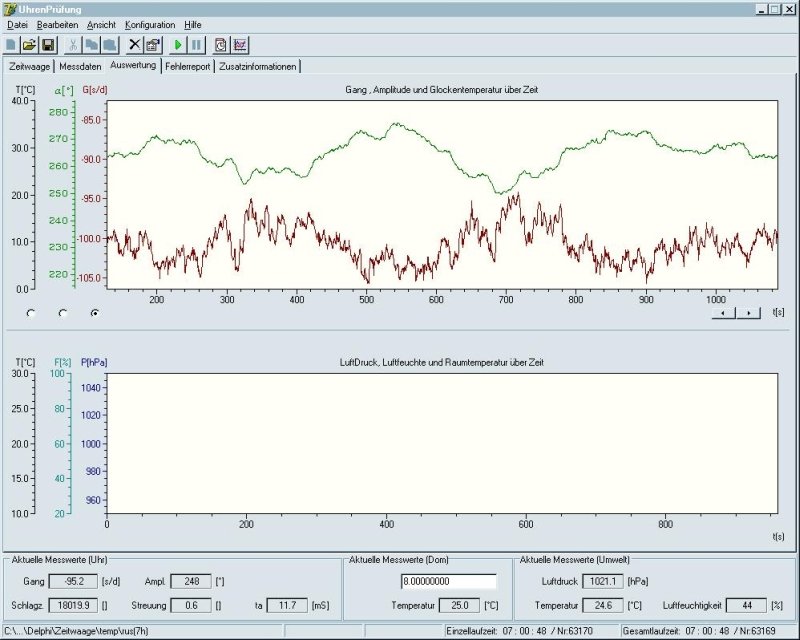
When you zoom into a smaller interval the addition (changing amplitude > changing rate) can be seen more clearly. Also seen is the change in the rate in smaller periods, which will not affect the amplitude. (Maybe a result of the escapement).
If you are interested, I can send you a diagram of a 8-day going watch, where you can see clearly the beautiful  line of error which is affected by a incorrect wheel engagement.
The following screen shot is of the ?noise-checking? window, where you can set the parameters to optimise the test results.
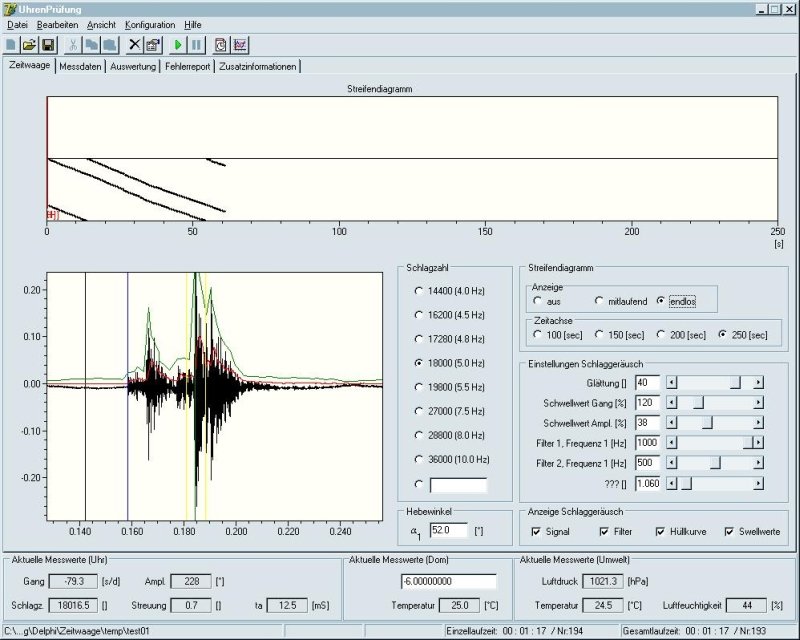
The testing equipment is shown in the next two pictures:
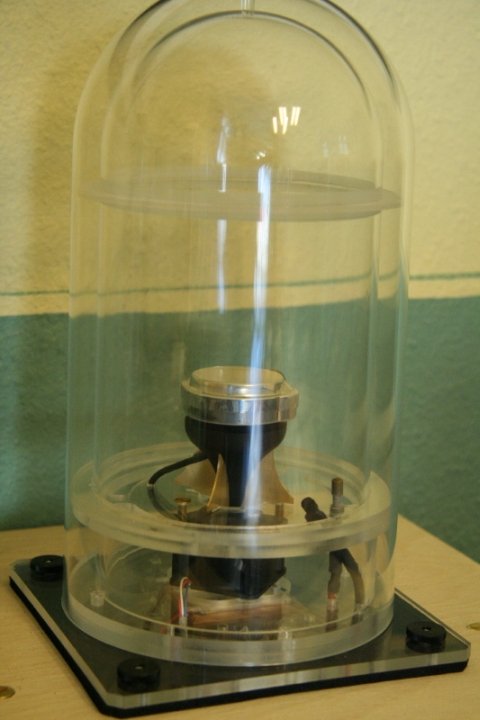
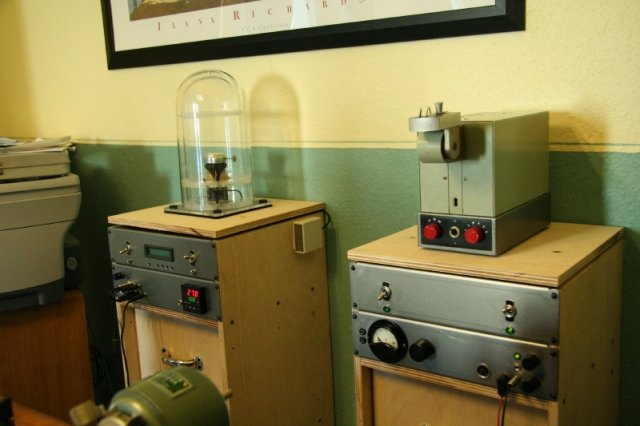
The testing of the mainspring is done on my CNC-Machine:
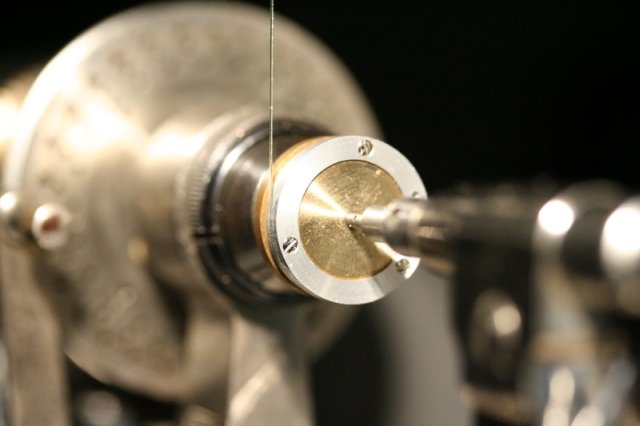
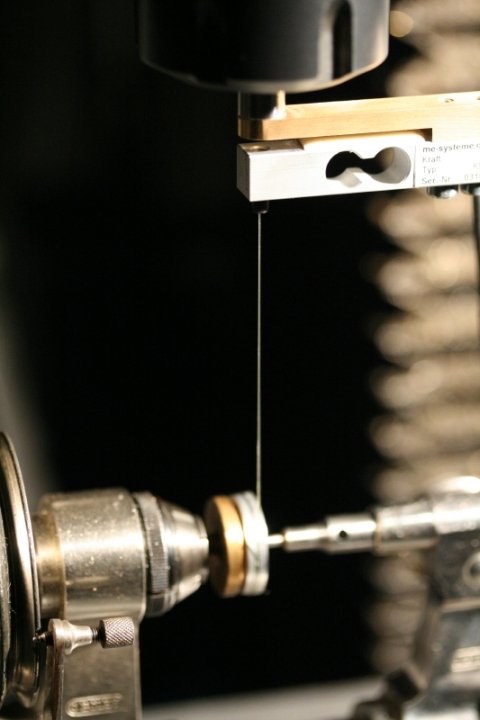
The next picture shows a monitor screen. It shows the program that I have written to measure the torque of the mainspring. You can see clearly the hysteresis of the mainspring (area between the two lines is the friction losses).
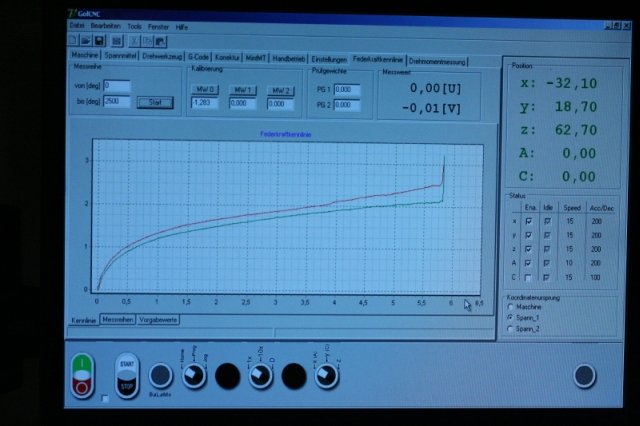
Normally it would be better to add more information about the testing procedures. But first I have to write it down in German (and I need time to do it). Meanwhile, this screenshot may provide some information:
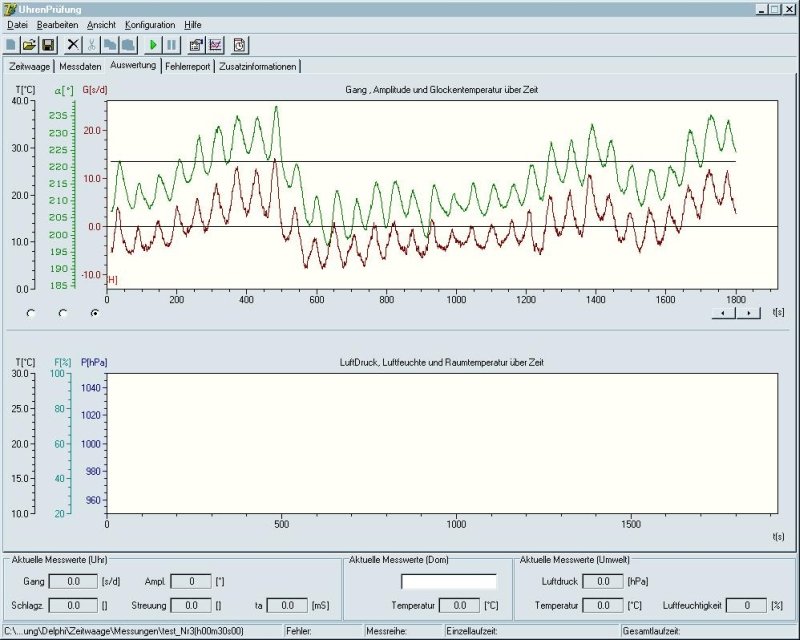
When people look at the VA, they often suggest, that it must be one of the most exact watches today. But this is not possible, in principle, because of the low frequency of the balance. To prevent this "misunderstanding", I want to include a complete range of testing diagrams with every watch I deliver, to show the performance of the watch. Every influence variable in one diagram (isochronism, amplitude over time, rate over temperature, rate in different positions...).
By wearing the watch, all influence variables affect the rate of the watch "at the same time". This includes the dynamic parameters like angular momentum and impact forces. I cannot test the latter parameters in a way that will give any usable results. This diagram will show that it is up to the "watch-wearer" to mix all the parameters by wearing the watch and to observe any performance over a wide range.
I think that testing diagrams are extremely boring to most people. So, I want to add a small brochure/book with background information about the diagrams. I am not sure if this is very clever (to give away the diagrams) but it is the best way to come clean. That is Life. My Inner Voice commands me to do it .
To maximize the boring stuff, I may add a diagram of an 8-day-going watch. These lines are (horribly) beautiful. You can see clearly the error in isochronism, (changing the amplitude affects the rate). The "harmonic" waves are the result of gearing which is not optimal (shape of the teeth, centre-distance...). It is difficult to get constant torque at the escape wheel in a 8-day-going watch because of the great ratios.
On the other hand, this diagram must not to be over-rated because in daily life, nobody will notice the waves. In summary, they swing around the null line of rate. Let me know if you want a screenshot of the 8-day-going watch results.
Another example:
First, beautiful wooden boxes are handmade by a talented young cabinet maker.
The second layer are cardboard boxes, handmade by a professional bookbinder, to protect the wooden boxes.
The outer-outer layer to protect the cardboard boxes for shipment are also "handmade"
Please have look at the attached pictures. They show the outer-outer shipment-cases for the watches.
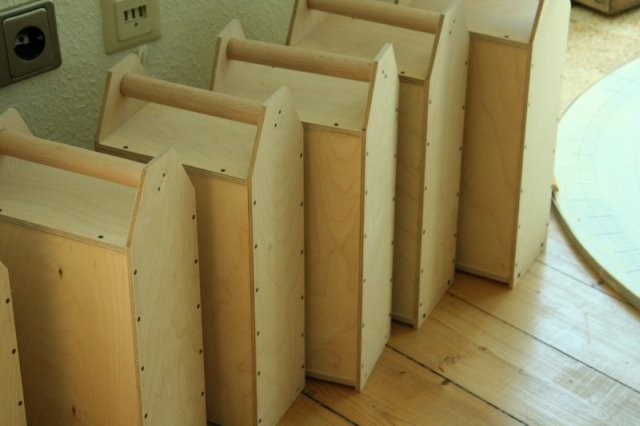
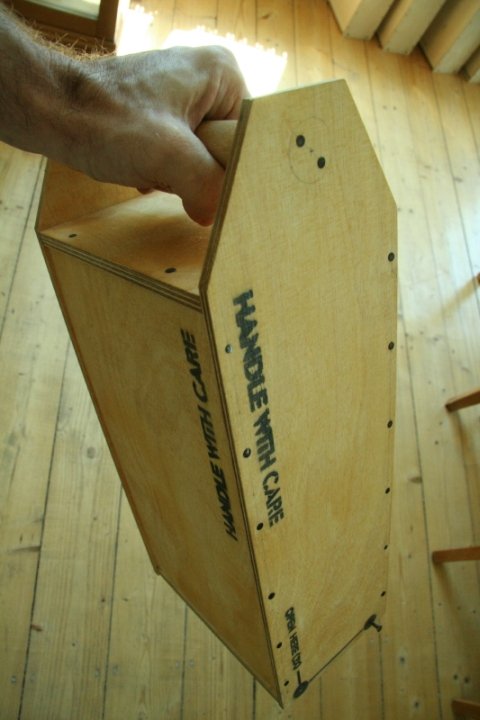
I don't want to bore you with too much information. But if you need more information, please let me know...
With best personal wishes,
Volker
END QUOTE