decksurgeon
177

Of Sight, Sound & Passion on a Sandy Island (Many Pics!)
If you clicked this thread thinking that you be met by young nubile blondes hawking Swiss watches –
I’m afraid Sir …………… perhaps ThePurists is not for you!
May I have the pleasure of sharing with you the opportunity to attend an event showcased on Sentosa Island (in Singapore). We gather at Sandy Island in Sentosa on a cool Wednesday evening. The uniqueness of this event was the amalgamation of many nice things presented. All the items here struck me with one single minded unified principal that any purveyor of fine watches would appreciate:
Their design, form and function is meticulously master-crafted to a degree where it would far exceed the owner’s expectations.
Seemingly everyday objects that touch our lives in simple ways now given the magic treatment of finery. Objects that we rely on for shelter, transport, time management & entertainment. We all have a daily for these, but in our busy lives we perhaps do not think of the toil and hard work put into creating them. Creative and innovative people making objects capable of changing society and the way we think and act.
May I present humbly to you the innovators and how they have made history with the Objects de Art showcased.
----------------------------------------------------------
Innovator & Creator of History: Claudio Silvestrin (1954 – present)
Born in 1954, Claudio Silvestrin studied under A. G. Fronzoni in Milan and at the Architectural Association in London. His integrity, clarity of mind, inventiveness and concern for details is reflected in his architecture: austere but not extreme, contemporary yet timeless, calming but not ascetic, strong but not intimidating, elegant but not ostentatious, simple but not soulless.
Claudio’s most celebrated work is his 25 global flagship stores and boutiques of Giorgio Armani stores around the world, and consultant to Mr. Armani for the design of Armani Hotel and Residence in Dubai. Some of the other recognized works includes the Museum of Contemporary Arts, Turin, the Victoria Miro private collection space in London, One East Melbourne Apartment and Esplanade Apartment in Melbourne.

Sandy Island is a rare collection of 18 waterfront villas nestled within a tropical island oasis of privacy and calm. Designed by Claudio Silvestrin, these exclusive villas are embedded in a lush rainforest setting, like precious jewels waiting to be discovered in the splendor of nature.

It is situated in the exclusive Sentosa Cove, Asia’s premier integrated marina community. Located at the resort island of Sentosa, Sentosa Cove is a short distance from the metropolitan city hub of Singapore. Boasting Singapore’s largest marina, ONE°15 Marina Club, Sentosa Cove is in close proximity to Resorts World Integrated Resort, two 18 hole championship golf courses and a 3.2km stretch of white-sand beach.

Designed with the most discerning individuals in mind, every villa is a visual meditation on the concept of ‘home’; a temple for the senses set in a tropical idyll. Each home is one of a kind, an original work of art by an acknowledged master of contemporary architecture.
Each villa is unique in its exceptional composition of design, material, layout and furnishings. 
The highlights of each five-bedroom villa include: a dramatic living area facing the waterfront with a 7-metres double-volume ceiling height, a master suite that occupies the entire 2nd floor, a home theatre, a reading room, an optional purpose-built wine cellar, luggage room or cloak room, a swimming pool and a private berth for 12-metre boat. 

[*Author’s note: Please Sir, if you had to park your boat out front there should be nothing less than a Riviera Yatch. There is no better place to see them in action than in St Tropez, Cannes and Monaco - that the final products consistently break new ground and redefine the concept of luxury on water.]
The villas will be the only residences at Sentosa Cove with car-lift access to basement garages spacious enough for two luxury cars; and passenger lifts connecting all four floors of living space. All villas are lavishly furnished with the finest selection of European brands including Molteni & C, Poliform, Boffi, Flaminia and Viabizzuno from Italy; Vola from Denmark; and Miele from Germany. The villas vary from about 7,500 to 9,200 sq ft of built-up areas on land which range from about 7,000 to 10,000 sq ft. 
Landscaping was not to be overlooked and Jamie Durie who is one of Australia’s best landscape designers and a winner of over 33 international awards for landscape design (including the prestigious Gold Medal in the Royal Horticultural Society’s Chelsea Flower Show last May) was handpicked for the task. 
For Sandy Island, he has designed individual gardens for the 18 villas, and the island’s tropical rainforest setting with a closed canopy of mature trees, creating a natural hideaway for all villas which are screened from each other and the central driveway.

Innovator & Creator of History: Peter Lyngdorf 
Innovation has always been a hallmark for Peter Lyngdorf. Ever since his entry into the hi-fi industry in mid 1970's he has been capable of changing how audio products are being conceived and sold - both globally and in his native Scandinavia. In a constant pursue of better ways to replay music Peter has founded or co-founded several world famous audio companies, for instance Dali Loudspeakers along with full or part ownership of many other highly esteemed audio brands such as NAD Electronics, Gryphon Audio and Snell Acoustics.
Snell Acoustic Sepakers shown here:
Peter Lyngdorf is also the founder and owner of Hi-Fi Klubben which is Europe's largest and most successful chain of shops specialized in high-end audio. Founded in 1980 Hi-Fi Klubben today covers all of Scandinavia with 70 shops and is still expanding.
Naturally, being in close contact with end consumers and market demands has proved invaluable for acquiring inspiration for new products and feedback for making them perfect during development. No doubt the overall success of Peter Lyngdorf is closely related to his ongoing retail experience with consumer needs and ideas.
In the 1990's Peter was presented to the ideas of digital room correction and digital amplification. These were the logical next steps to the digital revolution of the 1980s where the CD was introduced and took the world by storm. The vision of leading digital audio into its full implementation as a complete re-play system and not only a sound carrier system was of course intriguing.
This interest led to the foundation of Tact Audio ApS, a high technology company focused on digital audio. This is today named Lyngdorf Audio and is based in Skive, Denmark.
Innovator & Creator of History: Heinrich Engelhard Steinweg (1797 – 1871)
Heinrich Engelhard Steinweg was a piano maker and emigrated with his family from Germany to America in 1850. In 1853, Heinrich Engelhard Steinweg founded Steinway & Sons. His first workshop was in a small loft at the back of 85 Varick Street in Manhattan, New York City. The first piano produced by Steinway & Sons was given the number 483 (Heinrich had built 482 pianos before founding Steinway & Sons) and today it is now displayed at the Metropolitan Museum of Art in New York City. One year later demand was such that the company had to to move to larger premises at 82-88 Walker Street. It was not until 1864 that the family anglicized their name legally from "Steinweg" to "Steinway".
Steinway & Sons (often called Steinway) is a highly regarded piano maker, since 1853 in New York City. Steinway's second factory was established in 1880, in the city of Hamburg, Germany. Both Steinway factories have undergone great updates and renovations, and are still making Steinway pianos today.
In 1880 a Steinway Village was founded as its own town in what is now Astoria, providing a new factory with its own foundries, post office, parks and housing for employees. Its early successes have been credited both to the high quality of its instruments as well as the brilliant marketing, including its showrooms and the Steinway Halls. Steinway Street, one of the major streets in the Astoria and Long Island City neighborhoods of Queens, is named after the company.
The company has since the foundation in 1853 improved the construction of pianos and has today more than 125 registered patents. Steinway has registered more patents than any other piano company.
The company is currently known as one of the world's premier manufacturers of high-quality pianos. The founder Heinrich Engelhard Steinweg's dedication was simply to make the finest pianos in the world. 
His four basic principles were:
(1) "To build the best piano possible"
(2) "Build to a standard, not a price"
(3) "Make no compromise in quality"
(4) "Strive always to improve the instrument".
Today the company still follows these principles and as a result Steinway remains the choice of 9 out of 10 concert artists (some sources would say closer to 98% actually).
Henry Steinway seen here (The Grandson of Steinway). He passed away recently in 2008 at aged 93.
Fast forward to present day, Peter Lyngdorf meets Steinway & Sons=The birth of Steinway Lyngdorf
Headquartered in Copenhagen, Denmark, and founded by Peter Lyngdorf in December 2005, Steinway Lyngdorf represents Mr. Lyngdorf’s consuming passion to create the finest products in the audio industry, without any compromises and without precedence. 
The company is focused on the design and manufacture of innovative high performance digital audio systems. The partnership between Peter Lyngdorf and Steinway & Sons resulted in the formation of the privately-held Steinway Lyngdorf Holdings Audio A/S and the introduction of its signature product – the Model D Music System. 
This is a one of a kind partnership and where both parties have kindred spirit in an uncompromising commitment to excellence in sound reproduction. Steinway Lyngdorf brings together the artisanship, fine furniture craftsmanship, striking design, groundbreaking engineering and sheer innovative genius that have made these two great names uncontested leaders in their respective arenas.

Peter was in Singapore to demonstrate the system and he shared with us some insight into the design of the product. Essentially the Model D Music System the system was designed with 3 main goals in mind:
(1) The promise to reproduce a Steinway piano on the Model D Music System such that a Steinway pianist will not be able tell if it is a live performance or a CD being played.
(2) Reproduce a full orchestra as if it were “live” in your living room.
(3) The music system will deliver the same result in any home environment as it was heard in a Steinway Lyngdorf’s demo suite, through patented technologies and design approach Steinway Lyngdorf takes. The speakers employ the world’s first fully digital and state-of-the art technology - RoomPerfect which produces the first fully three-dimensional map of a room’s sound field. It adjusts the music system to overcome spatial influences in any listening room rather than adapt the room to the music system.
The Model D Music System loudspeaker is 7 feet tall and weighs in total a staggering 174kg each. They are finished in the same exact black piano mirror polished lacquer at Steinway's Hamburg factory.
The speakers have four 12" glassfiber honeycomb woofers and two 5" magnesium midrange units & the ribbon tweeter. Each speaker module has its own amplifier tower with 800W amplifiers and active digital crossover.
The speaker’s monolithic frame start life as a block of solid 300kg aluminum billets and are painstakingly crafted over 170 hours of precision engineering and milling/cutting processes to produce a rigid base to mount the drivers. Assembly of each unit takes 8 weeks and is done by hand.
The midrange units and tweeters are acoustically decoupled from the main frame with a shock-absorbent rubber construction.
Midrange units seen here, view from behind:
Another speaker design criterion is to provide the signature Steinway Lyngdorf sound every time: identical timbre throughout the entire loudspeaker product range. This is achieved by employing the same drive units and specially designed Air Motion Transformer tweeters (AMT) found in all Steinway Lyngdorf models.
The AMT utilizes the best technology from the two popular high frequency driver types: the ribbon tweeter and the dome tweeter. The dome tweeter is popular because its wide frequency range allows flexible crossover design and high power handling. However, it lacks the silkiness and resolution of fine detail that make the ribbon tweeter exceptional. 
On the other hand, while the corrugated Mylar membrane ribbon tweeter possesses smooth resolution at the highest frequencies, it is limited in the lower frequency range and consequently may have difficulties with details from voices and other important sound sources. The AMT features a wide frequency range with a low 2 kHz crossover point, ensuring a seamless transition to the midrange driver.
Ribbon Tweeter is the red rectangle in the center of the picture:
The 5” midrange driver is extremely advanced. The diaphragm and chassis are made of magnesium for minimal cone break-up. The completely nonmagnetic chassis focuses the magnetic flux at the voice coil. The unit incorporates a solid metal centre plug instead of a traditional dust cap, making the cone lighter and faster and eliminating unwanted air pressure behind the cap. Furthermore, it provides extra cooling for the voice coil for increased power handling and sonic stability at high levels.
[*Author’s note: Personally, I am a believer of ribbon tweeter technology, the other interesting company that do an excellent speaker with a superb ribbon tweeter is A.D.A.M. Audio from Berlin Germany. The extreme clarity and definition advantage of the Mid/Highs on speaker systems that employ the latest ribbon tweeter technology is apparent at a listening preview over conventional drivers.]
If you haven’t noticed by now, the Model D speakers have no cabinet, just a stylish and massive front baffle on which the drivers are mounted. This results in an extremely open, detailed and dynamic musicality, completely free of traditional cabinet-induced smear and coloration.
Note the Mirror Polish Black finish (camera set to overexpose by +1EV to see this effect)
During the demonstration of the Model D Music System a wide variety of different music was played to demonstrate the handling capabilities of the system. Everything from a solo recording of an original Steinway D piano, to violin pieces, to jazz and a bit of pop for good measure. 
The staging, imaging and depth of the Model D Music system lived up to its name.
If a piano recording was made in a concert hall, you would be magically transported into the same ambience with the same reverb and character of the large concert hall. Subsequently another recording was played of a piano in a smaller room and again you would feel the change in the reverb and ambience of the recording – this time your ears transported to a “small room” kind of sound exactly as intended.
Staging was extremely accurate also for such a system. You could hear the individual voices panned off center in a mix exactly as how the CD’s mastering mix engineer wanted it to be in the final recording. If the recording had complex panning and solos of individual vocalists, these would leap out at you in crystal clarity also whilst being segued in the mix of the backing music/vocals without any “muddyness”.
One would expect that this system would be very unforgiving to any recorded source that was not up to par on the Mastering or Recording process. My non-audiophile grade ears could find no flaw in the system except of course perhaps acquiring a Model D Music System would result in you throwing out all your below par CDs because the recording sounded terrible!
The Model D Music System is the standard bearer - delivering craftsmanship, *enduring quality and value, as well as unmatched musical experience to its audience.
(*Peter mentioned that the system is built to last and that the internal DSPs are upgradeable options over the years, there will not be another Model D and the design would not change also so you don’t have to “chase the fashion”.)
Before my frail mind forgets, there is a variety of custom color finishes available also to match individual taste and architectural requirements. Should you wish to change the color of the lacquer at a later stage, the factory will gladly assist you with your bespoke instructions.

Innovator & Creator of History: August Horch (1868 -1951) 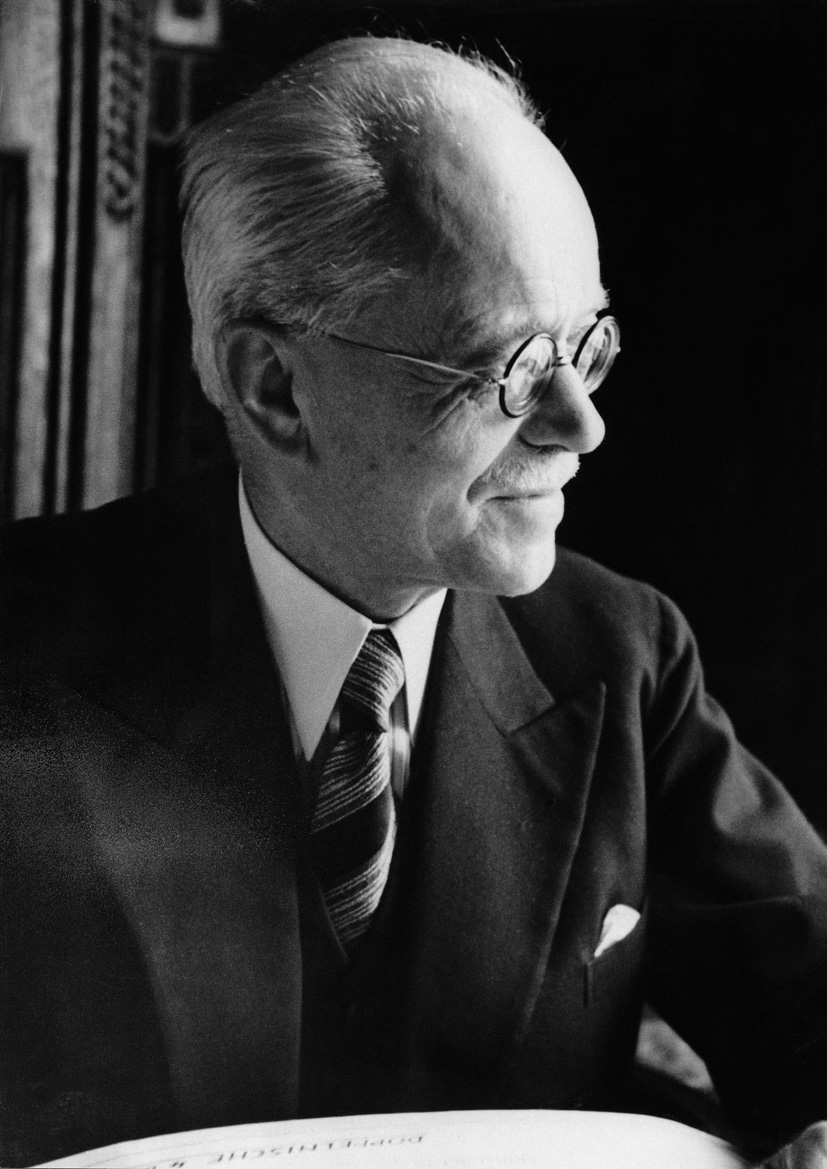
August Horch was a German engineer and automobile pioneer, the founder of the manufacturing giant which would eventually become Audi. He was born in Winningen, Moselle and was educated in Mittweida. August Horch worked for Karl Benz from 1896, before founding A. Horch & Cie in November 1899, in Ehrenfeld, Cologne, Germany.
The first Horch automobile was built in 1901. The company moved to Reichenbach in 1902 and Zwickau in 1904. Horch left the company in 1909 after a dispute, and set up in competition in Zwickau. His new firm was initially called Horch Automobil-Werke GmbH, but following a legal dispute over the Horch name, he was obliged to change the company name. (The court decided that Horch was a registered trademark on behalf of August Horch's former partners and August Horch was not entitled to use it any more). Consequently, Horch renamed his company to Audi Automobilwerke GmbH in 1910, Audi being the Latinization of Horch. [Audi means “listen”]
In August 1928, the Danish engineer Jørgen Skafte Rasmussen of DKW acquired a majority holding in Audiwerke. In June 1932 Audi, DKW, Horch and Wanderer merged to form Auto Union AG, the new company's logo was four interlinked rings, one for each of the founder companies. Horch was on the supervisory board of Auto Union.

Auto Union is best known for its racing team (Auto Union Rennabteilung, based in Zwickau). The Silver Arrows of these two German teams dominated not only GP car racing from 1934 onwards, but set records that would take decades to beat. For example, the power levels of the unlimited 1937 models were only equaled in the early 1980s by turbocharged Formula One Grand Prix cars.
Auto Union Type D:
The Auto Union race cars were designed by the famous engineer Ferdinand Porsche; they were based on an earlier design he had done using a mid-engined layout similar to the famous 1923 Benz Tropfenwagen, or "Teardrop" aerodynamic design.
These cars used supercharged V16 engines that eventually produced almost 550 horsepower! The fuel tank was located in the center of the car, directly behind the driver, so that the car's front-rear weight distribution would remain unchanged as the fuel was used - the exact same location used in modern open-wheel racing cars, and for the same reason.
Fast Forward to 2003: 
Audi displayed for the first time the “LeMans quattro Concept Car” at the 2003 Geneva Motorshow. The layout of this car was not different from the Auto Union Silver arrows. Mid-engine layout and purpose built as a sports car. The response to the concept was extremely positive and in 2005 Audi finally announce that the world would see the serial production of the LeMans Quattro Concept Car and that it would adopt the name of Audi’s most successful 24 hours LeMans race entry – The birth of the Audi R8. The R8 was officially launched at the Paris Auto Show on 30 September 2006.
The R8 LeMans racer during a 24 hr race - red hot brakes is a norm
The Audi R8 is equipped with a 4.2 litre Fuel Stratified Injection (FSI) high revving V8 engine developing 420 PS and 430 Nm and is basically the same engine used in the ‘wolf-in sheep’s clothing’ Audi RS4 but modified to use dry sump lubrication.
A variant with a 5.2 litre Fuel Stratified Injection (FSI) V10 engine announced in December 2008, which produces 525 PS and 530 Nm. As a result, it is the *slowest car that Audi have ever built but dispatches 0-62 mph in only 3.9 seconds.
(*Author’s note: slowest car because the last time I visited the factory, they only built 27 units per day up from a previous 22 units per day)
The transmission is either a manual gearbox with metal gate for the shift lever, or an "R-tronic" gearbox (single-clutch semi-automatic sequential manual transmission). The transmission is actually the same gearbox found in the Lamborghini Gallardo. Approximately 15% of the R8 is shared with the Lamborghini Gallardo.
For Gallardo owners; you will be pleased (or not so pleased?) to know that the aluminum chassis for your Italian supercar is hand welded in Neckarsulm, Germany and checked to 0.1mm QC tolerance at a laser measuring station in the Audi factory before shipping off to Italy.
The R8 was available for test drive at the event and the car is nothing short of exhilarating as an everyday friendly daily-drivable sports car. There is simply no amount of superlatives that I can spew to describe the combination of finesse, sophistication, sporting qualities combined with German teutonic hand-build quality all rolled into one.
Team "White" coming home down the Straight on a track day.
The Baddest (Maddest) Station wagon in the world..........
The world’s fastest supermarket run car the RS6 was also on site for participants to test drive on Sandy Island. Straight out from the factory gates of Quattro GmbH in Neckarsulm (Germany), this car churns out 580hp in stock from and small electronic makeover from the best Audi tuner MTM GmbH (Motoren Mayer Technik) gives this hooligan in a pinstripe suit a massive 702hp on tap.
This is more than 2000 horsepower combined pulling out from the pit lane:
If you have never seen the family dog plastered to the rear windscreen or feel a dire need to get from the supermarket to your home without your imported Kapiti ice cream melting. There is only one answer - The RS6 Avant is perfect for you!
If you see a bloke in the Saintsbury or Safeway parking lot with a helmet - you know its a RS6 shopping wagon!
Not to be left out, the new Audi TT-S was also available for test drive as well. This in my opinion is the “underdog car” from Audi. Small, compact with a shortwheel base and all Quattro all wheel drive coupled with a light Aluminium Space Frame chassis make this one of the most nimble and explosive cars on the road or on the track.
Here's a Audi TT-S taking on a R8 on the Sepang Track in Kuala Lumpur:
There is only one minor thing left for ThePurists to perhaps consider when piloting such a vehicles. Please be sure to don the appropriate timepiece fit for the occasion. For example as you get into the cockpit of the Audi R8, you need a Pilot’s watch.
Ferdinand Adolph Lange (1815-1875)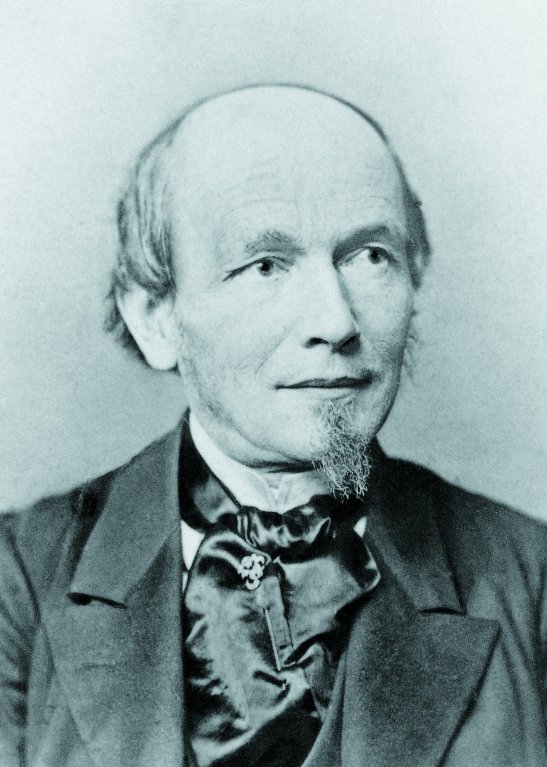
After almost four centuries of mining, the silver dried up at beginning of the nineteenth century and great poverty broke out over the town of Glashütte. Ferdinand Adolph Lange who was master watchmaker to the Saxon court, brought new hope to the city with the founding of the first watch manufactory. His vision was to make an independent Saxon watch industry concentrating on the production of high precision watches in comparably small numbers.
Well-known watchmakers followed Lange’s call, with Julius Assmann at the forefront. At his Deutsche Präzisions-Taschenuhrenfabrik, he manufactured precision watches outfitted with elements typical of Glashütte, such as the three-quarter plate and a hand-engraved balance cock.
Karl Grossmann 
The enormous international demand for Glashütte’s precision watches called for more and more very specialized trades people. Along came Karl Moritz Grossmann (also famous for his excellent pocket watches) who founded the German School of Watchmaking.
Today the German School of Watchmaking is the premises of the Glashutte Museum, This is the opening in May 2008:
In addition to the many important watchmakers, case makers and producers of hands and balances also settled in Glashütte. They supplied the individual companies who strived to make watches containing German-made components. Glashütte became the epitome of German precision horology and advanced to one of the era’s most important centers of watchmaking, along with the Swiss Jura.
With the approach of World War I in 1914, the positive development that Glashütte had been enjoying came to an abrupt end, terminating the town’s first heyday. Many watch companies had to let the majority of their employees go. No one knew how the sales of Glashütte precision watches would develop.
After the end of the World War I, many companies were newly created. On November 9, 1918 Deutsche Präzisions-Uhrenfabrik Glashütte (DPUG) was entered into the registry of companies. The factory‘s origins were underscored with the words “Original Glashütte” in its logo. This was to distinguish it from other (copycat) watches from the same region that bore the name “System Glashütte”.
"System Glashutte" Pocket Watch - Therefore Not Glashutte Original
Following the severe world economic crisis of the early 1920s, many of Glashütte’s companies were experiencing great financial difficulty. Additionally, the wristwatch was becoming ever more popular from 1919. When the Swiss watch embargo was lifted in 1924, Glashütte’s relatively expensive wristwatches and pocket watches, which were no longer the fashion, had lost importance.
With the express goal of not letting the Glashütte watch industry go under, two new companies, UROFA (Uhren-Rohwerke-Fabrik Glashütte AG) and UFAG (Uhrenfabrik Glashütte AG), were founded in 1926: important movement ébauches were supplied from then on by the Uhren-Rohwerke-Fabrik Glashütte (UROFA), which was created from the remains of Glashütter Präzisionsuhrenfabrik. The qualitatively very good and price-conscious wristwatches from Uhrenfabrik Glashütte (UFAG) were welcomed by many.
Once again the positive developments of Glashütte’s wristwatches ended in the 1930s with the beginning of World War II. The watch companies were obligated to manufacture “goods important to the war.” The design of Glashütte’s pilot’s chronometers became a military secret in 1940. They were fantastic in their striking reliability and rate precision.
On the very last day of World War II, May 8, 1945, Glashütte itself was subjected to an air raid. After the end of the war, numerous factories were expropriated and dismantled by Russian occupying forces.
Modern day Pilot's watch from Glashutte, This time all inclusive of a perpetual calender 

On July 1, 1951 all of Glashütte’s independent watch companies were fused into one large conglomerate: VEB Glashütter Uhrenbetriebe. It included UROFA with its departments UFAG and Basalt, VEB Lange, VEB Feintechnik (formerly Gössel & Co. or Burkhard), VEB Messtechnik (formerly Mühle and Son), VEB Estler, VEB Präzision Glashütte (formerly Liwos), and the technical school Makarenko (founded in 1946). 
Shortage of foreign currencies and absent import opportunities demanded of Glashütte’s residents the most autonomy possible in terms of education, research, and direct creation of value in their products. This was to begin with a movement design department, continue with tool making, and go right into the production of individual components. At times even jewel bearings, balances with balance springs, shock protection, and ball bearings for rotors were even manufactured there.
A wide selection of observation pocket watches, chronographs, and above all wristwatches with timeless designs for everyday use was created. These watches were shock-resistant, water-resistant, and outfitted with a sweep seconds display and a date indication.The automatic era experienced its high point in the 1960s with the Spezimatic caliber. The marine chronometers from Glashütte were a big hit both domestically and internationally until 1978. 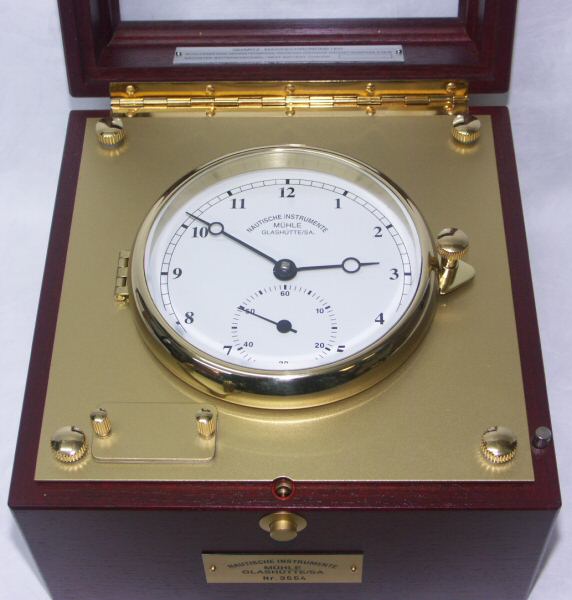
In 1990, the wall was no more with the fall of the DDR and the reunification of Germany caused VEB Glashütter Uhrenbetriebe to become Glashütter Uhrenbetrieb GmbH, a limited company. This firm is the legal successor to all of the previously founded companies belonging to Glashütte’s watch community.
Since the foundation by F.A. Lange of the first watchmaking company in the German town of Glashütte in 1845, Glashütte Original has always known how to meet its customers’ demands for high precision and outstanding quality. Joining the Swatch Group at the end of the last century, the brand continues to pursue this tradition today, creating mechanical masterpieces in accordance with the rigorous standards of the Saxon art of watchmaking.
The characteristics of the classic Glashütte Original design transform each mechanical movement into a miniature masterpiece epitomizing the German values of quality, precision and reliability. The Glashütte Original watchmaking company is one of the oldest in Germany to have always made its own models. It attaches great importance to human skill and expertise. While traditional methods have survived throughout the centuries, the brand also makes use of leading-edge technology in many ways, for example in manufacturing components and carrying out quality testing.
The brand’s masterpieces evoke fascination due to the passion and high precision that drive their development. Limited-edition models such as those dedicated to Julius Assmann and Alfred Hewig, and its timepieces decorated with Meissen porcelain dials are much sought-after by collectors.
9 Dragons on a Sandy Island
The work and vision of one man is still alive an well today - Ferdinand Adolph Lange has left his indomitable mark in the history of the town of Glashütte.
Present day Glashutte’s municipal coat of arms (existing in its present form since 1912) displays the history of the city in a blaze of yellow and red - a past first characterized by mining and then watchmaking. 
You see clearly the representation of the tools of mining combined with a watch face on the coat of arms.
In a nutshell you may wish to view some video here (that I posted some time ago) which will transport you on an intimate journey behind the walls of Glashutte Original manufactory – See and hear what it is like to be the personification of the words “Handmade in Germany”.
Youtube Video (Click on Link Below)
www.youtube.com
(Total of 5 parts, part 1 of 5 above - you can find all the parts on youtube)
Now I must bid thee farwell as it is way past my bedtime here in this sunny isle. I hope you have been entertained, enjoyed and had fun reading this report as much as I’ve had preparing it.
Till next time - History is made by individuals and innovators. May you be one of them!
Of Sight, Sound & Passion on a Sandy Island (Many Pics!)

Hey JerryW.. I think I found your home theater speakers!


Decks owns Sandy Island! Great Job!


Thanks for the report Doc


Fantastic report, DS.