Last last year I determined for myself that high frequency watches were definitely one of my collecting topics - and after taking some time to compile a list of high frequency calibres (those beating at 36.000vph or above (here:
www.watchprosite.com
the overview - and thanks to all who contributed)) I decided to jump into action and to enrich my collection in that direction. And when it comes to Hi-Beat vintage Grand Seikos, Japan is more or less the richest hunting ground. This meant an additional learning curve and much use of Google translation but eventually resulted in some interesting pieces (another one from that first foray has been the SCVL002 (here:
www.watchprosite.com
a quick overview)).
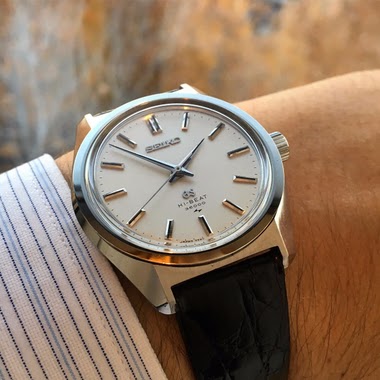
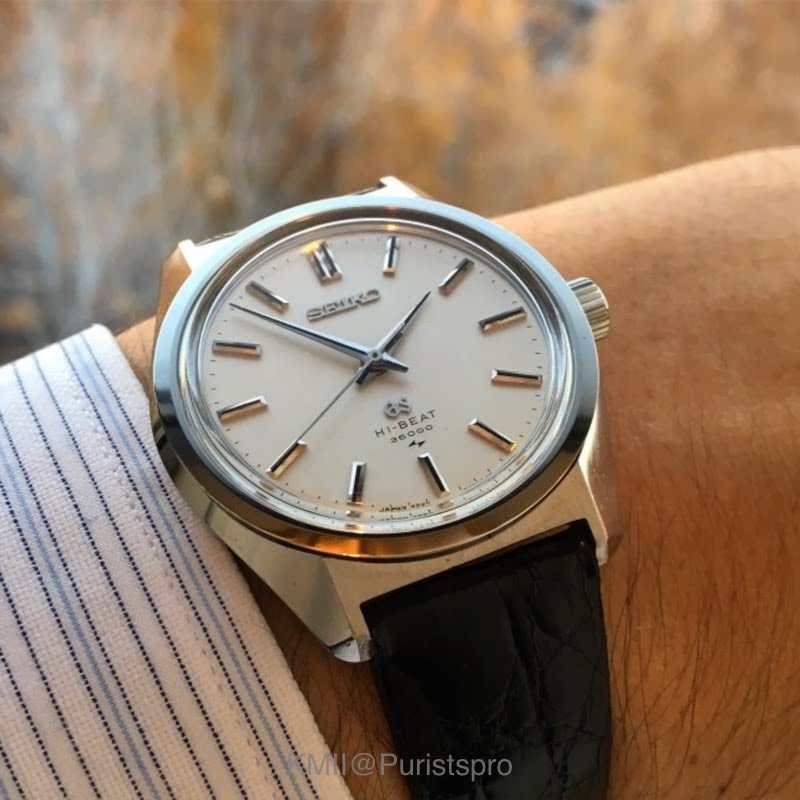
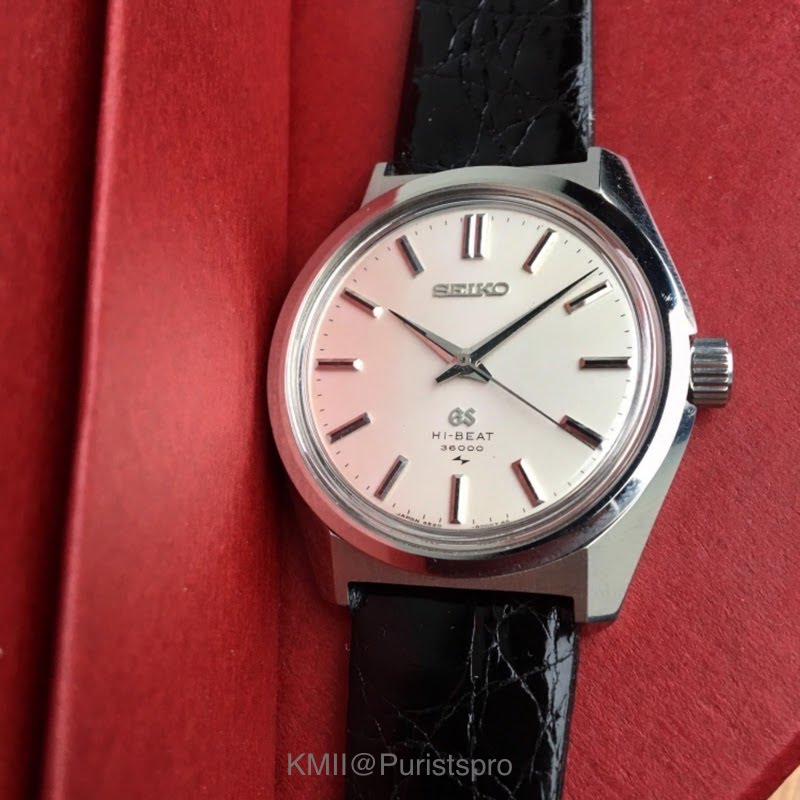
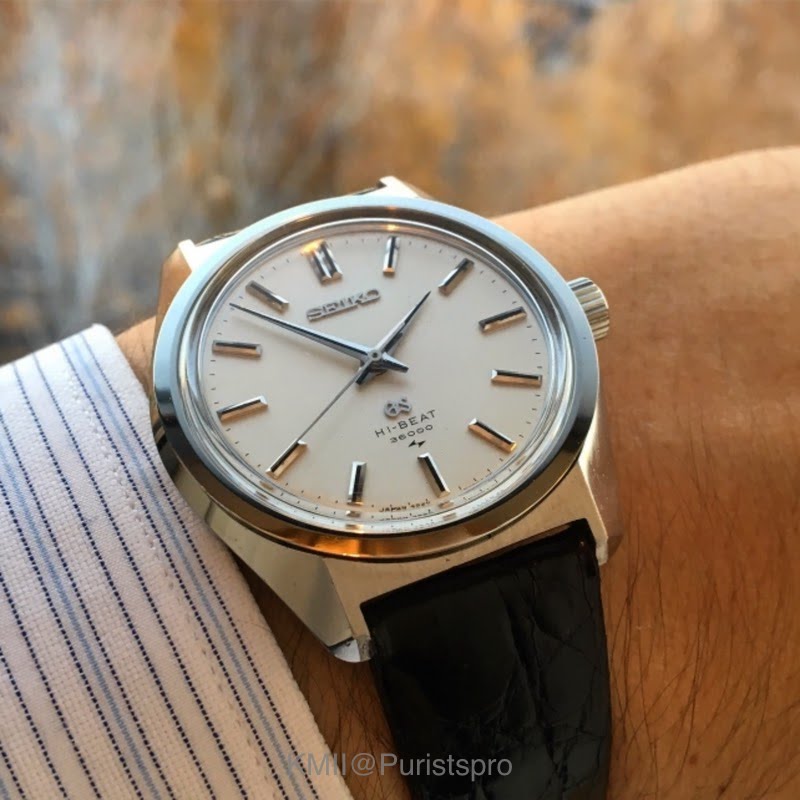
This brings me to my first vintage Grand Seiko and my second Grand Seiko Hi-Beat - the 45GS 4520-8000.
Brief history of Grand Seiko
While threads of Purists deciding on and acquiring their first Grand Seiko have been somewhat frequent of late, perhaps a brief run down of the vintage lineage of GS is in order for those who have not immersed themselves into the subject yet. The classical era of Grand Seiko lasted from 1960 to 1976, with the brand being resurrected in 1988 (with quartz movements) and then returning to mechanical calibers in 1998.
One further aspect to be mentioned before delving into individual model families is the place of production. Seiko - in an attempt to spread risk - operated two separate production facilities, which were partially in strong internal competition, namely Daini Seikosha and Suwa Seikosha.
The main lines from the classical era have been:
- Grand Seiko (sometimes referred to as 'First'), produced from 1960 to 1963, and featuring the 18.000vph Cal. 3180. These have been produced by Suwa
- 57GS, produced from 1963 to 1968, with the Cal. 430 and 5722A / 5722B movements, beating at 18.000vph and 19.800vph respectively and all featuring the date complication (Self-Dater). These have also been made by Suwa
- 44GS, produced from 1967 to 1968, with the Cal. 4420B, running at 18.000vph. These were the first GS models designed according to Taro Tanaka's 'Grammar of Design', or 'Grand Seiko Style', which was to become a typical design language for the brand. At the same time they were also the first Daini produced GS watches and were all without the date
- 62GS, produced from 1966 to 1969 (but official sales started after 44GS), being powered by a self-winding movement - the 19.800vph 6245A / 6246A - for the first time. These were Suwa manufactured and came as Date and Day Date versions
- 61GS, produced from 1967 to 1975, introducing a Hi-Beat (36.000vph) automatic movement, in the form of Cal. 6145 (date), 6146 (day date), 6155 (Special, date), 6156 (Special, day date), 6185 (A and B, VFA, date) and 6186 (VFA, day date) versions. These were Suwa produced and the line is one of the most prolific classical GS ones in terms of variations
- 45GS, produced from 1968 to 1973, with a hand wound Hi-Beat (36.000vph) movement, here with Cal. 4520 (no date), 4522 (date) and 4580 (VFA) versions and coming from Daini, like the 44GS
- 19GS, produced from 1968 to 1974, which were the first Grand Seikos designed specifically for women, with hand wound Hi-Beat (36.000vph) movements of Cal. 1944, 1964 and 1984 (VFA). These were the first 36.000 vph watches in 'women's size' world wide, and also produced by Suwa
- 56GS, produced from 1970 to 1975, the thinnest automatic GS automatic caliber of the era, beating at 28.800vph. The movement versions are 5641 (no date), 5645 (date) and 5646 (day date) and there have been many case varieties, including completely square ones. The 56GS has been produced by Suwa.
In addition to the main lines and movement variations, there have been many case varieties and materials (from platinum to stainless steel), so it is estimated that 142 distinct models existed in the vintage era.
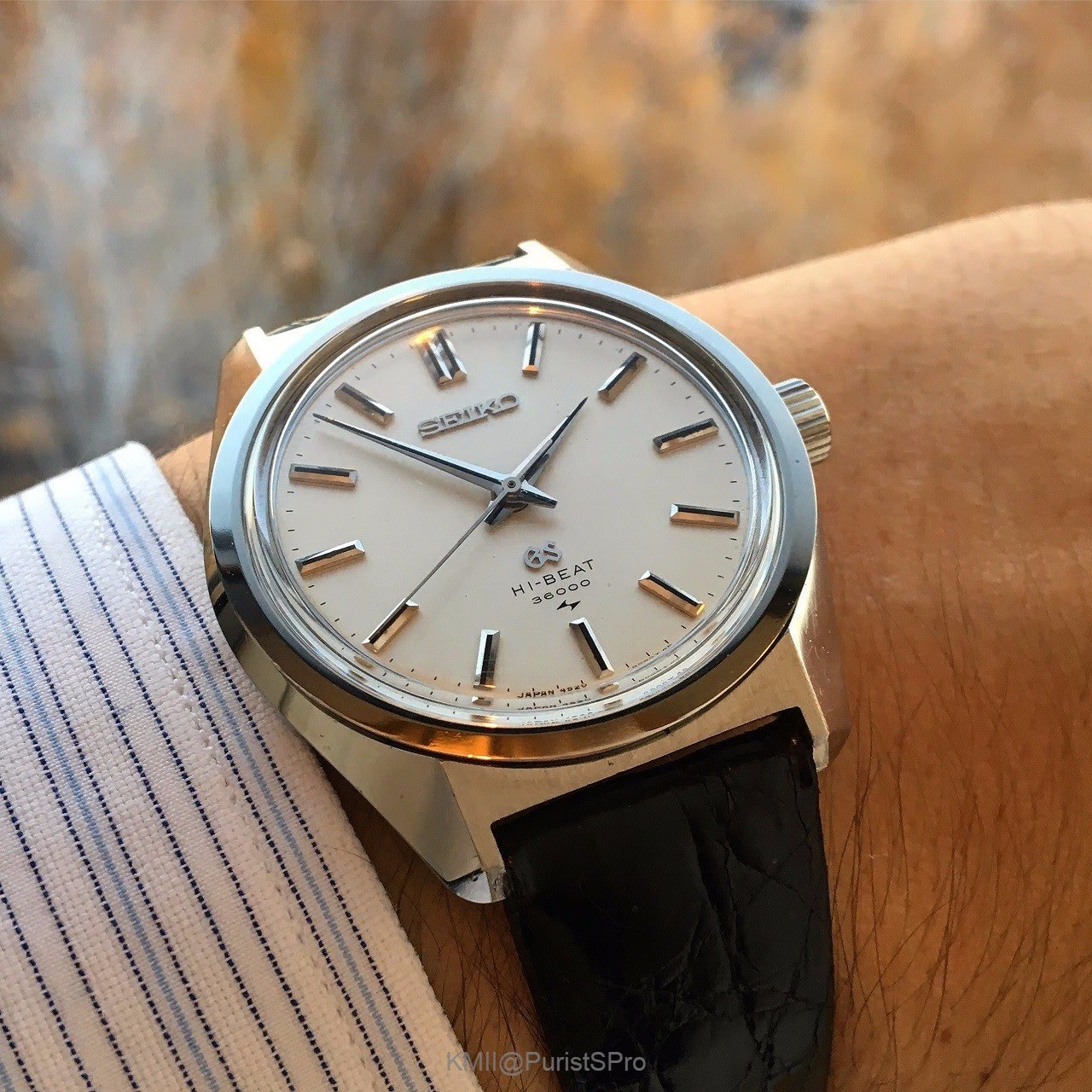
Grammar of Design
The 44GS line was the first time, where Seiko tried to establish a completely separate design identity for its Grand Seiko line, the so called 'Grammar of Design'. The design manifest was penned by Taro Tanaka and first rolled out with the 44GS line in 1967. The watches needed to be usable both in formal and informal settings and to adhere to the 'Nine Enduring Elements of the Grand Seiko Style'. These are:
- 1. Double width index at 12 o'clock
- 2. Multi faceted rectangular markers (very rarely roman or arabic numerals)
- 3. Highly polished bezel
- 4. Highly polished planes and two dimensional surfaces
- 5. Half recessed crown
- 6. Flat dial
- 7. Multi faceted hour and minute hands
- 8. Curved sideline
- 9. Reverse slanted bezel wall and case side.
The watches - cases as well as markers and hands - got zaratsu polishing, something that continues to this day. For a graphical representation, I can highly recommend https://www.grand-seiko.com/about/design/
45 GS
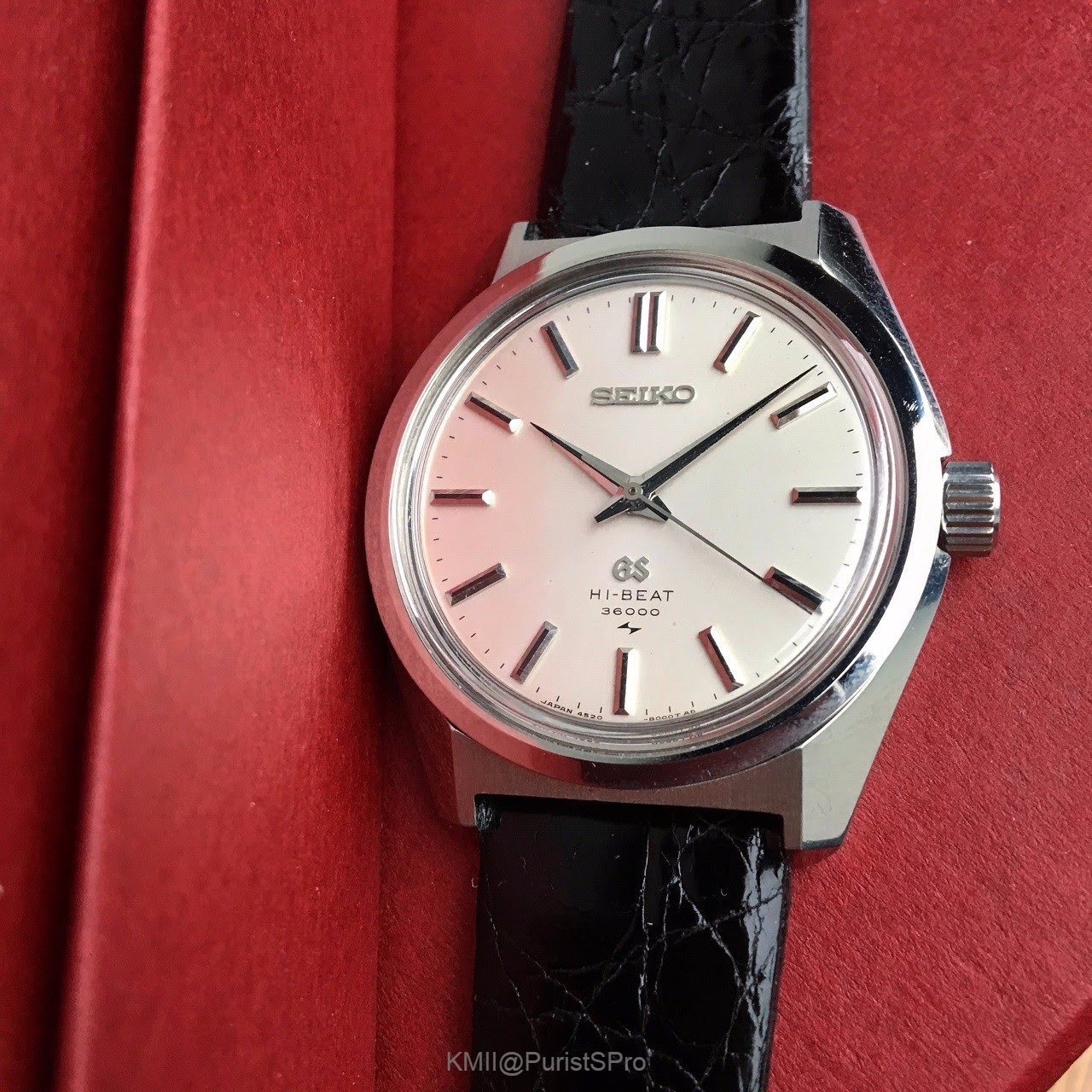
After the extensive introduction, I can finally get to my particular watch. While not quite the first Hi-Beat Grand Seiko (the 61GS slightly predates it), it was one I was after first, due to the hand wound movement - making it slimmer - and the non-date design, which I find particularly harmonious here.
The 45GS line - like the 61GS - featured many different case variations, from multifaceted (7000), somewhat oval (7010), curved rectangular with a round dial (8010) to the Grammar of Design shape in the 8000 case. Mine - the 4520-8000 - combines the most 'classical' case with the no-date 4520A movement.
The Nine Enduring Elements are all there in the design of the watch. The hands add a period typical black central line for hours and minutes and the hour markers are topped with a corresponding design. The dial is white and has acquired a wonderful patina in the form of a slightly creamy colour - which is fortunately completely uniform (I am personally not a fan of highly patinated pieces).
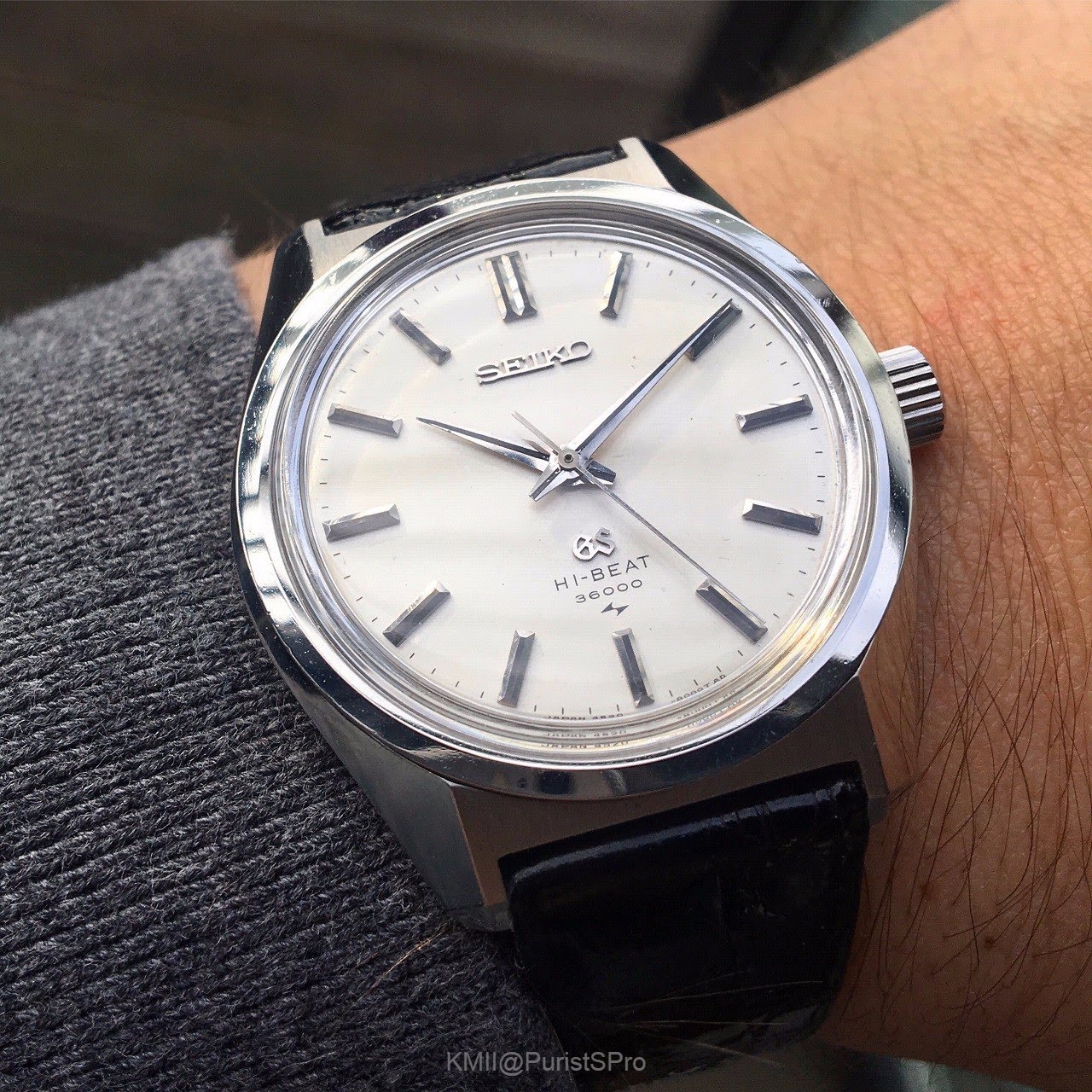
There's still sparkle in this almost 50 year old piece and I find the Grammar of Design look to be truly timeless - practically as fresh in 2018 as it has been in 1968. At the same time it remains a very understated watch and the conservative case diameter of 37mm paired with the thinner hand wound movement make it easy to disappear under your cuff. At the same time the harmonious proportions do not make the watch appear small, even in today's >40mm minimum case size times.
The movement immediately makes its Hi-Beat nature clear - with the smooth gliding of the seconds hand one the one hand and the frenetic sound that I find so mesmerising in high frequency watches on the other. I have not timed it properly yet (lack the required equipment) but it seems to keep excellent time, especially for a piece 50 years old. And as KIH has demonstrated, properly tuned it can still achieve accuracy rates of around 1 seconds deviation a day (here:
www.watchprosite.com
for Art's specimen).
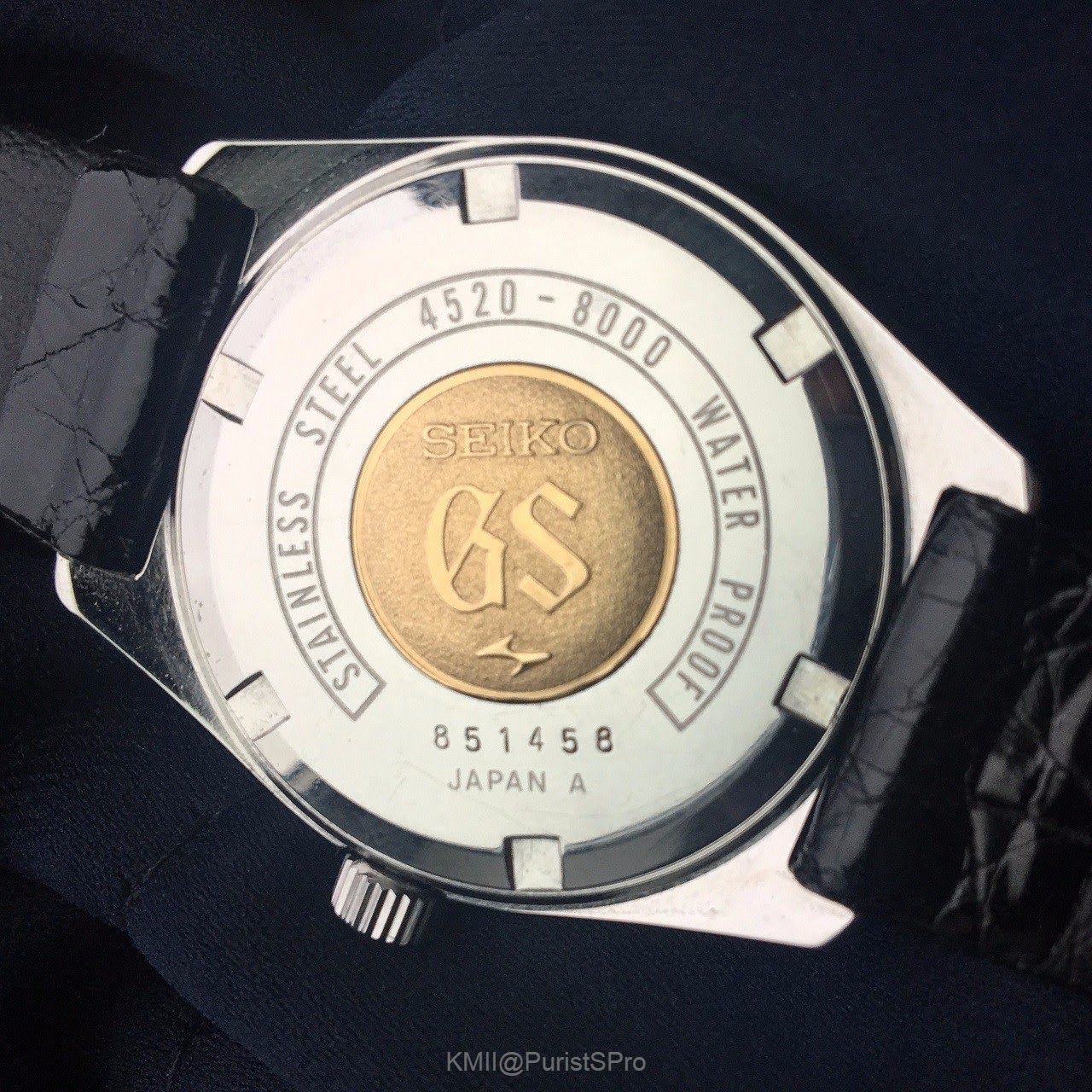
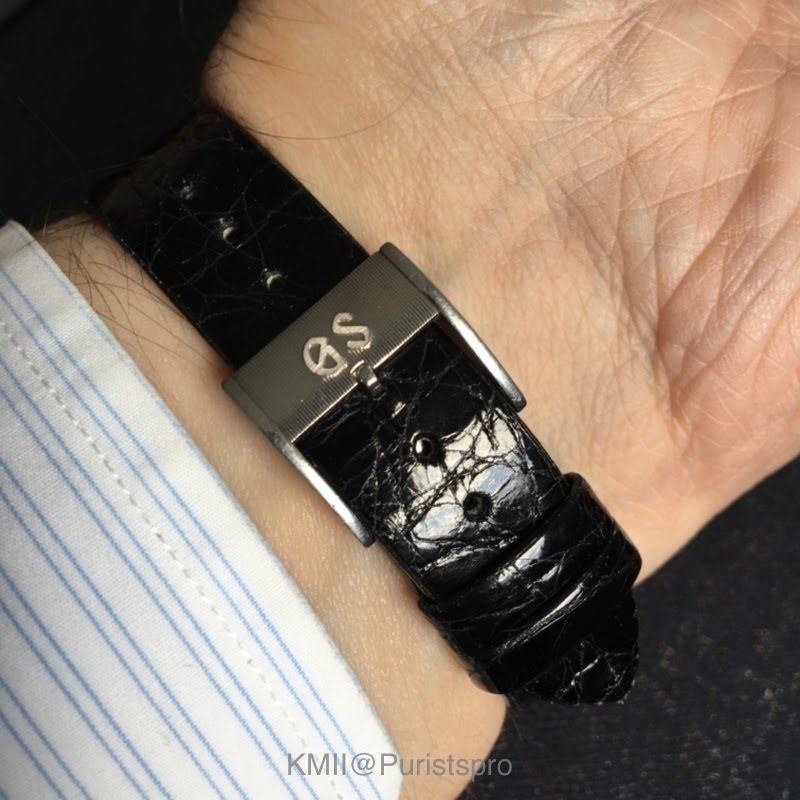
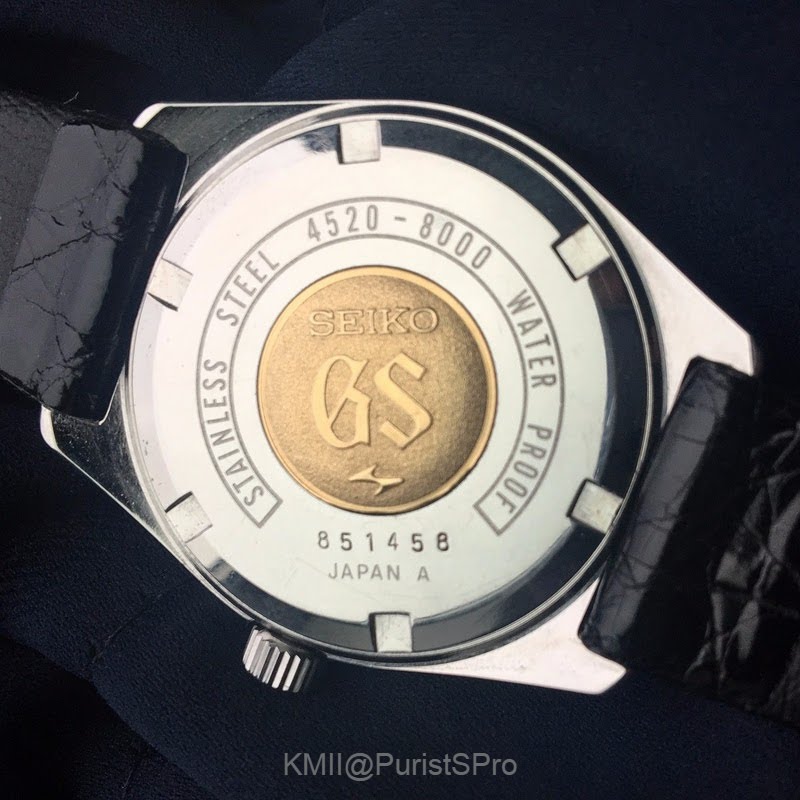
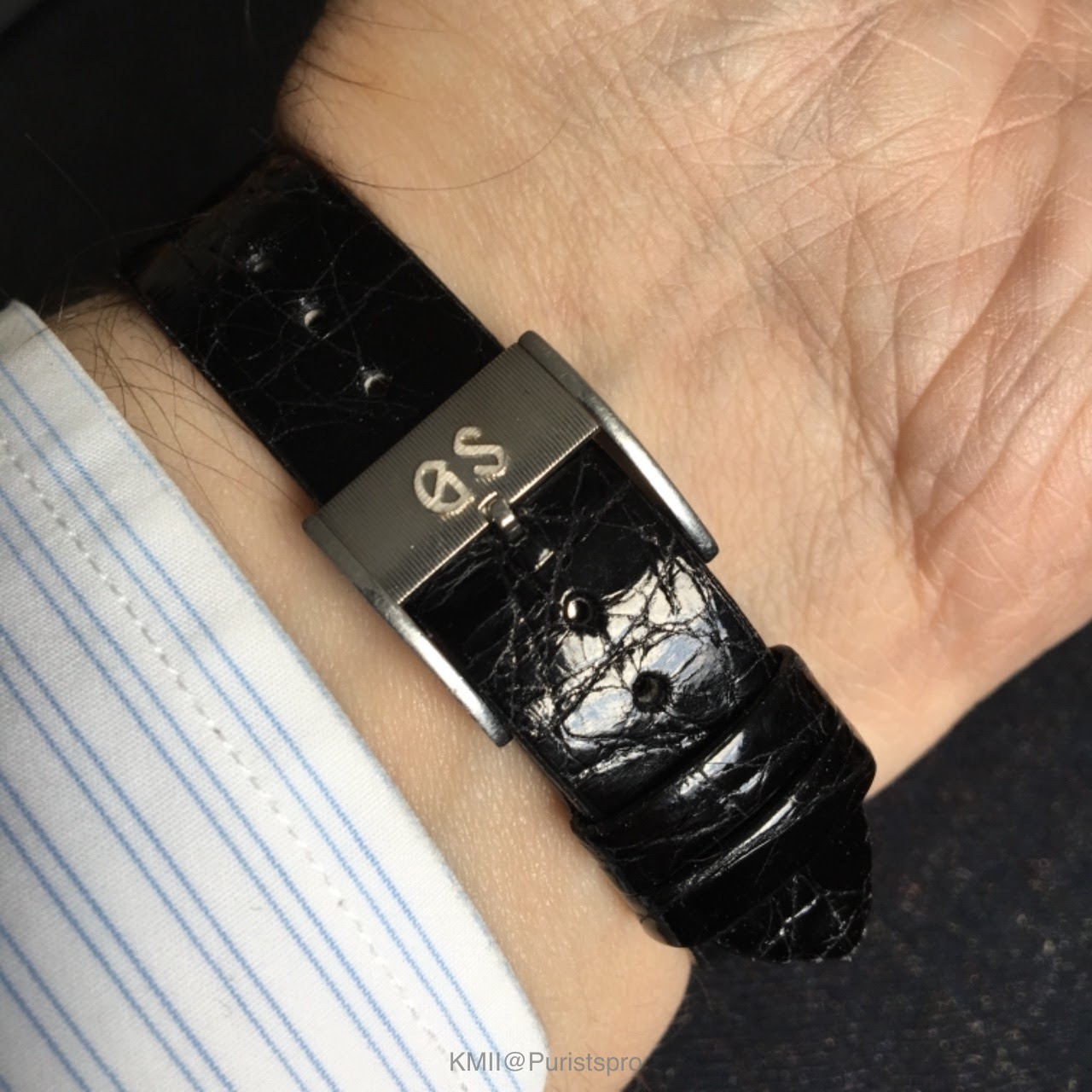
The GS medallion gracing the case back is in excellent shape - I wish I will be similarly well kept by the time I reach a comparable age. As an added bonus, the watch came with a period correct, original to the model pin buckle, something that will please perfectionists like our dear Blomman. Sadly no box or papers but then again there is yet more targets to hunt - maybe one day I shall bag a complete set for the ultimate challenge.
So where does it go from here? There is still a large variety of vintage GS Hi-Beat calibres and watches to look at. Of course a 4580 or 6185 / 6186 VFA (Very Fine Adjusted) or one of the just over 120 Observatory Chronometers from the chronometric competitions in Neuchatel or Geneva are the grails to reach for eventually. Perhaps even one of the rare as hen's teeth female 1984 VFAs. In the meantime I guess it will probably mean one of the 6145 or even better 6155 (Special) models. And the odd non-GS high frequency watch, in addition.
Thanks for reading!
Sources:
1. Grand Seiko Collector's Guide, available at: https://thespringbar.com/blogs/guides/grand-seiko-collectors-guide
2. Grand Seiko, available at: https://www.watch-wiki.net/index.php?title=Grand_Seiko
3. Vintage Grand Seiko Collection, available at: https://watchdxb.com/category/grandseiko/45gs/
4. Grand Seiko 4520-8000, available at: https://thegrandseikoguy.com/product/grand-seiko-4520-8000/
5. Grand Seiko Design, available at: https://www.grand-seiko.com/about/design/
EDIT: Have integrated Gerald.D.’s comments and made appropriate corrections - thanks!