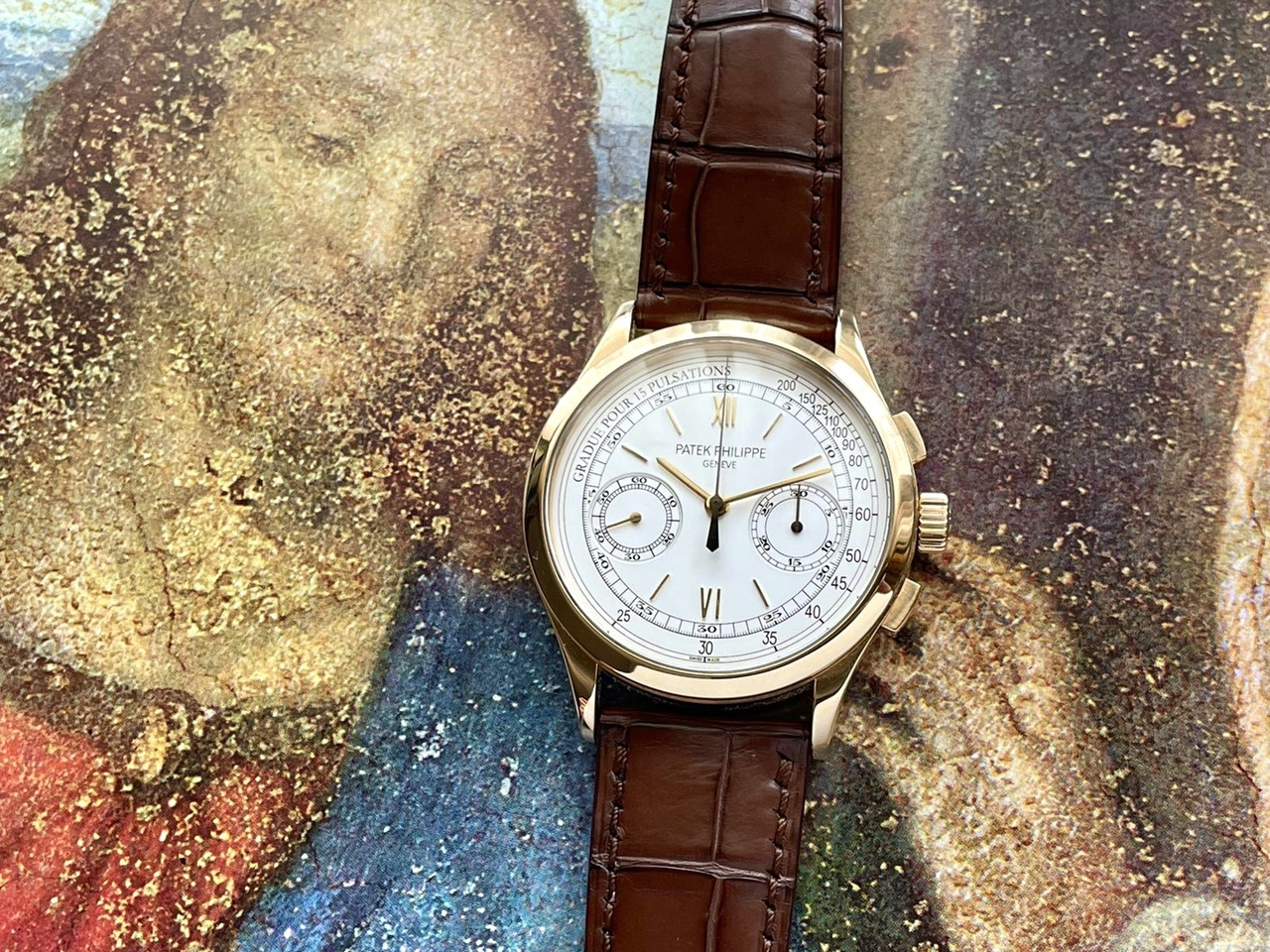
Mr.Gatsby embarks on a focused journey into Patek Philippe's manually wound chronographs, beginning with the often-underestimated Ref. 5170J. His initial impressions and rationale for choosing this particular reference offer a compelling perspective on its value, wearability, and historical significance, especially in contrast to more celebrated models like the Ref. 5070 and the Datograph. This article delves into why the 5170J, with its in-house CH 29-535 PS movement, stands as a milestone for modern Patek Philippe chronographs.
Took the plunge on this less than popular reference recently and have started to dedicate a portion of my time and finances on understanding Patek chronographs. The manually wound chronograph has been a favorite complication of mine for years. However due to my varied interest in watch collecting, I have yet to focus my energy on this segment till now.
Many years ago I picked up a Roger Dubuis Hommage H40, and subsequently in recent years a Datograph. I’ve decided to start from the later iterations of manually wound Pateks and then make my way back, hence the ref. 5170j.
Some quick key points:
1. Classic looking aesthetics paying homage to the ref. 1463
2. Proportions and wearability are clearly there
3. First in-house chronograph movement CH 29-535 PS
There has been numerous comparisons made on the ref. 5170 versus other chronographs, most notably the 5070 and the Datograph. And while the comparisons arguably tip in favor of both the ref. 5070 and Datograph, I still ended up buying one.
The reasons are as such:
1. It is a real bargains versus a vintage ref. 1463, or ref. 130
2. Wearability wise it is (especially in my case) probably better compared to other larger manual wound chronographs, making them less classically proportioned
3. I really appreciate the movement fwiw. Aesthetics aside. The operation of the chronograph is superfluous and buttery. Against the Datograph (superfluous but there is a firmness and rigidity to it) I wouldn’t say it’s any lesser.
4. In the history of Patek, I believe this reference is sort of a milestone reference, being the first modern chronograph to sport Patek’s first in-house movement. For that, I do appreciate it.
5. Against the other iterations (P version aside), I feel that the J is most faithful in terms of paying homage to the vintage, relative to the G and R iterations.
I would love to experience the 5070 some day, and perhaps even the vintage ref. 1463. As quoted previously, the 5070 in Porsche terms is akin to a 993. If so, the 5170 to me is like a 997. While the 993 is more collectible indefinitely, the 5170 can be enjoyable to “drive” too due to its wearability.
Some pics:


I welcome everyone to chime in with their thoughts on this reference. It would be a great pleasure to discuss, learn, experience and appreciate these watches with the community.
BR,
Gatsby
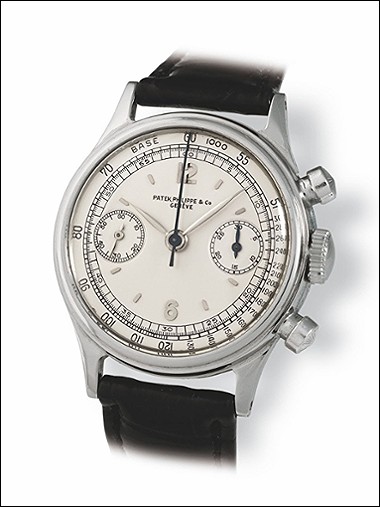
About the Patek Philippe Complications Ref. 1463
The Patek Philippe reference 1463 is a significant chronograph model, notable for its water-resistant case design, often referred to as the "Tasti Tondi" due to its distinctive round chronograph pushers. This reference stands out as one of the few Patek Philippe chronographs of its era to feature a screw-down case back, a design element that provided enhanced protection against dust and moisture, distinguishing it from many of its contemporaries with snap-on backs. It represents a blend of traditional chronograph aesthetics with a more robust construction.
This reference typically features a case diameter of 33mm to 35mm, though some examples can be found up to 38mm, crafted in various precious metals including yellow gold, rose gold, and stainless steel. It houses a manual-winding chronograph movement, specifically the Caliber 13''' CHR, which is based on a Valjoux ébauche but highly finished and modified by Patek Philippe. The crystal is typically acrylic, and the dial configurations vary, often featuring two subdials for constant seconds and a 30-minute counter.
For collectors, the reference 1463 is highly sought after, particularly examples in stainless steel or rose gold, which are considerably rarer than those in yellow gold. Its robust construction and classic chronograph layout appeal to those who appreciate vintage tool watches as much as haute horlogerie. The "Tasti Tondi" pushers are a defining characteristic, contributing to its unique identity within Patek Philippe's historical chronograph offerings and making it a cornerstone for many serious collections.
Specifications
- Caliber
- CH 13-130
- Case
- 18k white gold
- Diameter
- 33mm
- Dial
- Silver
- Water Resist.
- 30m
- Crystal
- Acrylic
About the Patek Philippe Ref. 5070
The Patek Philippe reference 5070, part of the Complications collection, marked a significant return for the brand to large-format chronographs. Introduced in 1998, it was the first non-perpetual calendar chronograph produced by Patek Philippe since the reference 1463, which ceased production in the early 1960s. Its design drew inspiration from a unique Patek Philippe aviator's watch from the 1940s, characterized by its prominent case and dial layout, yet reinterpreted for a contemporary audience. This reference established a new aesthetic direction for the brand's chronographs, moving towards more substantial case dimensions.
The watch features a 42mm case, initially offered in 18k yellow gold, housing the manual-winding Caliber CH 27-70. This movement, based on a Nouvelle Lémania ébauche, was extensively finished and modified by Patek Philippe, meeting the brand's stringent quality standards. It provides a power reserve of approximately 55 hours. The dial, in this specific configuration, is black, protected by a sapphire crystal, and the watch is water-resistant to 30 meters. The fixed bezel frames the dial, and the watch is typically fitted with a leather strap.
Reference 5070 appeals to collectors interested in modern Patek Philippe chronographs that combine traditional movement architecture with a more contemporary case size. Its limited production run and the subsequent introduction of variants in other precious metals contribute to its collectibility. The reference represents a distinct period in Patek Philippe's chronograph history, bridging vintage inspirations with a new era of larger watch designs.
Specifications
- Caliber
- Cal.CH 27-70
- Case
- 18k yellow gold
- Diameter
- 42mm
- Dial
- black
- Water Resist.
- 30m
- Crystal
- Sapphire