Innovation
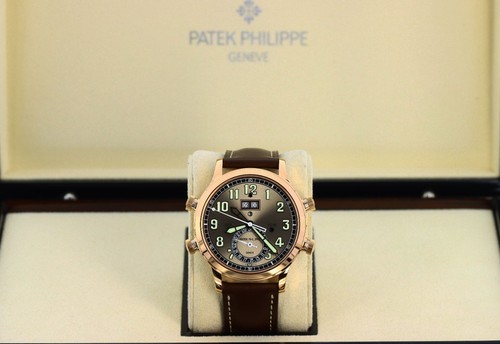
quattro's comprehensive overview of Patek Philippe's "Advanced Research" collection offers an invaluable look into the brand's commitment to horological innovation. This article meticulously details the six groundbreaking references that emerged from the department, showcasing Patek Philippe's pioneering work in new materials and technologies. For collectors and enthusiasts, understanding these advancements is crucial to appreciating the evolution of modern watchmaking.


Review of the 5350R-001 by Tim Mosso
Review of the 5550P-001 by Tim Mosso
Review of the 5650G-001 by Tim Mosso
History of Patek Philippe Advanced Research Watches | Perpetually Patek by The 1916 Company
Patek Philippe's Advanced Research collection represents the manufacture's most ambitious horological laboratory, launched in 2005 with the inaugural Ref. 5250 Annual Calendar. This experimental series serves as a proving ground for breakthrough technologies that eventually filter into the brand's regular production lines, establishing Patek Philippe as a leader in contemporary watchmaking innovation rather than merely a guardian of traditional craft.
The technical achievements showcased across these references demonstrate Patek Philippe's commitment to materials science and escapement development. The collection introduced revolutionary components including the Silinvar escape wheel (2005), the Spiromax balance spring (2006), the Pulsomax escapement (2008), and the Oscillomax ensemble (2011). Each iteration pushed the boundaries of silicon-based components and anti-magnetic properties, with innovations like the Spiromax mechanism achieving enhanced chronometric performance and the fortissimo sound amplifying system redefining minute repeater acoustics.
From a collector's perspective, the Advanced Research pieces occupy a unique position in Patek Philippe's hierarchy—simultaneously experimental and highly coveted. Limited production numbers and the historical significance of each technological milestone have created strong secondary market performance. The progression from the early calendar complications to complex mechanisms like the Aquanaut Travel Time Ref. 5650 and the recent Minute Repeater Ref. 5750 demonstrates how this collection bridges Patek Philippe's conservative reputation with cutting-edge horological research.
5550 due to its thinness and brushed dial ! So great ! "Terminator" looks like an odd ball but so sought after !🤣 Thanks for a very good post 👍
And I easily believe that the 5550P is wonderful! "Terminator", well... is too Terminator-looking for me ! And I like the design of the Minute Repeater quite a bit! Best, Emmanuel
I always liked the 5450p, the addition of platinum case and dial color and the size. Very sharp.
Best, Emmanuel
I have always been partial to the Advanced Research Aquanaut Travel Time. I had forgotten about the Minute Repeater but seeing these photos reminds me just how amazing it is. Those are my top two but really all of these pieces are winners. Thanks again for a terrific post. M4
This thread is active on the Patek Philippe forum with 27 replies. Share your knowledge with fellow collectors.
Join the Discussion →