
Complications
Miranda's comprehensive post on Patek Philippe minute repeaters illuminates why this complication is revered as the pinnacle of watchmaking. The article meticulously details the historical evolution, intricate manufacturing process, and acoustic challenges involved in creating these horological masterpieces, offering a deep dive into Patek's commitment to sound perfection.


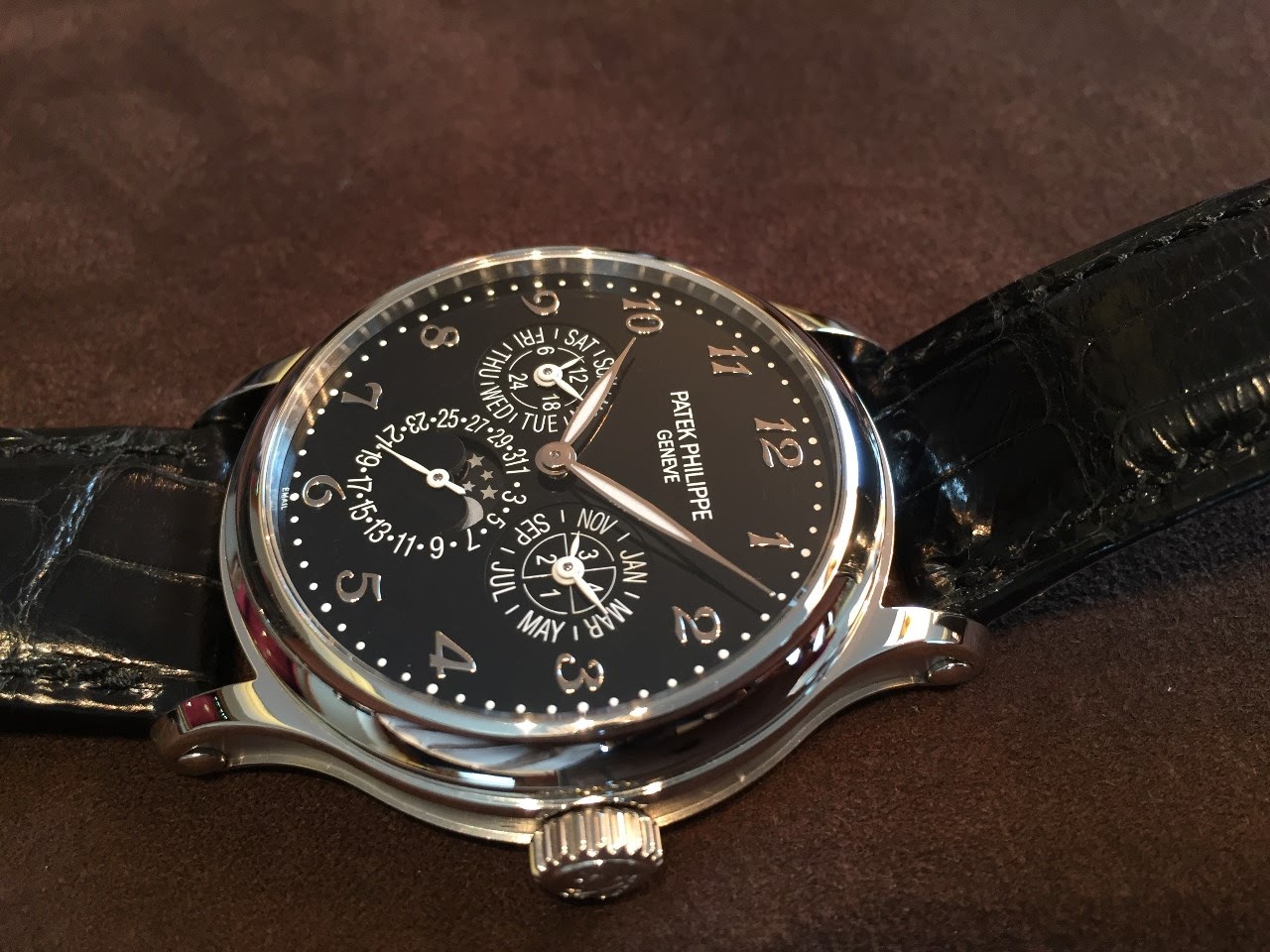
Quite rightly, collectors revere the Minute repeater or “striking watch” as the nadir of watch making know-how. Initially invented in the 17th century, these early crude repeaters, often known as “dumb repeaters” were made so that one could tell the time in the dark or in a discrete manner whilst holding the pocket watch in one’s hand. In a sense they were the luminova of the 17th century. Gradually the mechanism was refined to produce quarter, half quarter and five minute repeaters.
The art of the minute repeater really came alive with the genius watchmaker Abraham Louis Breguet. At the end of the 18th century he designed a mechanism that would be the blueprint of all modern repeating watches using wire gongs. The new mechanism would allow the timepiece to strike hours, quarters and minutes. Further development resulted in the ultimate configuration we see today by the late 19th century.
In a typical Patek Philippe striking mechanism there over 100 unique components taking between 200 and 300 hours of work to manufacture. But if the sound is less than acceptable, it may take another 100 to 200 hours to fine tune the striking mechanism.
This labour intensive process is a direct result of the complexity involved in the manufacture of the gongs. They are challenging to fine-tune and the watchmaker has to be acoustically proficient to judge the sound and have the patience of a saint.
Today there are two gongs used, each of which is hand adjusted to yield impeccable harmonic resonance. Striking these gongs are hammers, two of them, one for each gong. Each hammer is meticulously crafted and finished to match with the gong in order to bring about the best sound. Each hammer is controlled by a spring mechanism. The strength of this spring is critical and needs to be precisely comparative to the hammer or the sound can be drastically diminished, indistinct or too strong.

Cathedral gongs
So far, the minute repeater mechanism described here is what is customarily named as classic gongs. At the beginning of the new millennia, Patek Philippe took on the unbelievable mission of improving on the classic gong to give a longer lasting sound and a richer tone. This could only be achieved by increasing the length of the gong. Now bearing in mind the confined space within a wristwatch and the already arduous task of trying to reach the faultless tone, this new undertaking would take the realms of the potentials of striking watches to the extreme.
In early 2000, Patek achieved the near impossible and developed a new striking mechanism known as the “cathedral gong”. This new mechanism achieves its incredible sound by the use of an exceptionally long gong which is nearly two circumferences in length. They are twice as long as a classic gong. This is a prodigious feat because as the gongs are attached at one end, it is particularly challenging to wrap them around the movement twice without them touching the case, the movement, or each other - thus adversely affecting the sound.
This problem was solved by utilising a helical arrangement of the two gongs coupled with recesses in the case. This design allows enough ‘air’ for the two cathedral gongs so they can vibrate freely along their full length and generate a clear and audible reverberating sound.
The enhancement in technical prowess did not just stop at this new arrangement. The steel used in the production of the gongs was a special alloy that Patek spent years perfecting.

History of Patek Philippe minute repeaters
Patek Philippe manufactured its first minute repeater wrist watch in 1924. The caliber 10’’ movement was housed in a tonneau case with a beautiful Breguet dial. It was followed in 1925 by a series of pieces with a new movement 12”’, usually in rectangular or tonneau cases, culminating in the 1939 ref 541 mvt no. 198.340 with perpetual calendar, already featured in the forum. Amongst these exquisite early repeaters was a special commission from the famous Patel collector Henry Graves Jr. This was a superb piece featuring a cushion case and Breguet dial and provided the inspiration behind the glorious ref.5013.
During the mid-1940 the illustrious references 2419, 2421 and 2524 were produced. These have become legendary pieces in their own right, fiercely sought after at auction when they do appear.


Complications
The sound quality in minute repeater can be affected
additional complications. The more the complications the less space for the
sound to reverberate from and more material is available for absorbing the
sound. This makes the production even more complex, that’s even before you
factor in the complexity of the additional complications. It’s no wonder that
today Patek Philippe super complications are so hunted after and celebrated.
The first super complication was the ref 541. It was not till the ref 3615 introduced in 1982 that we saw another complicated minute repeater.
For the 150th anniversary celebrations, two minute repeaters were launched, the delightful ref. 3979 and perhaps one of my favourite Patek’s of all time, the extraordinarily impressive ref. 3974.
Today we are spoilt with references such as 5078p, 5539g and my favourite of the modern collection the 5374p.
Each combines the magic and DNA of the vintage lineages whilst being contemporary and up to date. Despite the addition of complications, the sound quality is paramount. With this in mind the ‘Quality & Homologation’ department has developed a technique for analysing the minute repeater sound to a standard whereby it has to pass the most stringent test of all….the president’s ear. It pays testimony to the high standards and ethos of the company that even today, the president checks every minute repeater for sound quality.

175th Anniversary

Ref 5078

Ref 3615
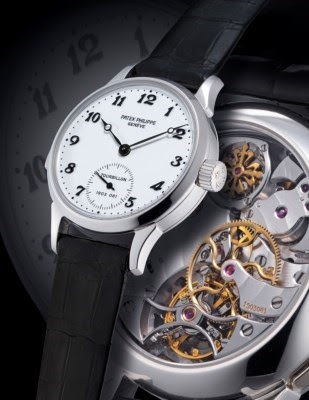
Ref 3939

Ref 3974

The Patek Philippe Reference 2419 is a minute repeater, distinguished by design elements intended to enhance legibility and user interaction. These include an oversized trigger and, in some examples, an oversized crown, paired with blackened hands and numerals. This reference represents a period when Patek Philippe produced highly complicated timepieces with a focus on practical usability for the wearer. It is a notable example of the brand's minute repeater production from the mid-20th century.
This specific example of the Reference 2419 was produced in 1946. It features a case that was retailed through Cartier New York on April 21, 1950. The design emphasizes clarity, with its blackened hands and numerals providing contrast against the dial. The oversized trigger facilitates activation of the minute repeating mechanism.
For collectors, the Reference 2419 is significant as a Patek Philippe minute repeater from the post-war era, particularly those retailed by prominent jewelers like Cartier. Its design choices for improved legibility and handling make it a distinctive example within the brand's complicated watch offerings. The known production and retail dates provide important provenance for this reference.
......superb review. I think I see minute repeaters as the epitome of watch complication. When i was at the manufacurer, we had an opportunity to listen to a range of different minute repeaters. It was fascinating to hear how they differed. For example, a MR in platinum would definitely not have as sweet a sound as in gold. Platinum, being a denser metal, produced a more deadened or muted sound. Don't get me wrong, it was still exquisite, but just not as sweet. Similarly, when a MR had a multitu
With a great P and a great H. As Baron said, it is very interesting and always surprising to notice how different they can sound, even in the same reference and metal. A summit of poetry. 3939 for me, please. Best, Nicolas
Minute repeater is, by far, my favourite complication. It’s pure poetry for me as it gives another dimension to the time. May I complete your review by the Patek recently sold for Only Watch. Here the link: Best wishes Alkiro
Patek repeaters are not all created equal. Sounds like the best is the latest ladies' repeater. Let's not forget Chopard's crystal Full Strike which won this year's GPHG. Not to mention the recent and 'affordable' JLC Cal 942.
Not sure I understand? This is a review of the Patek Philippe minute repeaters on the Patek Philippe forum?? Jim, not sure I understand?
Says that Patek's repeaters are the pinnacle of watchmaking - yet Jim is saying that the Chopard is more innovative and sounds better than the Patek repeaters. Which I think many would agree with. I still prefer the classic styling of the Patek myself, but Jim makes a fair counterpoint
This thread is active on the Patek Philippe forum with 29 replies. Share your knowledge with fellow collectors.
Join the Discussion →


