Vintage
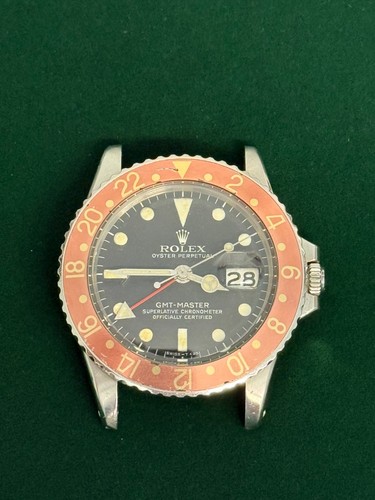
Amanico brings to light a fascinating Rolex GMT-Master Ref. 1675 with an extraordinary provenance, connecting it to historical figures like Che Guevara and Fidel Castro. This post delves into the watch's journey through the hands of revolutionaries, highlighting how a timepiece can become intertwined with significant historical events and personal legacies. The discussion explores the intriguing narrative of this specific 1964 GMT-Master and its auction history.
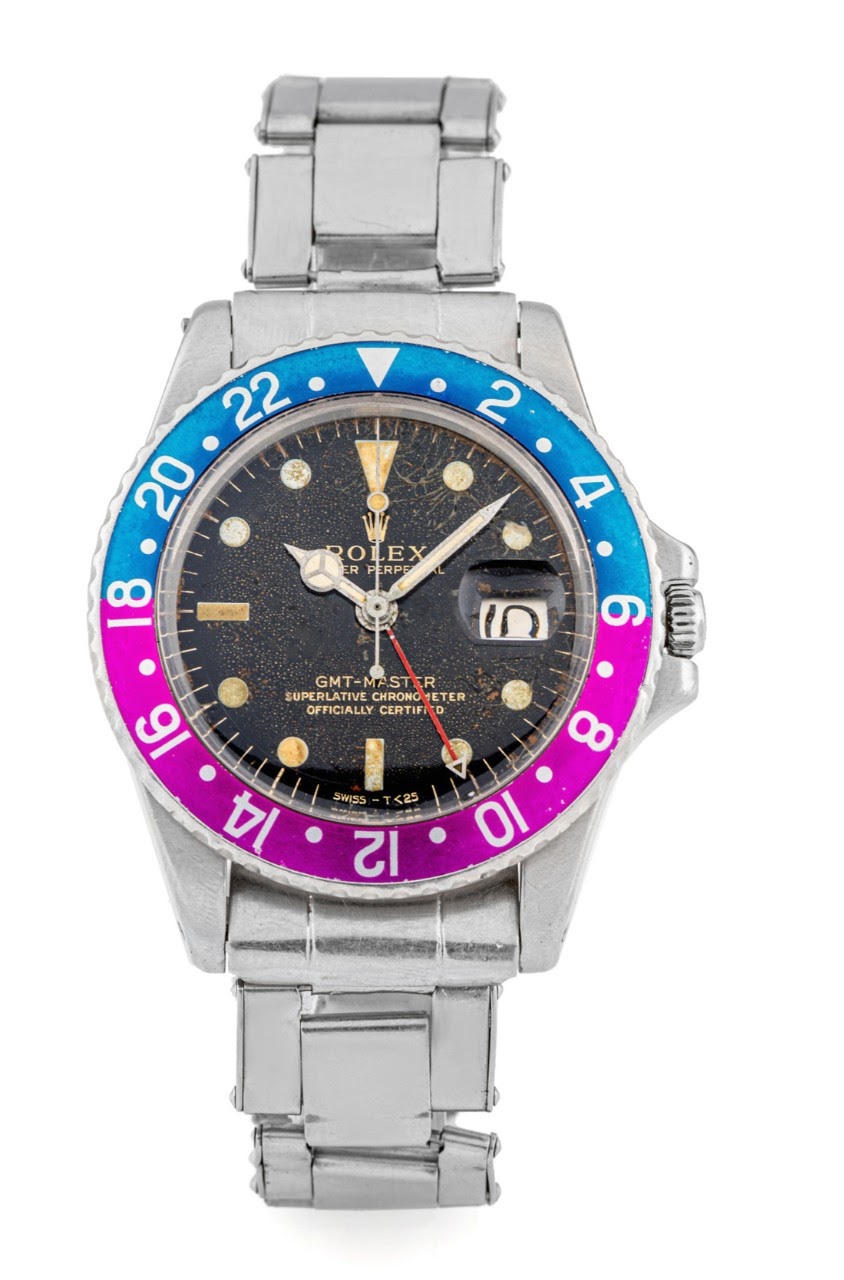
Property of General Eduardo Galindo Grandchant/Carlos Coello “Tuma”
According to General’s Grandchant’s wife, this 1675 was the former property of the right-hand of the “Che” Guevera, Carlos Coello Tuma, as he was assisting him in his revolution in Congo and Bolivia. Tuma organised an ambush of the Bolivian army in El Rio Piray in June 1967 where, facing stronger than expected resistance from the Army, was mortally wounded. Realising his serious condition, he handed over his Rolex watch to Rene Martinez Camayo (so called “Arturo”), entrusting him to give the watch to the Che in order to be given to his son, as was the tradition of guerrieros.
Interestingly Arturo was executed the day before Che Guevara (October 9th, 1967) and one can safely assume that he had handed over the watch to the Che for safe-keeping after the death of Tuma. The fact remains that upon his execution, the Bolivian military shared among them shared the Che’s belongings (his own watch as well as the GMT from Tuma) as history clearly recalls 2 Rolex watches being recovered upon his death. While the whereabouts of the GMT-Master of Che Guevara remains controversial (some say CIA agent Felix Rodriguez has it, Gary Prado says he sent it back to the family via the Cuban Embassy, see below), the second watch recovered by the General Grandchant was the lost GMT of Carlos Coello Tuma.
Another key important person in this story is Gary Prado Salmon, who was, at the time a young Bolivian US-trained 2nd Battalion ranger and upon capture of the Che, spent many hours in his presence. In a recent interview by the Financial Times (“It’s over, How I captured Che Guevara” by Clare Hargreaves published on October 6th, 2017) he says : Che also had two Rolex watches, one on his wrist, one in his pocket which he told me had belonged to ‘Tuma’, a guerrilla who had died a couple of months before. He said the whole Cuban group had been given watches by Fidel Castro as a farewell gift.
During the night I looked at Che’s diaries and asked him about some of the things he said in them. A bit later Che told me that my soldiers had taken his Rolex watches, so I called them and told them to give them back. I handed them to Che but he said, ‘Tomorrow another soldier will take them off me, so please keep them for me.’ He took a small stone from the floor and scratched a cross on the back of one of the watches. ‘That’s mine,’ he said, handing it to me. After Che was dead I took it to my battalion commander but he told me to keep it. I kept it until 1985, when we re-established democracy in Bolivia and restored diplomatic relations with Cuba. I sent it to his family via the Cuban embassy.
While we can safely assume that this GMT is the former property of Carlos “Tuma”, it remains a historically important timepiece for both being a Rolex gifted by Fidel Castro to a few select close friends/fighters of the Che and also for being on of the watches held by the Che until his last moments. Interestingly upon close inspection the watch appears to have a X scratched on the outer caseback, so was there a mix-up of the 2 watches or is it just by pure random luck ? No one will ever know for sure but it is, without a doubt, one of the most important Revolutionary Rolex watches ever to appear at auction.
Carlos Coello, “Tuma” (n. December 2, 1940 near Manzanillo, Cuba; m. June 26, 1967 in Bolivia) was a Cuban guerrilla and military who fought under Che Guevara in the Cuban Revolution, the Congo and Bolivia where he died in combat. He reached the rank of sergeant of the Cuban army.
By mid-1966, Che had sent Bolivia to two of his trusted men, Harry Villegas (“Pombo”) and Carlos Coello (“Tuma”), where José María Martínez Tamayo (“Daddy”) was already, organizing the contacts and analyzing the situation. Then they would join the group of fighters, along with other key men of Che Guevara, Eliseo Reyes, Juan Vitalio Acuña (“Vilo”), Jesús Suárez Gayol (“el Rubio”), Israel Reyes Zayas (“Braulio”), Rene Martínez Tamayo, Orlando Pantoja Tamayo (“Olo”), Alberto Fernández Montes de Oca (“Pacho”), Aniceto Reinaga Cordillo (“Aniceto”), Octavio de la Concepcion de la Pedraja (“Moro”), Dariel Alarcón (“Benigno” ) and Tamara Bunke (“Tania”).
The guerrilla group took the name of the National Liberation Army (ELN) of Bolivia with support sections in Argentina, Chile and Peru. Armed clashes began on March 23, 1967.
Only five men survived. Carlos Coello died in combat on June 26, 1967, in a battle on the Piray River. He was buried clandestinely near the place of his death in a place called Lepería. A few weeks later, on October 9, Che Guevara would die shot illegally in La Higuera.
His body was found on June 21, 1996 and has been placed in the Ernesto Che Guevara Memorial in Santa Clara
He was married to Esmérida Ferrer and had a son he did not get to know and whom his wife named Tuma. Before leaving he had told his wife: Where Che goes, I go. Where Che dies, I die
Bibliographie Anderson, Jon Lee (1997). Che Guevara. Una vida revolucionaria. Barcelona: Anagrama. ISBN 84-339-2572-0.
René Martínez Tamayo, «Arturo» (n. ---- of 1941 in Mayarí, Cuba; m. October 8, 1967 in Quebrada de Yuro, Bolivia)
On October 8, 1967, the last seventeen survivors of the original guerrilla group were caught in the Quebrada de Yuro, where intense combat was fought, in which René Martínez Tamayo was killed in combat. On that occasion Che Guevara was injured to be killed the next day, in the nearby town of La Higuera (Bolivia).
His remains were exhibited in Vallegrande and then buried clandestinely in the same mass grave where Ernesto Guevara and five other guerrillas were killed in those days. They remained lost until June 28, 1997, when they were found near Vallegrande. They are currently in the Memorial to Ernesto Che Guevara, in Santa Clara, Cuba.
Excerpt from the diary of “Che Guevara” in Bolivia
JUNE 26
Black day for me. It seemed that everything would go smoothly and I had sent 5 men to replace the ambushes on the road to Florida, when gunshots were heard. We went quickly on horses and found a strange spectacle: in the midst of total silence, four bodies of soldiers lay in the sun, on the sand of the river. We could not retrieve the bodies as we did not know the enemy’s position; It was 5 pm and we waited for the night to carry out the rescue: Miguel warned us that movements could be heard to his left, Antonio and Pacho went but I gave orders not to shoot blindly. Almost immediately there was a shooting that was generalized by both parties and I gave the order to withdraw, since we were in a dangerous posture. The withdrawal was delayed and the news of two wounded arrived: Pombo, in one leg and Tuma in the belly. We took them quickly to the house to operate them with whatever there was. Pombo’s wound was superficial and only his lack of mobility will bring headaches, Tuma had his liver punctured, he died during the operation. We were inseparable companion for many years, of a faithfulness to any trial and whose absence I feel from now almost like that of a son. Before his last breath, he asked for his watch to be delivered to his son, he took it off and gave it to “ Arturo”. That gesture reveals the will that it would be handed over to the son he did not know, as I had done with the watches of previously dead companions. I will wear it for the entire war.
Bibliographie Diario del Che en Bolivia Ernesto Che Guevara; Siglo XXI Editores Mexico; Stated First edition (Colophon) edition (January 1, 1968)
Credit: Antiquorum.
The GMT-Master reference 1675 is a significant model in the brand's history, representing an evolution from earlier GMT-Master references. It was produced for an extended period, allowing for numerous dial, bezel, and hand variations throughout its production run. This reference is notable for its introduction of crown guards, enhancing the watch's robustness and contributing to its distinct profile. It solidified the GMT-Master's design language, which would influence subsequent generations.
This reference features a 40mm case, available in stainless steel, yellow gold, or a two-tone combination of steel and yellow gold. It is powered by the automatic Caliber 1575, a chronometer-certified movement known for its reliability and a power reserve of approximately 42 hours. The watch is fitted with an acrylic crystal and offers a water resistance of 50 meters, suitable for everyday wear. The bidirectional rotating bezel, typically with an aluminum insert, displays a 24-hour scale.
For collectors, the 1675 is highly sought after due to its long production period and the resulting variety of configurations, including different dial types (gilt, matte), hand styles, and bezel colors (Pepsi, all-red, all-black). Its four-digit reference number and acrylic crystal are key characteristics that define it as a vintage Rolex. The reference appeals to those interested in the historical development of the GMT-Master line and the nuances of vintage watch collecting.
thanks for sharing the story cheers
now imagine finding one that was actually worn by Che.... that would be nearly as amazing as paul's PN...
communist terrorists had SS GMTs whereas today some of us capitalists go to our AD friends every week and ask, plead and beg for one. Sort of like going to the store for your rations of bread, milk and toilet paper in a communist/socialist utopia country and being told there isn't any. Circular. Confusing. Crazy.
This thread is active on the Rolex forum with 14 replies. Share your knowledge with fellow collectors.
Join the Discussion →