
Manufacture
Small-luxury-world delves into the often-underestimated artistry of watch dials, presenting them as the true "face" and personality of any timepiece. This insightful post challenges the common focus on movements, arguing that the dial's execution, harmony, and readability are equally crucial. He shares his unique experience visiting a dial manufacturer, offering a rare glimpse into this secretive craft.


“After observing many Pateks, XYs and a lot others, I believe that Patek makes the best numerals (both in style and quality) and hands. The rich selection of different hands and numeral styles in different materials is really a big asset for Patek. For me, a watch is not just a movement (although Patek does also some best movements), it's a highly integrated beauty with its case, dial and all the details on the dial. In this sense, Patek beats all other players, in my very own opinion.” (a fellow Purist)
“… These floating numerals.....they are sublime” (another fellow Purist)
Those quotes show me that I am not alone with my observations and I was more than keen on to get more input about that topic. I have visited quite a few watch manufactories, but how to make a dial I just saw at some independents – if at all. Finally I got a chance and would like to share my experience with you.
The complication (movement) gets most of the time our attention, when we discuss details. Of course we talk about the beauty of watches as well - the body and the face. But do we really look in detail so often? Or is it more about style … our (personal) life style …?
The dial is the face of the watch. It shows more than just the time. It displays its personality and not to forget the achieved precision, especially when we talk about chronographs. It must be nice, harmonious, readable, perfectly executed … it has to pay tribute to the movement beating within, to mention only a few of the challenges. That is why the role of the dial-maker is as important as that of the watchmaker, even when they don´t get the same attention. Both need a lot of attention for even the tiniest detail, the calm & knowledge to manage the challenges and both start their work with copper – at least most of the time.
Each stage in producing a dial is essential and not even the slightest imperfection may be tolerated. The dial-maker cuts out the round (or what else is needed) shape of the dial from a plate of gold or copper and that´s only the beginning …
Side note : Especially pieces from the 40s & 50s (Patek Philippe and Vacheron Constantin, to be fair) are known for their gorgeous dials. Still today most of them are real beauties and matured with grace. Is it still like this today? At least one thing is different. The dials of today are quite often an integrated part of the movement.
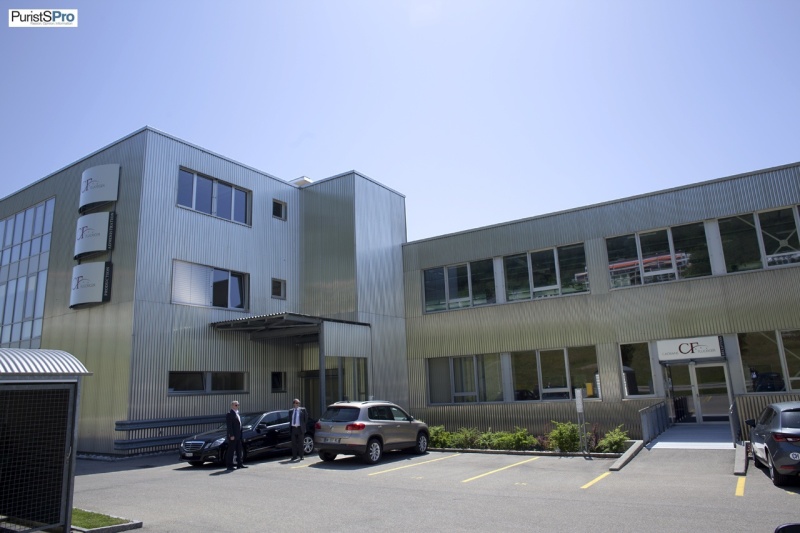
The Stern family started in the industry as dial makers, a long time ago, before they bought Patek Philippe. Maybe that´s why they are so keen on these details, even today. In 2004 they bought their main supplier (supplier for more than six decades) for dials - Cadrans Flückiger. “In-house” dials comes to my mind …
They started to build a new factory and moved in, in 2006.

The new place is outside St. Imier a lovely town in the Swiss Jura and well-known (at least in the past) for suppliers of the watch industry and of course Longines. It is about two hours from the PP headquarters in Plan-le-Ouates, Geneva.
A few quick impressions of the town, taken at a lovely sunny day:


More to see in the next parts …
How many different dials/faces do we have in the current collection? A brief overview : That´s still not all, but I decided to stop here - promised :-) I didn´t count them all, but the total amount seems to be impressive. Not to mention the different details shown and special skills needed to do them. And so far we just had a brief look at the regular production. Some close-ups from the current production : Is there something we won´t see at Patek Philippe? I would say, yes. Dials produced by ma
“Dial makers” are not that different - if not even “worse”. Even long time insiders from the industry don´t know that much about their “secrets” - much less than about movements. It is probably not a big surprise that the atmosphere at Cadran Flückiger is quite special. There are high-tech machines and highly efficient processes, painstaking handwork by artisans/artists in separated rooms, custom-made “old school” machines for the guillocheur … and it seems some kind of miracles on top. Are ther
I started it two hours ago...and OK i was distracted by a glass of wine or two, but just finished. What a superb and through treatment of the subject. As you probably know, dials are central to me. In Rolex world, it works for me..... dial, history/case, movement. As Nicolas pointed out, with different manufacturers, the order of importance varies. I think with Patek, the dial is perhaps not as significant as it is in Rolex....but as you show, it is still very key. One of the things that I do th
As your report has shown, the amount of work and efforts that go into the "face" of a watch are just amazing. So many steps and such attention to details. Since Cadrans supplies to others, by going through the factory, were you able to get a sense of which brands require more QC and are more stringent on their requirements on their dials ? Cheers, Gordon
…I’d have enjoyed a trip to Switzerland and a visit to Patek Phlippe better. ;) About the tiny details making a BIG difference for the connoisseur, I could not agree more. :) Best!
What a post! One of best intros in report ..ever.. to just sit back and enjoy reading. You are true Purist and Connoisseur dear Oliver Indeed if movement is heart of watch dial is it's soul. What best movement perfectly executed and finished can do if dial is ugly...nothing..at least for me. You made great points in your marvelous post Best D P.S. I got totally different association from "white powder" on a plate ;)
This thread is active on the Patek Philippe forum with 48 replies. Share your knowledge with fellow collectors.
Join the Discussion →


