
Moonshine Runner
14

L’ Hommage: The IWC Aquatimer Vintage Collection
L’ Hommage: The IWC Aquatimer Vintage Collection
A look back
The International Watch Co. turned 140 years old in 2008, and this anniversary was to be celebrated with a series of reissued and gently modernized classics from IWC.
In addition to models from the Da Vinci, the Portofino, the Ingenieur, the Portugieser and the Pilot's Watch series, there was of course also a new edition of an Aquatimer classic.
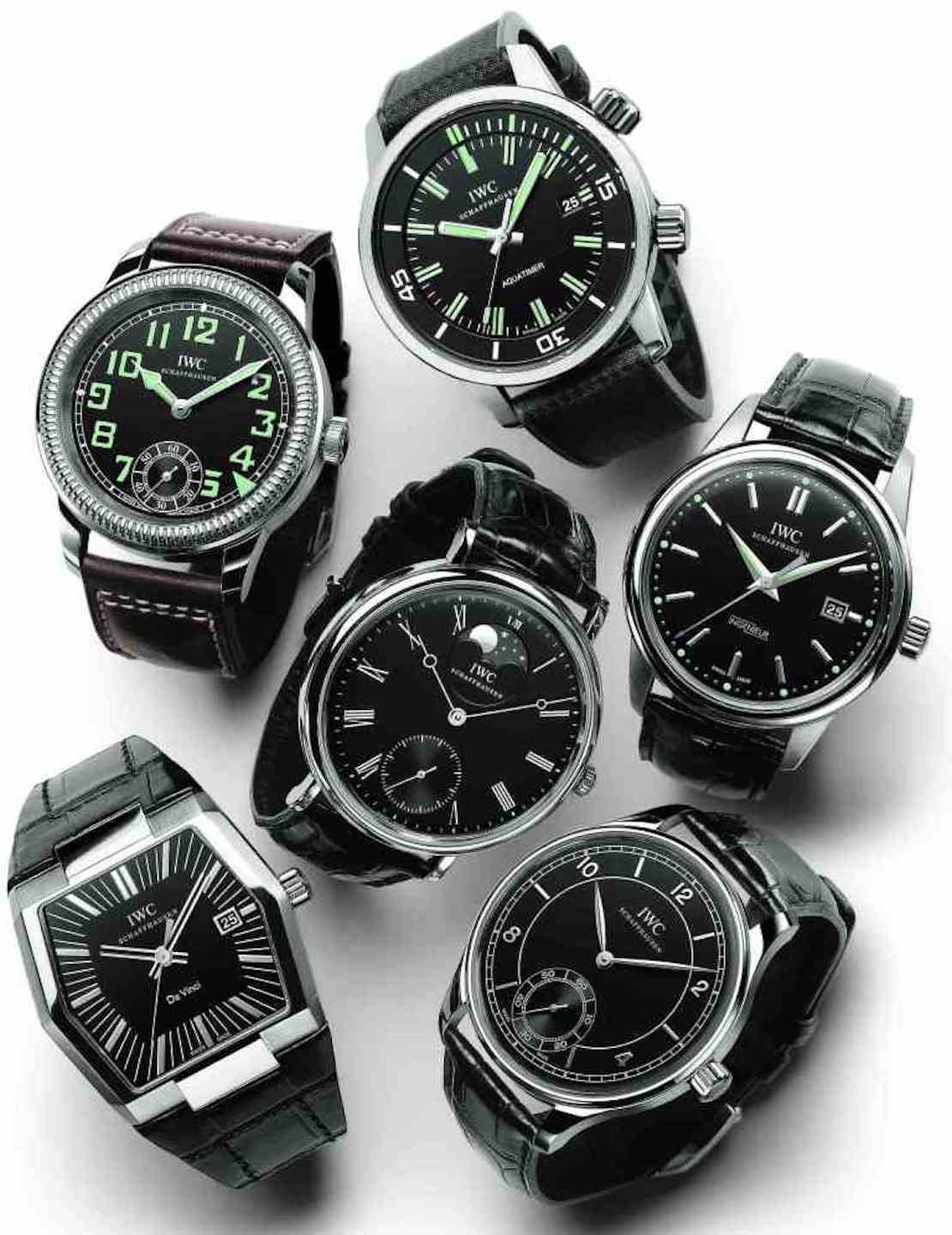
All Vintage Collection models were available with precious metal or stainless steel cases, and the Aquatimer was also available in variants with stainless steel cases (reference 3231-01) or white gold (reference 3231-03), rose gold (reference 3231-04) and platinum (reference 3231-05) cases. The Vintage Collection was an integral part of the IWC portfolio from 2008 to 2012.
The watch
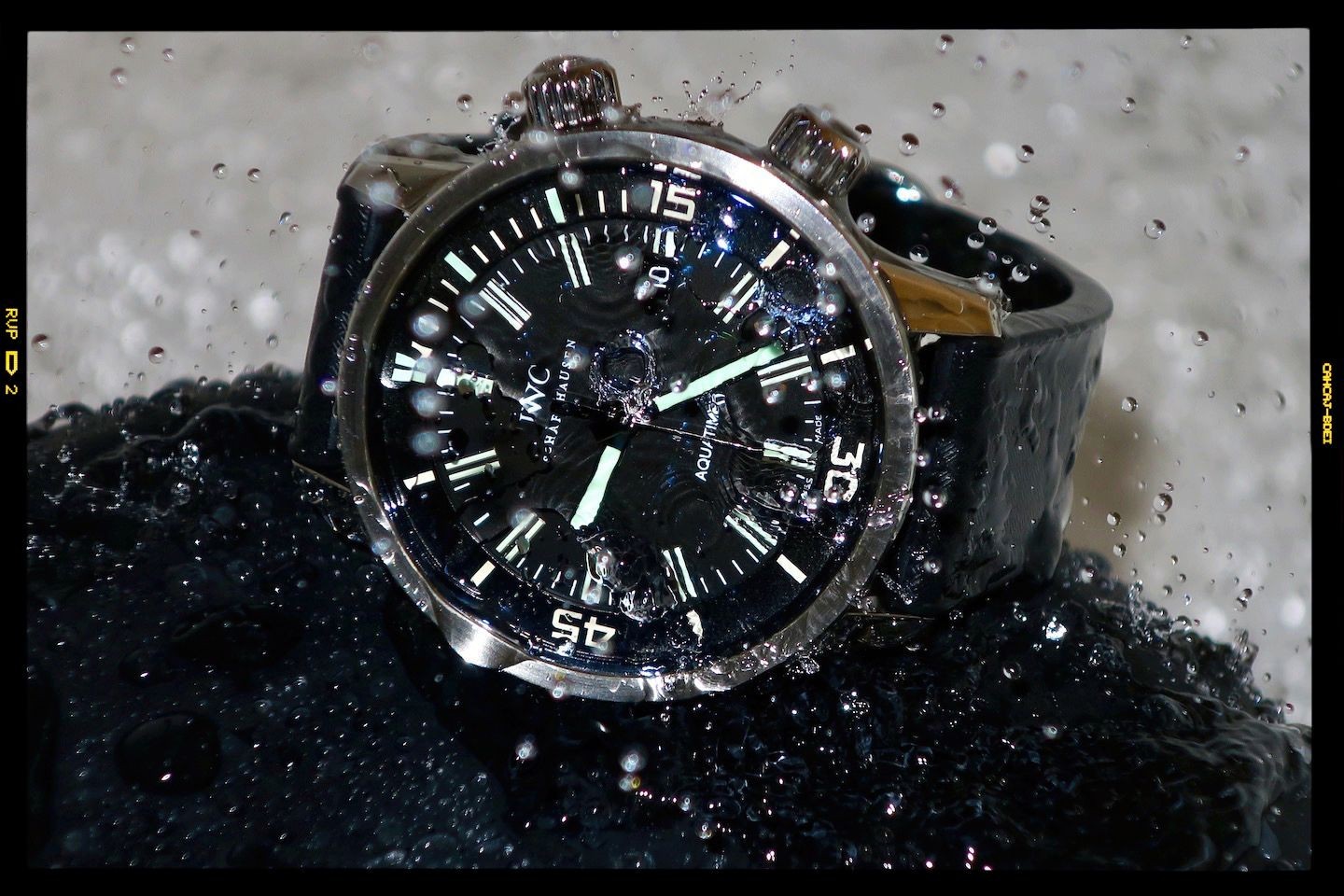
The Aquatimer VC is clearly a homage to the first Aquatimer, reference 812 AD, from 1967.
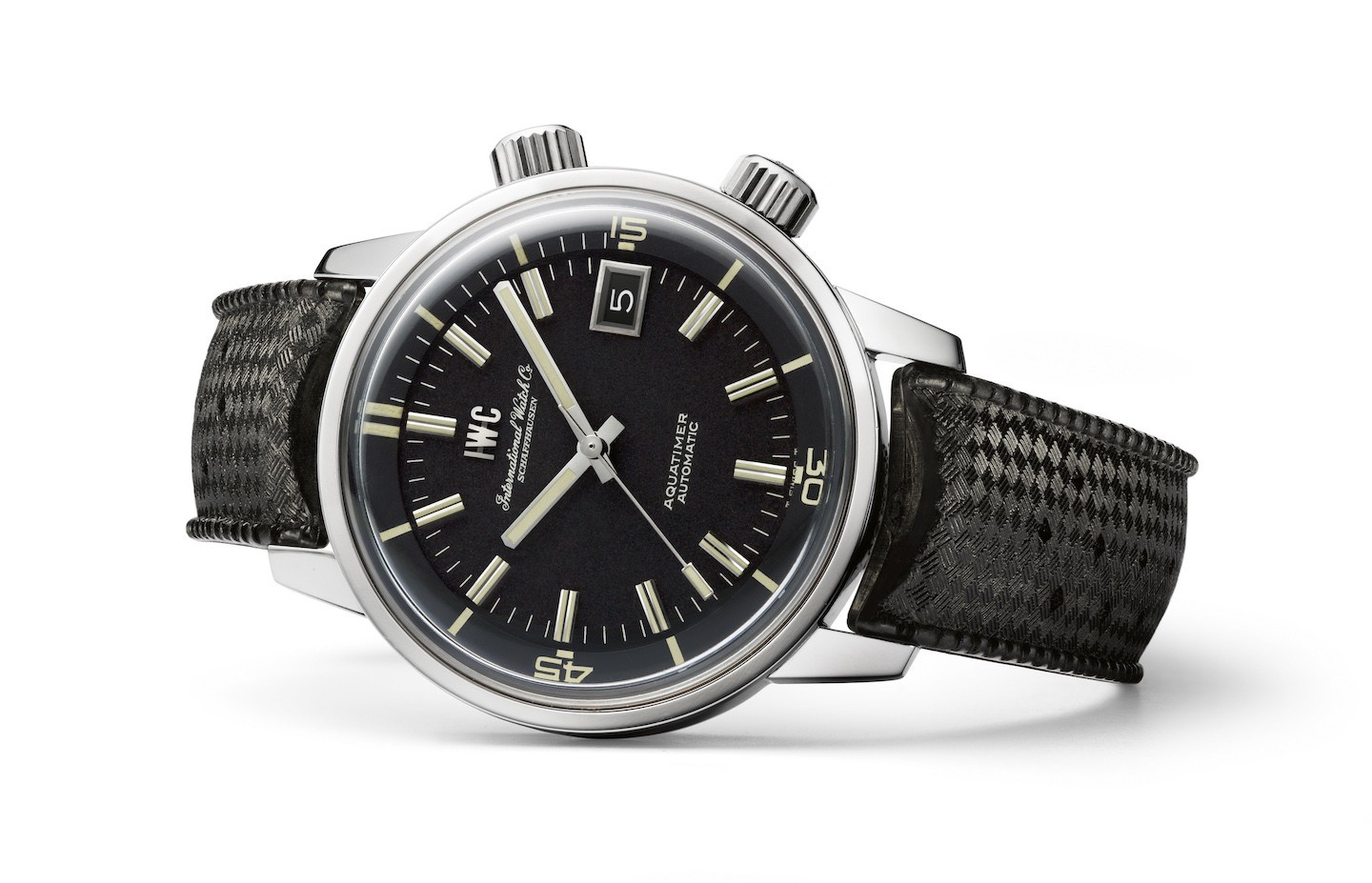
The more modern version, however, is significantly larger, with a case diameter that has increased by a full 6.5 millimeters. What it clearly has in common with its predecessor is its design and a manufacture movement with Pellaton winding – the 812 AD uses an IWC caliber 8541, while the 3231 is equipped with an IWC caliber 80111.
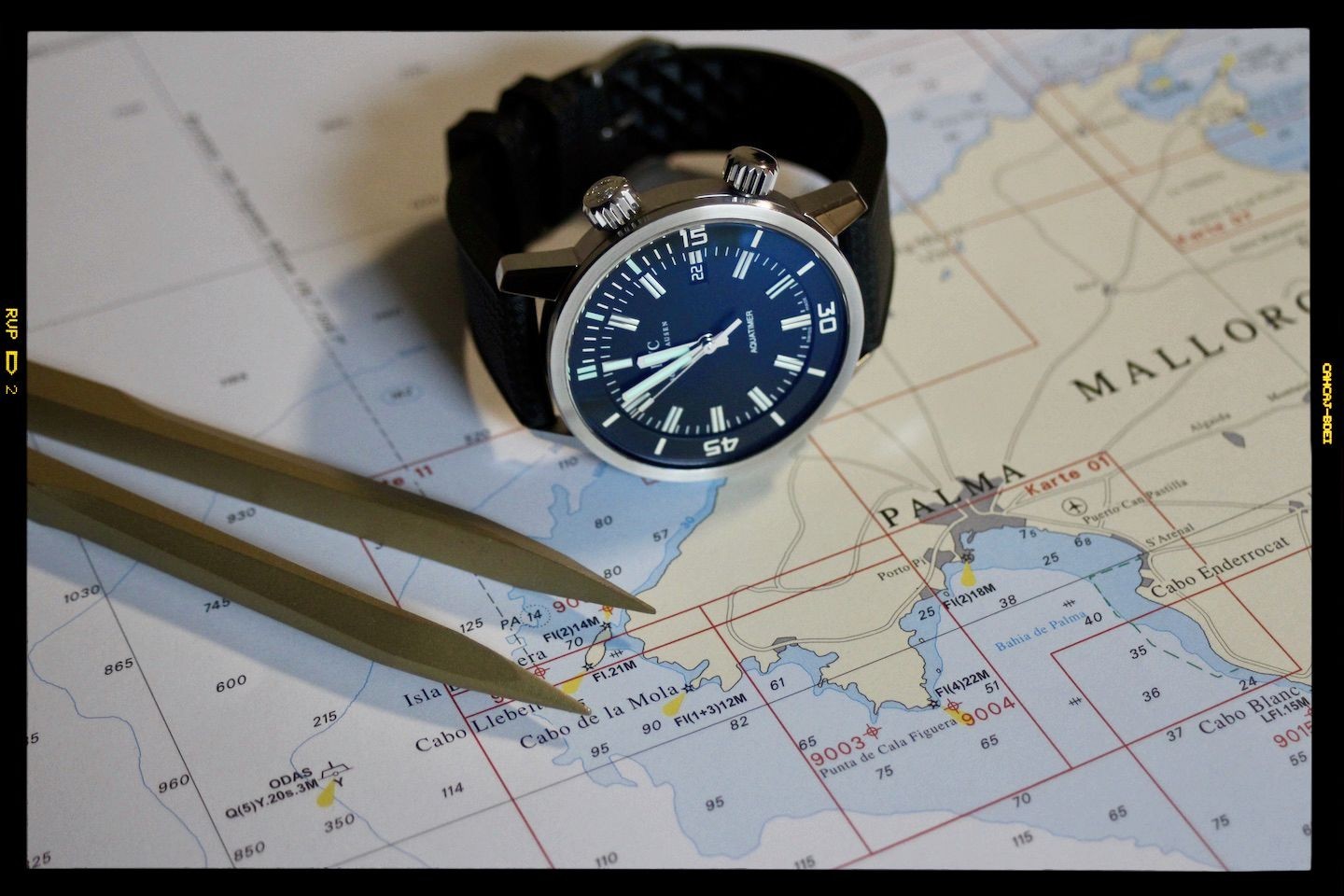
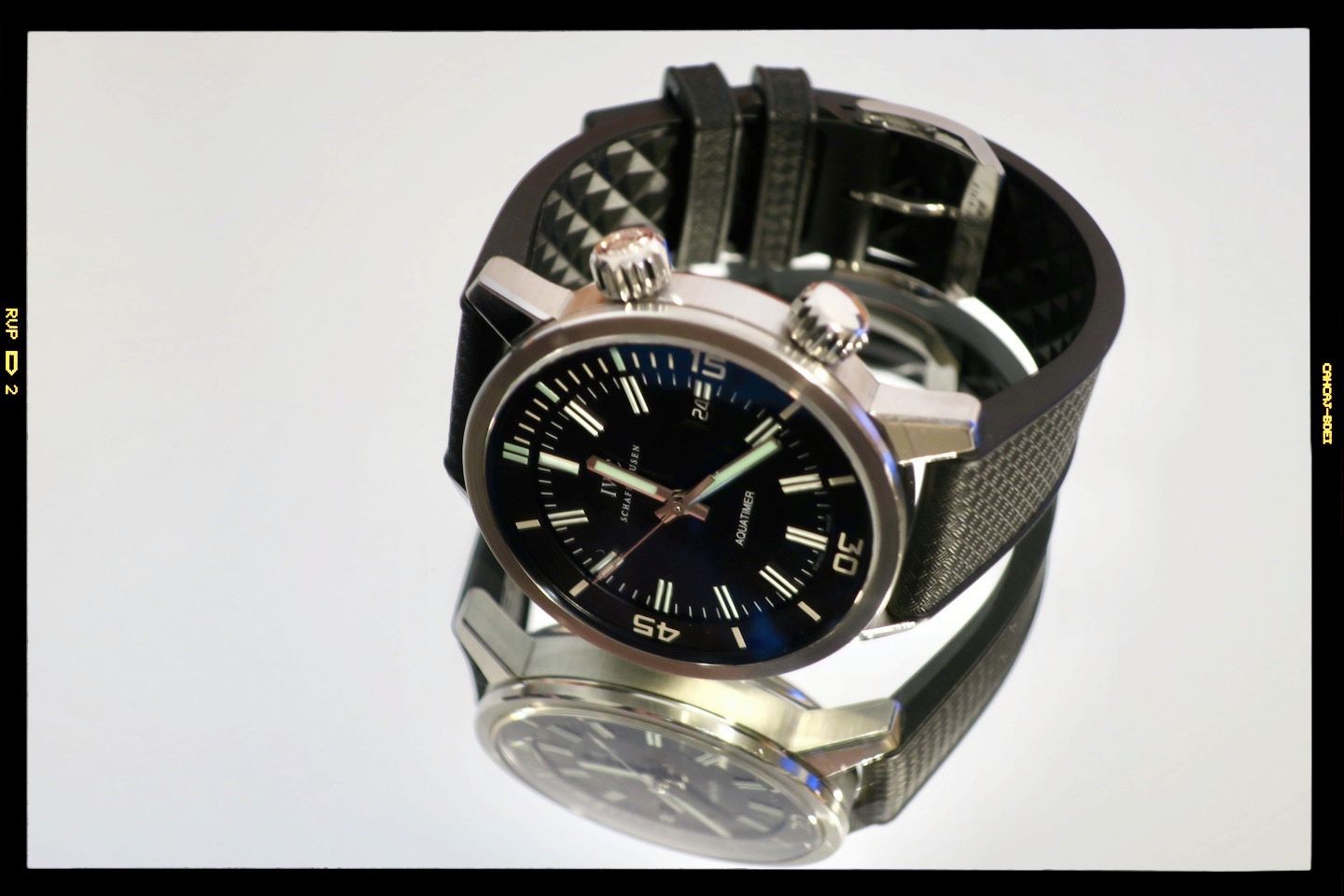
As is typical for IWC, the Aquatimer VC also has a few technical gadgets on board. The most noticeable here is probably the crown for setting the dive time, which is automatically decoupled by the water pressure during diving. The crown, located at 4 o'clock, can be pushed in a few tenths of a millimeter towards the case against a slight counterpressure generated by a spring. This decouples the crown's drive to the internal rotating bezel and the dive time can then no longer be (accidentally) adjusted. From a certain diving depth – unfortunately, I could not find out the exact value – the resulting water pressure then ensures that this crown is pressed in and the rotating bezel is thus automatically secured.
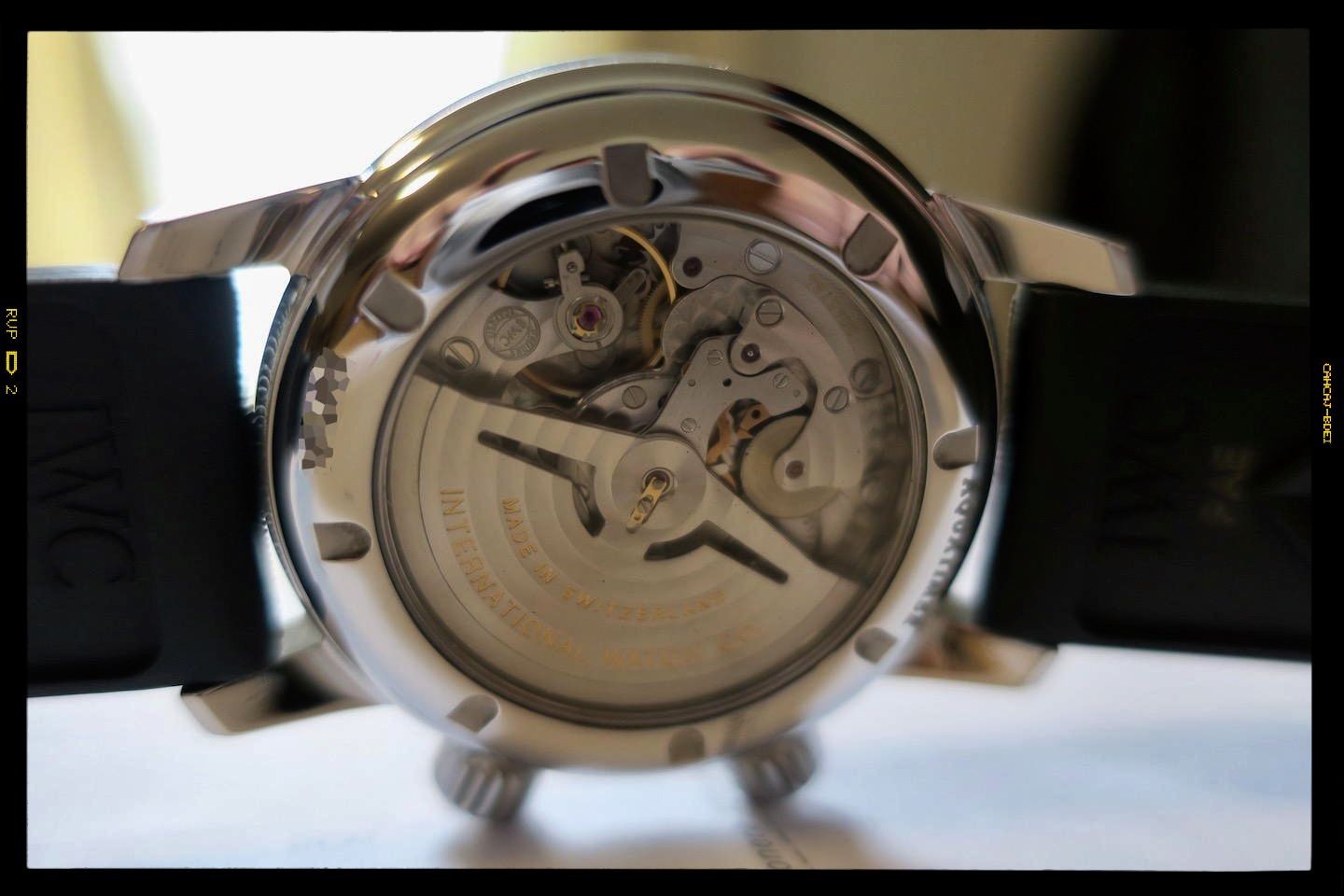
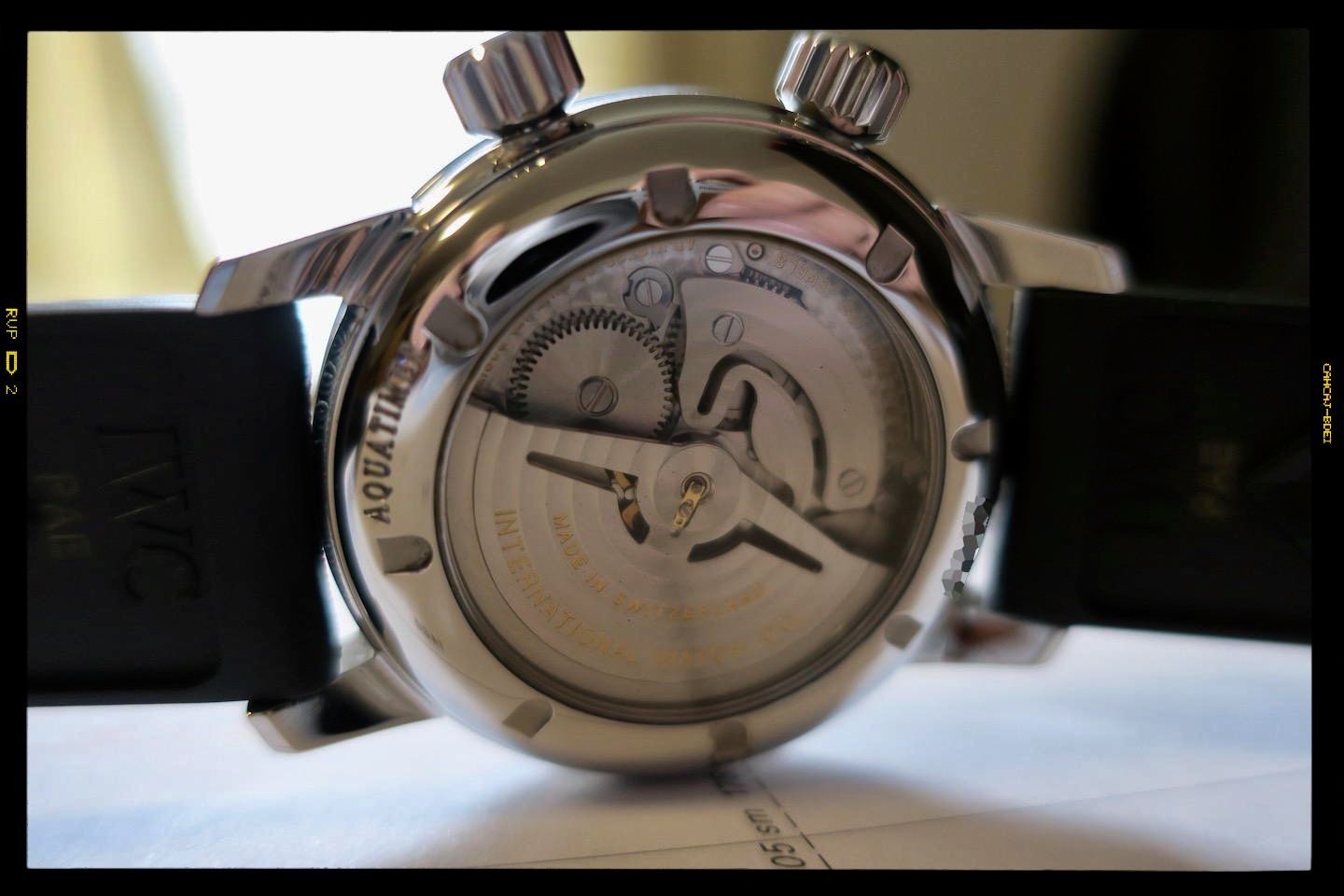
While the unusual and very effective Pellaton winding system can be admired by looking through the sapphire crystal in the case back, the ruby bearings of the diver's bezel unfortunately remain hidden from the viewer.
Albert Pellaton and his winding mechanism
Albert Pellaton (* 1898; † 1966) came from a family of watchmakers and was the grandson of Albert Pellaton-Favre (* 1832; † 1914), a watchmaker specializing in tourbillons, and nephew of Jämes Cesar Pellaton (* 1873; † 1954), the long-serving director of the Technicum watchmaking school in Le Locle.
After his training, he worked at Vacheron & Constantin, among others, and was IWC's Technical Director from 1944 until his death in 1966. Albert Pellaton influenced the development of IWC to the present day. He developed a system of automatic winding, which was patented in 1946 and completed in 1950, the Pellaton winding named after him.
Albert Pellaton was also responsible for the development of the legendary Caliber 89 (known, among other things, from the Mark XI, produced from 1946 to 1976) and the Caliber 85 family, which was already equipped with the Pellaton winding system. He was also the one who brought Kurt Klaus from the watchmaking school in Solothurn to IWC in 1957. The man who developed IWC's famous perpetual calendar.
The Pellaton winding system
The principle of this winding system for automatic watches is basically as simple as it is ingenious.
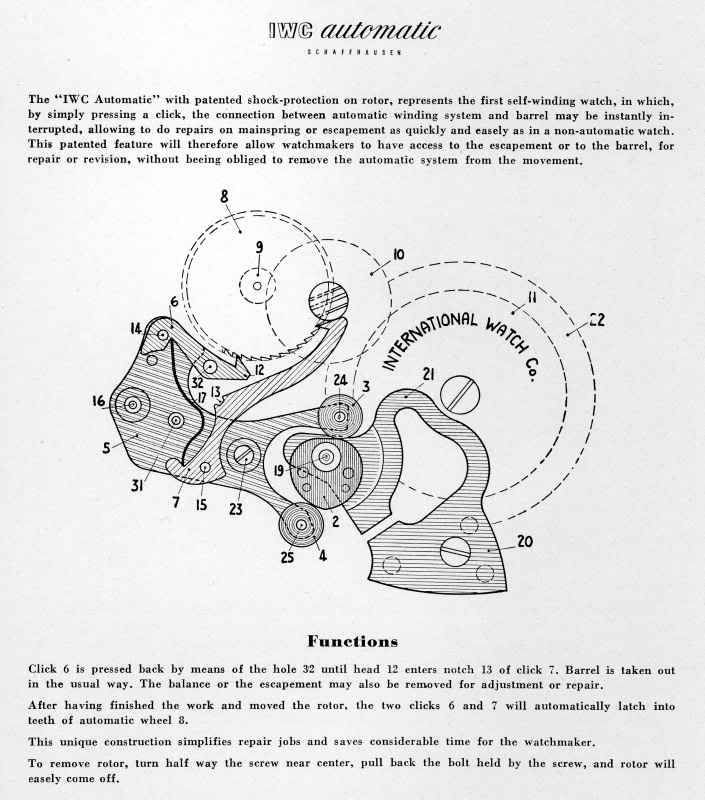
However, it differs fundamentally from other designs in the way it works, because instead of gears, the energy generated by the rotor is transmitted to the mainspring in the barrel via a cam, which is enclosed by a fork with ruby rollers at both ends, and a sophisticated pawl system that alternately performs the tasks of winding and backstop.

This mechanism experienced its rebirth in 2000 with the launch of the first new and in-house Caliber 50000 in the Portugieser Automatic. Meanwhile, the Pellaton winding system has become the hallmark of IWC's own calibers, such as the cal. 80000 in the Ingenieur models and the cal. 89360 from the new in-house chronographs.
This winding system was and is so good that various automatic calibers from Patek Philippe were equipped with the IWC-patented system, and the "Magic Lever" winding system introduced by Seiko 13 years after IWC's patent application also works on the same principle.
A look at the movement also reveals the "wildly" shaped automatic bridge that supports the rotor. Beautifully finished with a circular stripe cut, the bridge literally snakes across the movement to the left of the balance. The shape of this bridge has not only aesthetic reasons, but also a function, because it should also absorb shocks and decouple the rotor from the movement.
Specifications:
Case:
Material: brushed and polished stainless steel.
Glass: slightly domed sapphire crystal, double anti-reflective coating
Case back: screwed sapphire crystal case back
Dimensions: Case diameter: 44.00 mm, height: 14.50 mm, length (measured over horns): 52.00 mm
Strap lug width: 22.00 mm
Weight: approx. 122 g
Water resistance: water resistant up to a pressure of 12 bar (120 m)
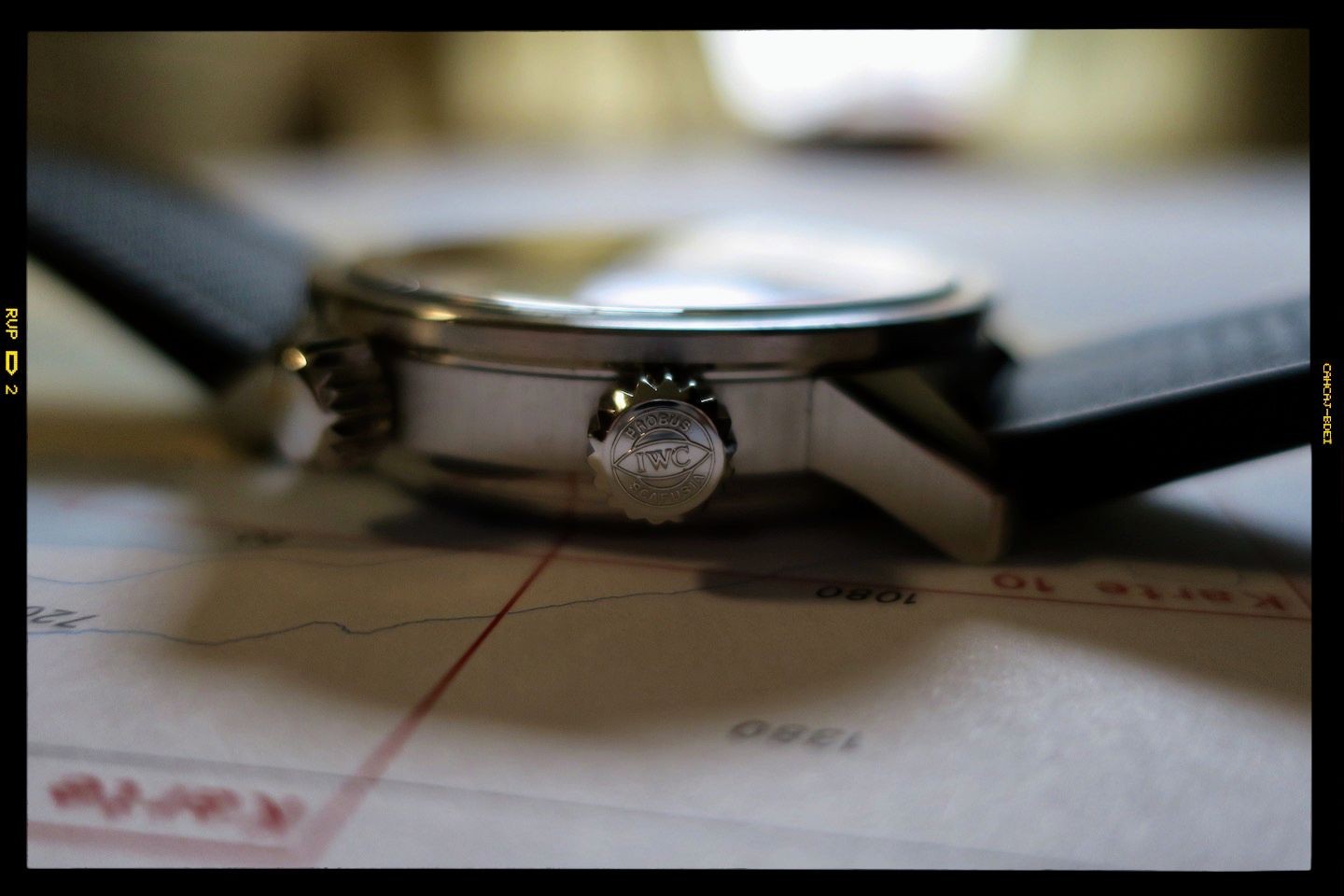
Features: internally unidirectional rotating bezel, latching with 60 clicks, operated by unsigned crown at 4 o’clock, winding crown signed “Probus Scafusia” at 2 o’clock, internally screwed, 6.6 mm diameter, 3 gaskets, separate steel crown tube
Dial and hands:
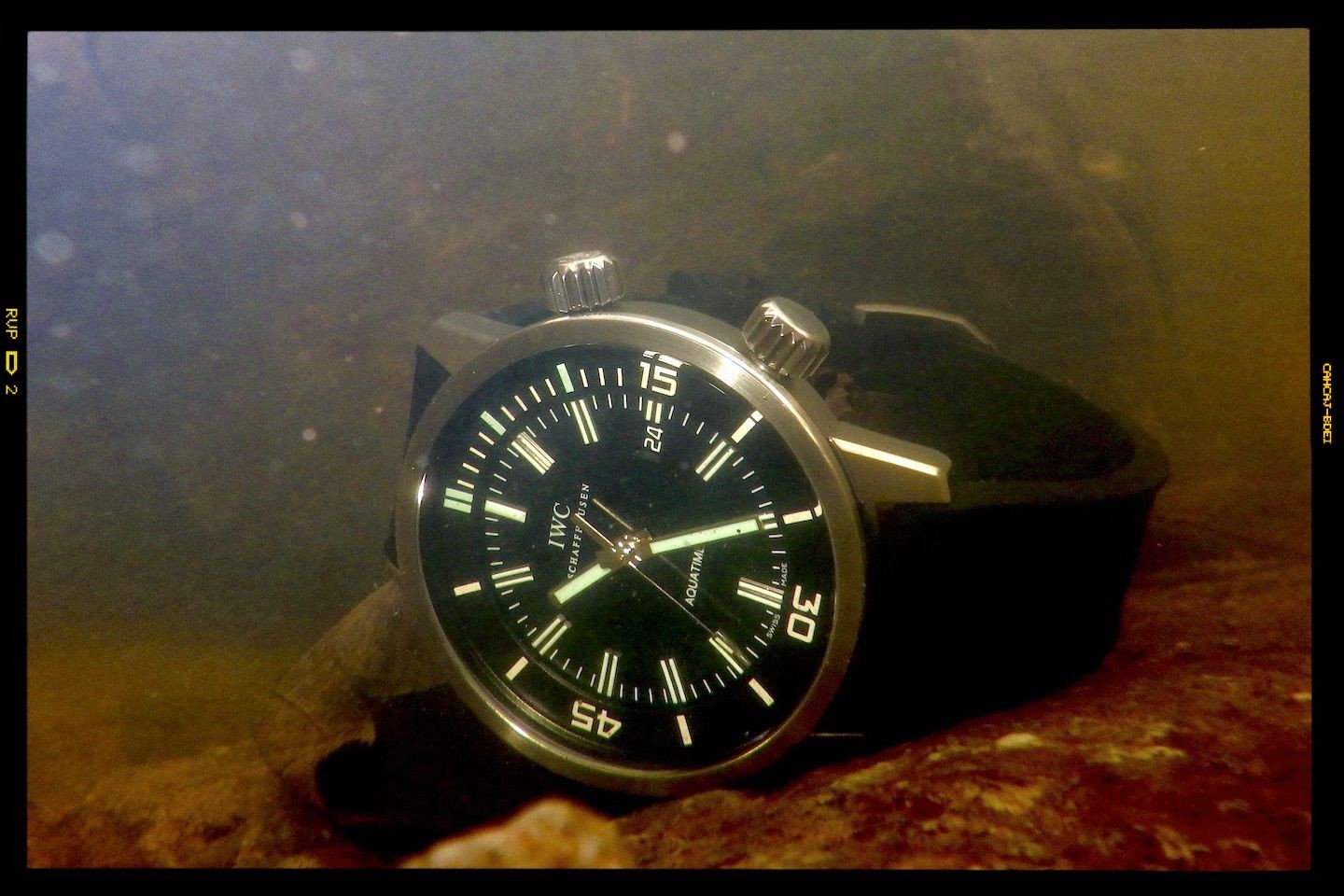
Color: matte black dial, rhodium-plated and polished hands.
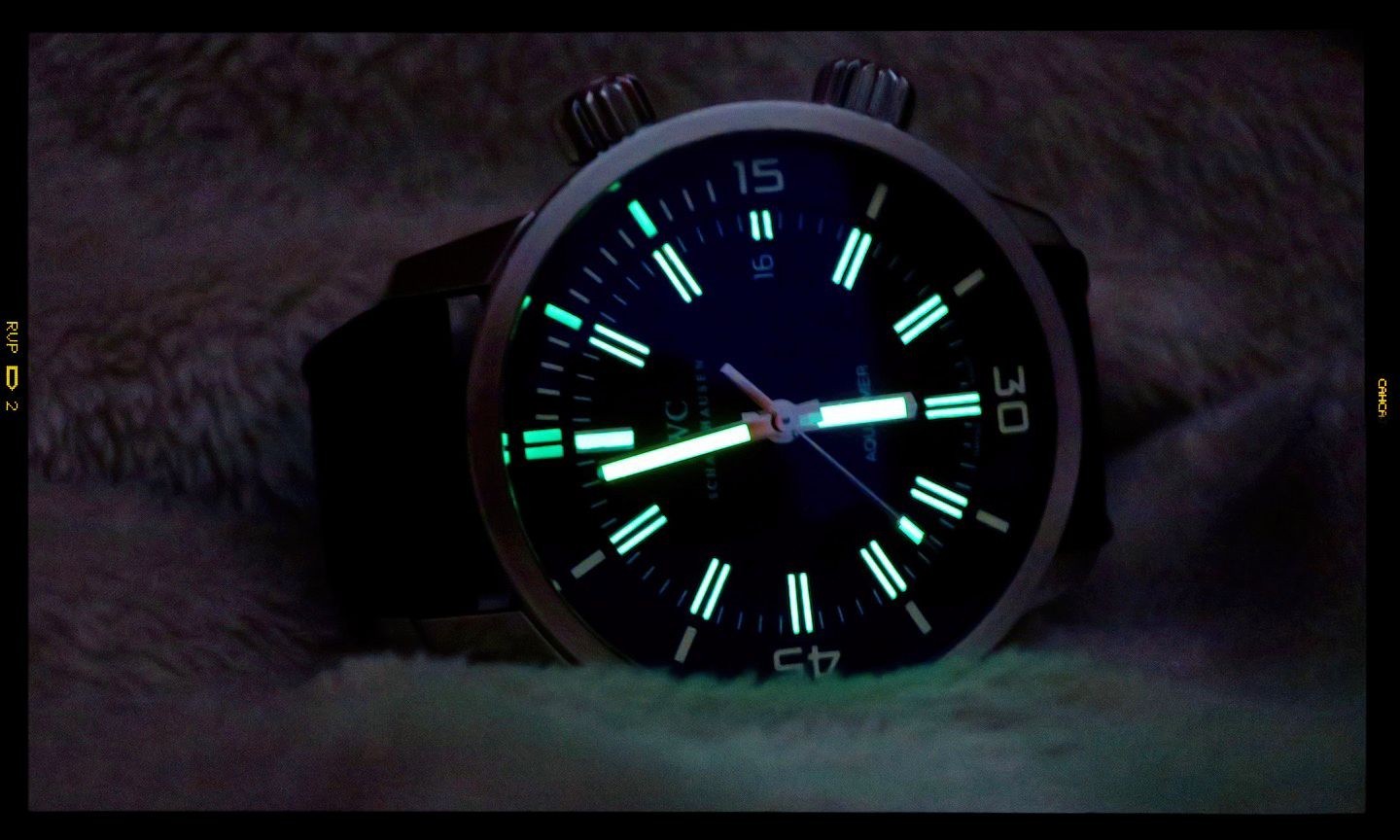
Hour scale: applied indices, rhodium-plated and polished and covered with Swiss Super-LumiNova®, printed minute track, date display at 3 o’clock
Hands: rhodium-plated and polished hands, covered with Swiss Super-LumiNova®.
Movement and functions:
Caliber: rhodium-plated automatic caliber 80111 (based on IWC caliber 80110), 28. 800 A/h, center second, date disc black with white writing, 28 jewels, automatic winding system Pellaton, Glucydur balance, Nivarox flat hairspring, Swiss lever escapement, Triovis fine adjustment, shock protected and anti-magnetic, cock and bridges beveled, beveled main plate, circular stripe pattern, steel parts brushed and beveled, polished screw heads, partly skeletonized rotor, stop-seconds, manual winding possibility, date quickset
Power reserve: approx. 44 hours
Function: hours, minutes, seconds and date
Bracelet:
Material: rubber, 22.00 mm wide at the lug, tapers to 18.00 mm at the buckle.
Color: black
Clasp: signed stainless steel pin buckle
List price (2008 - 2012):
5,650.00 Euro
Conclusion:
Not only during the search for my third diving watch from the house of IWC, I realized that the Aquatimer series are among the most interesting and innovative diving watches of Swiss provenance, even without unwearable and unsaleable prototypes have reached the bottom of the Challenger low. So what's to stop me from adding (at least) one watch from each generation to my collection? The fact that IWC brought plenty of variety to the Aquatimer series with sometimes quite fast but always radical model changes, would also bring plenty of variety to the collection.
The already existing Aquatimer GST (3536-02) and Ocean 2000 (3504-01) were followed in late summer of this year by the Aquatimer Automatic (3290-02) and now the Aquatimer from the Vintage Collection (3231-01), to which I came like the virgin to the child.
Actually, an Aquatimer 2000 with the reference 3568 should have enriched my collection next, but it should come differently. While searching for a suitable offer, I came across an auction in the bay, in which an Aquatimer VC was auctioned and whose highest bid was about five days before the end at a modest 1,990.00 Euro. But since I also had the Aquatimer from the Vintage Collection on my list - planned for 2023 – I thought I would just play along. I did not expect that I would actually win the auction…
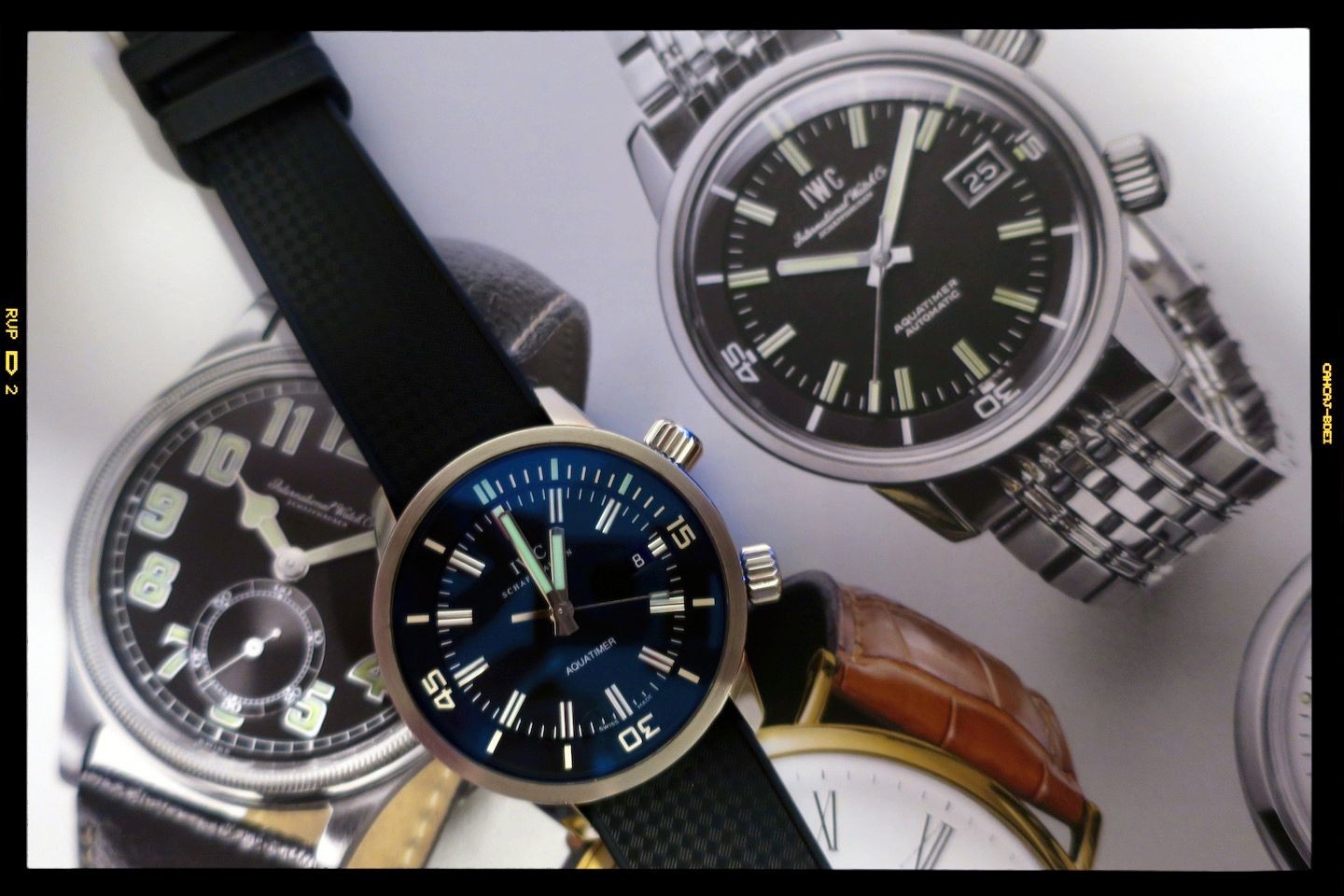
When I could hold the watch in my hands, I was more than pleasantly surprised. Not only that it looks much better in reality than on the admittedly rather miserable pictures of the auction, but also that it is so different from the other diving watches from the Aquatimer series and the watches that I have and had in my collection – and here is not meant the super compressor design.
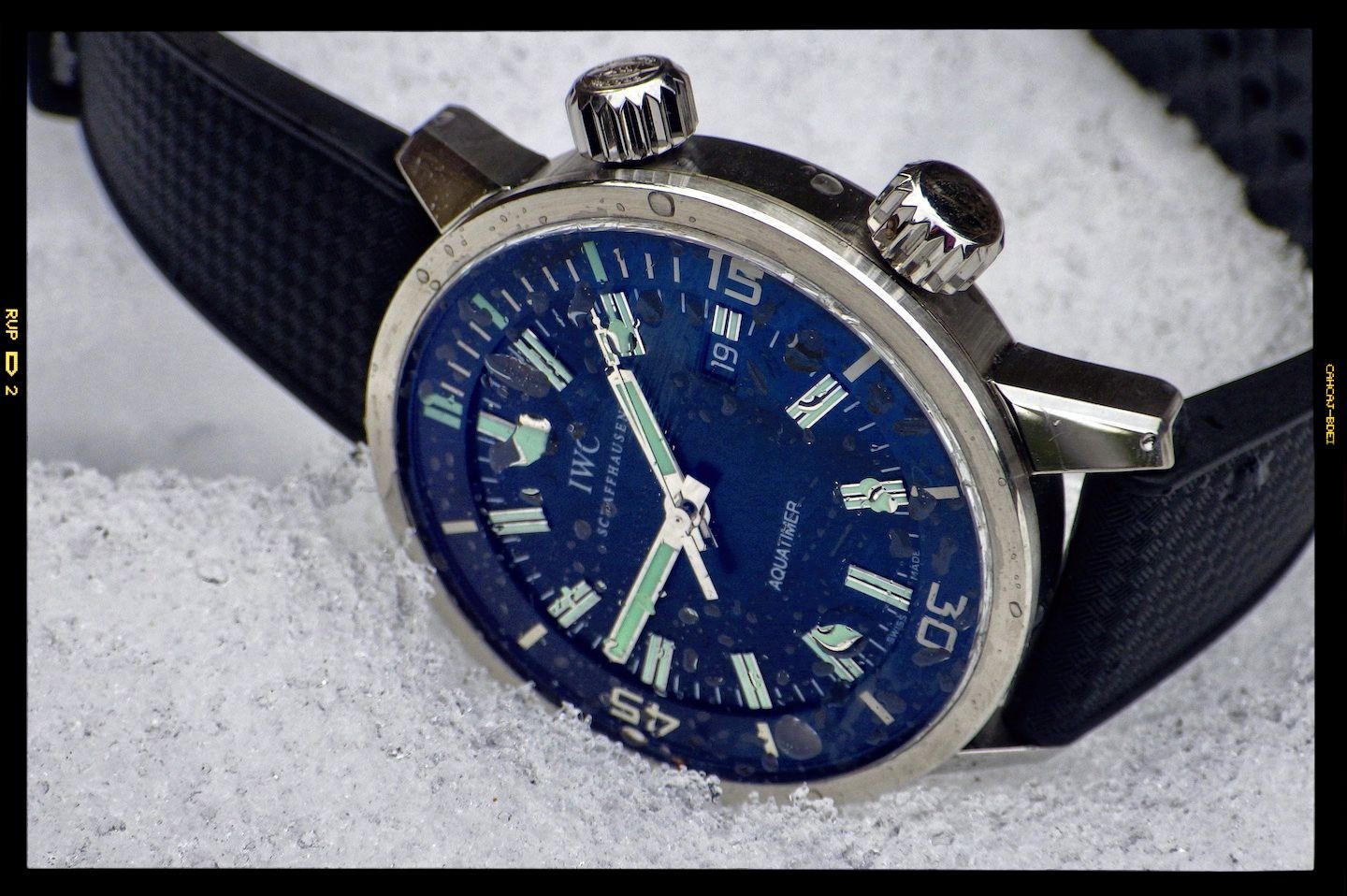
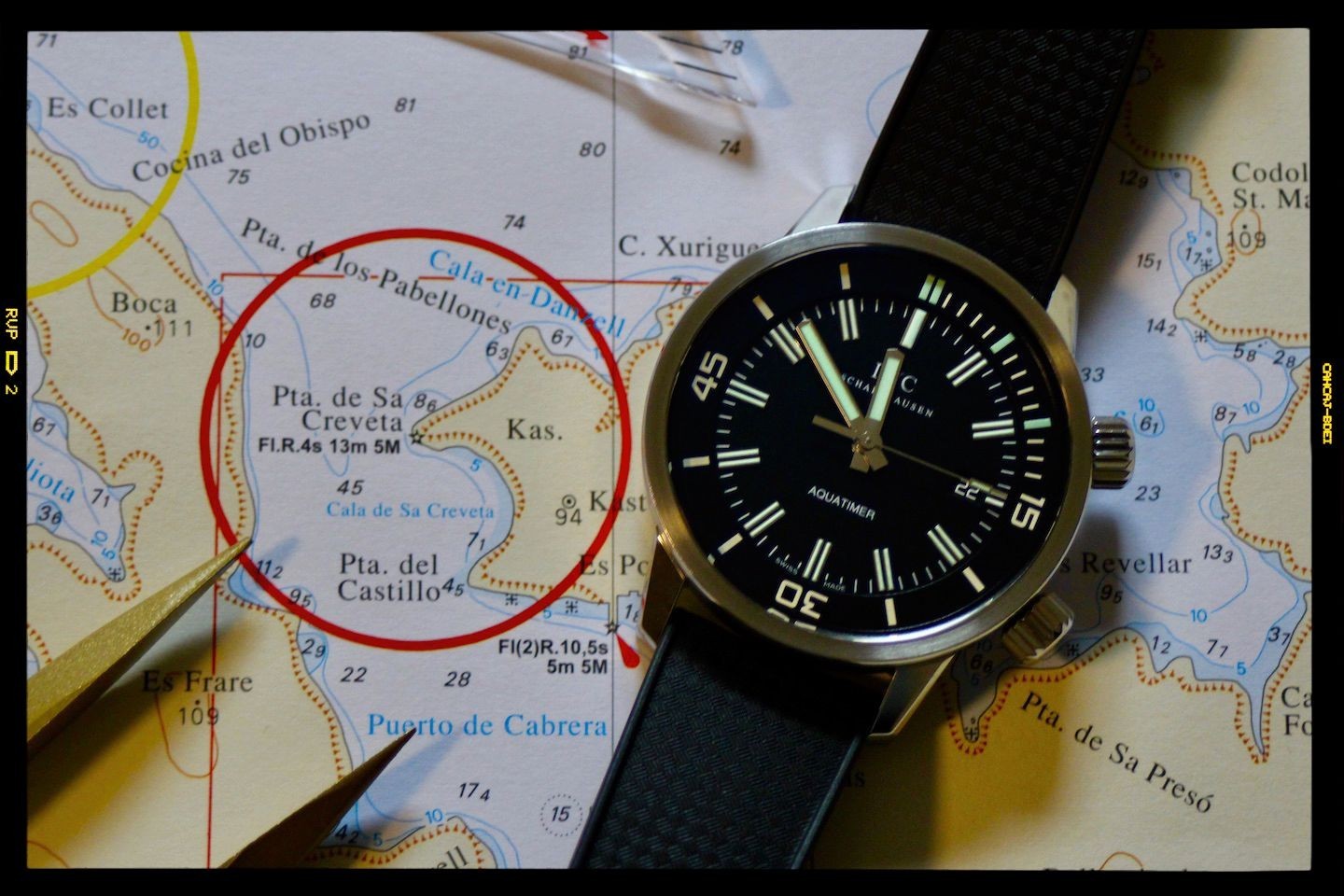
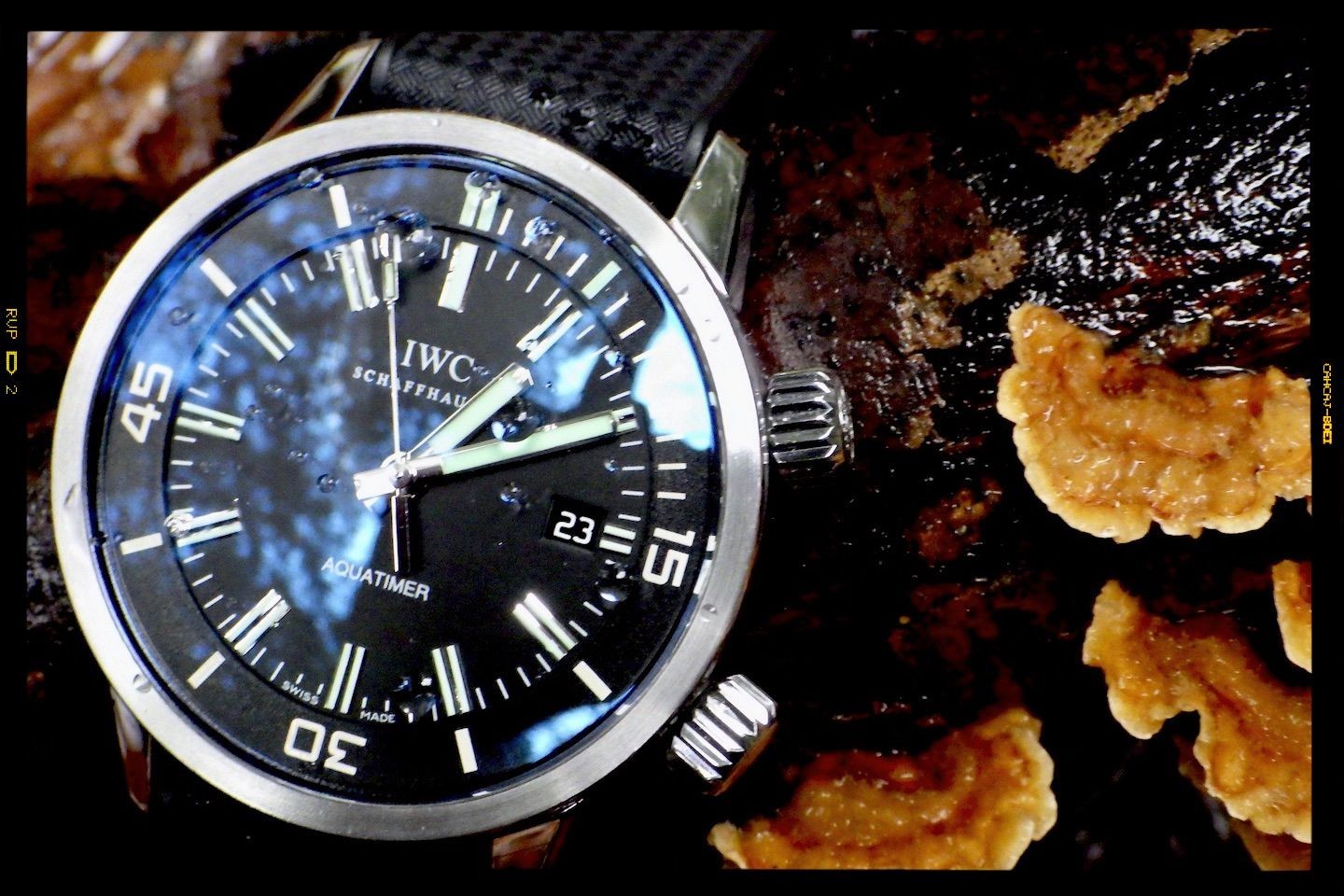
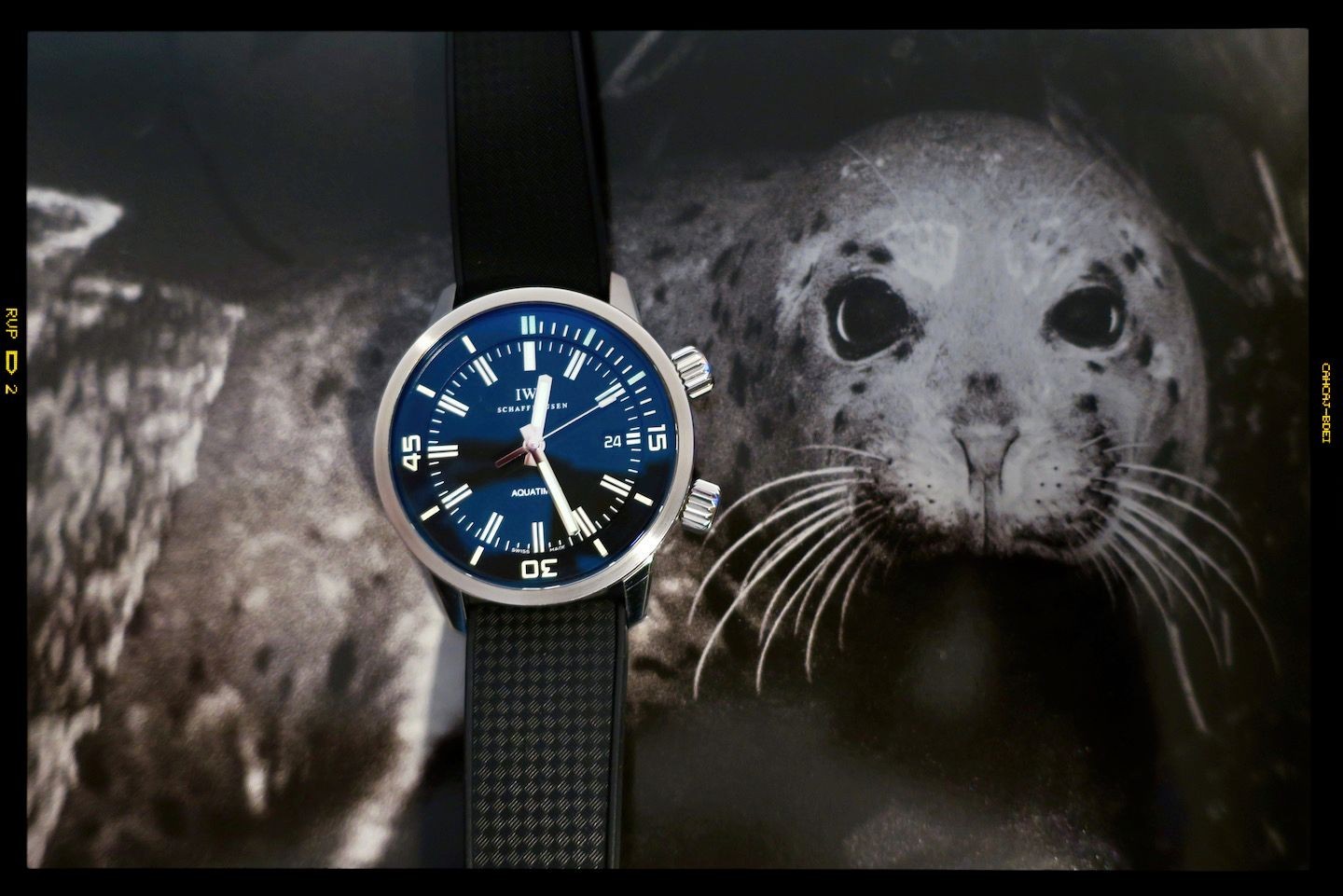
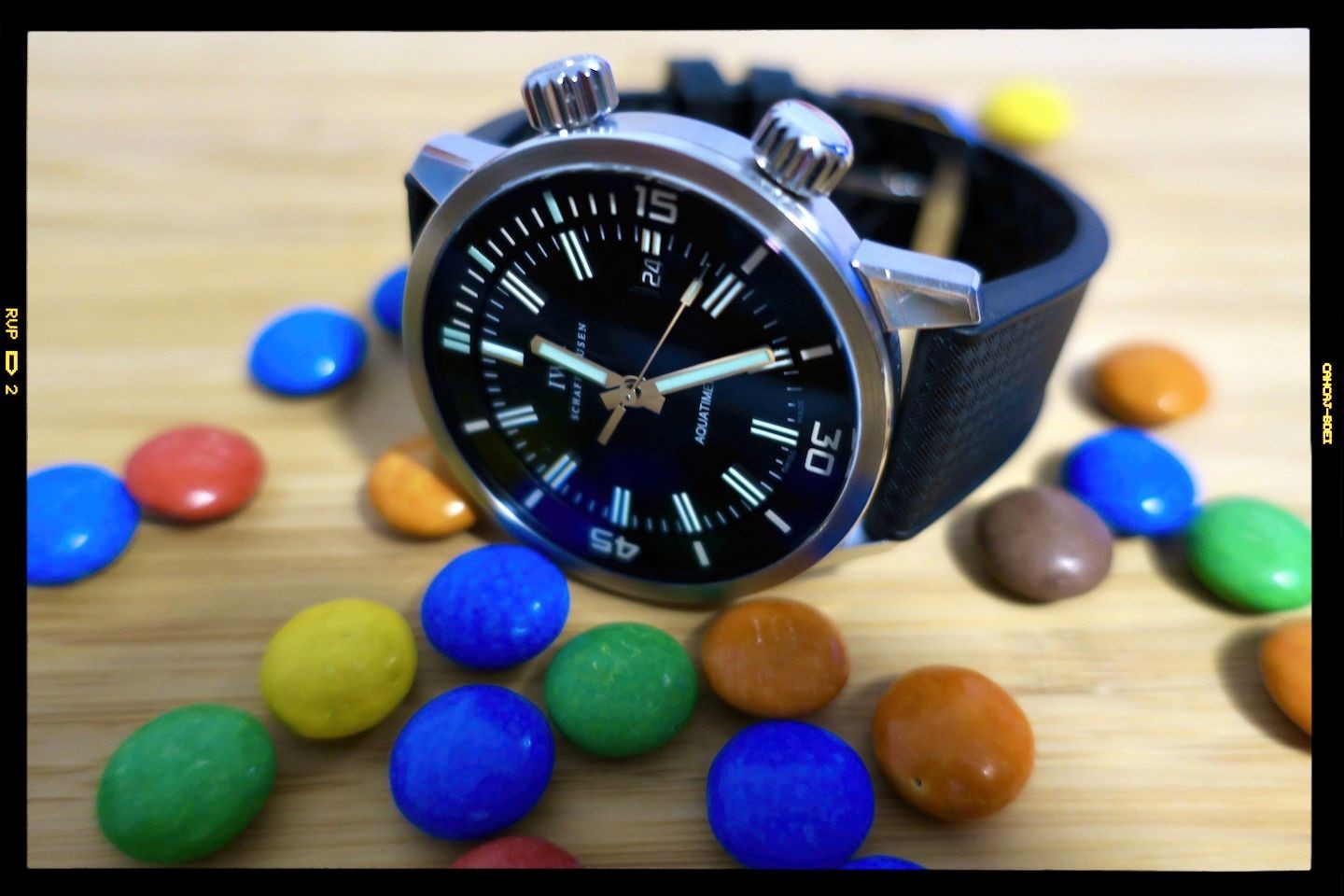
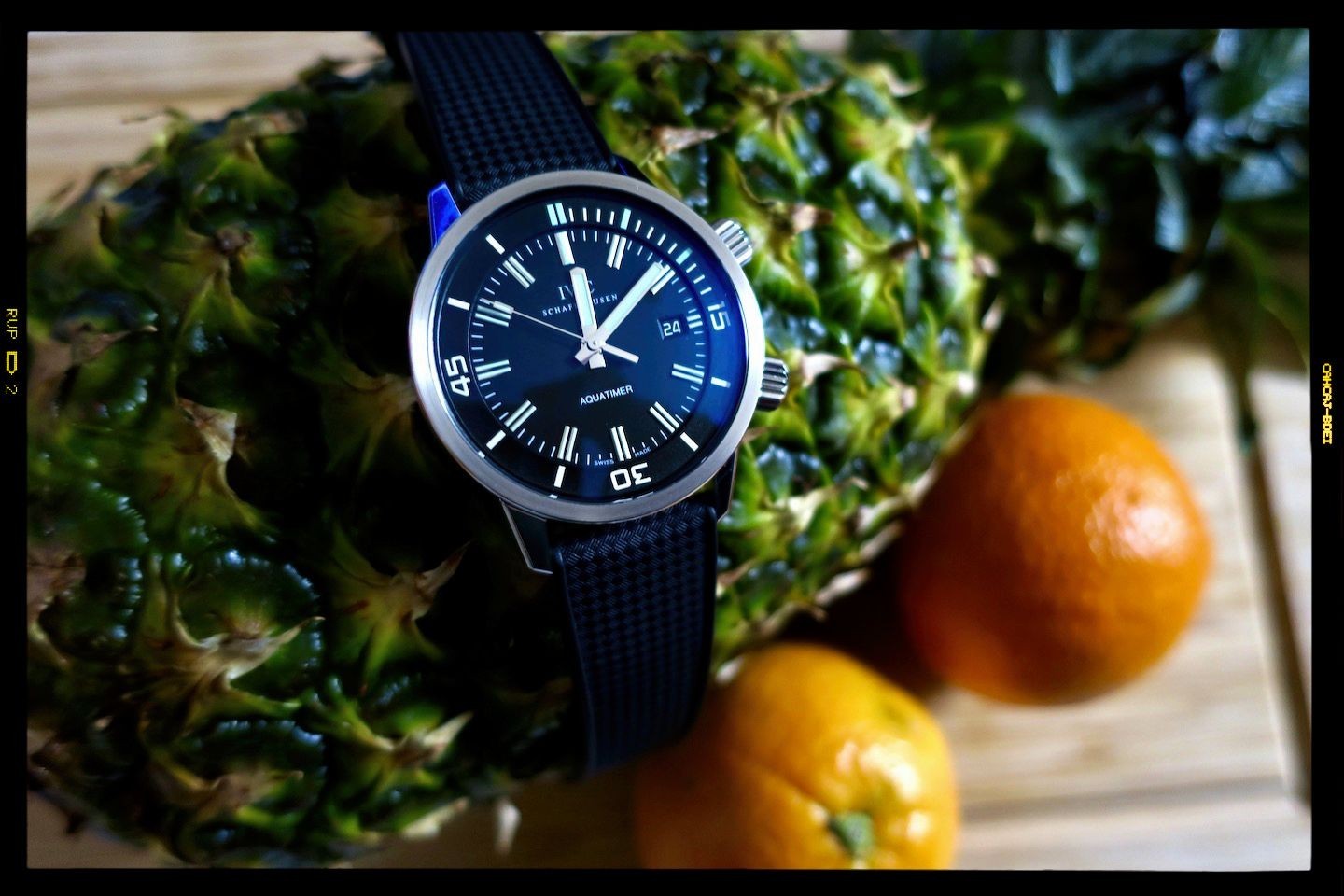
Due to the fact that a rehaut is omitted and also the rotating bezel, which is mounted on rubies, is kept very flat, it almost seems as if the dial is directly under the glass. Therefore – and of course also because of the size – the watch looks very dominant on the wrist.
As expected, the watch is superbly crafted, the rates are excellent, and for the first time since the introduction of the Ocean 2000 in 1982, IWC has dispensed with a proprietary strap system for the Aquatimer VC, attaching the high-quality and comfortable rubber strap to mundane spring bars.
The water resistance of “only” 120 meters may seem too little to some watch lovers, but in reality, this pressure resistance is perfectly sufficient for diving. By the way, it should be mentioned here that the Aquatimer Split Minute, the Aquatimer Deep One and the Aquatimer Deep Two are also “only” water resistant to 120 meters (12 bar).
The IWC Aquatimer Vintage Collection is a great watch, so it's a little surprising that this watch is virtually absent from the various watch forums.
All in all, this purchase was again a stroke of luck, I always seem to be in the right place at the right time with IWC's dive watches.
Thank you for your interest.
References:
International Watch Co. “Die Uhren von IWC 2008/09” and “Historical Selection – Engineering Time Since 1868” | IWC.com | Chronos “Meilensteine: IWC”
Image sources: Image 1 to 3: International Watch Co. | Image 4 to 20: own work
L’ Hommage: The IWC Aquatimer Vintage Collection


