
Which other watches has the Peseux 260
And are they vintage or modern watch?
Just curious

Lovesss*CL

Age?

Tis?

Tested in Neuchatel 1961, but cased up as a wristwatch a lot later.
Actually there are reports of a serial production Breguet wrist watch and (at least one that i´ve seen) Ulysse Nardin wrist watches fitted with a P260 of those years, but i´m not sure these were available as a "regular model" then. It might be these were fabricated for staff or testing purposes only; not the least because "full-trim" observatory movements, just like F1 engines, don´t go well with daily wear.
The movement was introduced in 1947 for the then new "wrist watch" category of the Observatory trials, which commanded movements not to be larger than 30mm in diameter and 5mm in height (or 707 square mm in volume).
I´m sure these, but also Observatory-trimmed counterparts by Omega, Zenith and Longines, were in use until late 1960´s for chronometric and trial purposes.
As per modern watches, i don´t think there´s another with a P260.
The movements could be found almost always in the past couple of years, so there may be one or more individually fabricated pieces using a vintage movement. At least Christian Pfeiffer-Belli wears one, with a movement finished at a famous watchmaking school in Switzerland.
But i don´t believe there´s been something like a serial production!
Cheers,
Peter
Daily wear?
Hi Peter,
Interesting to see the GP...never knew about that watch! Thanks!
Did your statement about "full trim observatory movements.....like FI engines...." lend itslef towards the P260 used in Kari's watch? Would this statement just pertain to movements which were created only for the sole purpose of "competition"?
I would hate to see the folks who are purcahsing the observatorie have movement problems. I hear that Kari is replacing parts as needed and really giving these movements the royal treatment.
Happy holidays,
asg

I'm pretty sure.....
Hi Asg,
I'm pretty sure this movement will last generations - at least if properly treated (but it doesn't need to be pampered).
Nothing in there is specifically fragile - and if a ususal shock protection is added (as in Kari's watches) there's no reason to not be able to stand daily wear. I'd go so far to believe that properly cased this could make an ultimate beater as well - at least almost any automatic movement would be more prone to get damaged (just because of the oscillating mass).
There were certain observatory movements (those which actually were submitted to the trials) with extremely delicate balance pivots for example , but the standard Peseux260 movement balance pvots are 0.1mm which is about a good, reliable standard size.
And as said that's no issue when equipped with shock protection.
All other longevity aspects are pretty much as one could dream of - from my personal view made to last generations.
Besst regards
Suitbert
Hi Peter....so do you know what effort
has Kari done to ensure that the Observatoire is suited for daily wear?
Or is it meant to be admired gently
I do plan to wear it very often, rotating with my Simplicity.
Lovesss*CL
I have no idea
G'day,
i´ve no idea - and not seen one of Kari´s piece up close so far.
The difference between "race trim" and "civilian" movements is subject of several older discussions and particularly Suitbert is THE instance; thus i´d suggest to have a look at the "fine print" from older posts if that´s interesting for you.
But given it´s not a re-cased historical movement only, i´m somewhat confident Kari included daily wear in his considerations.
Back to X-mas dinner now
Cheers,
Peter
At least he's added ....
...a shock protection. And as I'm pretty sure Kari hase even lubricated the movement I'm pretty sure you can get very old without
ever beeing disappointed.
All the best
Suitbert
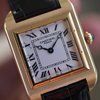
No regular production....
...Hi Geo,
UN used the Peseux extensively for the Observatory Competitions, but only a few (perhaps only 1) was later cased.
I'm not even sure this was an company official project (although it's documented somehwere in the literature, if I'm not mistaken).
Could be UN was the company who made the most extensive use of the movement - speaking in numbers. But that's more a guess only.
Best regards
Suitbert
I did some search
I wonder if this is the one you referred to
Geo


Have a look at this post below....
no, I wasn't speaking of this one, as this isn't a Peseux 260 movement - it's a regular production piece.
More on the movement, see here:
ahci.watchprosite.com
BTW, the dial is a poor redial and the hands aren't correct as well.
I'll see if I can find a picture of the one with P260
Best regards
Suitbert
I believe the only small series and cased....
Hi CL,
to my knowledge the only small series as cased as a ww and branded was Breguet and LeRoy, BeBa (sometimes also branded with Montres BD, but same origin). Those BeBa might have a special "history" and perhaps wouldn't qualify as branded in it's truest sense,
but perhaps this is even the largets series
. There are a lot "later creations", i.e. found as a loose movement with manufacturers name on it (former comp. movement) - than cased as a ww - but those aren't original ww's .
Somehow a "series" would be those school watches, the cased examples are mainly from LeLocle technicum as there this movement was used in the "finishing class" - I've seen at least so many that it would qualify to call it a series - although all are unique pieces from different watchmakers of course.
BTW, as far as I know it was also used in La Chaux de Fonds technicum, but there it was used for the class for watch adjusting/regulating - and as such the movements will be found without a cosmetic finish and more likely as loose movements or
in transport cases as used for the trials.
I'm pretty sure we'll see the one or the other "second life" of this movement in the future
It's well deserved for this movement to step a little bit out of the hidden existance of the past...it's one of the nicest designs
ever IMO. But a few years ago, only very, very few even had heard about it.
Best regards
Suitbert
This message has been edited by SuitbertW on 2007-12-24 04:34:24
Thank you Peter and Suitbert....
All this history about a watch movement makes....collecting such an interesting passion
Thank you very much.
Lovesss*CL

On top of what Peter and Suitbert have mentioned...
there is another one equipped with Peseux260. I saved these 2 photos from some website (very sorry that I cannot recall it) a long time ago.
Joe


Those are ...
those aren't original wrist watches, they're cased at a later point to make use of the movements.
Of course it may be hair splitting, which could be considered original and which others are "later cased" -
at least this one for example isn't cased by the company displayed on the dial
Best
Suitbert
Perhaps, Peter and Suitbert could help...
identify what movement (in a UN watch) is in this photo? Is there anything related to what we are talking now Peseux260?
Regards,
Joe

Similar bridge layout.....
...but a completely different movement - if memory serves well this is 12 or 11 1/2 ''' only to start with. It was used quite a lot by UN, with different levels of finish, around that time and in fact is a very nice movement. The base movement, again if memory serves well, is a FHF cal. 26 or 27.
IIRC it was also used with a triple calendar plate, but not that easy to find.
Best regards
Suitbert