
De Bethune DB22 Photomontage published
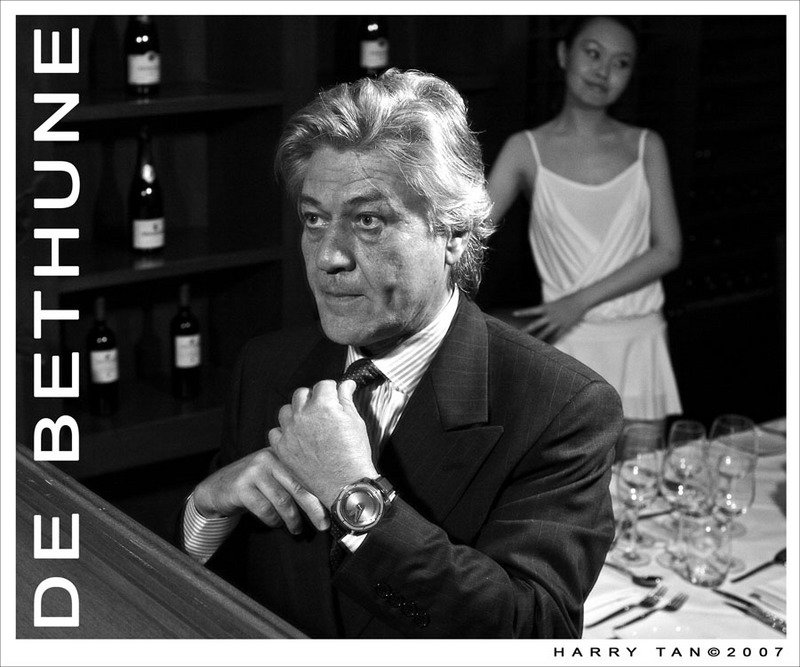
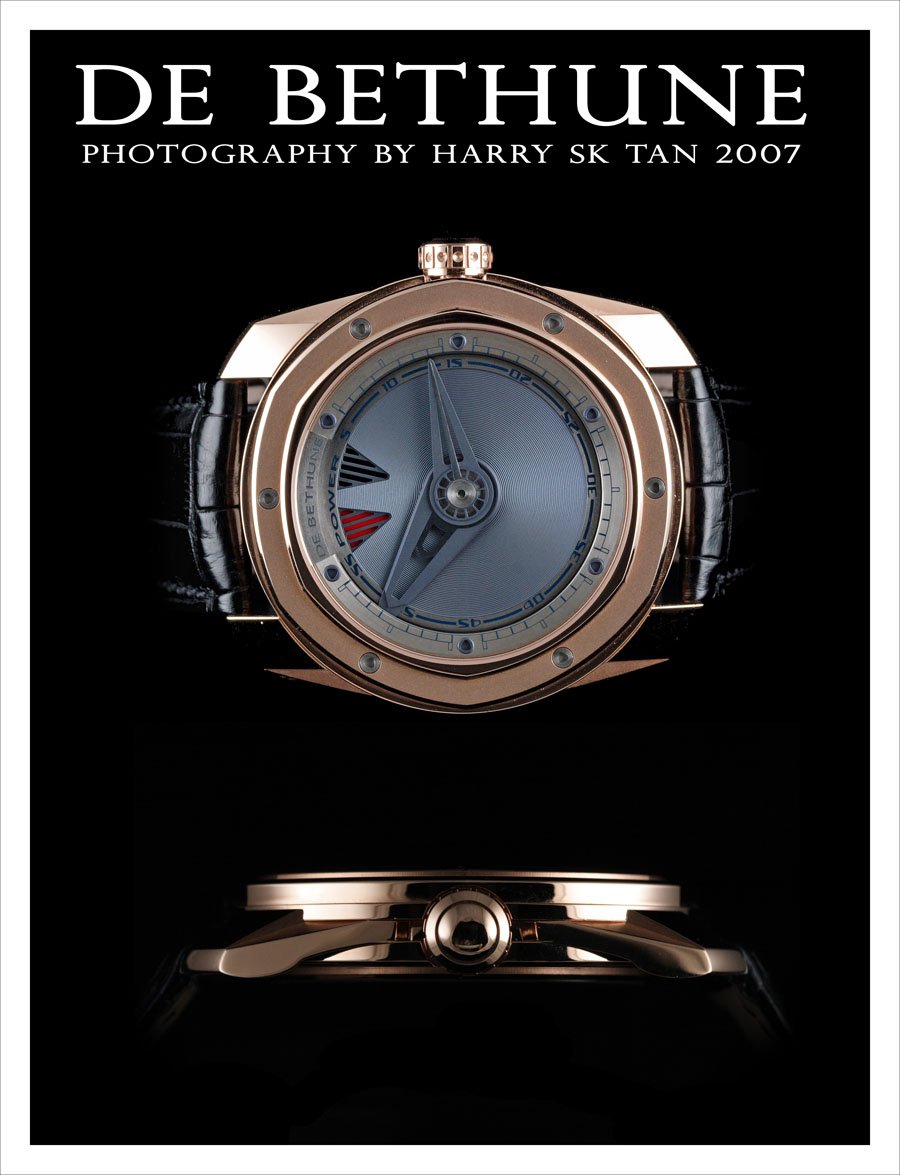
I realise that for many De Bethune is not a brand that normally the first name that comes to mind when we read or talk about high horology. At least for me until recently I only knew of the brand by name but having had the chance to photograph a few of the watches and speak to the Denis and David - I am very much impressed by their direction and leadership and their time pieces.
About more than a week ago I spent half a day at the premises of DeBethune's local Authorised Dealer in the presence of both David Zanetta (the CEO) and Denis Flageollet (master watchmaker). I only just managed to find a few spare hours to finish completing at least the images of the DB22. What immediately hit me about this watch was how different it is compared to the earlier lines/models from DeBethune. Almost disconcerting even. However, the watches are well made, design and executed and with all things beautiful - grew on me.
I hope that with my images here I am able to convey some of the intricate details and beauty of this new model from DeBethune. I hope you like them!
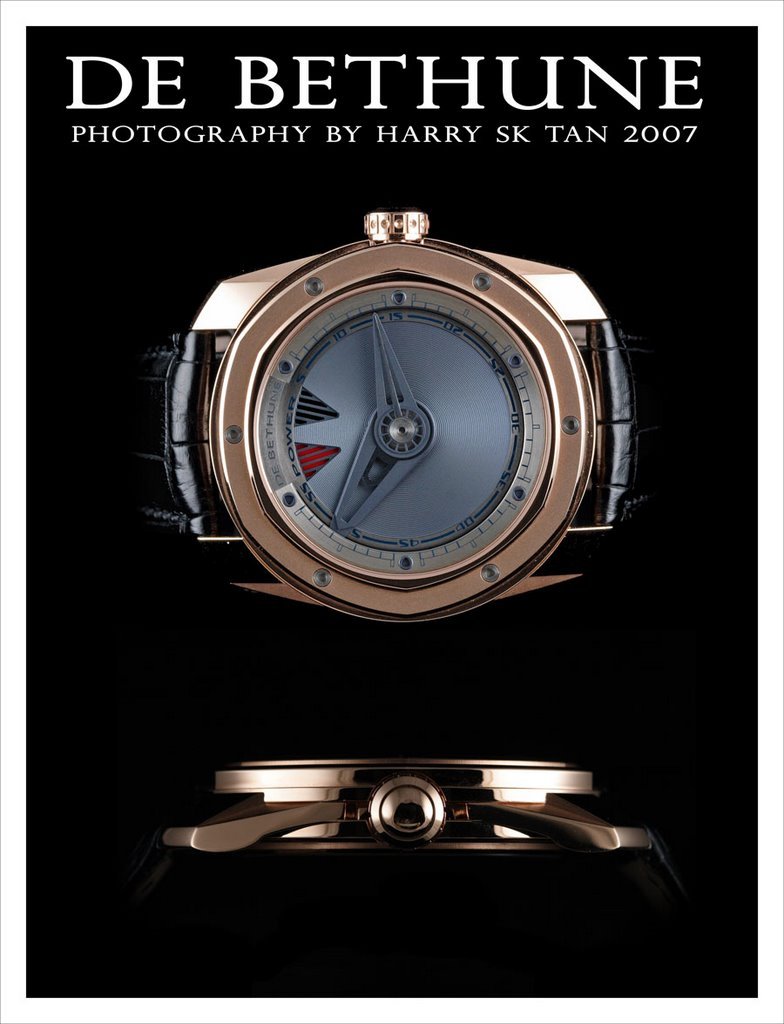
To view the photomontage click on this link below and follow through:
DE BETHUNE DB22 POWER
Cheers!
Harry Tan
horolographer
watchinghorology.com
Beautiful! Your craft as a photographer. . .
You know, I have a confession to make. I am of two VERY different minds about DeBethune; or perhaps I should say their designs evoke very mixed feelings. They're completely distinctive; DeBethune watches have an identity all their own and to my eye a certain appealing- I don't know what to call it, 'craziness' or 'weirdness' sounds altogether too pejorative but they're both accurate terms if you can just leave out the negatively judgemental connotations. They have an almost out of place look- there's something about the super high tech lines and deliberate hyper modernity that makes them feel disconnected, in a way, from watchmaking in general- almost as if they're not really watches, but some other kind of bizarre mechanical device altogether.
Yet at the same time, there's something about them that I feel is distancing and I am not quite sure what. There is something (just to my personal taste) cold and angular about a lot of their designs; the finish is SO diamond sharp that I get an impression of unapproachability. Now I've never seen the watches in person, but between that and some of the mechanical innovations- the balance and escapement system in particular seems a trifle striving for effect- I just find it hard to feel like I could warm up to them.
Of course it could just be my provincialism- God knows my own personal tastes tend towards the extremely conservative (with some exceptions- MB&F HM1 is a notable exception but as I've said elsewhere I actually find that a pretty classically designed watch in a lot of respects) so maybe I'm just the horological equivalent of a dumbstruck country boy looking at the thoroughbred lines of an Italian supermodel (why Italian? Supermodels come in a plurality of provenances, I've noticed ;-) ) wondering how he'd hug the woman without getting a papercut ;-) .
Jack
Thanks Jack! :-)
I can understand your feelings between the two extreme ends of design. In many aspects its almost inexplicable how we could desire watch classics and yet be drawn to machine designs. I have been there myself and its a waking and learning process to discover how my own preferences change over time.
I hope you will get a chance to see and handle a DeBethune in the near future. Admittedly though, this DB22 is a rare piece so keep your fingers crossed!
Cheers!
Harry Tan
Horolographer
watchinghorology.com< a>
Yeah, I've never had the good fortune. . .
Jack
I know exactly what you mean - esp when I started out watch collecting...
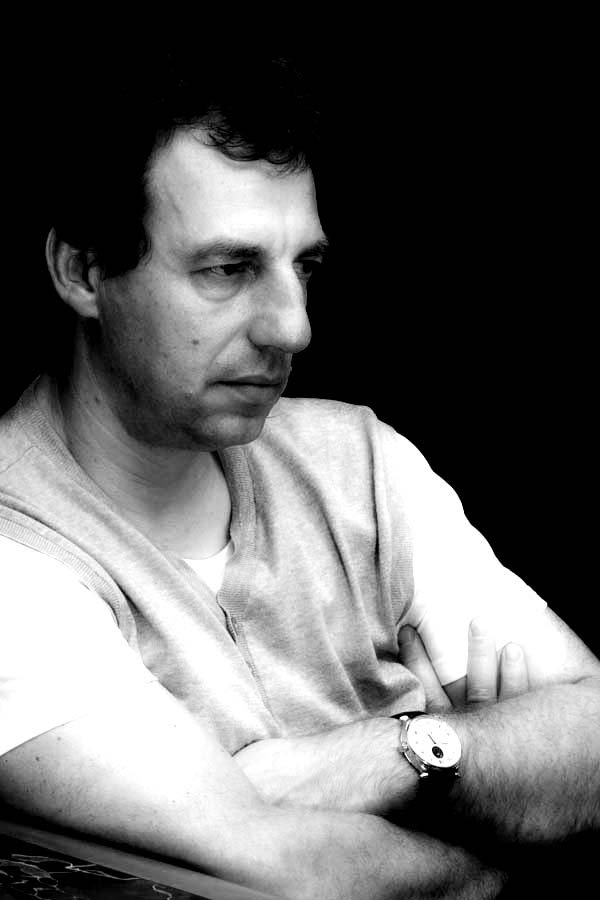
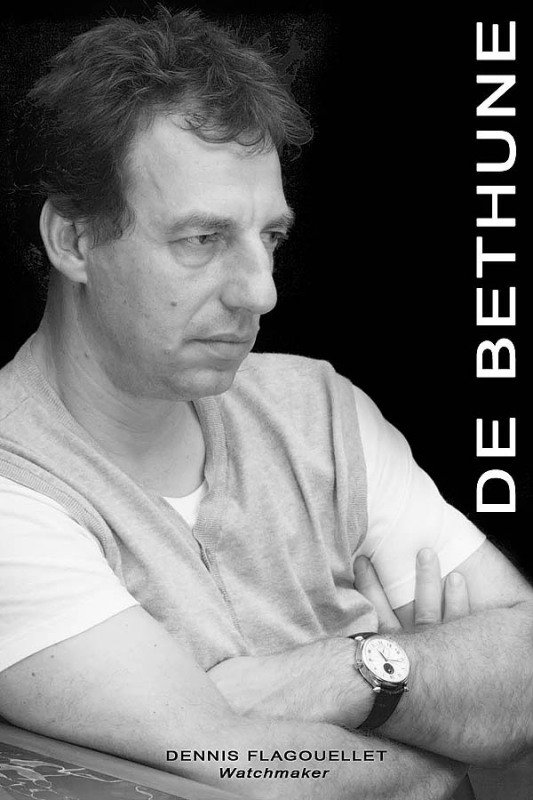
Speaking of watch makers, let me share with you a snap of Denis Flagoellet the Master Watchmaker at DeBethune. This image was snapped while I was taking a break from photographing the watches and both Denis and David was being interviewed by a local journalist.
Do note that Denis was wearing his favourite timepiece - a DeBethune Perpetual Calendar (one of my favourite Perpetual Calendars today).
Cheers!
Harry Tan
Horolographer
watchinghorology.com< a>
Great photo- he gives me the immediate impression. . .
 I hope if the folks at DB have looked in on this thread it's understood that my personal opinion is just that and I'm prepared to do a complete, feckless 180 if I ever get a chance to see one of their pieces in person. They're pretty darned rare though; nobody in my immediate circle of horological acquaintances has ever shown up with one on the wrist so unfortunately I have to make surmises from photos. As far as technical merits go, I'd love to be better informed- I have thanks to some input from others a general sense of where DB and M. Flageollet are trying to go with their balance and hairspring combination but I'm sorely short of real nuts and bolts technical information.
By the way, he is wearing one of my favorite DB watches; I think that particular model is extremely beautiful though I still can't decide how I feel about the lugs. They look much less obtrusive on the wrist (at least in the picture) than they seem to in press photos though.
Jack
Image disappeared! Here it is again
From what I understand he is definitely. . .
Jack

One word..the deBethune has the hands that RM should have had.
That is my singular pet peeve with RM.
I have to look at those hands everyday...but the DB Power has sort of got the hands that may just fit into the RM look..just my POV.
Hm, do you really think so Bernard? I think. . .
Jack
No Jack...I like the RM design. But for 2 things...
The RM hands...ok..I can't get over (1)the finish of the hands edges and (2) the uneven luminous paint.
When I saw how another company handled that situation..they encased the hand, similar to RM's, in a saphire sandwich..damned good solution..the pressure from the 2 saphire plates flattened out the luminous paint, and made also the edges of the hands very flat and even.
However, all said..ok..it was ONE example, but hey...they don't churn out many 009s. So..I was more than unhappy.
Ahhhh, not the design but the execution. . .
Jack
Naked eye Jack...in fact, let me see if I can get hold of that 009
Thanks Bernard- not to hijack a DB thread :-) . . .
Jack
Thanks Harry for the excellent photos.

Now I know what you have been doing all evening ;-)
Thanks Harry, for bringing us "closer" to the actually piece
cheers
joe
Thanks Joe, you must see the automatic movement in person...
Cheers
Harry Tan
Pardon the small red cross... here is the missing image :-)

Great photos of the watch, Harry
- SJX
Thanks SJX ...
Cheers
Harry

Harry, that's another outstanding series of yours! It's fascinating to
Cheers, Valentin
Thanks Valentin!
I truly appreciate your words of encouragement!
You would have noted that I returned to a static presentation here. This was because I was experimenting with different new techniques (for me in any case) in the photographing as well as post processing of the watches. I also acquired new equipment and all these helps with my improvement of the images at some level (at some small level at least).
As I have always said, I am always pushing to perfect the art and never being satisfied with the last effort and while the whole process is time consuming and requires a lot of effort, I still enjoy it and find it a wonderful means for creative output and at some level its quite cathartic for me.
Also, I am always mindful that many people see the images I publish and I have the responsibility to publish the quality that the watch deserves.
Cheers and Thanks again!
Harry Tan
horolographer
watchinghorology.com< a>
Wonderful Presentation, Again and Again
As usual, Harry, an outstanding presentation here, and just a preference, I prefer the ‘stills’ over the quasi-video slides. It was Susan Sontag who said a picture of a thing is far better than the thing itself, and after seeing your work, I am convinced you epitomize such—not to say I don’t like the watches.
Thanks Douglas...
I think there are those prefer one or two of the differing styles of presentation I use. I use different styles because it gives me a greater breadth of tools to show off the watches. I began first with activeX slideshow which was well received but many wanted to have some control over the speed of the changing slides. The two styles I have used of late allows users to control the speed or pause the transitions. The video of the stills allows me to zoom and pan to give the images a little more punch and allow me to highlight the parts - and the video can still be paused as well (also it allows me to have some music attached - but I have decided that it distracts the images too much).
Your reference to Sontag is quite poinant for me. I started with closeup watch photography because the camera lens catches images that the naked eye (vis a vis the brain) just cannot see. We all see in 3D and just not possible to see all the details at one go even if we use a loupe. A digital image captures all the details and show it in 2D and thus our eyes get to see all the fine details and in many instances the greater beauty our eyes miss.
Thanks again!
Cheers
Harry Tan
horolographer
watchinghorology.com< a>