Enamel dial







Take a look at anniversary langematik
Don't look at PP5115 in case it lowers your expectation.
Regards
Ling

Girard-Perregaux
G'day,
what about one of these?


Actually GP is one of few manufacturers doing their own enamel dials too, such as the marvellous piece to be found in this post:
Cheers,
Peter

Ling is right, the Langematik Anniversary is the King
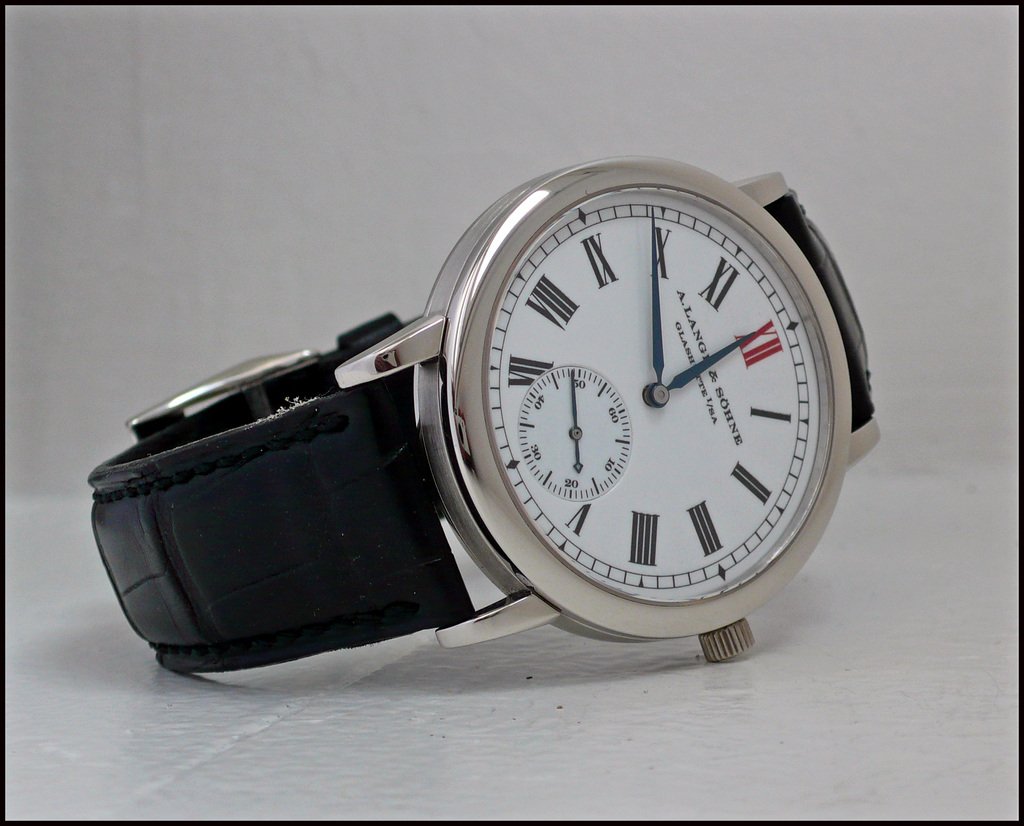
On the top of the category, with the Richard Lange PLM, and a small step under,
The Breguet 5140:
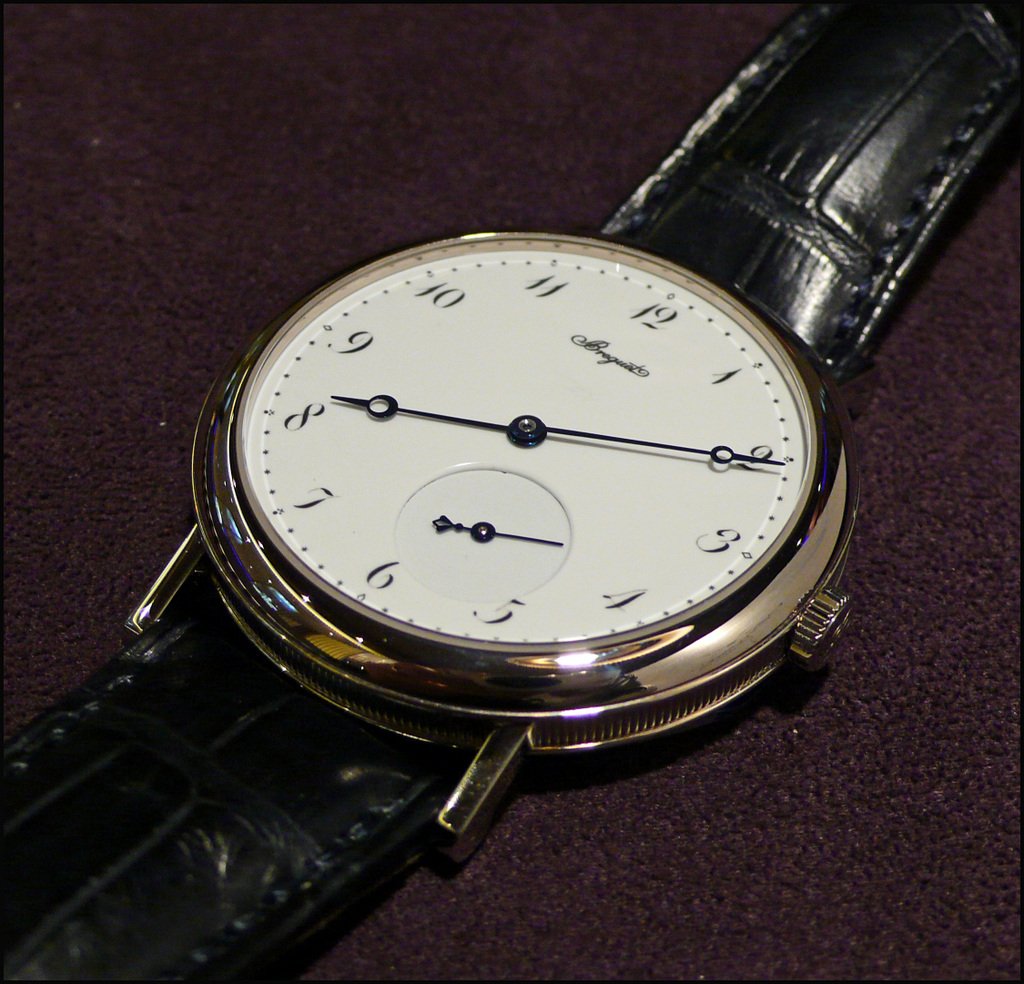
The Brguet 5177:
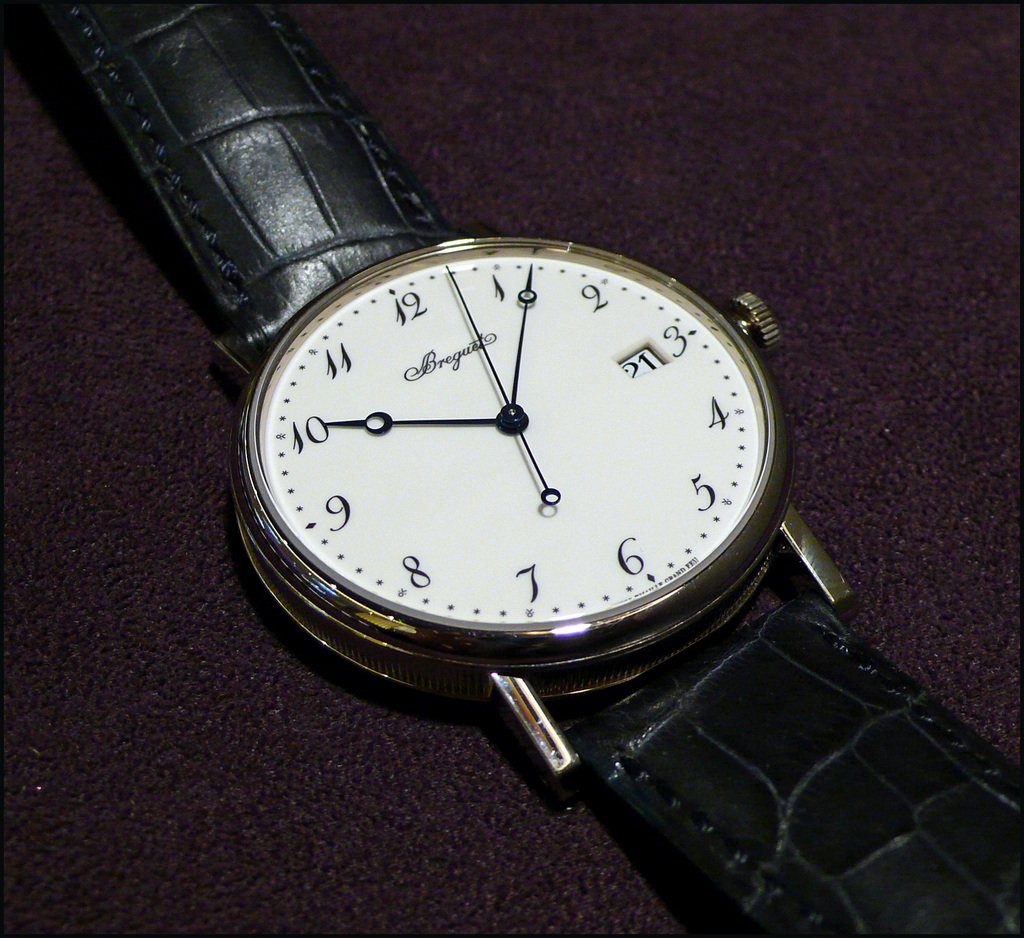
Or the 1775, which was a LE of 225 pieces, released in year 2000.
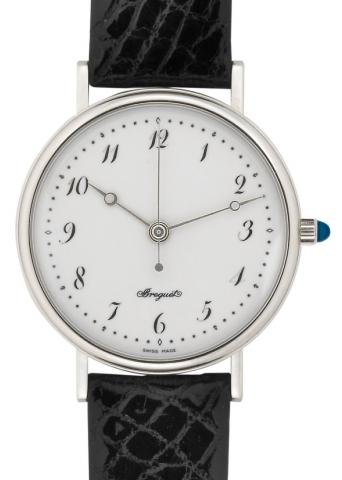
Welcome here, by the way!
Best.
Nicolas
interesting photos , how can we define the quality of enamel dial ? thank you

Be careful...
Hi,
Modern fired enamel (as opposed to lacquer enamel, which is not really enamel in the classical sense at all; this has been misleadingly coined "cold enamel" by the mighty PR marketing machine. Again, this is NOT enamel in the classical, collector's sense!) is a far cry from classical fired enamel from the golden age (pre-1950's) due to restrictions on "dirty" or "dangerous" elements used in the production of fired enamel.
If you look at modern enamel dials under a 4x (or better yet, 10x) loupe, you will see immediately what I mean - pits, uneven surfaces, uneven colors and lettering, etc.
This is a function of both the prohibition against using previously mentioned "toxic elements" and the prohibitive cost of labour to do the job properly - multiple treatments, firings, sanding and refiring, etc.
Jaquet Droz seems to have the most consistent quality of fired enamel dials in the modern era, followed by Breguet.
As much as I love the Lange Anniversary, the quality of the enamel dial would be considered medium grade, at best, in the pre-1950's era.
Again, look at the surface - pitting, evenness, etc; look at the colors.
Cheers,
TM
Thank for information , for the real enamel dial how can we define what is good quality ?
Dear Thomas M ,
Thank you for your helpful information, related to firing enamel ( real enamel ), what is good quality one ?
I 've heard that JD and other watch brand required their enamel dial from dial manufacture, and there are few ( 02,03 ) switzerland company can make enamel dial ? Is that correct ?
Also, I 've heard that the enamel technique are not taught in watch school , people only study by the watching the making process by master . Is that correct ?
No brand can claim they are the best
It is the collectors who make their own decisions based on their own personal preferences and subjective views. Yes, there are certain guidelines to follow, such as pitting, evenness and colour.
When I examine my Lange Anniversary under the loupe, it is "near perfect". I dare not say perfect. No bleeding at the XII roman numeral, Almost free of craters (unlike PP5115). Very nice cream colour. Of course, I am not in the position to say this for the rest of the pieces.
Thomas, I am afraid I can"t agree that it is considered the medium grade work.
What I can say is that the quality of every piece of the enamel dial varies. Even I am not happy with enamel dial of Zheng He piece.
Regards
Ling
Not sure what you are disagreeing with, Ling?
"Thomas, I am afraid I can"t agree that it is considered the medium grade work."
Hi, Ling,
What I wrote was,
"As much as I love the Lange Anniversary, the quality of the enamel dial would be considered medium grade, at best, in the pre-1950's era." (emphasis added)
I'm not sure what you are disagreeing with? Are you trying to state that modern fired enamel dials can compare, in general, with fired enamel dials from the 1950's and before? If so, I'm sorry, but you are wrong.
I agree, there is a huge range of variability with fired enamel, from any period, and from any brand; this is the nature of the process. But part of the GENERALIZED quality statement on a brand, or indeed of any generalized broad based statement, is that the range of quality is narrower and more consistent, and of consistently higher quality, from a "higher quality" brand or producer or enameller.
Without this, the general, comparative term "higher quality" becomes absurd and nonsensical.
Implicit in the term "higher quality" are
a. Part process - consistency;
b. part of this is after the fact quality control and very rigourous rejection rates.
The first part - process - can be further broken down into
1. the amount of skilled and experienced labour available and applied, and
2. the technical processes available (again, for example, the use of now prohibited toxic chemicals)
If one were to compare the range of in spec, acceptable fired enamel dials of today, in particular of the Lange Anniversary (why am I naming the Lange Anniversary specifically? I'll explain later) and compare them to standards of acceptability from the 1950's and earlier, the specs for today would be considered that which is acceptable for MEDIUM GRADE brands and model ranges in the 1950's and before period.
I'm sorry, again, I'm not sure what part of this is disputable or disagreeable? Historical fact is historical fact. I'm not referring to individual "best of" specimens versus each other. In that case, individual and especially good period Gruen watches (or Mido or Cyma or Omega or Longines or ...) can be compared, favourably, with Vacheron and Patek, and again, renders the whole notion and practice of speaking of brands and not of individual pieces, absurd and nonsensical. In a meaningful discussion among serious hobbyists, one cannot (should not) flip flop randomly between specific pieces and generalized brands or other broad category - the parameters of the discussion and definition of working terms should be spelled out, agreed, and then used consistently.
That said, I had much hands on and personal experience with a couple of Lange Anniversary pieces; both had quite a bit of pitting and unevenness, and one even had a little bleeding of the red in the XII.
I showed these pieces to some experienced modern collectors, and some who were very experienced with vintage fired enamel dials. All would have rejected these specimen.
I then showed the pieces to two senior executives in Lange; one would not comment on it other than to say, "those are in spec, and are the best possible with current methods and materials."
The other, off the record, went on to explain and confirm that which I already gathered (detailed above) and acknowledged that the current standards are not what he would like to see either, but limitations are limitations.
I am not bashing Lange, and certainly not the Lange Anniversary, and giving other examples from the modern period as being not "up to expectations" achieves I don't know what...
It is what it is; and the individual buyer needs to make their own decisions if this is acceptable. I am preaching neither that it is, nor that it isn't.
Cheers,
TM
ps: PLEASE don't project more into my words than I intended; stating that today's fired enamel standards are "medium grade" when compared to standards from periods when
1. lead and mercury were acceptable, even legal, to use in the process of making fired enamel
and
2. when labour costs and labour allocation allowed an enameller to sand off, smooth, and relayer and refire, over and over again
is a more than fair and generous statement based on objective standards.
This applies to the Lange, this applies to PP, VC, AP, even Breguet and Jaquet Droz, and that is the context of my comments and intentions.
With all due respect to Donze, Ms. Rohr, Ms. Porchet, Mr. Merczel, et al.
Let me be 100% clear - The work of Donze, Ms. Rohr, Ms. Porchet, Mr. Merczel, et al. are to be respected, and given the limitations today, their work is very impressive. GIVEN THE LIMITATIONS today...
I would be very surprised if they themselves would disagree, and certainly if they or someone else expert and/or experienced with the work and the history of fired enamelling would like to refute my comments, I stand ready to learn and be corrected.

High/Medium/Low grade work....
Glad to hear that you are happy with your Lange Anniversary as it's a wonderful piece!
I think that calling something High-Medium-Low grade is all relative. Something that is High grade to me (be it cars, watches, clothes, guns, shoes,etc..) may be medium or low grade to you. Just like your Lange, you might think your enamaling is near perfect, but seasoned enamel collectors/specialist may think otherwise. Who is right and who is wrong? It's up to you if you want to see the light and wisdom of others.
At the end of the day If it's high grade to you and near perfect, that's the most important thing, as enjoyment is one of the reasons we are all here.
-MW
A few basic touchpoints...
Hi,
I'm no expert at fired enamelling; I have studied the various aspects of high watching, as an academic (as opposed to a practitioner) and as a collector, for more than a few years. And I tried to do so without blinding brand or industry fanaticism. Dials and their techniques are one aspect of this...(previous to put into context my comments following)
Look for evenness of the surface
Look for smoothness of the surface
Look for vividness and correctness of the colors, and how well separated they are, and how well blended they are, where they are supposed to be. If they are supposed to be well delineated, then they should be well delineated and not "bleed." If they are supposed to blend, then they should blend naturally and beautifully.
Look for pitting, which usually indicates that bubbles occurred in the process which were not properly addressed (by limiting the number and severity of bubbling during the firing process, and by sanding and resurfacing and then relayering and refiring, over and over again until the resulting surface is as smooth and free of pitting as humanly possible)
Look for fading if the dial has aged.
Look for the aesthetic quality of the pattern presented.
These are the most basic and obvious touchstones for a collector/hobbyist to evaluate a fired enamel dial.
Yes, true high grade fired enamel work is very rare, both in terms of companies doing it, and qualified, experienced practitioners.
Cheers,
TM
Something that apparently has been forgotten here ....
Regards,
Marcus
agreed, and that is why serious connoisseurs are willing to pay
premiums for the process - hand finished vs machine finished, hand painted vs stamped, etc - even if the finished result may not be discernably different by the majority of people.
I believe you are correct about the process for Lange vs Breguet (in those specific pieces) but I am not sure either.
Thanks for the reminder/further clarification.
TM

Any macro pics to demonstrate your touchpoints...
Thanks TM for your valuable tips.
Do you (or anyone) have any macro pics in your HD just to demonstrate to evenness, smoothness, non-bleeding, non-pitting, etc?
Also, macro pics of not-so-good-limited-medium-grade enamels as a comparison (Am I asking too much?  )
)
Thanks again.
Pat
This message has been edited by patrickau on 2009-02-04 20:08:46
One macro as a start...
I'm really no expert, but I do like my PSM Shimoda quite a bit. That said, it is possible to see minor imperfections in the enamel dial, including a dark fleck or two not visible in this photo:

For someone who wants a really simple watch, the Shimoda might take the cake! Available in steel, and neither a date nor anything else except a single hand.
Best,
Gary G
Nice photo Gary..
but I guess this photo does not show the smoothness, eveness, bleed, etc as in discussion.
Are these features only noticable when inspecting in flesh? Under ?x magnification?
Anyway thanks for sharing. I agree this is a nice watch.
Pat
the imperfections are nearly impossible to capture...
possible, but nearly impossible.
Using a dedicated macro lens (like the Canon 45mm macro that can shoot 5:1) might be able to show some, but not all, of the issues.
There is also the issue of limitations of the digital capture and display medium - chromatic aberation and color bleed might be artifacts of the digital capture process, not necessarily the enamel quality or process.
So yes, best to try to inspect in person.
But hopefully someone can post some pics illustrating the things to look for.
Cheers,
TM
Enamel dial part 2
Having all those options, I'm more inclined towards just a simple watch. No complication...such as
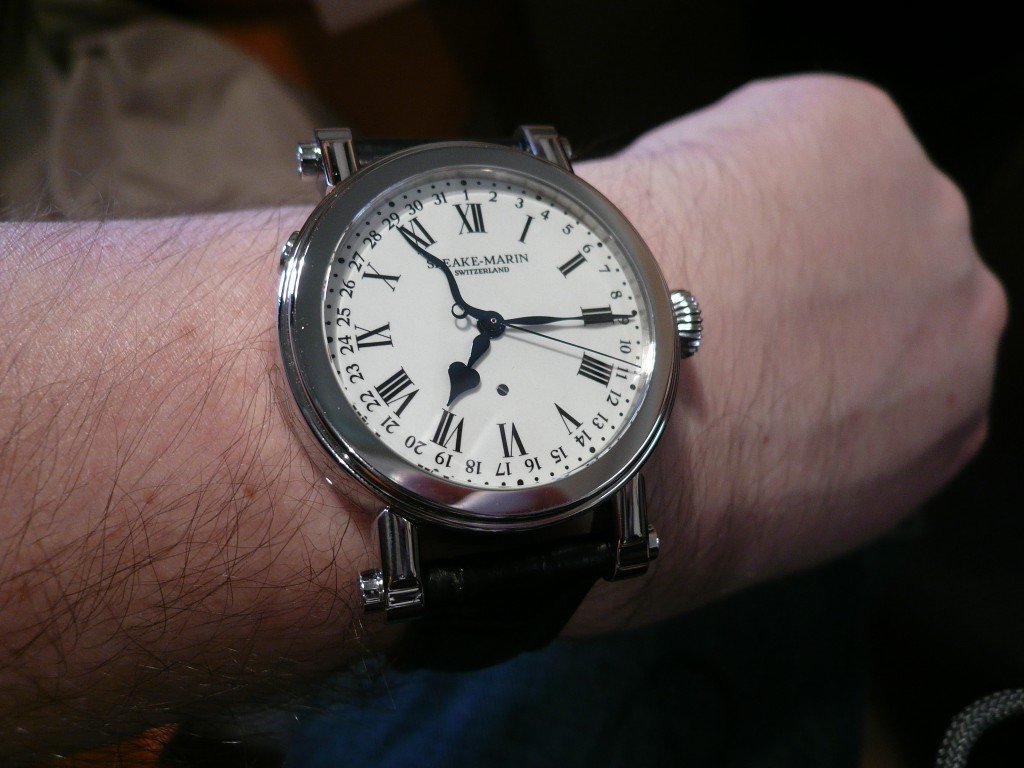
Glashutte Senator Meissen
Breguet 5140
Speake-Marin Picadilly
I'm not too much of a fan of precious metal watches.
Are there any watches out there w/ simple look like the above, and the following characteristics?
Stainless steel
Enamel dial
NO date
Breguet-style Pomme hands

How about Lang & Heyne
How about a Lang & Heyne from the independent watchmaker Marco Lang in Dresden ?


Don

Beautiful Hands
Don
Your watches- wow!
With hands to die for - so exquisite and delicate - fantastic ...
Reminds me of the delicate clock dial hands on Vienna regulators and Gustav Becker clocks.
A real eye opener. Thanks for the pics.
This message has been edited by VPREGULATOR on 2009-02-06 19:32:28
