
An open question...
Stop and think about it for just a moment; is there just one thing that all of our ‘precious toys’ have in common?
“Easy", you say: “they all tell the time”. Not if you’re the owner of the Haldimann H8, or the Romain Jerome double tourbillon, they don’t. “They all fit on our wrists”. What about all of our pocket-watch collecting friends? The differences are far more numerous than the similarities: cases of metal, plastic, ceramic, wood, stone, bone; round cases, square ones, tank, tonneau, cushion, spaceship-shaped, frog-shaped, oval, tubular; dials of silver, gold, sapphire, meteorite, enamel or no dials at all; analogue, digital, both; mechanical, quartz, electronic, hybrid; simple, complicated or uber-complicated; fragile or bullet-proof; one hand, two hands, ten hands or none; straps, bracelets, lanyards, fobs; new, old, vintage, antique - and on and on and on and on…..
Perhaps – perhaps – the one thing that all of these diverse items have that is common to each and every one of them is a value: whether it be small or great; sentimental or empirical; permanent or temporary; increasing or decreasing; substantial or ephemeral.
In that context, then, why is it that we, as a like-minded group of individuals with very diverse horological interests, find it difficult to converse freely about the one thing that is the common feature across our interests?
At this point in the discussion it is important to differentiate between ‘value’ and ‘price’, although obviously the two concepts are inextricably linked. To be fair, that is not easily done: someone as sage and as erudite as ThomasM, for example, could probably fill a book on the nuances between ‘value’ and ‘price’. Maybe, though, for the reasons mentioned here, we could usefully create our own definitions and thereby prescribe our own 'regulations'.
We don’t discuss ‘price’ on this site, and for most purposes that is exactly as it should be. That credo means that we can focus on the inherent merit in the pieces which are the subject of our interest without being…. distracted… by ‘unworthy’ financial considerations. In that way also we pull down, not create, walls within the community.
Can we discuss value, though? Unlike price, it is the same question whether we are talking of a disposable Swatch or a JLC Hybris Mechanica. Unlike the ‘price’ question it shouldn’t, or needn’t, alienate anyone in the community. Whatever our resources, whatever the state of our collection, whatever the depth of our passion, it is a question on which we will all have a view and can all contribute equally.
Perhaps the better question is: do we want to discuss value ?
What has prompted the thought (if you will pardon a momentary lapse into use of the ‘p’ word) is the increasingly eye-watering prices being sought for some of the newer models from the large houses and the recent creations of the Independent watchmakers. There are all sorts of interesting intellectual propositions to be analysed here. Is a new Calatrava objectively more valuable, by the several orders of magnitude suggested, than a vintage Calatrava in good condition? It has the same number of parts, same precious metal case, same chronometric values, same level of workmanship, very similar aesthetic: why the gulf in ‘value’? Indeed, for all the same reasons is a vintage Patek chronograph objectively more valuable, by the several orders of magnitude suggested at auctions, than a new Patek chronograph? Will there be twice as much ‘value’ in Roger Smith’s next creation as in his last? Moreover, did the last creation represent ‘good’ value, or ‘fair’ value? Does a minute repeating chronograph represent ‘good’ value or ‘fair’ value compared to a Ferrari, or an original Roy Lichtenstein, or a small Tuscan farmhouse, all of which will involve an identical drain on the purse?
Your posts confirm that you are all intelligent, sensible, thoughtful people (and before you laugh at that observation, Amanico is the exception to prove the rule…. ). Is it not possible for us, then, to find a mature way to carry on a discussion or a debate as to the ‘value’ of the pieces which we hoard and pore over, without having the discussion descend into the grubby libels and boasts which might otherwise characterise posts about 'price'? Can we not synthesise a collective view or a reference point on the fairness, or the absurdity, as the case may be, of movements in auction realisations; of increasingly frequent increases in catalogue pricelists; of fees for commissions being selected (apparently) by throwing a dart at numbers in a telephone book?
Over to you. Is there any point in us being able to have an open discussion about ‘value’ in this forum? Would you wish to be able to do that from time to time? Can the conversation be self-regulated or should it be moderated? What topics would you like to explore?
Cheers,
pplater.

I think Passion is the common thing shared by our " Tic Tacs " and us.
Or .. The common value.
My point is that the financial value is very subjective.
For example, I think that it is more logical to spend some bucks on a JLC Duometre than on a PP 5070, because the Duometre offers more than the 5070 on an horological point of view ( in house movement, made for the watch, adding a sophistication to the Chronograph, versus a simple Chrono using an outsourced movement which- sorry for the redundance- was not made for this watch ).
Others won't, and will let passion speak on this matter.
And I think the JLC fans and the PP fans are all correct, because it depends on our views on these watches.
I fear that discussing on financial values will cause some endless and ininteresting debates, and that these discussions will make our virtual home poorer.
While Passion, Opinion and Information are more interesting " values ".
If I want to speak " value ", then I buy the Financial Time...
Best,
Nicolas
This message has been edited by amanico on 2010-09-19 04:23:20 This message has been edited by amanico on 2010-09-19 04:24:01

I don't know, counselor. I think your post may alleviate the very fears you profess.
In a way, we come very close to this already, I think. We make comparisons among watches we find similar, and we often pick a "winner" as we draw such comparisons. Maybe it is not always an enumerated criterion, but value is frequently lurking in such comparisons.
Best,
CaliforniaJed
Thank you, CJ, thank you!.....
Cheers,
pplater.
pplater, it's always good to be in agreement with you! In fact,
Best,
CaliforniaJed
I'm sorry, pplater.
Best,
CaliforniaJed
Thank you Amanico....
Were you making an argument to be 'the Devil's Advocate'? (This is a reference which 'translates', isn't it?). It does not escape attention that you own the Duometre AND the 5070: why would that be so if they were not at least of similar 'value', even if only to you? The head would say 'No way' when the heart would say 'Of course, both!'. Logic has not entered the room, but your own values - and your own sense of value - have.
"I fear that discussing on financial values will cause some endless and ininteresting debates, and that these discussions will make our virtual home poorer" - on this we are very much in agreement. In that sentence, though, you have used 'financial values' as a synonym for 'prices', and the two, as we know, are not the same. Could we not separate them in discussion somehow?
Cheers,
pplater.
" Devil Advocate " ... Now you speak, pplater... :)
Yes, I own the Duometre and the 5070...
And I love them for what they are, as explained in my answer.
What disturbs me with the 5070 is that this Chrono is too often associated to " Value ", you know, these " Will it keep its value " or " Is it a good investment " posts.
Like if people would like it for the money it represents, not for the watch in itself.
I don't have this problem with the Duometre, which is not appreciated for its " Value ", but for its virtues.
Of course we have our own values, which can be sentimental, horological, historical, and also financial.
But the financial value is for me the less interesting, because it doesn't matter when I buy a watch.
I have or I don't have the money to go for it, but I won't go for it because it is a good investment.
I go for it ONLY because I love the watch, immensely.
Think about it: If the Duometre had PP written on its dial rather than JLC, would it change a lot of people's perception on this watch?
Sadly, I think it will.
That's the negative point with " financial value ", as it " distords " people way of thinking.
You're absloutely right, there are several values, and I personally think that the financial one is the worst of them, when we speak about watches.
While other values are very interesting to be discussed...
My 2 Valuable old French Cents.
Best,
Nicolas
This message has been edited by amanico on 2010-09-20 01:48:37
Firstly...
As for the question at hand, I don't think its possible. Moderated or self-regulated, this discussion about values is simply unable to succeed due to the fact that the medium being used is the internet. The participants who are of different upbringing, educational level attained, level of exposure to life in general is just too varied that one simple statement can be easily be misinterpreted in at least a dozen ways. If that is the case, then there won't be any reference or metrics determined and could end up being a "this is better because" and a "no it is not because".
Still, a GREAT post.... Looking forward to others who will share their thoughts.
You are too kind, Rob...
Cheers,
pplater.

wow, lengthy scholarly post
I think we are discussing value in a very indirect way almost everyday on this forums, with advertisements, like the incessant Linde Werdelin one on the right of this screen, to the "reviews" given by fellow purists on watches, such as the recent GG Bulgari Sapphire Tourbillion. It is about making unique value-propositions, on why this watch should receive our favour, over another, and this goes on and on.
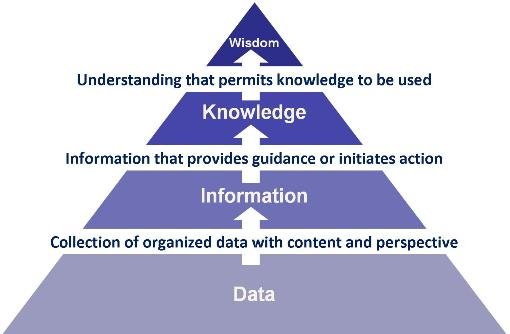
I may be dangerously over-generalising an idea, but I feel that most Purists gather here to garner as much horological knowledge as possible to ground their next logical purchase. It is wisdom that is the pinnacle of what we strive for, which some clearly have after years of experience- think BernardCheong and Armanico. Price as I would see, would be a raw data, and what we really need to do is to translate that data into wisdom- how valuable the piece is.
Retrieved from: weknowmore.org g
In short, I guess few would dare to say: "this one's a keeper, or this one is lousy" on this forum, based on their logical value assessments. History has told us that the most unpopular pieces then, can end up being the best pieces to have. For example, the Orange hand Explorer, snow flake submariner. Value is such a tough topic to discuss, but I see trickles of interesting value propositions that may prove to be wise advise on this forum, in an indirect manner.
my 2 cents of nonsense

haha
I just thought about this the first instance I read Pplater's question.
Might not be a good answer.

Discussing the value might be too complicated
but the value for the money is perhaps a bit easier.
Let's take an example: I guess that Longines Legend Diver represents a good value for the money. Most of us who are familiat with this watch can probably agree. Fuerthermore, i.e. Rolex 14060M represents in my opinion a good value for the money when compared with other Rolex models.
The value of the watch is in my opinion what the buyers pay for the watch. A good vale means that peole get a lot more than they would normally get with the same money. Good value for the money is a toppic worth of discussing because such a discussion can help fellow Purists to find some "bargains".
Best, Kari
Hypotheses on Value and Passion
Hypothesis 1: The value of an object to an individual is a function of individual and social meanings. The watch one inherits from a loved one, the gift from one's wife or friend, the first watch, the wedding watch, and the watch representing an achievement are all embued with personal meaning, not visible to the onlooker. The hot watch of the year, the design icon, the brand favored by one's reference group, the brand that supports one's favorite sport, the model named for one's hero, the degree of bling or understatement imagined to command the approval of one's aspirational colleagues, and countless discriminations made among one's affiliated groups (families, coworkers, bosses, friends, viritual friends, subcultures, culture, social class, and more) reflect the social meaning of the object that contributes to the subjective calculus of value.
Hypothesis 2: Passion is the emotion each of us attaches to objects we value, and this reflects the personal meanings, social meanings, and the existential reassurance we receive from admiring, holding, touching, wearing (or driving or piloting or otherwise using), or owning the object.
Park

Value.....
In my opinion there are two measurements of value.....
A/. monetary one, that is determined by the market....
taking Amanico"s example, 5070 is much more sought after and commands a higher market value
while the duometre is certainly a more interesting in-house calibre but does not command an equal
market value as the 5070...
This kind of value, market, is not discussed....
B/. passion value.... the one that we do discuss....
Taking money out of the equation, the point of which watch is more valuable is endless.....
Using the 5070 and Duometre example, there is no right or wrong... just passion and opinion....
When one sees a tropical GMT for example, a vintage Minerva, an original polaris, a vintage chrono PP....
different ideas and thoughts come to ones mind......
Money is out, passion is in....
And discussions are endless....
Cheers
It's hard to discuss value.
At least three factors make the "non-value" approach appealing: (a) it is available to every company instantly, instead of requiring years to build up a history or a reputation for quality; (b) much of the buying public is poorly prepared to evaluate value; and (c) much of the luxury goods-buying public actually seems to take comfort in being overcharged, as that is an indication that they are buying something truly luxurious.
I think the original post may go more to the proposition that no matter how much true horological "value" a watch may have (whether by virtue of design, finishing, new materials, traditional techniques, or otherwise), there is a price point at which it ceases to provide reasonable value for money. I think that is true, and it is clear that the watch companies are daily testing our "squeal points" in that respect. I have no doubt that each time they raise prices they carefully monitor the effect on sales in order to determine how much more the market will tolerate.
Sometimes the market moves away from us old-timers: we remember what we paid for the watches we already own, and that sets value expectations that the companies are no longer willing to meet. When that happens our collecting slows or changes direction.
Our value expectations are very subjective and situation-based. That is why, for example, a no-prestige watch company will suddenly introduce a $100,000 specialty watch: by comparison, it makes its $2000 watches that happen to be priced at $5000 seem like a good deal. We also have a tendency to forget about real value propositions when they are not in front of our noses. I submit, for example, that rather few $8000 "me too" ETA-based large divers would be sold if each one were offered with a $4500 MIH watch right next to it. Luxury marketers understand that, and the watch industry is highly competent in exploiting our analytical weaknesses.
So it is, mkvc....
Actually, ethics is a convenient analogue when we consider the three (of many?) reasons you provide as examples of the 'non-value' approach taken by some companies. Are they being 'unethical' by taking that approach, or is the question, in a free market, 'morality-neutral'? If restraint may be equated to ethics in that context, do the companies who show greater business 'ethics' (if there are any!) deserve greater kudos, greater support, for so doing?
Why should we not freely share our opinions about those companies who earn our support and those who cynically take advantage of our weaknesses?
In that vein, you are correct in large part when you say "I think the original post may go more to the proposition that no matter how much true horological "value" a watch may have (whether by virtue of design, finishing, new materials, traditional techniques, or otherwise), there is a price point at which it ceases to provide reasonable value for money". More and more it is becoming, as you say, a question of finding the 'squeal point'.
Thank you for your thought-provoking response.
Cheers,
pplater.
Value
To extend this to watches: the intrinsic value of a watch is the sum of all the pleasure you will get out of ownership for the time you own it, discounted into a present-day price. Easy to state, hard to implement perhaps, and thus the (mostly) useless advice to "this-or-that" type inquiries: "Buy what you like."
The value (that word again) that I find here on PPro is the ongoing education in how the tangible and intangible parts of the whole watch can be analyzed, put into context, and assigned value. I have learned about the value of finishing from posts on Dufour and Voutilainen. I have learned about the value of in-house movement creation and integrity from posts on A.Lange. I have learned about movement longevity from posts on Omega, Rolex, and IWC. I have learned about dial, case, and hand quality from posts on Grand Seiko. I have learned about small-scale hand-craftsmanship from posts on Dornblüth and Viot. Great posts and reviews necessarily make value judgements, and like an education in wines, or art, one really should learn the "rules" before deciding to bend, break, or ignore them.
Eventually, though, it is up to me to decide how much pleasure I will get from each of these aspects of a piece and its ownership. But I learn the most when "value" is explicitly addressed. The price is the price: easy to learn and digest. The value is a harder measure to take.
Tom
So what you are saying is that
"value" could be defined as the future pleasure the ownership of the watch discounted to NPV. Am I right?
Interesting idea...
Best, Kari
Yep...
Admittedly, trying to factor re-sale potential and recoverable costs complicates my simple model...
Tom
I like your thinking...
Let's simplify a little bit and for the sake of simplicity, I am forgetting now the discount factor. At the same time we have the annual inflation everywhere.
According to the statistics, I will live still a bit over 20 years. If I would have an opportunity to buy now a really nice Patek Perpetual in pt., I would say without problems that I am willing to drop my average consumption with the price of the cigarettes i smoke daily - say € 10.00 per day. Even trade smoking to such a watch. This means € 3,650 per year and € 73,000 in twenty years.
Additionally, when I take care of my watch, I doi not have to depreciate it to zero value in 20 years. With a high quality watch like Patek, it is fair to assume that the retaining value of the watch in 20 years is minimum equal to 50 % of the purchase price of the watch corrected with the inflation.
Such an equation gives us fantastic results: BUYING HIGH QUALITY WATCHES WHICH WE ENJOY OWNING EVERY DAY ARE ACTUALLY VERY GOOD INVESTMENTS!
Best, Kari
Tom, also from Warren Buffet....
Thank you for your (very apt) take on the question. We all seem to be converging on the conclusion that 'price' is a simple, concrete, uni- dimensional concept which is generally of little interest to us in anything other than a 'capability' context, whilst 'value' is a very broad church indeed.
Cheers,
pplater.

Financial value versus price
I used these interchangeably as well, but you are correct that they are different but related entities.
A price is an objective amount that one pays for a watch. But financial value is subjective and takes into account whether the watch was worth the price paid. It is then that we pile on all the other parameters that allow us to determine value and worth.
And it's at this point that the interesting discussion starts, because we all have different priorities for the loosely defined set of parameters that make up a watch.
Andrew
Ps. it may be worthwhile starting another thread to lay the framework for how we define a watch and its' 'worth'. I know we think we know this, but laying it out might help us to all speak the same language.

Two thoughts
A wonderful and thought provoking post - I hope the discussion can, as you suggest, avoid slipping into the typical elements that lead to locked posts! I had two abstract thoughts, one on value and the other on a common theme:
1. Value: For me, value in watches represents trading a portion of my earnings for the best efforts of someone else. Value here is the belief, which importantly, is a personal one in the end, that one is able to use the fungible instrument of money to fairly trade for someone else's skill. While I don't believe in any ideology in the extreme, the thoughts of Ayn Rand on capitalism and for those not familiar, Francisco d'Anconia's speech on money and "value" ring a bell in your philosophical query. If one does an internet search on "Fransisco's money speech" you will find the full length version. Again, it's not so much the ideology but the concept of having a personal view that you have exchanged the product of your efforts fairly for those of someone else and ultimately their belief that they can perform the same trade for money (at fair value I hope) and then spend in a similar concept for other goods.
2. Common theme: Watches, like most precision machinery, are largely mechanical pieces of metal with various gears and well fitting precision parts; nothing special. What makes the magic? It's the fact that when wound our watches beat like a heart and with a life; they literally do come alive. That they can do this with high levels of precision through accurate timekeeping, gives their life a purpose. When watches break and are not fixable, they return to being lumps of metal; their value at risk until they are fixed again and restored to their accurate life beat.
All the best and thanks again for the thought provoking post.
This gets the gong...
Cheers,
pplater.

Value
as related to price, as already stated in so many words, is related to what the market will bear. New luxury watches are priced highly because there are people who are willing to pay that price. If watches are not moving at the given price, the price should go down. The gap between the price and what it actually costs to make a watch (materials cost and time/expertise) must be high, because there are plenty of new watches being sold at a discounted rate and I assume these sellers are still making a profit.
I don't think of value when I buy a watch, whether it is a Casio or a luxury model. The watch serves a purpose or it satisfies a desire/need. The Casio keeps time during exercise: luxury watches are "toys" that I love to play with, polish, wear, and discuss. I know there are those on the site who espouse the value of brands that have less expensive price points and still have quality materials and movements. There are also those of us who purchase these watches because it is the best we can afford. I did not buy a Glashutte, UN, Cartier because they were good values for the money. I loved the way they looked, and could afford them. If we just bought watches to tell time, the luxury market would not exist. None of us need these expensive watches. There is something about the asthetics, and expertise in creation, that resonates with us and we are willing to pay the price.
There is value in some watches I own due to a link of that watch to a memory, event, or place. I have a gold Omega with a quartz movement that was given to me by my wife 11 years ago for my birthday. At the time the price was a lot of money. This year my wife bought a Baume and Mercier for my fortieth birthday that we were celebrating in NYC. These watches are not the most expensive I own but I value them because they make me think of my wife and the thought she put in to buying me something special. That value exists for others when they speak of watches being handed down from a father/grandfather. In this light value is discussed all the time on this site, and it should be, because the emotions these watches stir up is what links us and is why we are all on this site.
Value can certainly be discussed without ever bringing up price, and that allows us all to be on an equal playing field, in which the owner of Omega or Tag or Seiko can discuss watches with owners of tourbillons, perpetual calenders, etc. and not feel less than for the difference in price of the watches.
Stewart
Aspects of value
Thanks pplater, a great topic for discussion.
While we avoid talking about monetary value (ie. cost), we certainly discuss other aspects of value when we talk about watches. While we can have an immediate response to a watch in front of us (like listening to a piece of music), if we want to discuss the watch with peers, its easier to break it down into its components, using a pre-defined language with its own set of scales. This is a bottom up approach to thinking about value, but of course we then have to determine what aspects are important to us as individuals. This is when ‘balance’ comes into play, our own internal value system and our experience with other watches.
Obviously cost has some impact on our decision to purchase, but as you say, the problem with it is that it can swamp other more subtle discussion and degenerate into comparing discounts, dealers and the like.
One of the nice things about horology is that there is value to be had at all cost levels. It is teasing this out from the background noise that is difficult, but the discussions that occur on PPro about finish, history, mechanical design, robustness, reliability, and many other aspects all feed into this.
Regards
Andrew