Comments:


Not a Laureato you'll see everyday...>>>
Here is one really rare Laureato 
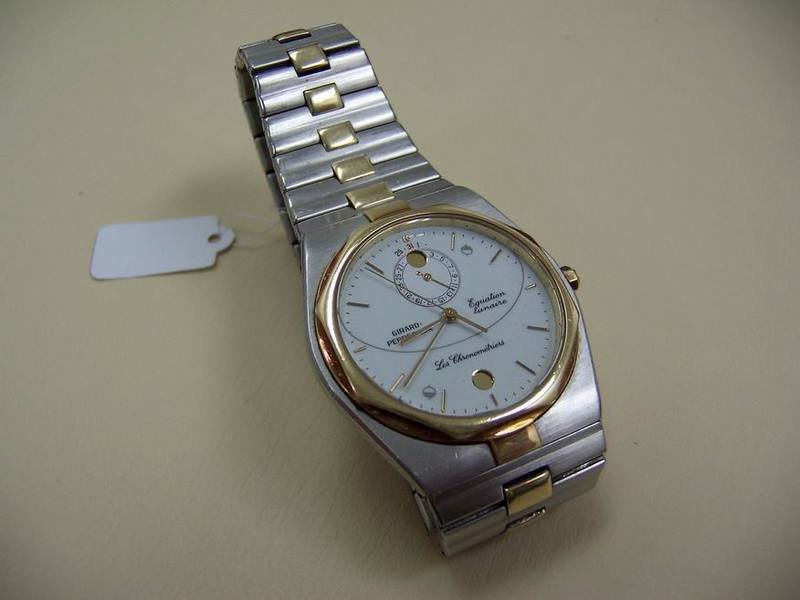
If only it is mechanical....
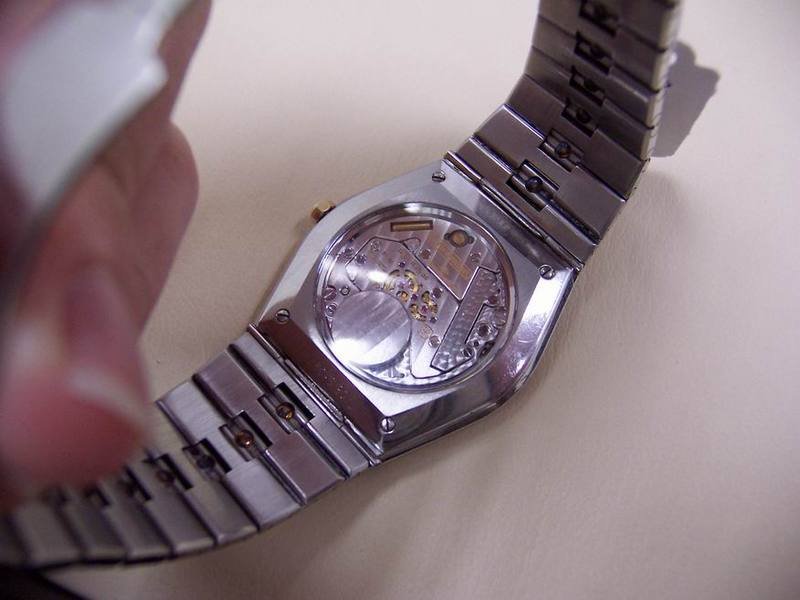
The finishing of the Quartz movement is pretty impressive too and i guess thats what GP is all about, refinement and details
Regards
Jacky
If only it is mechanical....
The finishing of the Quartz movement is pretty impressive too and i guess thats what GP is all about, refinement and details
Regards
Jacky
These are very nice
Hi Jacky,
thanks a lot!
The "Techniques" models are among my wife´s most favorite GP watches; she loves the look and the function, as well as the nice view through the back.
It´s a pity these don´t get more attention, while there´s for sure a lot of details to enjoy. Such as the nice enamel dials, for some models!
And these are a good reminder of GP´s quartz movement not to be comparable to any other.
Thanks for sharing!
Cheers,
Peter
thanks a lot!
The "Techniques" models are among my wife´s most favorite GP watches; she loves the look and the function, as well as the nice view through the back.
It´s a pity these don´t get more attention, while there´s for sure a lot of details to enjoy. Such as the nice enamel dials, for some models!
And these are a good reminder of GP´s quartz movement not to be comparable to any other.
Thanks for sharing!
Cheers,
Peter
You are right Peter...definitely an understated watch but...
Cant deny the fact that its electronic movement didnt excite too many people Its refinement does though I doubt if theres any Quartz movement better then this? Or is there any?
Regards
Jacky
Well, it´s all in the details...
Hmm. That´s correct i think; given GP does about 3 percent quartz movements today, it´s really more a "commemorative production"
Something easily overseen is the fact these quartz movements are pretty special.
Not just the way they are finished, which is certainly on par with the mechanical movements.
But the functional part does have some surprises, in that it´s genuine GP through and through. It´s running on GP-patented stepping motors, which is a direct successor of the 1960´s development which then was a world´s first for GP.
The GP quartz movements include a mechanical geartrain, which is exactly like a mechanical watch up to the jewels.
Naturally it is much smaller and a LOT more difficult due to the low energy supply; friction is a real topic, because the power supply in quartz movements is very demanding (to make it work a long time) and only a fraction of the power supplied by the mainspring in a mechanical watch.
One might compare the size with the "Lange 31", which measures 37.3mm in diameter and will do for one month (a real achievement). The quartz movements are smaller than 25mm and will do about 2-3 years with a battery. So this may put things in relation and on such small scales, power supply and friction become critical issue. Which means everything needs to be designed, crafted, finished and assembled very very carefully to make it work.
The other interesting aspect, at least to me, is these units offering GP-propietory mechanical complications.
That´s unusual too, because it would be likewise easy to attach an electric motor to each hand.
But for these movements, the cadrature that runs the indication is exactly the same as in mechanical movements; that´s very tricky, because the power to supply these is little and thus it´s challenging to do them.
Apart from the fact the quartz movements are pretty small, so it´s really a very limited space which makes things even more difficult.
Simply put, doing the same complication for a mechanical movement is a lot more easy, simply because there´s more power to work with and thus a mechanical movement will be not as demanding when it comes to design and executional details.
Well, as per the "better" part, it really depends on the perspective.
Obviously all this can be exciting
Now GP´s quartz movements today are found in ladies models only; among the female watch lovers, it is not uncommon to encounter a more "pragmatic" approach which is the battery thingy to be very practical first of all
And that it is; notwithstanding all admiration for craftmanship and skills, not caring about the watch to be wound is pretty much of a practical benefit.
The major downside, which most GP quartz movements do share with some mechanical brethren like the GP30C0 column-wheel chronograph, is the most interesting part to be hidden under the dial. So it´s quite stealthy and may require someone interested in the details.
Cheers,
Peter
Something easily overseen is the fact these quartz movements are pretty special.
Not just the way they are finished, which is certainly on par with the mechanical movements.
But the functional part does have some surprises, in that it´s genuine GP through and through. It´s running on GP-patented stepping motors, which is a direct successor of the 1960´s development which then was a world´s first for GP.
The GP quartz movements include a mechanical geartrain, which is exactly like a mechanical watch up to the jewels.
Naturally it is much smaller and a LOT more difficult due to the low energy supply; friction is a real topic, because the power supply in quartz movements is very demanding (to make it work a long time) and only a fraction of the power supplied by the mainspring in a mechanical watch.
One might compare the size with the "Lange 31", which measures 37.3mm in diameter and will do for one month (a real achievement). The quartz movements are smaller than 25mm and will do about 2-3 years with a battery. So this may put things in relation and on such small scales, power supply and friction become critical issue. Which means everything needs to be designed, crafted, finished and assembled very very carefully to make it work.
The other interesting aspect, at least to me, is these units offering GP-propietory mechanical complications.
That´s unusual too, because it would be likewise easy to attach an electric motor to each hand.
But for these movements, the cadrature that runs the indication is exactly the same as in mechanical movements; that´s very tricky, because the power to supply these is little and thus it´s challenging to do them.
Apart from the fact the quartz movements are pretty small, so it´s really a very limited space which makes things even more difficult.
Simply put, doing the same complication for a mechanical movement is a lot more easy, simply because there´s more power to work with and thus a mechanical movement will be not as demanding when it comes to design and executional details.
Well, as per the "better" part, it really depends on the perspective.
Obviously all this can be exciting
Now GP´s quartz movements today are found in ladies models only; among the female watch lovers, it is not uncommon to encounter a more "pragmatic" approach which is the battery thingy to be very practical first of all
And that it is; notwithstanding all admiration for craftmanship and skills, not caring about the watch to be wound is pretty much of a practical benefit.
The major downside, which most GP quartz movements do share with some mechanical brethren like the GP30C0 column-wheel chronograph, is the most interesting part to be hidden under the dial. So it´s quite stealthy and may require someone interested in the details.
Cheers,
Peter
It is interesting. Thanks for sharing :-)
Is it a special model? or is it a regular model but with a customized display back?
I believe that no one would make a regular display back quartz watch back then...
By the way, how old is the watch?
I like the battery, it has the Geneva Stripe too
Cheers!
I believe that no one would make a regular display back quartz watch back then...
By the way, how old is the watch?
I like the battery, it has the Geneva Stripe too
Cheers!
Actually yes!
Howdy,
in fact some models came this way, with sapphire backs.
The golden "cap" indeed is a battery cover and solid gold; the battery itself is rather unspectacular
The "Techniques" line followed the first generation Laureato in 1975; the inlay pieces within the bracelet links and GP´s very small quartz movements (a novelty, then) were newly introduced. These were in production until mid/late 1980, in different variants and case shapes:
This earlier overview of the Laureato line includes some models, so it´s been really different then.
Cheers,
Peter
Thats a superb finishing for Quartz watch...
Never knew much about it's movement until i read your reply above. Impressive work from GP i would say. Absolutely a house that is making only fine products. Even the entry level GP is very finely done...as this one
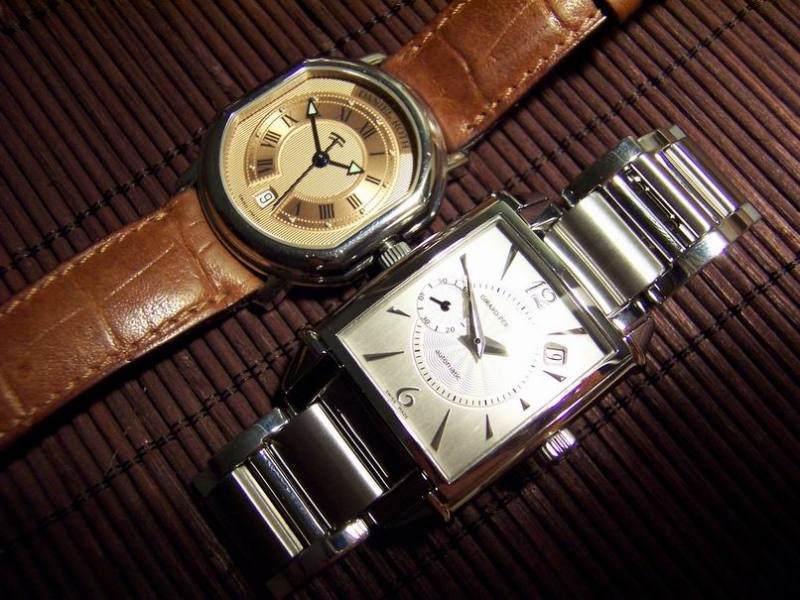
Cheers.
Jacky
Cheers.
Jacky
May I join ...
your admiration for those watches! This ref. 42666.57.71 "equation lunaire" from the equation "ligne technique" line is another outstanding piece of GPs portfolio from about 1985-1990 with moonphase indications for the north and the south hemisphere at the same time! I'm most impressed by this combination of quartz base movement on the highest level and sophisticated mechanical complication and enamel dial, the batteries in those watches have a power reserve of more than 5 years (for the ladies watches about 2 years +). One day I would like to lay hands on a perpetual calendar watch of this line. But you have to find one!
congrats and greetings, Alex from Germany
congrats and greetings, Alex from Germany